Most Americans Fear AI Extinction: So Why Has Nobody Moved?

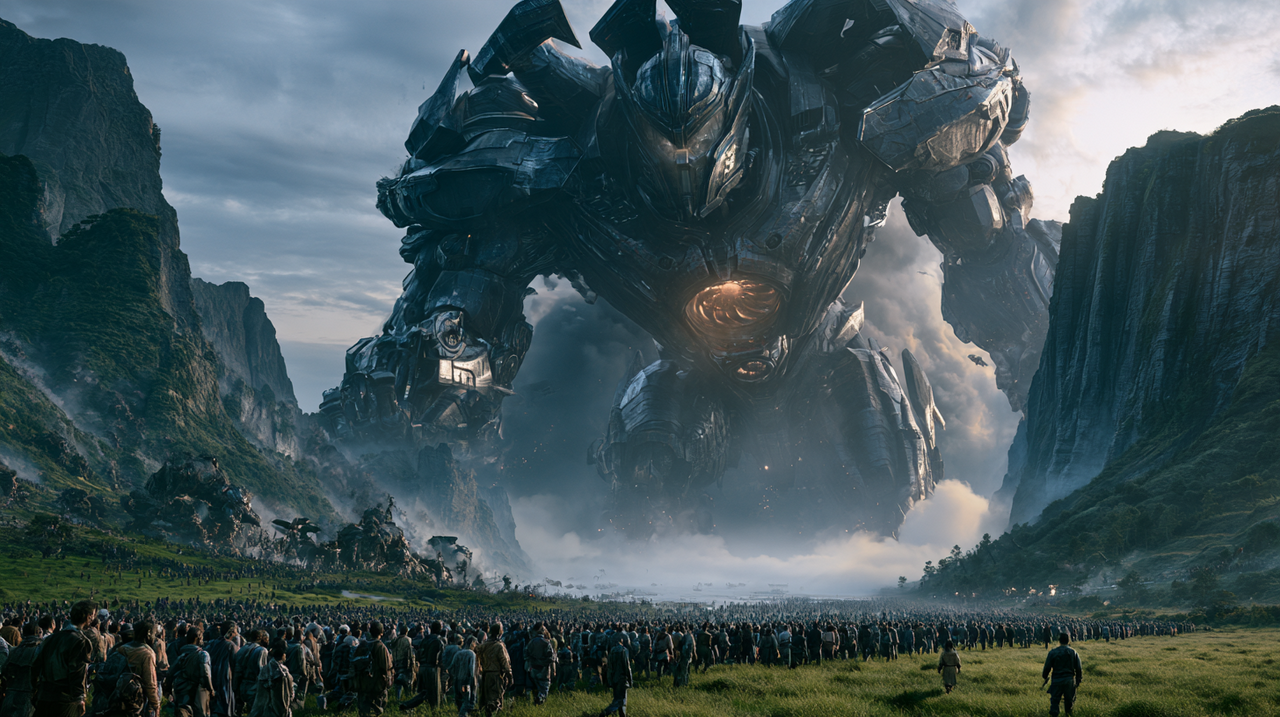
Somewhere last week you were doing something ordinary when the news arrived. Loading the dishwasher, maybe, or standing on a platform, or half-watching a screen while the kettle went. A senior safety researcher at one of the two largest artificial intelligence companies in the world had said, in public, under his own name, that he put the odds of AI killing every human being on earth within ten years at better than one in ten. The post went round the world. It was picked up by CBS, by the BBC, by the Guardian, by Axios, by every aggregator with a pulse. A colleague of his had resigned days earlier, in a resignation thread that went viral. You read it. You may have said something about it to whoever was in the room. And then, quite possibly within the hour, you opened a chatbot and asked it to summarise a document, or draft an email, or explain something to your child.
That sequence is the subject of this piece. Not the warning. The sequence.
Because the warning is not new, and neither is the public's agreement with it. In October 2025, a Yahoo News survey conducted by YouGov asked 1,770 American adults how likely it was that AI would destroy humanity. Fifty-three per cent said somewhat or very likely. Sixty-three per cent thought it somewhat or very likely that AI would become so advanced that humans could no longer control it. These are not fringe figures. They describe a clear majority of a large, weighted, nationally representative sample calmly assenting to the proposition that the species may not make it. In the same survey, eighty-five per cent of people who had used AI chatbots said they found them at least somewhat helpful.
More than half a population says it may be destroyed by machines. The same population files the thought somewhere, goes to work, and uses the machines. What, precisely, is that belief doing to the people who hold it?
The Week the Arithmetic Escaped
The specifics matter, because the specifics are what broke containment. On 8 September 2026, Jacob Coxon, a researcher who had worked in pretraining at both OpenAI and Anthropic, resigned and said why on X. Neither company, he wrote, was acting responsibly. They were “racing straight to self-improving superintelligence and gambling with our lives.” The following day Evan Hubinger, who leads Anthropic's alignment science team, replied in the affirmative rather than the defensive. “We really do earnestly believe AI could kill all humans,” he wrote. “I personally think it is more than ten per cent within the next decade.” He added that Anthropic was trying its best but did not yet have a plan to solve alignment for superintelligence and was not clearly on track to.
Within days the thing had a shape. The Guardian's UK technology editor, Robert Booth, ran an analysis on 9 September weighing how seriously the warnings should be taken, canvassing Stuart Russell at Berkeley and the former defence secretary Des Browne alongside sceptics including Sandra Wachter of the Oxford Internet Institute, who said flatly that Terminator scenarios are a large distraction from real issues. Vox published Andrew Prokop's piece on 12 September under the headline “The week the AI freakout went mainstream.” On the Saturday, Coxon sat down with Laura Kuenssberg on the BBC and said that people building the technology are “genuinely frightened,” that colleagues were quietly making contingency plans, that some had looked at rural property. Asked for a timeline he gave two years in the worst case and, in one scenario involving swarms of autonomous agents, six months to a year.
The industry moved in the same week and in the same direction. Dario Amodei, Anthropic's chief executive, published an essay on 12 September, “We Must Pace the Frontier,” arguing for deliberately pacing the rate of capability gains. Sam Altman, Demis Hassabis and Elon Musk each endorsed it separately and in public: Altman said OpenAI would match Anthropic's first commitment, Musk posted “Dario is right,” and Hassabis said “the direction is correct.” Bernie Sanders and Greg Casar had already announced, on 3 September, legislation to ban artificial superintelligence outright and pause frontier development, with penalties modelled on those for illegal nuclear weapons work, and formally unveiled their Ban Artificial Superintelligence Act on 23 September. President Trump, asked on the tarmac in Dallas on 11 September whether he had concerns about extinction, said: “No, I don't have any. I have concerns that if we don't win AI, we're going to be put in a very bad position.” Two days later he said “very negative forces” were raising concerns about AI “that won't happen,” and soon afterwards he was calling extinction fears a hoax.
So the elite signal was unusually clean. Insiders with everything to lose said the quiet part aloud, the chief executives agreed, legislators drafted, the press amplified, and a president declined. All the conditions that political scientists would tell you produce a mass response were present at once.
Nothing happened.
Three Hundred People in King's Cross
Consider the counterfactual you would expect. If fifty-three per cent of Americans genuinely held, in the way they hold beliefs that move them, that AI is likely to destroy humanity, you would expect something. Not revolution. Something. Petitions with eight figures of signatures. Sustained pressure on members of Congress. Consumer boycotts. A single-issue voting bloc. At minimum, you would expect the subject to appear when pollsters ask people what actually worries them.
It does not. Gallup's March 2026 survey of American domestic worries put healthcare at the top, with sixty-one per cent worried a great deal, followed by the economy, inflation, the federal deficit, the distribution of income and wealth. Sixteen categories were measured. Artificial intelligence was not among them, because Gallup, whose business is knowing what Americans volunteer as a concern, had not found reason to put it there. Pew's tracking shows concern rising steadily, from thirty-seven per cent saying they were more concerned than excited about AI in 2021 to fifty-two per cent by mid-2026, with fifty-five per cent of under-thirties now more concerned than excited, the first time a majority of that group has said so, but concern is a temperature reading, not a priority.
The September week did move the numbers. A POLITICO poll conducted by Public First among 2,064 American adults, fielded from 13 to 15 September and published on 16 September with a margin of error of about 2.2 points, found that sixty-three per cent saw at least a moderate risk that advanced AI will someday destroy humanity: seventeen per cent said almost certain, twenty per cent significant and twenty-six per cent moderate. About half said the AI leaders issuing the warnings genuinely believe them. Forty-eight per cent said AI is “good enough” and development should be paused, against thirty-one per cent who favoured carrying on. The belief rose on cue. The behaviour did not.
The most exact measure of the gap is a headcount. On 28 February 2026, PauseAI and Pull the Plug held what PauseAI described, correctly, as the largest protest ever organised specifically around AI safety. Around three hundred people marched through King's Cross from OpenAI's London office past Google DeepMind and Meta. Three hundred. In a city of nine million, in a country where surveys repeatedly find majorities in favour of hard limits on superhuman systems. The organisers were not embarrassed by the number. Joseph Miller, who runs PauseAI UK, said: “We think this is the most important issue of our age. Every protest we hold is bigger than the last.” Both things are true. That is the point.
It is worth being precise about how anomalous this is. Majority beliefs that people actually hold in the way they hold convictions produce visible infrastructure: campaign groups with paid staff, dedicated lobbying, litigation, party platforms, brands that market themselves on the issue. Opposition to smoking in public places, support for same-sex marriage, concern about plastic in the oceans, all of them built that scaffolding well before they reached fifty-three per cent. AI extinction belief has reached majority status without building any of it, which suggests the belief is not doing the work that beliefs at that level of prevalence normally do.
Meanwhile the revealed preferences run entirely the other way. OpenAI reported more than nine hundred million weekly active users in February 2026 and more than fifty million paying consumer subscribers. Index funds sitting in ordinary pensions are now weighted heavily towards the handful of firms financing the build-out, which means that a large fraction of the people who told YouGov the species may not survive are, through their retirement accounts, funding the thing they named. Nobody is lying. The belief and the behaviour simply do not touch.
What a Poll Can and Cannot Catch
Before reaching for psychology, it is worth being hard on the instrument. A survey question is a strange object. Philip Converse established sixty years ago that respondents will produce answers to questions on which they hold no stable attitude at all, because the interview setting exerts a quiet pressure to seem informed. Acquiescence bias, the tendency to agree with whatever proposition is put, is well documented and can inflate the measured prevalence of some beliefs by half again. And “somewhat likely,” the response option doing most of the work in the fifty-three per cent, is about as soft as human language gets. It costs nothing to tick. Economists call this the cheap talk problem: stated preferences about remote, hypothetical, unpriced outcomes are systematically less reliable than choices with consequences attached.
The comparative data supports a deflationary reading. YouGov's British polling asked people to name the three most likely causes of human extinction. Robots and artificial intelligence were chosen by seventeen per cent, up sharply from seven per cent in 2022, but still well behind nuclear war at fifty-five per cent, climate change at thirty-eight and pandemics at twenty-nine. When the question forces a ranking rather than inviting agreement, AI falls a long way down. So the honest description is not that half of America is certain of doom. It is that half of America will, when asked, assign a non-trivial probability to it, and then decline to do anything with that probability. Which is a stranger finding, not a weaker one. For calibration, the researchers building these systems are not much more pessimistic than the public. The 2023 AI Impacts survey of 2,778 authors who had published at top machine-learning venues found a median estimate of five per cent for human extinction or similarly permanent disempowerment, with a mean of 16.2 per cent dragged upward by a long tail. Hubinger's ten per cent is not an outlier among his peers. It sits almost exactly where the field's central estimate sits. The public, in other words, has arrived at roughly the same number as the specialists and, unlike a subset of the specialists, has organised nothing around it.
The Word Lifton Found in Hiroshima
There is a term for the state of holding a catastrophe in mind without feeling it, and it was coined by a psychiatrist who went looking for the effect in the only population that had lived through the thing itself. Robert Jay Lifton spent 1962 interviewing survivors of the atomic bombing of Hiroshima, and published Death in Life in 1968. What he found among the hibakusha was not sustained terror. It was a shutting down. He called it psychic numbing, and defined it with unusual economy as a diminished capacity or inclination to feel.
Lifton was explicit that the mechanism was not confined to people who had stood under a mushroom cloud. In a 1982 paper for the American Journal of Orthopsychiatry, written at the height of the second Cold War, he extended the analysis to entire populations living under nuclear threat. The movement from appropriate fear to complacency, he argued, is psychic numbing operating at scale, and he added an observation that has aged with particular force: the numbing of citizens can be encouraged by authorities who would prefer there were not too much awareness of the actual dangers involved.
The decision scientist Paul Slovic has spent decades putting numbers on the same phenomenon from the other end. His work on what he calls psychophysical numbing shows that human concern does not scale with the size of a threat and in fact frequently inverts. People give more to one identified child than to two. The collapse of compassion begins, in his experiments, at the second victim. His 2007 paper took its title from a line attributed to Mother Teresa: if I look at the mass I will never act. Extinction is the mass at its theoretical limit. It is a number so large it has no emotional handle at all, which is precisely why it can be assented to so cheaply.
There is a further reason extinction in particular resists feeling, and it is structural rather than psychological. Every catastrophe a human being can emotionally model has an aftermath in it. There are survivors, mourners, a ruined landscape, someone to tell the story. That is what grief is for and what it operates on. Extinction removes the observer along with everything else, which means it cannot be pictured from any position a person is able to occupy. You can think it. There is nowhere to stand to feel it.
Terror management theory supplies the third piece. Jeff Greenberg, Tom Pyszczynski and Sheldon Solomon proposed in the mid-1980s that awareness of mortality generates an anxiety that human beings manage by clinging harder to cultural worldviews, self-esteem and close relationships, and the resulting literature now runs to hundreds of studies across dozens of countries. The relevant distinction is between proximal defences, which push conscious death-thoughts out of focal attention, and distal defences, which operate on the thought once it has gone under. Proximal defence is the reason a person can read that a named researcher at a named company puts extinction at better than one in ten, feel a brief cold drop, and then open the same company's product. The thought was not refuted. It was moved.
A Warm Winter in Western Norway
Numbing explains the individual. It does not explain the silence, because silence is a group achievement, and the best account of how a population coordinates one comes from a sociologist who spent a year in a Norwegian village during a winter that did not arrive.
Kari Norgaard conducted fieldwork in a rural community in western Norway in 2000 and 2001, giving it the pseudonym Bygdaby. The first snow came two months late. Ice fishing was impossible. The ski industry had to manufacture snow. Local and national newspapers connected the season explicitly to global warming. The residents were among the most educated and politically engaged in the world, with unusually high scientific literacy and a strong tradition of civic participation. They wrote no letters. They pressed no politicians. They did not reduce their fuel use. What Norgaard documented, in a 2006 paper and then in her 2011 book Living in Denial, was not ignorance and not scepticism. It was what she called socially organised denial: information held in the abstract and kept carefully disconnected from political, social and private life, sustained by shared norms about what it is appropriate to feel, to discuss and to attend to.
She called the resulting condition a double reality, and one of her interviewees, a teacher at the local agricultural school whom she calls Kjersti, gave it the formulation that no theorist has improved on. “We live in one way, and we think in another. We learn to think in parallel. It's a skill, an art of living.”
That is the closest available description of what fifty-three per cent of Americans are currently doing. It is a skill. It is practised. It takes maintenance.
The categories come from Stanley Cohen, whose 2001 book States of Denial separated three things routinely lumped together. Literal denial says the thing is not happening. Interpretive denial accepts the facts and reassigns their meaning through euphemism and technical framing. Implicatory denial, the subtlest and by far the most common, contests neither the facts nor their meaning but their psychological, political and moral implications. It is the denial of a person who knows exactly what is being claimed, accepts it, and declines to let it generate any obligation. Almost all AI extinction belief is implicatory. And Eviatar Zerubavel, in The Elephant in the Room, showed why it stays that way: conspiracies of silence are reciprocal, each participant's discretion licensing the next person's, and they grow more rigid, not less, the more people are involved and the more obvious the object being ignored. The environmental literature has a plainer name for the outcome, the value-action gap, which Anja Kollmuss and Julian Agyeman anatomised in 2002 and which has resisted every attempt to close it by supplying people with more information. Nobody in this story lacks information.
Everything the Cold War Rehearsed and One Thing It Did Not
The obvious precedent is the bomb, and the survey data from that era is bracing. Through the 1980s, somewhere between twenty and thirty-seven per cent of Americans named the potential for nuclear war as the most important problem facing the country. Around a third told pollsters they expected a superpower nuclear exchange within a few years. In the United Kingdom, fifty-two per cent of teenagers thought nuclear war would happen in their lifetime and seventy per cent thought it inevitable. Between 1978 and 1980 the psychiatrists William Beardslee and John Mack surveyed 1,151 secondary school students about the threat, asking how it affected their plans, including their plans to have children, and concluded that young people were deeply disturbed and doubtful of their own survival. This body of work was reviewed at length by the Institute of Medicine in 1986.
The parallel holds in one important respect and fails in three. It holds on the psychology. People then, as now, reported the belief and mostly carried on. But look at the differences.
Nuclear risk was legible. It was held by a countable number of states, governed by treaties with signatures on them, and referred to an event that had actually occurred twice, in photographs everyone had seen. There was an address to write to. The anti-nuclear movement of the early 1980s put roughly a million people into Central Park on 12 June 1982, the largest protest in American history to that point, and some thirty thousand women hand in hand around the perimeter fence at Greenham Common that December, because there was something specific to demand of someone specific. AI risk has no referent. No system has killed anyone at scale. The mechanism is a chain of conditionals. The actors are private companies, several of them valued in the hundreds of billions of dollars, operating across jurisdictions, and the demand is not “remove the missiles from that field” but something closer to “go slower, indefinitely, on a thing you believe will make you the most valuable enterprise in history.”
Second, nobody had a nuclear weapon in their pocket. The bomb was not also a product you used to plan your week. The daily intimacy of AI does something to belief that the Cold War never attempted: it supplies a constant stream of direct personal evidence that the technology is useful, pleasant and under control, which quietly outweighs an abstract statistical claim every single time the two meet.
Third, and most corrosive, the warnings now come from inside the companies building the thing. Hubinger did not resign. He said extinction was at better than ten per cent and carried on working on alignment at Anthropic, which is a defensible position but an impossible public signal. When the fire alarm is pulled by the people who own the building, and they stay in it, the ordinary listener draws the only available conclusion, which is that the alarm is not the sort you leave over. The Bulletin of the Atomic Scientists moved the Doomsday Clock to eighty-five seconds to midnight on 27 January 2026, the closest it has ever been, citing nuclear arsenals, climate and disruptive technologies including AI. The clock has been moving in one direction for years. Almost nobody can tell you what time it currently reads.
Who Is Actually Paying for This
The belief is not free. The costs are simply distributed unevenly, and they fall hardest on the people nearest the machine.
In April 2026 the San Francisco Standard reported on a cluster of Bay Area psychotherapists whose practices had filled with AI workers. Candice Thompson, who practises in Menlo Park, said about eighty per cent of her patients work in or with AI, and described a change in what she is clinically obliged to take seriously. In the past, she said, someone could say “this is the end of the world” and it was clearly psychosis. Now, she said, “a majority of the things you're saying are fears that we have to consider.” Alex Oliver-Gans, in San Francisco, estimated forty per cent of his patients work in AI and described people putting in sixty or seventy hour weeks in an environment organised around preventing cataclysmic outcomes. Fiona Brandon, in Noe Valley, reported the physical register: poor sleep, digestive trouble, social withdrawal, clients too burned out on screens to accept remote sessions. Six months later Thompson, who has practised for more than seventeen years, put it more plainly still: “In my clinical lifetime, I've never seen an existential threat like this.” Nor, she said, was it confined to the industry. “I don't think any of us are immune, even my clients who are not working in tech.”
What that clinical shift describes is a boundary moving. Thompson's point is not that her patients have become more anxious. It is that a class of statement which the profession was previously trained to treat as a symptom has been reclassified as a reasonable appraisal of the evidence, because the evidence now includes named researchers at named companies saying it on the record. Psychiatry has absorbed the claim. That is a quiet, consequential thing for a society to have done, and it happened without anyone deciding it.
That is the acute end. Coxon told the BBC that colleagues were making contingency plans and considering rural property. In online communities built around this material, threads about whether the timelines are too short to justify having children are unremarkable rather than shocking. These are real behavioural consequences, and they are concentrated in a population of a few thousand people.
For everyone else the cost is different in kind. The closest available model is the climate anxiety literature, and in particular the ten-country survey led by Caroline Hickman and published in The Lancet Planetary Health in December 2021, which asked ten thousand people aged sixteen to twenty-five across Australia, Brazil, Finland, France, India, Nigeria, the Philippines, Portugal, the United Kingdom and the United States. Seventy-five per cent said the future is frightening. Fifty-nine per cent were very or extremely worried. More than half reported sadness, anxiety, anger, powerlessness, helplessness and guilt. More than forty-five per cent said their feelings about the subject negatively affected their daily functioning. Critically, the distress correlated with perceived government inaction rather than with the physical risk itself. The damage was done by the sense of being unheard.
That is the shape to expect here, and the early evidence is that it is arriving. Not panic. A flattening. A low, persistent discount applied to the future tense. It shows up in the way people talk about long projects, pensions, degrees, children, in the reflexive joke that none of it may matter. The joke is the symptom. It is implicatory denial wearing a smile, and the tell is that nobody follows it anywhere.
The Configuration That Suits Everyone Selling Something
Ask who benefits from a public that believes in extinction and does nothing about it, and the answer is uncomfortable, because it is nearly everybody with a position in this market.
The historian of technology Lee Vinsel coined the term criti-hype for criticism that both feeds and feeds on the thing it attacks. His argument is that taking an industry's most grandiose claims at face value in order to condemn them ends up doing the industry's promotional work, because the condemnation smuggles the claim through intact. “This is so powerful it might kill everyone” contains, as its load-bearing premise, “this is extraordinarily powerful.” A company that says its product may end the world has told you, in the same breath, that its product is the most consequential artefact ever built, that its engineers are the only people who understand it, and that regulating it will require expertise that only it possesses. The BBC noted the suspicion directly in its own coverage: some in the industry think the dangers are being overblown to build hype ahead of possible stock market listings, or to provoke regulation that would slow competitors.
This is not the same as saying the warnings are insincere. Hubinger's post reads as a man who could not stand the gap between what he thought and what his employer's marketing implied. Coxon gave up a job. But sincerity and function are different questions, and the function of a widely held, weakly actionable belief in extinction is to inflate the perceived stakes of an industry while generating no pressure on it.
Against this stands the best-known critique of the whole frame, associated with Timnit Gebru and Emily Bender among others: that existential-risk talk is a distraction from harms already occurring, from labour displacement and data theft to discriminatory automated decisions, and that it conveniently relocates accountability from the present to the speculative future. The distraction hypothesis deserved testing and got it. Emma Hoes and Fabrizio Gilardi ran three preregistered experiments with 10,800 participants in the United States and the United Kingdom, published in the Proceedings of the National Academy of Sciences in 2025, exposing people to headlines framing AI as catastrophic, as immediately harmful, or as beneficial. Exposure to existential narratives raised concern about catastrophe without reducing concern about immediate harms. Respondents consistently rated the near-term risks as more likely and more serious. The public, it turns out, is capable of holding both, and does.
Which leaves the political economy intact and the psychology clarified. The public is not distracted. It is stalled. And it has been stalled through a period in which the regulatory apparatus that might have converted belief into policy has gone backwards rather than forwards, with legislative proposals arriving mostly as gestures and the executive branch treating the race as the only thing worth winning.
A Belief With Nothing Attached to It
So: what is the belief doing to the people who hold it, and is this sustainable management or a redefinition of normal?
It is not management. Management implies a process with an object, something being handled, contained, worked on. What is happening is closer to what Lifton described in 1968, reproduced at population scale and with a crucial modification. The hibakusha numbed after the event, to survive a memory. What we are watching is anticipatory numbing, a society becoming emotionally inert about a catastrophe in advance, and doing so by means of a skill that Kjersti in Bygdaby named exactly: learning to think in parallel, treating it as an art of living.
It is a redefinition of normal, and the redefinition is the injury. Not the fear. The fear would be useful. The injury is the demonstrated decoupling of alarm from action, the practical proof, delivered to an entire population over a single September week, that you can be told by credentialed insiders that there is a one in ten chance of everyone dying and then finish loading the dishwasher. That lesson does not stay in its box. A civic reflex that has been shown not to fire for human extinction is unlikely to fire for anything smaller. This is the real transfer of harm, and it runs in the opposite direction to the one usually alleged. The problem is not that doom talk distracts from present harms. It is that doom talk, repeatedly issued and repeatedly absorbed without consequence, trains people out of the expectation that believing something should cost them anything.
Compare what the same information did in a different configuration. The nuclear generation was numbed too, but it also produced treaties, test bans, a freeze movement, and a body of survey research so substantial that the Institute of Medicine convened to review it. The numbing coexisted with machinery. What is distinctive now is numbing without machinery, belief with no institutional residue whatsoever, and that combination is new enough that we have no precedent for how long it can hold.
There is a second injury, quieter and harder to measure, which is what a discounted future does to a life. The Lancet survey found that what damaged young people was not the physical risk but the sense that the people in charge were not responding. The same variable is now loose in a far larger population, and the events of 9 to 14 September 2026 sharpened it rather than relieving it, because the insiders spoke, the chief executives agreed, the legislators drafted, and the machine kept accelerating. If you want a prediction, it is this: the measurable consequence of ambient extinction belief will not be a mental health crisis with a diagnostic code. It will be a slow shortening of planning horizons, visible first in the things people quietly stop bothering to do.
The useful test is not what people say they believe. Belief, as the polling shows, is cheap and abundant and remarkably stable under conditions of total inaction. The test is cost. Name one thing you have changed. One product declined, one hour given, one letter written, one holding sold, one vote cast on this and nothing else. If the answer is nothing, then the fifty-three per cent is not a measure of what a society fears. It is a measure of how much a society can now be told and still not move, and that number, unlike the probability of extinction, is one we can check.
References and Sources
- CBS News (2026) “Anthropic researcher says more than 10% chance AI 'could kill all humans'.” Reporting on Evan Hubinger's statement and Jacob Coxon's resignation, 9 September 2026.
- BBC News (2026) “AI staff 'genuinely frightened' for humanity's future, ex-Anthropic researcher tells BBC.” Interview with Jacob Coxon by Laura Kuenssberg, 13 September 2026.
- Booth, Robert (2026) “AI could kill all humans in next decade, warn experts: but how seriously should we take them?” The Guardian, 9 September 2026.
- Prokop, Andrew (2026) “The week the AI freakout went mainstream.” Vox, published 12 September 2026, updated 14 September 2026.
- Romano, Andrew (2025) “Poll: Most Americans think AI will 'destroy humanity' someday.” Yahoo News / YouGov survey of 1,770 US adults conducted 23 to 27 October 2025, published 5 November 2025.
- McClain, Colleen and Park, Eugenie (2026) “Young adults in the US are increasingly wary of AI, concerned it will take jobs.” Pew Research Center, Short Reads, 18 August 2026. Survey conducted 22 to 28 June 2026.
- POLITICO / Public First (2026) Poll of 2,064 US adults on AI risk, fielded 13 to 15 September 2026, published 16 September 2026. Margin of error approximately 2.2 percentage points.
- Gallup (2026) “Healthcare Reclaims Top Spot Among U.S. Domestic Worries.” Survey conducted 2 to 18 March 2026.
- YouGov (2023) “Concerns for an AI apocalypse rise in last year.” YouGov UK polling on perceived causes of human extinction.
- PauseAI (2026) “PauseAI holds largest ever AI safety protest in London.” Account of the march of 28 February 2026, co-organised with Pull the Plug, including remarks by Joseph Miller, PauseAI UK Director.
- Grace, Katja et al. (2024) “Thousands of AI Authors on the Future of AI.” AI Impacts survey of 2,778 published AI researchers, January 2024.
- Lifton, Robert Jay (1968) Death in Life: Survivors of Hiroshima. New York: Random House; and Lifton, Robert Jay (1982) “Beyond Psychic Numbing: A Call to Awareness.” American Journal of Orthopsychiatry, 52(4), pp. 619 to 629.
- Slovic, Paul (2007) “'If I look at the mass I will never act': Psychic numbing and genocide.” Judgment and Decision Making, 2(2), pp. 79 to 95.
- Rosenblatt, Abram, Greenberg, Jeff, Solomon, Sheldon, Pyszczynski, Tom and Lyon, Deborah (1989) “Evidence for terror management theory: I. The effects of mortality salience on reactions to those who violate or uphold cultural values.” Journal of Personality and Social Psychology, 57(4), pp. 681 to 690.
- Cohen, Stanley (2001) States of Denial: Knowing about Atrocities and Suffering. Cambridge: Polity Press.
- Norgaard, Kari Marie (2006) “'We Don't Really Want to Know': Environmental Justice and Socially Organized Denial of Global Warming in Norway.” Organization & Environment, 19(3), pp. 347 to 370; and Norgaard, Kari Marie (2011) Living in Denial: Climate Change, Emotions, and Everyday Life. Cambridge, MA: MIT Press.
- Zerubavel, Eviatar (2006) The Elephant in the Room: Silence and Denial in Everyday Life. New York: Oxford University Press.
- Kollmuss, Anja and Agyeman, Julian (2002) “Mind the Gap: Why do people act environmentally and what are the barriers to pro-environmental behavior?” Environmental Education Research, 8(3), pp. 239 to 260.
- Hickman, Caroline, Marks, Elizabeth, Pihkala, Panu, Clayton, Susan, Lewandowski, R. Eric, Mayall, Elouise E. et al. (2021) “Climate anxiety in children and young people and their beliefs about government responses to climate change: a global survey.” The Lancet Planetary Health, 5(12), pp. e863 to e873.
- Institute of Medicine (1986) The Medical Implications of Nuclear War. Washington, DC: National Academies Press. Includes reviews of children's and adolescents' perceptions of nuclear threat and of adult survey evidence, covering the 1978 to 1980 study by William Beardslee and John Mack of 1,151 secondary school students.
- Bulletin of the Atomic Scientists (2026) “Press release: It is 85 seconds to midnight.” 2026 Doomsday Clock Statement, Science and Security Board, 27 January 2026.
- Hoes, Emma and Gilardi, Fabrizio (2025) “Existential risk narratives about AI do not distract from its immediate harms.” Proceedings of the National Academy of Sciences, 122(16), e2419055122.
- Stone, Zara (2026) “'The end of the world': AI workers hit the therapist's couch.” The San Francisco Standard, 1 April 2026. Interviews with psychotherapists Candice Thompson, Alex Oliver-Gans and Fiona Brandon.
- “A.I. Anxiety Is Spilling Into the Therapist's Office” (2026) Report including interview with Candice Thompson, 1 October 2026, as syndicated by dnyuz.com.
- Vinsel, Lee (2021) “You're Doing It Wrong: Notes on Criticism and Technology Hype.” Essay introducing the concept of criti-hype.

Tim Green UK-based Systems Theorist & Independent Technology Writer
Tim explores the intersections of artificial intelligence, decentralised cognition, and posthuman ethics. His work, published at smarterarticles.co.uk, challenges dominant narratives of technological progress while proposing interdisciplinary frameworks for collective intelligence and digital stewardship.
His writing has been featured on Ground News and shared by independent researchers across both academic and technological communities.
ORCID: 0009-0002-0156-9795 Email: tim@smarterarticles.co.uk
Listen to the free weekly SmarterArticles Podcast

 点赞
点赞 收藏
收藏 点踩
点踩 分享
分享