Why Do Senior Designers Leave?

Practical tips to keep them from updating their LinkedIn profile at night
A great senior designer is like a Swiss Army knife: simultaneously a mentor, a visual strategist, a leading representative of their discipline — and, at times, even the conscience of the team, wielding significant influence.
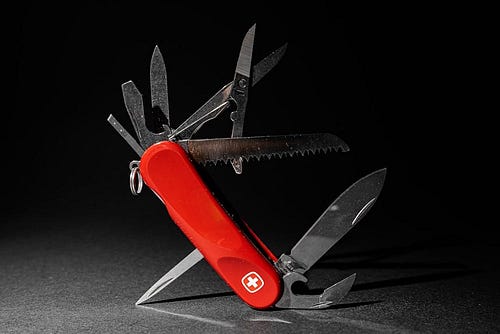
This is precisely why, when a senior designer resigns, you do not simply lose a colleague — you lose years of accumulated experience, stability, and cultural cohesion.
Retaining senior designers is far more challenging than recruiting them. Once you understand what truly motivates them, they will not only stay — they will become the very cornerstones of your culture.
In many teams, the title “senior” marks the end of a career path rather than the beginning of a new stage. From there, the only options seem to be upwards — or outwards. Yet it need not be that way. (For a related discussion on developing expertise beyond the senior level, see my article on professional mastery.)
I have faced moments too, when leaving seemed tempting. Looking back, I want to share my experiences and practical insights on how teams can successfully retain their senior designers.

Practical Insights
— Free from Empty Motivational Rhetoric
Don’t Just Give Responsibility — Give Them Real Impact
Senior designers don’t stay because of extra tasks or more meetings. They stay because they feel their work shapes the product, the processes, and the culture.
If every decision is made by a product owner or a manager, the senior designer will eventually shift from being a partner to merely an executor.
💭 Tips:
- Involve them in strategic decisions — for example, when defining UX priorities.
- Ask for their opinion, and genuinely listen to the response.
Let them Mentor
Most senior designers love teaching — but they dislike when it’s treated as an additional duty squeezed into an already full sprint schedule.
Mentorship ceases to be “extra work” when it is formally recognised and built into their role. Give them time, space, and feedback for it — because if you treat their expertise as a valued asset, they will, in turn, feel valued.
💭 Tip:
Incorporate mentorship objectives into performance reviews, and acknowledge their measurable impact.
Career Path ≠ Management Role
Not every senior designer aspires to become a lead or a manager — and that is entirely valid. Seniority is not a rank but a depth of professional, strategic, and conceptual thinking.
💭 Tip:
Establish a pathway for expert advancement — where progress is rewarded for excellence in craft and strategy, not merely for managing people.
Allow continuous learning — Even When “There’s No Time”
Senior designers cannot thrive in stagnation. They observe trends, tools, and evolving methodologies. When learning opportunities are absent, boredom sets in — and their LinkedIn profiles begin to refresh themselves.
💭 Tips:
- Allocate dedicated learning time during working hours — even a full day free from meetings and tasks can make a difference.
- Support conference attendance and internal knowledge-sharing sessions.
- Allow them to choose what and how they wish to develop — don’t dictate it.
Offer Trust instead of reviews
Excessive micromanagement is one of the fastest ways to drive designers away.
A senior designer doesn’t seek pixel-perfect directives — they seek guidance and trust. If every decision is subject to approval, it sends a clear message: “I don’t trust you.”
💭 Tips:
- Provide frameworks, not constraints.
- Let them make decisions independently — involve yourself only when genuine risks arise.
More recognition
Much of design work is invisible: workshops, research, iterations, testing, and reflection.
A senior designer does not merely produce functional or aesthetically pleasing screens — they hold complex projects together and maintain focus on the bigger picture.
💭 Tips:
- Praise the process, not just the finished result.
- Make their impact visible within the team — public recognition can work wonders.
- Simply say “thank you” — not only during performance evaluations. Authentic appreciation matters.
Give space to their “Intrapreneur” side
Senior designers are often creative problem-solvers who thrive on innovation. If every rule is rigid, they quickly lose interest.
An intrapreneur is someone who develops new ideas and initiatives within a larger organisation, acting as if it were their own venture — a description that fits many senior designers perfectly. You can read about this topic more here.
Side note: The term was first introduced in 1978 in a study by the American innovation consultant Gifford Pinchot III.
💭 Tip:
Encourage experimentation — new workshop formats, tools, user flows, or methods. When designers feel they can shape their environment, they stop seeking opportunities elsewhere.
Treat them as Partners — Not “Resources”
A senior designer is not a cog in the machine, but one of the team’s most potent strategic thinkers. Treat them as equals, and they will behave as such. Avoid reducing them to a mere “design resource.”
Additional tips for a Happy Team
- Listen: Even a ten-minute informal chat can make a difference.
- Keep humour alive: Even the most serious professionals enjoy laughing — especially when the mistake isn’t their own.
- Promote flexibility: A happy person rarely trades their keyboard for another company’s door.
In Summary
Retaining senior designers is not rocket science — it’s a matter of attention and trust.
Often, they don’t leave for higher pay (though make sure their contribution is fairly rewarded), but because their work begins to feel devoid of meaning.
If they are given the ability to make an impact, to learn, to be recognised, and to think freely — they won’t just stay. They’ll become the reason others stay too.
When a senior designer feels fulfilled within your team, chances are your product, your culture, and your other designers will thrive as well.
That’s the true user experience — only this time, it’s from the inside out: the employee experience. ❤️
If you liked the article, please give me a clap 👏🏻, share it & follow me 😉.
Why Do Senior Designers Leave? was originally published in Bootcamp on Medium, where people are continuing the conversation by highlighting and responding to this story.

 点赞
点赞 收藏
收藏 点踩
点踩 分享
分享