France Doesn’t Have a Plan to Calm Things Down

Welcome back to The Forecast from Bloomberg Weekend, where we help you think about the future — from next week to next decade.
This weekend:
French authorities don’t have much room to maneuverPredictions: AI could prompt the worst crash since 2008Keep an eye on: Populists are losing their war on globalization
France Doesn’t Have a Plan to Calm Things Down
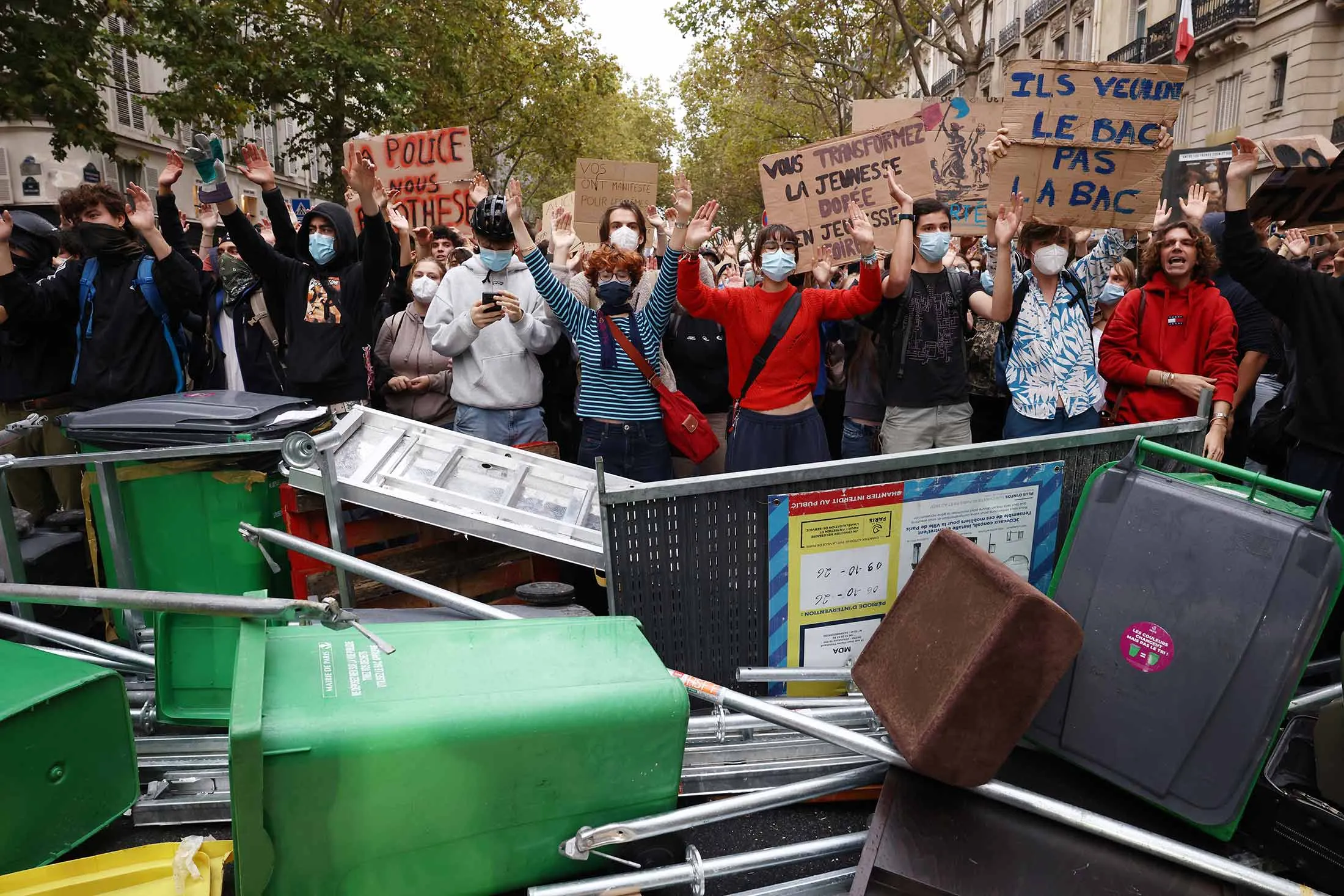
French authorities always plan for protests. Taking to the streets is a long-accepted, legally protected way of pushing for policy changes and state cash. Images of angry farmers driving tractors into Paris or placard-waving workers jamming boulevards have become stereotypes.
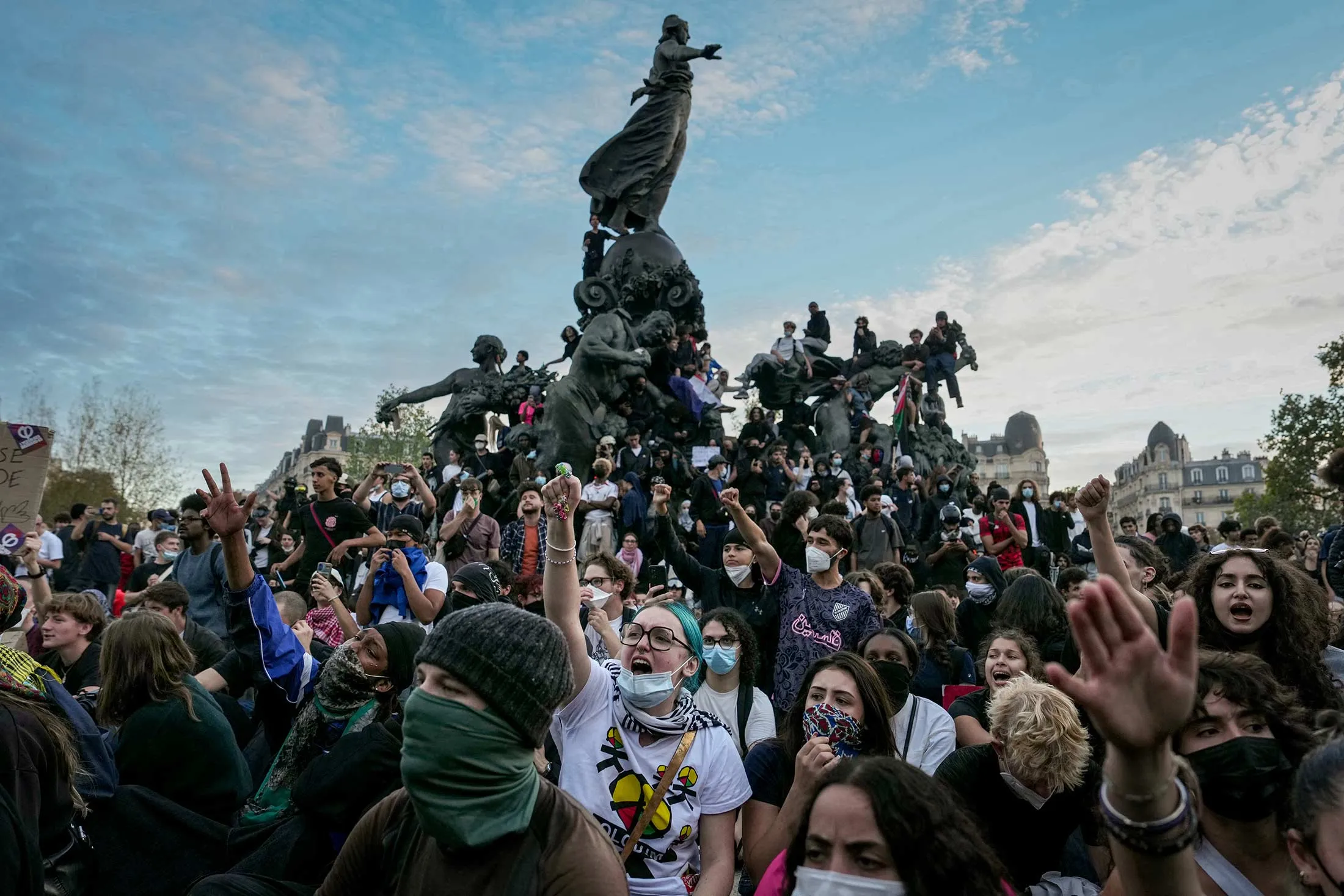
But the current government seems blindsided by the emergence of high school students protesting over classroom conditions, teacher absences and university admissions. Students have set schools ablaze and massed in cities across France. It’s added to an unstable, uneasy domestic situation ahead of next year’s presidential election.
When French Prime Minister Sebastien Lecornu gave a puzzling prime-time speech on Oct. 7, he didn’t unveil much of a plan to calm tensions. Instead he quickly pivoted to address other concerns: high fuel prices, electricity costs, farmers’ finances and the 2027 budget.
Lecornu had evidently prepared for a different kind of contestation, with furious commuters or farmers reeling from summer heatwaves. He pledged to release diesel from strategic stockpiles and called on state-owned electricity provider EDF not to raise prices over winter. Those limited moves simply revealed that France has little room to maneuver.
France has for many years run some of Europe’s widest budget deficits. Now, with energy prices pushing up global inflation and interest rates, it finds itself in a bind. Investors are demanding higher rates to buy French debt than German bonds, jacking up interest payments on its existing debt pile. The result is less money left to pay for priorities at home – such as installing long-promised cooling systems in schools where students complain of debilitating heat.
The teenagers marching through Paris mostly don’t know what bond markets are. They do know that their government hasn’t acted on their complaints, and they fear that talk of future cuts means that they must force their elders to act. It’s no surprise they’ve already called for another round of protests on Oct. 13.
Students aren’t the only group with unmet demands, though, which helps explain Lecornu’s speech. There have been calls for a grand day of protests on Oct. 17 against higher fuel prices and energy costs. Releasing diesel fuel stockpiles is meant to lower pump prices by as much as 18 centimes per liter, Lecornu said, or around $0.75 per gallon.
It won’t end there. With France’s presidential election due in April and May, a broad set of interest groups know that now is the time to apply pressure. It doesn’t guarantee that there will be money to follow in future budgets, particularly if debt costs stay elevated or even rise further, but it follows the logic of “if you don’t ask, you don’t get.”
In France, that often means asking loudly, in large numbers, while clashing with riot police. It may also mean there’s plenty more tumult to come.
— Alan Katz, Bloomberg News
Predictions
The AI bubble could trigger the worst crash since 2008, says the head of market strategy at a London investment bank. “Panmure Liberum’s Joachim Klement said his base case is for that trade to disintegrate as soon as 2027, sending stocks sharply lower.” — Levin Stamm and Sagarika Jaisinghani, Bloomberg News
Western China will become a major AI center. “Areas like Gansu and Inner Mongolia will become top computing hubs by 2028, helping the country double its data center capacity in the next five years, according to BNEF.” — Dan Murtaugh and Jin Wu, Bloomberg News
“US data-center power demand stands to roughly double from 2025 to about 600 terawatt-hours in 2028,” says Bloomberg Intelligence. (Link for Terminal subscribers only)
We’ll trust AI because we trusted Wikipedia. “The site ditched the normal signifiers of trust — signed scholarly articles, a board of advisers, a team of fact-checkers, leather-bound volumes with gold-trimmed pages — to focus only on the words and the sources that back them up.” — Noam Cohen, Bloomberg Weekend
A Kansas Senate seat could turn blue for the first time in 94 years. “The last time a Democrat prevailed in a US Senate race in Kansas, Franklin Delano Roosevelt won his first term, liquor was illegal, dust storms swept through the state and the Great Depression was nearing its peak. No state has been more reliably red than Kansas — at least in terms of Senate seats — over the last century.” — Amanda Albright, Miranda Davis, and Steven T. Dennis, Bloomberg News (As of Friday morning, Kalshi puts Democrats’ chances at 38%; the Cook Political Report rates it as a tossup.)
Gene-editing technology is about to be tested, in the form of the American chestnut tree. A blight-resistant version of the iconic species, which was nearly driven to extinction, is about to become “the first genetically modified plant intended to be released in the wild.” Many chestnut enthusiasts — known as “nutheads” — are not on board. — Kit Chellel, Bloomberg Businessweek
Keep an Eye On
Populists Are Losing Their War on Globalization
The populist revolution in the Anglo world is about to turn 10, as we near a decade since the US election of Donald Trump. And the world hasn’t been quite the same since.
But tune out the noise and take a long view of history, and the state of globalization — that force drawing people toward economic integration and the trading of ideas and goods, which has survived ups and downs for more than 2,000 years — actually looks remarkably healthy. Global trade has chugged along and, in absolute terms, even grown. More important, our increasingly digital and AI-powered lives promise only more global integration ahead.
— Shawn Donnan, Bloomberg News
A few more things to keep an eye on:
Here’s what to know about plague in light of the suspected Russia lab-worker caseChina and the EU are on the cusp of a trade war as global pushback grows against China’s export push.Ethiopia is on a precipice, with rival armed forces mobilizing across the country.
Populists Are Losing Their War on GlobalizationA decade after Brexit and Trump’s election, the global economy is more integrated than it was before the populist backlash began.
Week Ahead
Sunday: The World Health Summit begins in Berlin.
Monday: The IMF and World Bank annual meetings begin in Bangkok.
Tuesday: Goldman Sachs, JPMorgan, Citigroup and Wells Fargo report earnings; the IMF releases its World Economic Outlook and Global Financial Stability Report.
Wednesday: The US reports CPI and the Fed publishes its Beige Book; China reports trade and inflation data; Bank of America, Morgan Stanley and ASML report earnings.
Thursday: The US reports retail sales; EU leaders begin a two-day summit in Brussels.
Friday: The Eurozone reports CPI.
Weekend Reads
Melania Trump, Tehran and a Year of Upended AssumptionsCan Chess Help Kids Improve Their Attention Spans?China’s Young People Are Turning to an 84-Year-Old Cambridge ProfessorJapan Can’t Let Go of Its Favorite PenguinHow Not to Tame an Out-of-Control World
Have a great Sunday and a productive week.
— Walter Frick, Adam Blenford and Kira Bindrim, Bloomberg Weekend; Alan Katz and Shawn Donnan, Bloomberg News
More from Bloomberg
Enjoying The Forecast? Check out these newsletters:
Breaking News Alerts for the biggest stories from around the world.Markets Daily for what’s moving in stocks, bonds, FX and commodities.Morning Briefing Americas for catching up on everything you need to know.
Explore all newsletters at Bloomberg.com.

 点赞
点赞 收藏
收藏 点踩
点踩 分享
分享