GPUs in the Wine Cellar: Why Techies Are Hoarding AI Compute in Their Homes


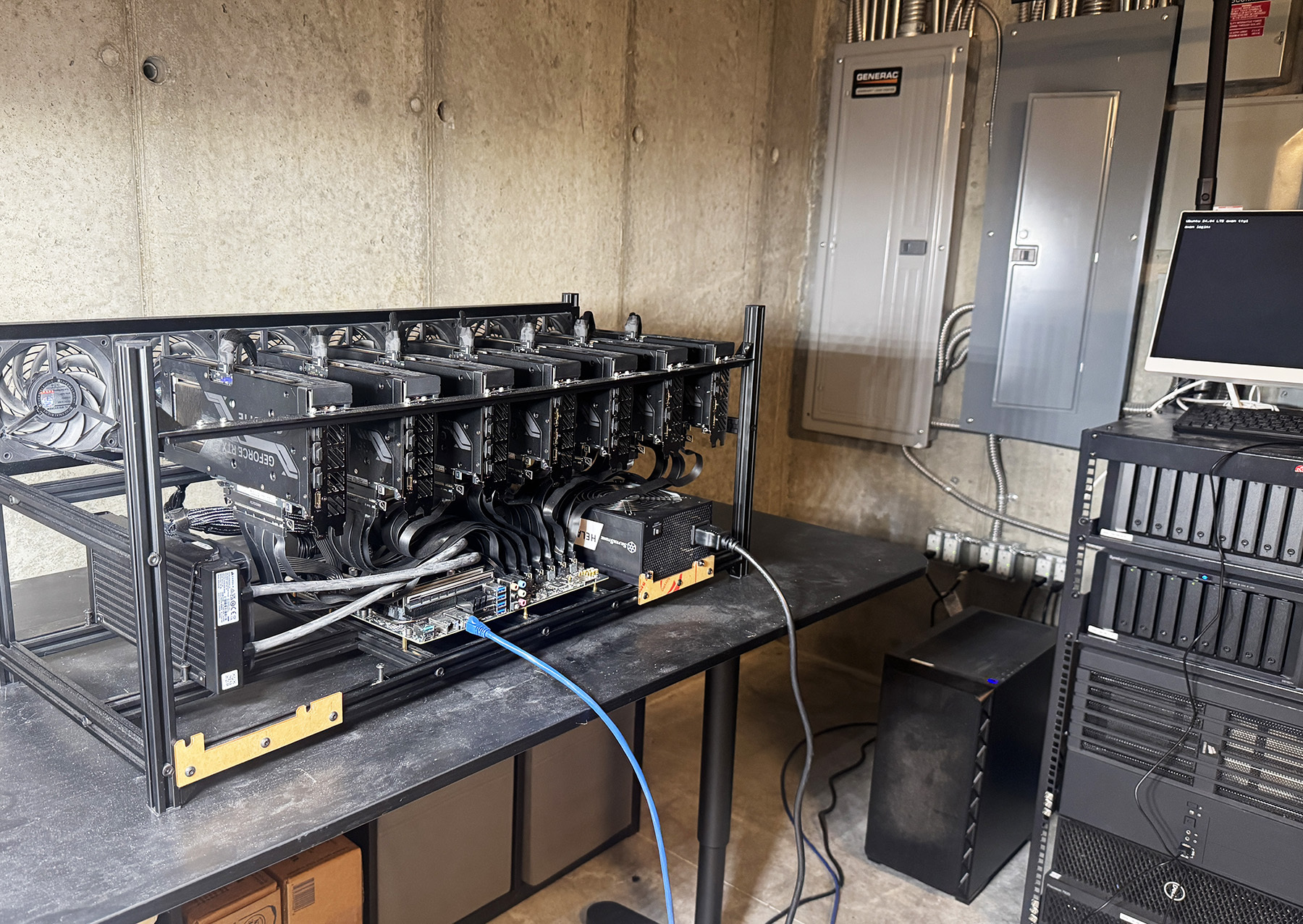
The basement of Gary Flake’s contemporary home in a quiet neighborhood in Bellevue, Wash., is furnished with everything you’d expect in a multipurpose man cave. There’s a cozy-looking couch situated between a large screen and a digital projector, a Peloton treadmill and a rowing machine. The real showpiece of the space, however, is a custom computer that resembles an oversized erector set, one with seven large Nvidia graphics processing units dangling from its frame.
Flake, a former Microsoft executive and startup founder, built the computer to train custom AI models on terabytes of data from electroencephalograms, the tests that measure electrical activity in the brain—part of a startup project he has since moved on from. To train his AI models, Flake could have paid a cloud service to train them on the industrial-strength GPUs inside their data centers, but he said it was far cheaper to assemble his own machine out of discounted parts (total cost: under $6,000) than to fork over fees to Amazon Web Services or Microsoft every month.
That’s true even when including the $10,000 to $20,000 he spent for electrical upgrades and a new HVAC system he bought to keep his basement cool while his AI computer throws off a lot of heat. “I want to own,” said Flake, who plans to begin using the computer again for a new AI project in the coming months. “I don’t want to rent.”
The growing popularity of running AI workloads in attics, basements and home offices is an unexpected outcome of the current AI boom. Most of the leading AI companies train and run their models in remote data centers stuffed with tens of thousands of GPUs to accommodate their voracious compute needs.
At the same time, there’s a burgeoning local AI movement, consisting of small developers and tinkerers who want to work on AI on their own computers for a combination of cost, privacy and convenience reasons. There’s even a belief among libertarian-minded developers that local AI gives them a way to ensure governments can’t take away their access to the technology. Autonomous agent platforms like OpenClaw, which can perform complex tasks with users’ local apps and files, have also contributed to the rise of the movement.
In some cases, local AI just looks cool as a decorative focal point in the home. Last month, Shopify CEO Tobi Lütke went viral after posting a photograph of three vertical racks of computer equipment in his home, illuminated by ribbons of pink LED lighting. The equipment included a Dell computer with a powerful Nvidia GPU that the chipmaker advertises as the “ultimate deskside supercomputer.” Lütke even had a clever solution to the challenge of cooling the gear.
Our house in Toronto had this fancy glassed wine cellar, but we are not big wine drinkers. Anyways, it had good climate control so here is my rack cellar. https://t.co/NW5DgjIuIF
The rise of home AI rigs has been a pleasant surprise for computer makers. Apple is seeing booming sales of its Mac mini and Mac Studio computers—both favorites among agent developers. Dell, too, says it’s seeing huge growth from the home AI community.
“It’s one of these zeitgeist moments,” said Marc Hammons, senior distinguished engineer at Dell. “We saw explosive growth after OpenClaw popped out earlier this year.”
Putting beefy computers in homes has been around for decades. There’s even a thriving community of “homelabbers” that connects on platforms like Discord and Reddit. In the early 2000s, enthusiasts built home servers with loads of hard disk storage for their growing libraries of MP3 and video files, which they often downloaded from file-sharing services. Later, the advent of crypto mining created new demands among enthusiasts for powerful GPUs in the home.
Hiten Shah was one such crypto enthusiast. In 2020, he bought eight GPUs in a server rack in his home to mine Ethereum. More recently, Shah, CEO of a software startup called Crazy Egg, has shifted his energy to AI development and substantially expanded the computing arsenal in his home in Redwood Shores, Calif. In total, he has 18 computers, including 14 Mac Minis and Studios.
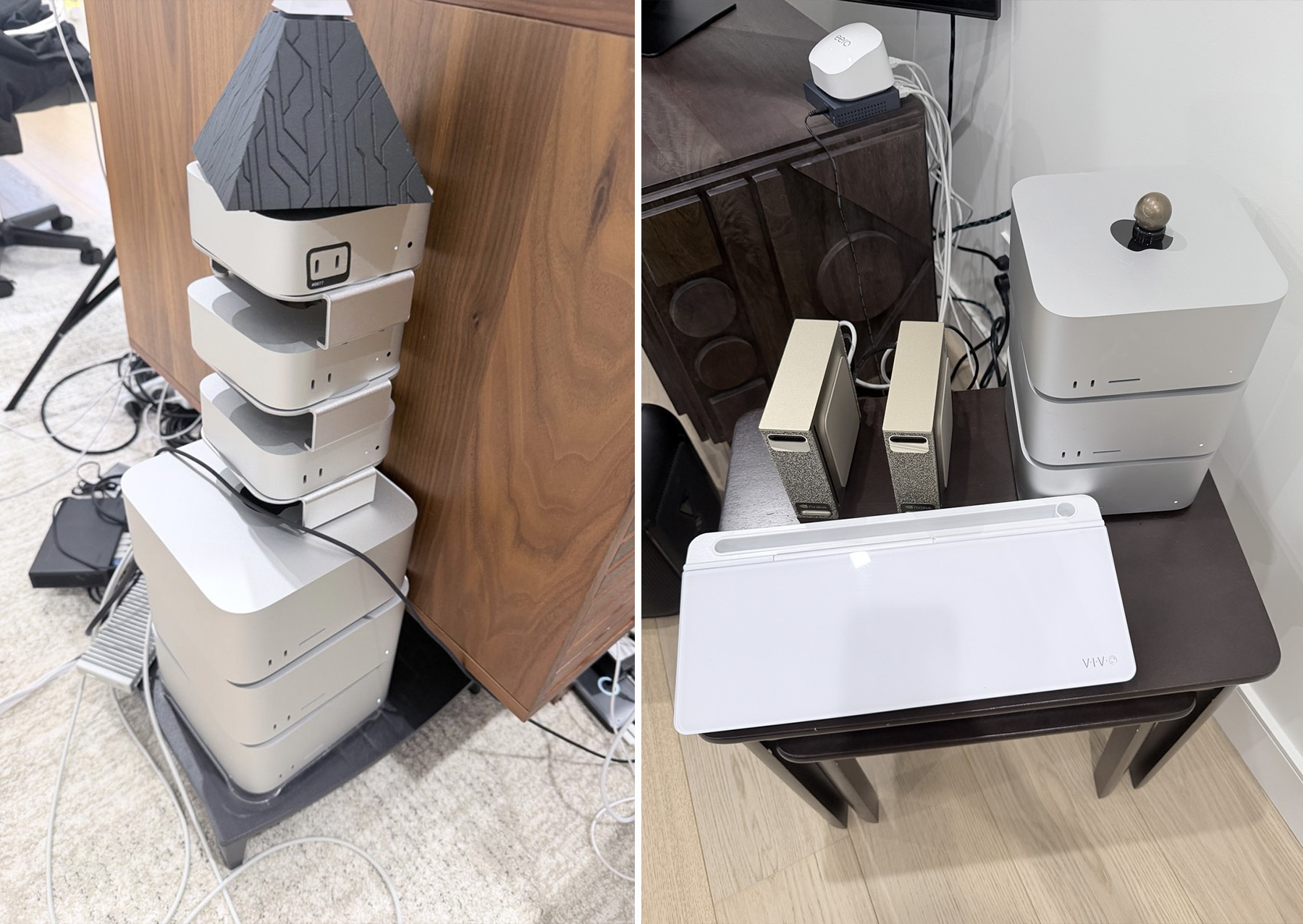
Shah said having so much local AI compute gives him more control over the performance of the website optimization software he builds, since he has come to expect outages and slowdowns of cloud-based AI models. “Every time there’s a new model in the cloud, you see models get janky for days,” he said.
But there are consequences for his comfort. All of his local AI compute is in his home office, where the temperature sometimes hits 85 degrees as the machines generate heat. Often, he’s in there wearing shorts. “I should put some AC in there,” Shah said.
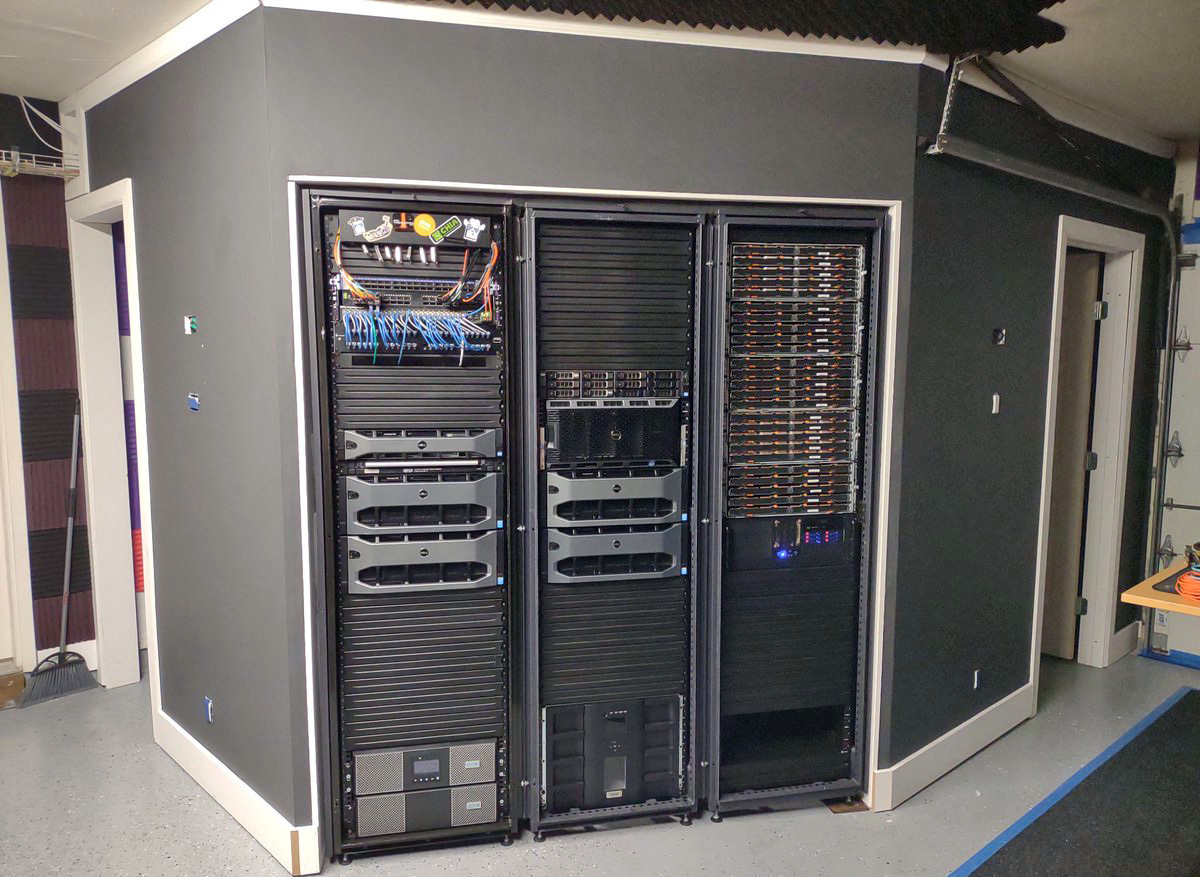
Some local AI enthusiasts have bona fide social media influencers—at least within that community. An Austin-based YouTuber who asked to remain anonymous—he goes by the name of his channel, Digital Spaceport—has what he describes as a “home datacenter” in his garage. Digital Spaceport’s gear includes five AMD GPUs, along with a bunch of networking and storage gear. At the moment, he is running the Chinese open-source model Qwen 3.8 27B on the hardware, which he uses to edit and analyze his YouTube videos.
Meanwhile, a tech consultant and YouTuber who also asked to remain anonymous—he, too, goes by the name of his channel, 0xSero—has had to move the AI computers around in his home in Poland as he has bought more and bigger hardware. His four Nvidia 6000 GPUs used to be in his home office, but they were noisy and ran so hot that they dried out the room, which he blamed for getting him sick last year. As a result, he moved them to the attic.
Initially, 0xSero used cloud-based AI models, but a pivotal moment for him occurred in late 2024 when the AI coding toolmaker Cursor raised its prices. “That was the point that I needed to figure out local AI,” he said.
0xSero also believes that people should own and control their own AI systems because there could come a time when governments try to control and restrict access to the technology. “I really like AI and I want to keep it,” he said.

 点赞
点赞 收藏
收藏 点踩
点踩 分享
分享