Trump Says U.S. May Join Saudi Strikes on Houthis After Riyadh Airport Attacks

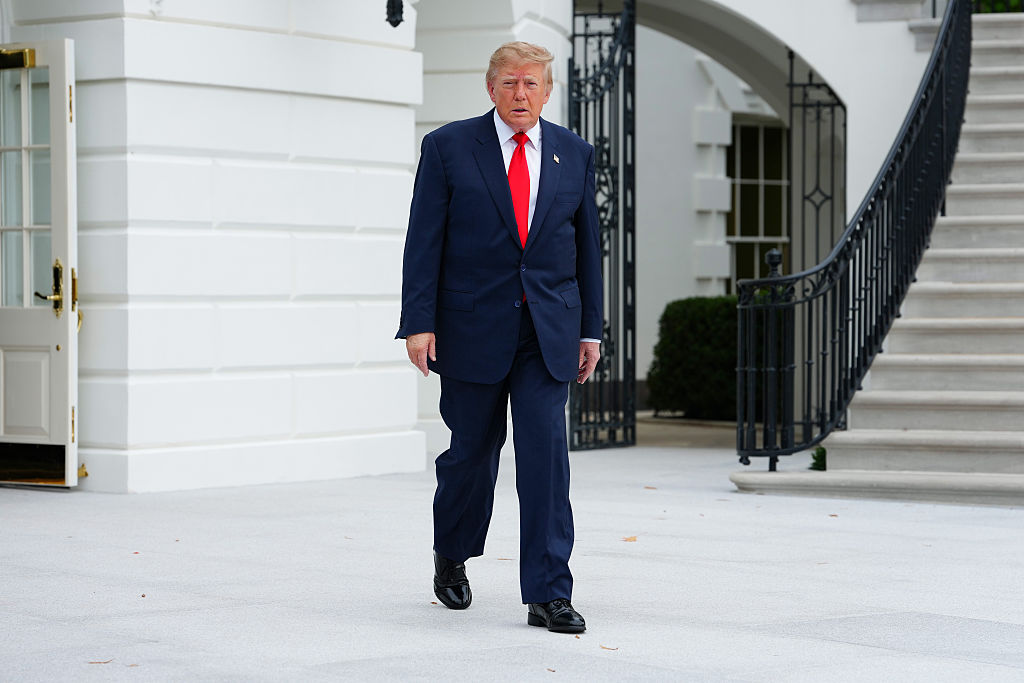
President Donald Trump told reporters on Saturday that the United States “may” join Saudi Arabia’s strikes on the Iran-backed Houthi militia group, which is based in Yemen, after airport attacks killed at least six people in recent days. The latest attack led to near-complete shutdown of public air traffic into and out of the capital.
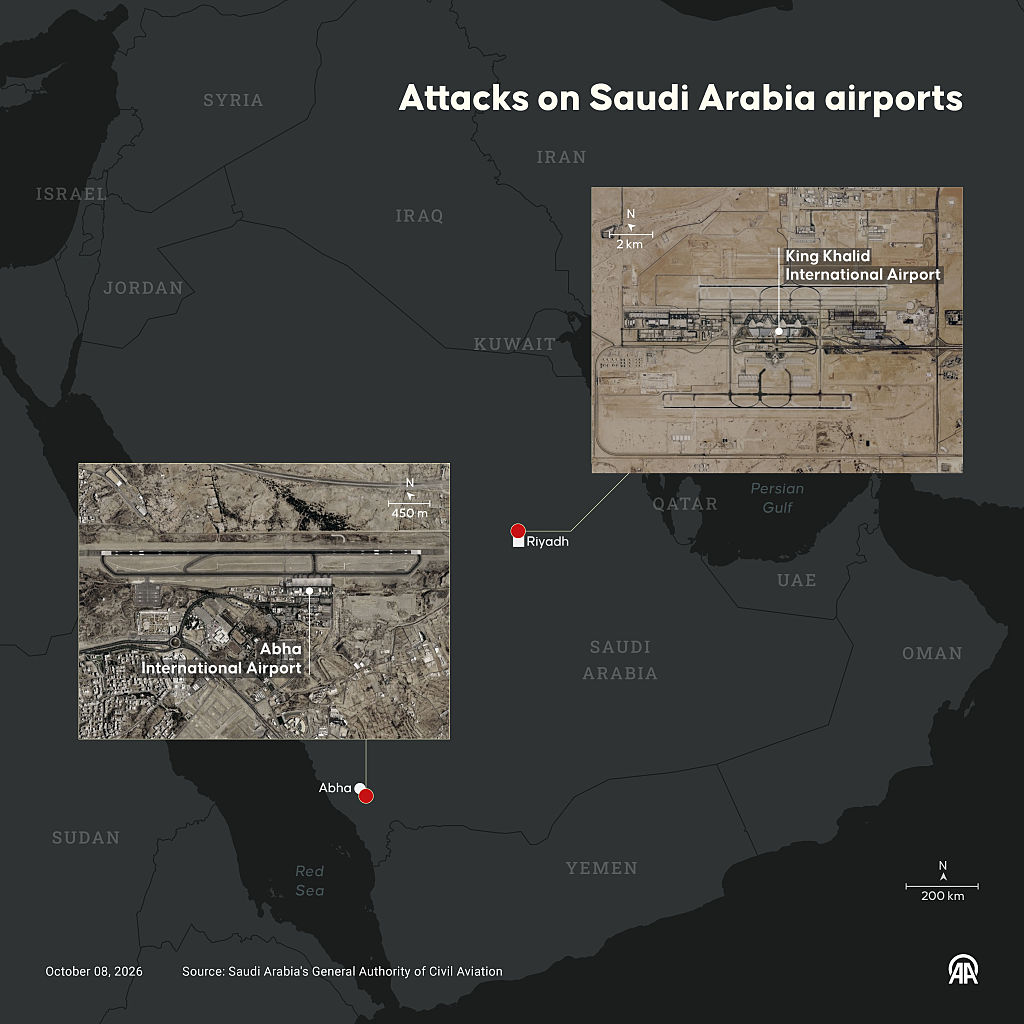
His comments came shortly after a fresh attack on Saturday, in which a missile struck the complex housing Terminals 3 and 4 of King Khalid International Airport (KKIA), the second-busiest airport in Saudi Arabia. Dozens were injured. The Houthis, who claimed attacks on the airport earlier in the week, did not immediately claim the latest strike.
It was the latest in a series of attacks over the past week, which began just days after Yemen’s Saudi-backed government announced a major offensive against the Houthis on Oct. 4.
Read More: Houthi Attacks on Saudi Airports Kill 3 Amid Escalating War in Yemen
Two took place on Tuesday and Wednesday, although the information about each has been scarce. A strike on the more southerly Abha International Airport killed two women—one Algerian and one Moroccan—while an attack on KKIA left one Sudanese man dead, the country’s civil aviation authorities said on Wednesday.
The Houthis said they again targeted KKIA on Thursday; three Saudi citizens, including a pilot, died.
The victims of the past week’s strikes were primarily Saudi but also included individuals from Algeria, Bangladesh, Egypt, Morocco, Pakistan, the Philippines, and Sudan.
Maj. Gen. Turki al-Malki, a spokesperson for the Saudi-led coalition fighting the Houthis in Yemen, said in a statement on Friday that the attacks “will not go unpunished.”
Airport strikes are a signature strategy from the Houthis; a similar move on Abha in 2019 was denounced as an apparent war crime by the Human Rights Watch.
Brigadier General Yahya Saree, a Houthi military spokesperson, on Thursday reiterated an earlier warning for international airlines and passengers to avoid airspace over Saudi Arabia, which had on Monday been declared an open military operations zone. He also warned employees to avoid Saudi oil facilities so as not to endanger their lives, since they are also considered . He also .
The General Authority of Civil Aviation announced that Riyadh had suspended operations at its main airport on Saturday and was assessing the damage; FlightAware showed 400 cancellations into and out of KKIA as of 11 p.m local time.
The U.S. Embassy in Riyadh also issued a security alert, warning Americans to avoid KKIA and its surrounding areas as of Saturday.
“U.S. citizens should be aware of potential flight cancellations, airspace closures, and travel disruptions. We recommend checking your flight departure status directly with the airline and with the airport,” its website said.
Why has the Saudi-Houthi conflict escalated?
The latest airport attacks followed months of escalating threats to air travel and shipping.
In July, the Houthis accused the Saudis of bombing Sanaa International Airport. Yemen’s Saudi-backed government claimed responsibility, saying it had sought to prevent an Iranian plane from landing there.
In response, the Houthis said that they would impose a naval blockade on Saudi Arabia.
The Houthis last month captured both the port city of Mokha and Perim Island in a bid to control the Bab el-Mandeb Strait. With shipping through the Strait of Hormuz already disrupted by the U.S. war with Iran, a threat to traffic through Bab el-Mandeb could deepen the global oil crisis.
In the weeks to follow, Saudi-backed forces have since claimed to retake both seized areas, but the claim has not been independently verified and control remains disputed.
In September, Saudi Crown Prince Mohammed bin Salman called to urge Trump to act against the Houthis. The request came as the militia group gained ground over vital chokepoints in the Red Sea.
Although the two nations are allies, Washington explained last month that it did not have plans to get involved in the conflict. TIME has reached out to the White House for comment as the situation evolves.
Trump’s renewed consideration of strikes in Yemen comes as the war with Iran remains deeply unpopular at home: 69% of Americans said it had not been worth fighting in an AP-NORC poll from Oct. 1.
On Thursday, Trump said the U.S. would not attack Iran before the Nov. 3 midterms—a pledge that does not address possible strikes on the Houthis in Yemen.

 点赞
点赞 收藏
收藏 点踩
点踩 分享
分享