Is there a circular argument in Feynman's derivation of rotational equilibrium in §18-2?
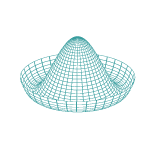
In §18-2 of The Feynman Lectures on Physics, Vol. I (original text), Feynman introduces torque by considering the work done by a force during an infinitesimal rotation. He then argues that, if an object is in equilibrium, the forces do no work for a small displacement, and concludes that the sum of the torques must be zero.
I am concerned that this reasoning may be circular.
Feynman derives the relation
$ \Delta W = \tau\,\Delta\theta, $
where $\tau$ is the net torque about the chosen axis. He then argues that, because the object is in equilibrium, $\Delta W = 0$, so that
$ \tau\,\Delta\theta = 0. $
For a nonzero infinitesimal rotation $\Delta\theta$, he concludes that $\tau = 0$.
My concern is that the inference seems to go in the wrong direction. To establish that the forces do no work under an arbitrary infinitesimal rigid-body displacement, shouldn't we already need both the net force and the net torque to vanish? Zero net force alone is not sufficient: a couple of equal and opposite forces can have zero resultant force but a nonzero net torque, and can do nonzero work during a rotation.
In other words, it seems that the vanishing of the net torque is needed to establish that the total work is zero, but Feynman appears to use the vanishing of the total work to establish that the net torque is zero.
Am I missing an independent justification for the claim that the work vanishes? Is Feynman invoking a general principle about virtual displacements that does not presuppose rotational equilibrium, or is the rotational equilibrium condition being implicitly assumed in this argument?
I would appreciate a careful clarification of the logical structure of this passage.

 点赞
点赞 收藏
收藏 点踩
点踩 分享
分享