On the Ground at the Power to the People Festival, a Day of Protest Music and Solidarity

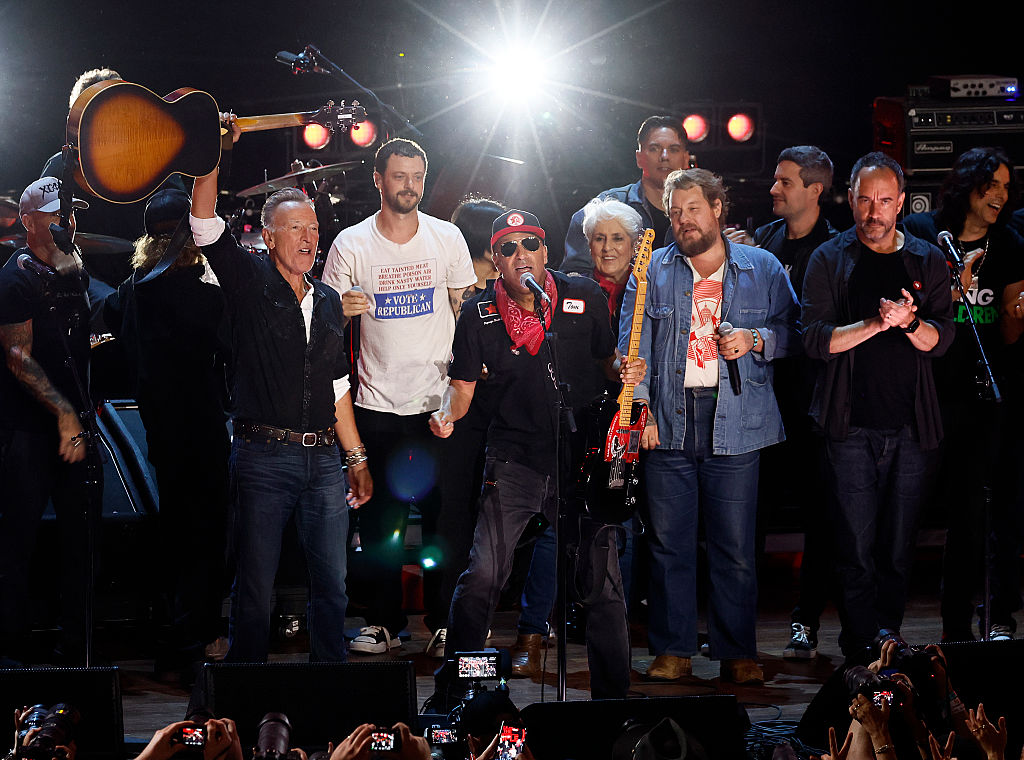
Tom Morello has been staging benefit shows since before Rage Against the Machine made him an icon: $10 at the door, proceeds to a homeless shelter, guitars loud enough to wage a sonic revolt against the establishment. Last year, while serving as musical director of Back to the Beginning, the Birmingham farewell concert for Ozzy Osbourne and Black Sabbath, he began imagining something bigger: a multigenerational, multigenre festival built on his foundational proposition that music can be an act of resistance—aimed squarely at Donald Trump and the forces he has unleashed.
"It's no accident that the concert was about three weeks out from the midterms," Morello told me after the Oct. 3 Power to the People show at Merriweather Post Pavilion in Columbia, Md., less than 30 minutes from the capital whose balance of power those elections will decide. "In a time where hatred and division are rife, this is a festival of love and solidarity. In a time where injustice is rampant, this is a festival celebrating those who are standing up against injustice. And in a time where artists are either being canceled or censoring themselves, it was a guarantee the artists were going to be able to play what they wanted to play and say what they wanted to say."
To that end, Morello assembled a sprawling roster of rebels and rock-n-roll royalty: Joan Baez and Public Enemy; Jack Black and the Dropkick Murphys; Cypress Hill and Nathaniel Rateliff; Killer Mike and Serj Tankian; Stephen Stills and Dave Matthews and the Foo Fighters. Headlining the event was Bruce Springsteen, fresh off a 20-show tour that had become a nightly rebuke of Trump, MAGA, and the authoritarian currents he saw threatening the American experiment.
Power to the People suggested a rebellious energy stirring at a moment when many artists had grown wary of speaking out, fearful of backlash, of alienating part of their audience, of the wrath of an administration that has repeatedly targeted prominent critics. "I feel as though we're trying to turn the tide and we're facing a tsunami," said Baez, who sang alongside Bob Dylan and Pete Seeger during the protest movements of the 1960s and '70s. Then she turned to the crowd. "You are the antidote in a world of cruelty and bullying." With Rateliff beside her, she launched into a haunting rendition of Woody Guthrie's "Deportee."
Inevitably, the place felt like a progressive family reunion: aging boomers who carry the counterculture as a kind of secular inheritance; younger activists animated by rage against corporate power, democratic erosion, and the war in Gaza; keffiyehs, protest shirts, and homemade placards scattered across the grounds. One read, Keep the Immigrants. Deport the Racists. MS NOW livestreamed the proceedings. It would be easy to dismiss the show as an exercise in preaching to the converted.
But movements have to begin somewhere, and politics is downstream of culture. If the message travels beyond the lawn, Power to the People may come to represent one of the seminal cultural events of the era: a gathering of artists, at a liminal moment in American life, turning their influence into a political insurgency to preserve the nation's democratic future.
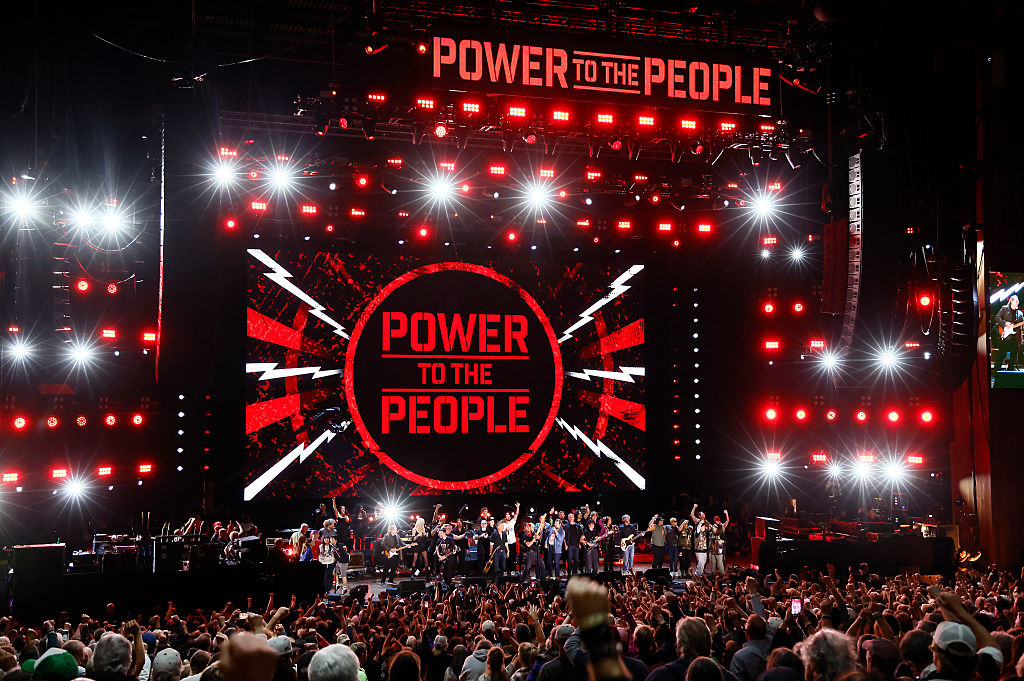
Morello had been planning the festival for more than a year, but he says the "turning point" came after the Operation Metro Surge, when Trump administration deployed roughly 3,000 federal officers to Minneapolis this winter for the largest immigration-enforcement operation in the country, which culminated in the killings of two Americans, Renee Good and Alex Pretti.
"When you're putting on a show like this, managers and agents are not always eager to get involved," Morello told me. But after Minneapolis, something changed. "Artists started calling me up and raising their hand, saying, 'I understand you're putting on a festival. Can I be involved?'"
One was Ken Casey, frontman of the Dropkick Murphys, who tore through a 12-song set that ended with the band's signature anthem, "I'm Shipping Up to Boston," built around lyrics by Guthrie. "Days like today let us know that there's a community out there that wants to see a peaceful America, an empathetic America, a unified America, that wants to see control of our government given back to the people," Casey told me.
The concert began at one in the afternoon and ran for 10 hours, the history of American protest music compressed into a single day. During Morello's early-evening set, Tankian from System of a Down joined him for Audioslave's "Like a Stone," a tribute to Morello's late bandmate Chris Cornell. Macklemore, recently dropped as an opener on Ed Sheeran's tour because of pressure from New England Patriots owner Robert Kraft over the artist’s pro-Palestinian advocacy, had been invited but was unavailable. So he sent a video message that played on the giant screens. The controversy itself reinforced the festival's defiant argument—rebelling against a world where speaking out still carries a price.
The lineage grew explicit as the night wore on. Baez, Rateliff, and Matthews joined for "Deportee," then moved into the civil-rights standard "Ain't Gonna Let Nobody Turn Me Around." As they left the stage, Stephen Stills appeared and reached back to another era of upheaval with Buffalo Springfield's "For What It's Worth." Cypress Hill followed, then Public Enemy with their landmark "Fight the Power," then Dave Matthews. The Foo Fighters opened their set with "Times Like These," a song born of uncertainty and near-fracture for the band that transformed into an anthem of renewal. They closed with "Everlong." a track about the desire to make a perfect moment last forever, despite knowing that it can’t.
But the concert’s climax was Springsteen's set. At 76, he summoned the power and energy that have defined him over a half century, as he occupies yet another role now, too: the elder statesman among a generation of musicians deciding how much to risk by taking a stand. "When you have a guy that's at that stage of his life, he's done all the stuff, he's comfortable, he didn't have to go on the road and do that and put the crosshairs on himself, but he did it anyway," Casey said. "If artists can't take a lead from that, then my God, nobody's paying attention."
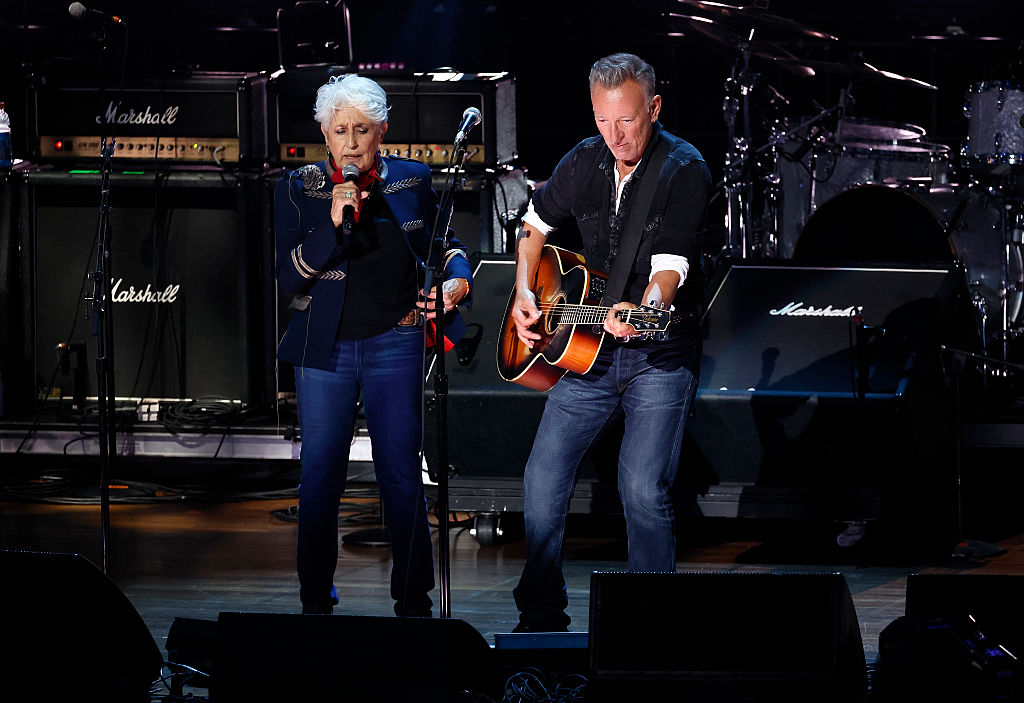
Springsteen opened with "Streets of Minneapolis," his protest song against Operation Metro Surge, written days after ICE flooded Minnesota's streets and murdered two protestors. He then brought Baez onstage for a searing acoustic rendition of Dylan’s "Chimes of Freedom.” From there the set erupted into anthemic rock fueled by righteous anger. He ripped through the Clash's "Clampdown" with Morello, then "The Ghost of Tom Joad," rekindling the version the two had performed on his recent Land of Hope and Dreams tour.
Grohl and Matthews returned to the stage, and Springsteen's set became an ensemble of generations of American rock musicians gathered around the protest-song tradition. Together they tore into two classics of the canon, Creedence Clearwater Revival's "Fortunate Son" and Neil Young's "Rockin' in the Free World."
When the last chords faded, they stayed onstage for a final coda as the rest of the day’s performers joined them onstage.
The festival was a reincarnation of the spirit of Guthrie, Seeger, and the musicians who advocated for working-class dignity and civil rights in the mid-twentieth century. Morello stepped forward to explain what they were about to sing—and why: Guthrie’s "This Land Is Your Land," but with the verses often omitted from popular renditions, in which the narrator encounters a "Private Property" sign and Americans standing hungry outside a relief office. The lines restored the song's original edge—an unofficial patriotic anthem that also challenges the country to make good on its promise that America belongs to everyone.
It was the version Springsteen sang with Seeger at Barack Obama's inaugural concert in January 2009, and one he resurrected last spring at Music America: The Songs That Shape Us, his concert at Monmouth University celebrating the nation's 250th anniversary, where he recruited the kind of star-level talent the President had been unable to marshal to Washington for the occasion.
For Morello, the song also evoked his mother, Mary Morello, who recently died at 102. A child of the Great Depression, she possessed an activist spirit, he said, feeding the homeless, helping recovering addicts earn their GEDs, and supporting her son's early punk bands. "Her fingerprints were all over this," Morello told me. "Her DNA was in every bit of this. I don't think it was any accident that this concert happened in a place called Mary Land."
It was also there, of course, because of its proximity to the White House, and so they closed with John Lennon's "Power to the People." Morello, Springsteen, and company wanted Trump to hear them, at a precarious moment for the President and the MAGA movement, with the midterms weeks away and his poll numbers at their lowest point of his second term. But the festival's message was ultimately a call to agency, a reminder that in a democracy it is the voters who get to determine their destiny.
"History is not something that happens," Morello told the crowd. "History is something we make."

 点赞
点赞 收藏
收藏 点踩
点踩 分享
分享