Meet the Nobel Peace Prize Contenders Who Could Beat Trump This Year

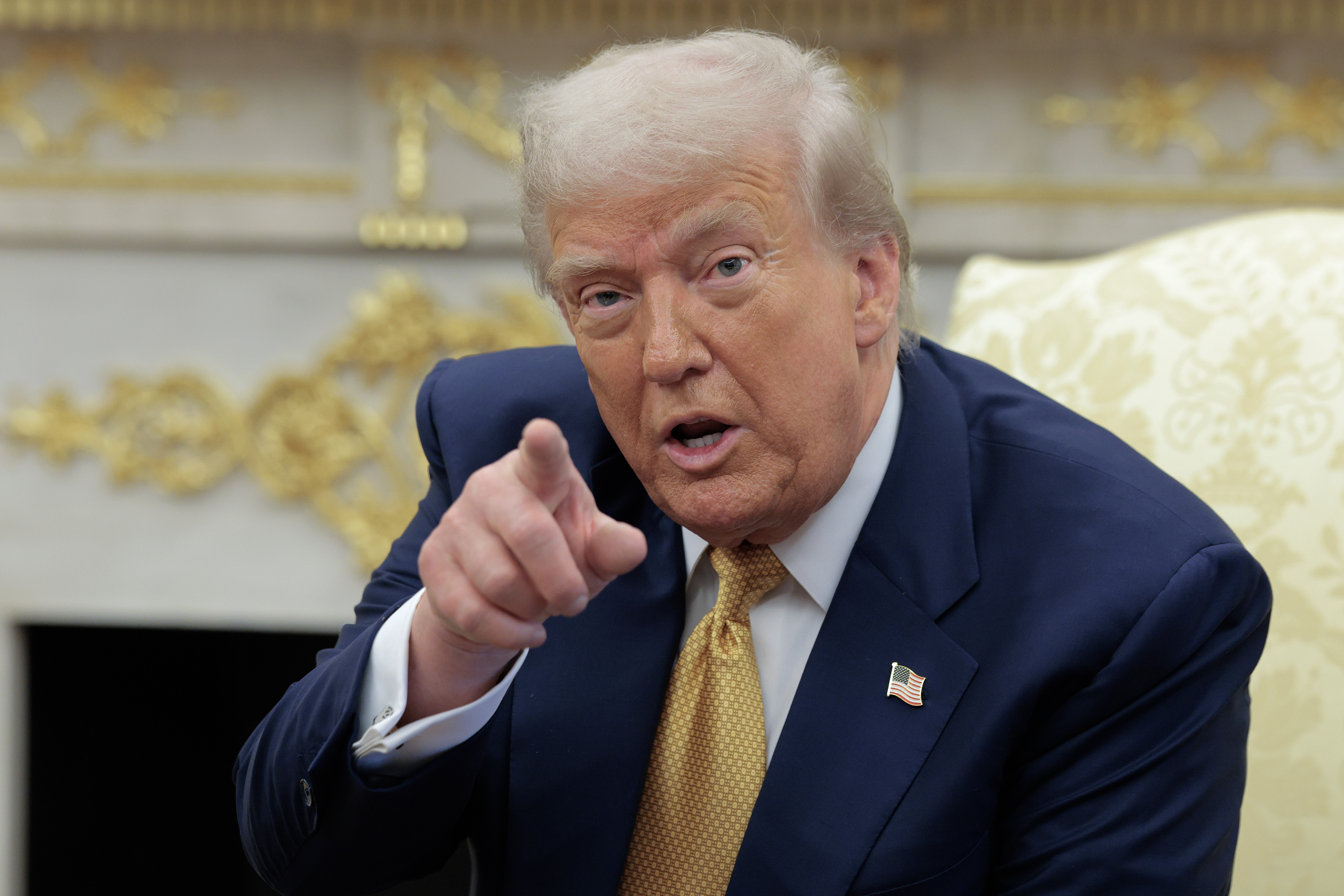
President Donald Trump on Wednesday revisited his argument that he deserves to be awarded the Nobel Peace Prize this year, telling reporters in the Oval Office that he has done “far more” than any other U.S. President.
“I don't know what their decision is going to be. They have a reputation for maybe not giving it to people like me,” Trump said, insisting that it would be a “great discredit” to the Norwegian Nobel Committee if they do not announce him as the recipient Friday morning.
“I've stopped maybe the total obliteration of the world, because Iran will never have a nuclear weapon, and that's a positive thing,” he claimed, listing the reasons why he believes he is deserving of the prestigious prize.
Trump said he was “very honored to receive it indirectly last time by the recipient, who said nobody in history deserves it more” than him. The 2025 winner, Venezuelan opposition leader María Corina Machado, notably gave her medal to Trump in January as she pressed the U.S. to support democracy in Venezuela, days after the U.S. capture of former Venezuelan President Nicolás Maduro and his wife Cilia Flores.
Following the regifting of the medal, the Norwegian Nobel Committee emphasized that “the prize itself—the honor and recognition—remains inseparably linked to the person or organization designated as the laureate by the Norwegian Nobel Committee.”
Trump has long said he is deserving of the prize. The leaders of Israel, Cambodia, and Pakistan have all previously said they nominated Trump. However, all nominations remain private and the Norwegian Nobel Institute doesn’t release a shortlist of contenders. Still, each year, names are circulated in public discourse and bets are made as to who might come out on top.
The Norwegian Nobel Institute has registered a total of 287 candidates for this year’s prize, of which 208 are individuals and 79 are organizations.
As Trump’s war with Iran stretches into its eighth month, polls have tipped him as an unlikely contender to walk away with this year’s award. Amid mounting speculation over who may be the chosen recipient, here’s a look at some of the contenders.
Sudan’s Emergency Response Rooms
The start of Sudan’s current civil war in April 2023 escalated an already desperate humanitarian crisis. Fighting between the government and the Rapid Support Forces (RSF) in late 2025 pushed civilians further toward risk of famine, with even more people displaced and killed.
Sudan’s Emergency Response Rooms have provided desperately needed relief. The collapse of the state and increasingly difficult access for humanitarian groups over the past three years has led to a rise of 700 ERRs across all of Sudan’s 18 states, mobilizing over 26,000 volunteers, according to Alsanosi Adam, a journalist and ERR volunteer himself.
The community-led initiative provides healthcare, food assistance, education, civilian protection, and psychosocial support. According to Right Livelihood, volunteers have been detained and tortured while offering assistance.
The charity is a lead contender to win the Nobel Peace Prize, with Polymarket citing a 17% chance.
Mark Carney
Canadian Prime Minister Mark Carney arrived in Office last April amid an emerging trade rift with Trump and threats from Washington to annex Canada and make it the 51st state.
The tariff threats escalated and, following the collapse of negotiations in August, the U.S. and Canada are now engaged in a trade war.
Carney has opened up new trading and diplomatic relations with China and Europe in an effort to move away from U.S. reliance. He delivered a defiant speech at the World Economic Forum in Davos in January, denouncing “American hegemony” and insisting there has been a “rupture in the world order.”
Carney’s efforts to unite Canada in the face of Trump’s threats have seemingly helped his popularity at home, with his approval rating back up to 66%, according to new data from Liaison Strategies.
When it comes to the Nobel Peace Prize, he’s more an outsider, with a 1% chance of receiving the honor.
Pope Leo
Pope Leo XIV, the first American pope, has made strident global outreach efforts since his ascension to the head of the Catholic Church in April 2025.
His repeated calls for peace, including his spotlight on Gaza, have made an impact, and even earned him criticism from Trump.
“Today, sadly, war has returned, even to Europe: a new senseless slaughter, claiming countless civilian lives every day,” Leo told European leaders in September, referencing the Russia-Ukraine war. “We must ask whether we are truly making creative efforts to advance world peace, or whether we are simply seeking to stem the tide of war and better prepare ourselves for wars that we assume are still to come.”
In the aftermath of the first U.S.-Israeli strikes on Iran in late February, Leo said “stability and peace are not achieved through mutual threats, nor through the use of weapons, which sow destruction, suffering, and death, but only through reasonable, sincere, and responsible dialogue.”
Trump responded by falsely claiming that Leo would “be fine with Iran having a nuclear weapon”—Leo rejected the claim and urged critics to speak “truthfully.”
Pope Leo stands with a 1% chance of being awarded the prize.
Mykola Kuleba
Mykola Kuleba co-founded Save Ukraine in 2014 during the early days of the conflict in Eastern Ukraine. The organization’s work has become increasingly important since Russia’s full-scale invasion of its neighbor in 2022.
Missing Ukrainian children have become a focal point of humanitarian efforts amid the war, with Moscow contending that it relocated children in an effort to protect them. Save Ukraine has so far helped reunite 1,763 children with their parents, but the organization has said thousands more need to be brought home.
“[Kuleba’s] work combines direct humanitarian action with strong advocacy for children’s rights, making him a compelling candidate for international recognition,” said Haakon Gjerløw, acting director of the Peace Research Institute Oslo (PRIO), as he detailed his list of suggested candidates for the 2026 prize.
Kuleba is currently listed as having a 9% chance.
Yulia Navalnaya
Yulia Navalnaya, widow of Russian opposition leader Alexei Navalny, has become an activist in her own right, challenging President Vladimir Putin’s regime and fighting for democracy.
Alexei died in an Arctic penal colony in February 2024. A few weeks later, Yulia vowed to take up his cause in an interview with TIME, where she expressed hope that Russia might one day be a “normal, democratic country”—the future Alexei “dreamed about.”
Navalnaya is listed as having a 5% chance of winning the Nobel Peace Prize.

 点赞
点赞 收藏
收藏 点踩
点踩 分享
分享