A Past Tense Word
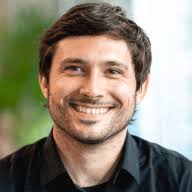
Rick Beato just published another one of his long-form interviews. This time, he interviewed Josh Homme.
Josh is from Palm Desert, California, where there were no clubs, so his band Kyuss, which he founded when he was 14, played parties outside in the desert. Out there, as Josh puts it, there’s nothing for the sound to bounce off of and everything just goes away. So he tuned down as low as the strings would go, played through bass amps, and somewhere in the distance you could hear a generator complaining about the load. And all of a sudden it had enough size to be pulverizing. He had found his sound, a way to sound like himself. That’s how “desert rock” began, and with Kyuss and later Queens of the Stone Age, Josh kept pushing it further. At one point in the interview, Rick and Josh also talked about radio, and how it used to be shaped by DJs whose taste you could trust. Radio today, Josh said, is all about safety:
Safety, he added, is “a past tense word. You think you’re safe now, but it just went by.”
This sounds so trivial, but it’s so true. And it isn’t only true for music. It’s true for writing, for typography, for design, for web design – for any craft. If all you focus on is making the safe choice, you’ll end up with something that sufficiently works. Something nobody can fault. But also something nobody will remember, because it has no distinct character, nothing in it that is unmistakably yours.
The interesting stuff happens when you take risks: when you go somewhere you haven’t been before, try the thing that might not work, and keep going when it gets strange.
But it takes another ingredient to arrive at something with character, and Josh mentioned it when Rick asked him what gives The Doors their strange sound:
A flamenco guitar player, a jazz drummer, an organist, and a poet on vocals? That’s not a proper band! But:
The same goes for many of the mistakes that happen along the way: “You don’t need to fix it. You’ll be desperate to play that mistake again. Give it enough air to accept it.”
That’s what he means by acceptance: you hold off on the verdict and you give the weird parts the chance to become the good parts. This sometimes takes time, because everything new feels strange and uncomfortable at first.
Most of us were taught the opposite early in life. We all remember those mistakes marked with red ink when we got our tests back. So better make no mistakes. Do it “the right way.” Take the safe path. And our industry took that lesson to heart, too. A lot of what we built into our web design processes is about safety: detailed specifications, static mockups signed off before anyone writes a line of code, CSS that tries to dictate what happens at every breakpoint. Our waterfalls are all about control, about a predictable way to arrive at a “right”, infallible result. But on the web, control is an illusion.
Of course, some things on the web do have a right way, or at least there are clearly wrong ways to build stuff. A button should be a <button>. Text needs enough contrast to be read. A page should still work when the JavaScript fails to load. That’s not where you gamble. That’s the foundation, the right kind of safety, that lets you take risks everywhere else. Josh says the same about the studio: “You need to feel secure to take these risks.”
But creatively, it’s the other way around. In how a page feels, in how type sets the tone for a design, in finding uses for a technology that nobody had in mind when it was specified, the risk is the point.
And that’s what bugs me so much about AI slowly replacing parts of the process. AI spits out generic output. That’s how it’s built: a language model produces the most probable continuation of whatever you give it, based on what it was trained on. Ask it for a landing page and you get the landing page: clean, plausible, and interchangeable with a thousand others. Boring. Lifeless. Uninspired. It’s the safe average, available to anyone who has the budget. And we now have plenty of that. A lot of Marshalls, Les Pauls, and Strats, as Josh would say.
Once the average is everywhere and this cheap (not for the environment, though), it stops being worth much. What remains valuable is what isn’t probable: the ultra bold heading set far too large that ends up holding the whole page together, the layout that just shouldn’t work but does somehow, the idea that started as a dumb mistake you decided to keep, because it somehow looked cool. The weird parts.
And yet, the safe, frictionless average is often exactly what we’re asking for. Humans are insecure creatures by nature and we don’t always trust our own judgment. If you need to feel secure to take a chance, insecurity sends you looking for safety. So we ask again for the right way to do things: the best practice, the standard approach, the answer most people would give. I spent a good time of my life as a student looking for “the ultimate way” to design things until I realised that there is no such thing. But that’s what a language model is built to deliver. It’s the lesson from school, promptly available. Everything it generates was a safe choice once, for someone else. But safety is a past tense word.
And the thing is that AI doesn’t only flatten the finished work. It skips the most valuable part of the process that would have produced the beautifully weird, human parts in the first place. Josh likes his demos “so shitty that there’s no chance you’re going to use it,” because the good stuff is “in the not knowing it perfectly. Where you get the extra that you could not get.” If we use AI to get to a plausible average answer as quickly as possible, we skip the not knowing stuff. And if nothing unexpected happens, there’s nothing unique left to accept. What a boring way of working that is. What a boring world that produces.
So it isn’t enough to keep humans in the loop, approving what a machine has made. We are not “meat proxies.” If we want work with character, people have to stay in the process: exploring, prototyping, making mistakes, responding to the material, changing direction, and running into things they couldn’t have predicted.
You can automate a lot of things. But you can’t automate acceptance. First, something unexpected has to happen. Then someone has to notice it. And then, instead of correcting it because it doesn’t look quite right, someone has to say:
Wait! Keep that.
Music isn’t about safety when it’s good.
Neither is our work.

 点赞
点赞 收藏
收藏 点踩
点踩 分享
分享