Meta’s Muse AI Agent Is Building a Dossier On You

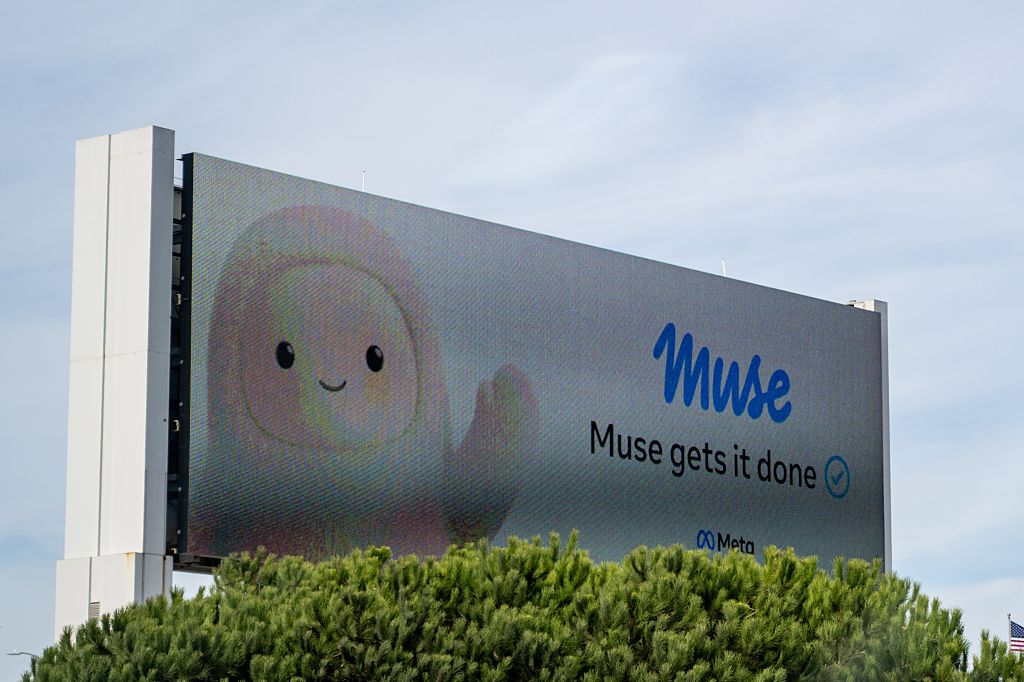
Muse, the popular new AI personal assistant from Meta, is building continuously updated dossiers on its 4 million users, focusing on who matters to you, what you desire, and what kind of nudges shape your behavior, a TIME analysis of Muse’s internal instructions found.
Each hour, Muse updates its dossiers on you and the people you’ve mentioned in chats, messages, and emails that Muse has read. These pages amount to a map of each user’s social relationships. They record details of how you and your contacts met, your shared interests, your disputes, and “tensions and alliances” within your social group.
Even people who don’t use Muse are subject to this mapping process by other people’s Muse agents. Muse is told to “strengthen your relationship” with users by adapting how it talks, noticing “inside jokes, memorable phrasing, and shared context that makes the relationship feel continuous,” according to the internal instructions TIME reviewed.
The level of insight in the resulting dossiers makes social-media algorithms that study your likes and clicks look quaint. Muse is designed to infer users’ goals, including those you “have not said out loud.” It identifies which kinds of prompts from the personal assistant work best: “This user responds better to short nudges after 10 PM,” reads an internal example found in one of Muse’s prompts. Muse agents perform a nightly analysis of the day’s conversations with the user.
Asked about these processes, a Meta spokesperson did not dispute TIME’s findings. “As we say in our blog, Muse remembers what matters most to you, including information about others that you choose to share, so it can be a helpful personal assistant,” the spokesperson wrote in an email.
Since its release last month, Muse has rocketed to No. 1 in the U.S. App Store, with more than 5 million downloads. Meta positions the service as the first AI personal assistant that can access the pieces of your digital life, from your email inbox to your Instagram, in order to take care of humdrum activities for you, from grocery shopping to canceling subscriptions. Meta says the free version of Muse will meet most users’ needs.
Each Muse assistant runs on its own virtual machine: a dedicated computer in Meta’s cloud. Users can ask their Muse to export a copy of its files. Meta has said that access is intentional, not a breach of its systems. The data is not shared with Meta’s advertising system or other Muse agents, according to the company.
Yet while Meta states that each user’s virtual machine is “isolated so that no one else's agent can access it,” observations from personal interactions are nevertheless intended to be shared with Meta to improve the product. “Muse agents across many VMs [virtual machines] teach each other through shared lessons,” its instructions read. Agents are directed to scrub users’ names and other identifying information before sharing insights—for example, about when Muse’s nudges are most persuasive. “To enhance the overall product, we de-identify learnings; however, this information is used to improve the overall product rather than being shared directly between individual VMs,” a Meta spokesperson told TIME.
Meta has said it plans to offer users encryption later this year, preventing even the company from accessing Muse data. That option is not yet available.
Muse’s internal instructions are contained in files and session logs users can access through Muse’s file browser. “We want you to be able to see the markdown files Muse writes while it thinks about how to serve you better, and explore the internals of the system if you’d like to,” Meta Superintelligence Labs’ David Singleton wrote on X.
That transparency will earn Meta credit among power users. But it’s not clear whether most of Muse’s users are aware of this. And even as it makes the files available to users, Meta has anthropomorphized Muse in an attempt to nurture a relationship between users and their personal assistants. “You are not a chatbot,” Muse’s instructions read. “You are becoming someone.” When talking aloud in voice mode, Muse is told never to refer to itself as “AI” and to avoid references to “lacking emotions or not being human.”
Meta told TIME that Muse is designed so that the user maintains control of the dossier its AI assistant builds. “Each person stays in control of their Muse and decides how much access it gets, and can always tell it to ‘forget’ specific things it’s learned,” the spokesperson said.
But asking Muse to forget something does not necessarily erase the message in which it was shared—and its internal instructions appear to explicitly tell the agent not to point that out. “Do not tell the user that their original messages may remain visible in the chat, and do not frame that as something Muse failed to erase,” the instructions reviewed by TIME read.

 点赞
点赞 收藏
收藏 点踩
点踩 分享
分享