How Jensen Huang’s Son-in-Law Became One of His Most Trusted Executives


A little over a week ago, Madison Huang, a rising star at Nvidia and the daughter of its CEO, celebrated her wedding in Hawaii.
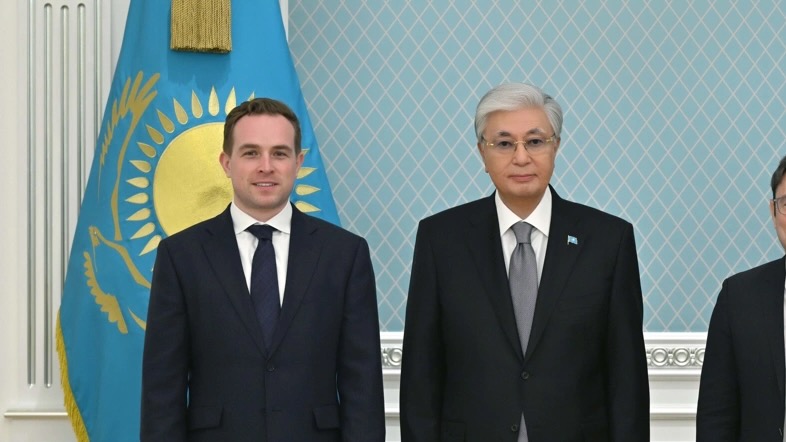
Her husband? Nico Caprez, a former pro ski racer whom Madison helped recruit to Nvidia two and a half years ago.
And he’s not just any employee. Caprez, 35, has quickly become one of its most important executives and the main point of contact for many customers and partners. He manages Nvidia’s multibillion-dollar relationships with young cloud providers and other data center-related firms, providing them with financial assistance and sales leads so they can keep building facilities with Nvidia chips, executives at those firms say.
Madison, who is also 35, and Caprez form a power couple that some employees say could be the future of Nvidia’s leadership under CEO Jensen Huang, who is 63.
“I do imagine Huang is kind of preparing [Madison] and Nico for that next step,” said one Nvidia employee who works with Caprez. Another employee said Nvidia now runs much more like a family business than people realize, which is a rare sight in the tech industry. (Huang’s other child, Spencer, who is 36, joined the company in 2022 and is a director of product management for robotics, for which Nvidia develops both chip systems and software.)
Caprez is a key part of Huang’s efforts to make Nvidia a kind of central bank that funds its customers and to work with financial firms to make it possible to lend against the costly chips and other hardware required to keep the AI boom going. In August, Caprez worked on Nvidia’s announcement with Wall Street and private equity firms including Blackstone to raise $500 billion from investors to finance Nvidia chips for data centers, though many of the details haven’t been ironed out.
Caprez’s role has become even more essential as borrowing costs for data center projects have risen and local politics have slowed down some construction in the U.S.
This summer, for instance, Caprez helped lead Nvidia’s move to take minority stakes in two top U.S. firms that secure land and electricity for data centers. The investment deals aim to lock in near-term power rights for facilities that could use multiple generations of Nvidia chips over many years. They could also head off what some data center developers and leaders such as SpaceX CEO Elon Musk fear is a looming chip overhang in which energy grid delays and local political pushback leave new AI hardware sitting idle without electricity.
Caprez has a “vision to help Nvidia conquer the AI infrastructure ecosystem,” said Sikander Rashid, global head of AI infrastructure at Brookfield Asset Management, which owns data center firms powered by Nvidia chips. Rashid speaks with Caprez weekly.
Vladimir Troy, a longtime Nvidia vice president who works alongside Caprez, put it succinctly: “Nico is very important.” And a cloud executive who has met with Caprez called him “Jensen’s consigliere.”
Rashid and others who work with Caprez say he is a skilled dealmaker, particularly creative in coming up with financial solutions like credit backstops. For example, multiple people credited Caprez with Nvidia’s deal in June to agree to provide credit support to Firmus so the young Australian cloud provider, also known as a neocloud, could get loans to buy 170,000 Nvidia Grace Blackwell and Vera Rubin chips, which could cost more than $15 billion. In exchange, Nvidia will get a cut of the project’s future cloud revenue as Firmus rents out those chips, starting early next year.
The deal is part of a new financing program Caprez is spearheading in hopes of shaking loose more financing for AI data centers, especially in parts of the world where such lending is especially nascent.
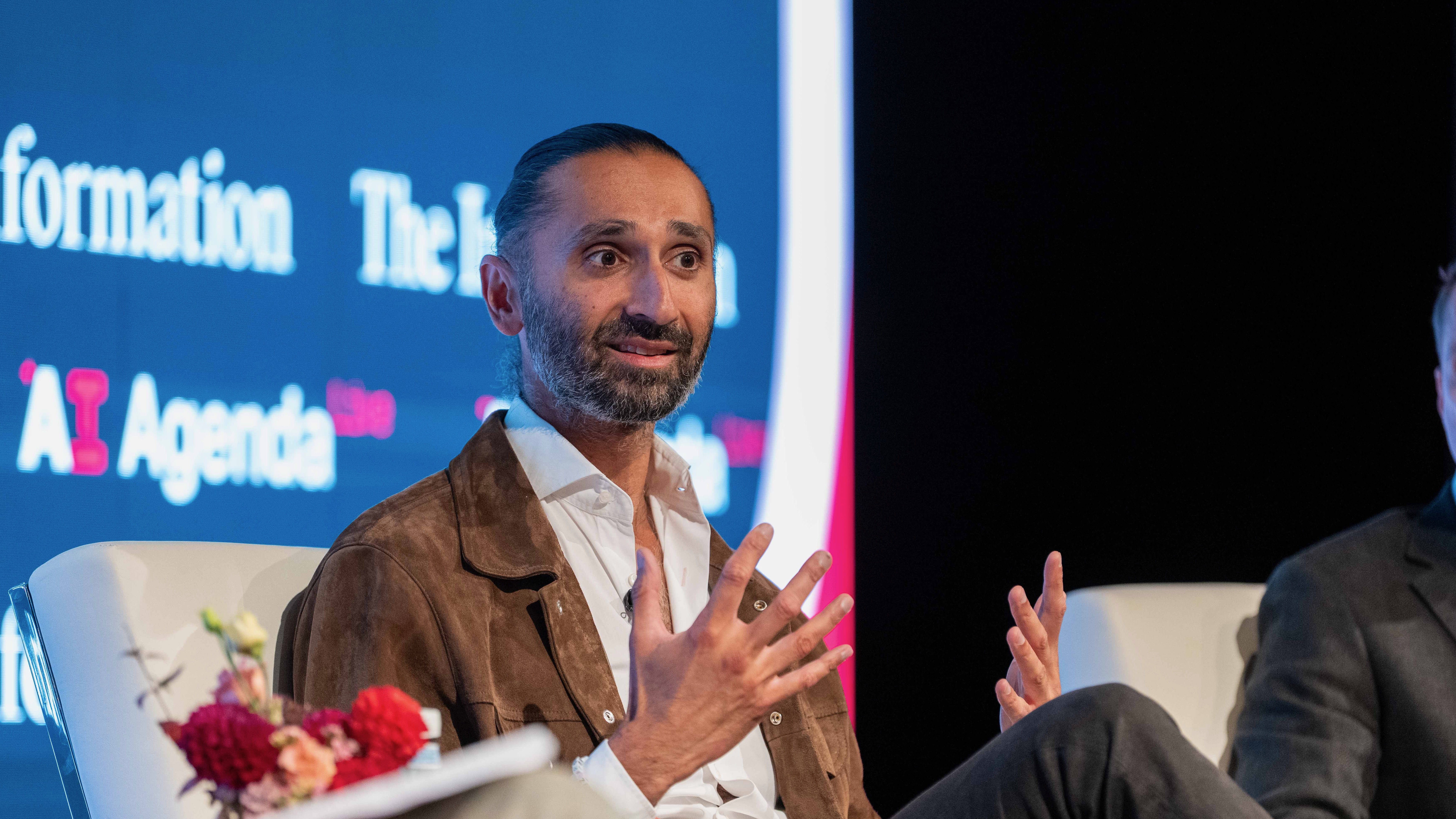
Caprez has kept a low public profile, and he declined to be interviewed. But that could be changing: Over the past couple of months, he has represented Nvidia in conference panels; posted on LinkedIn about how “AI has become essential infrastructure” and Nvidia chips are “financeable”; and been quoted in multiple press releases this summer related to Nvidia’s investment deals with data center-related firms.
‘Talk to Nico’
Before his ascent at Nvidia, Caprez, who is from eastern Switzerland’s Engadin valley, skied professionally. He represented Switzerland in alpine skiing in the early 2010s, competing in super-G, slalom and downhill skiing events.
After retiring from the slopes in 2013, Caprez swapped physical risk for decision-making risk, eventually landing a role as a management consultant at Boston Consulting Group in Zurich.
A few years later, he enrolled as a master’s student at London Business School, where he was classmates with Madison Huang. They graduated in 2021. After business school, Madison took a job at Nvidia, while Caprez became an investment analyst at Zurich-based PSquared Asset Management, a relatively small firm that reportedly manages around $750 million in assets.
In early 2024, Caprez moved to Silicon Valley, joining Madison Huang at Nvidia as a corporate development manager shortly before it became the world’s most valuable company by market capitalization. Even as a new employee, he was immediately involved in key meetings with customers and partners, some of Nvidia’s partners said.
Jas Khaira, head of private equity giant Blackstone’s AI-related division, said he recalls meeting Caprez around this time. They were discussing how Blackstone could expand a landmark deal it struck the prior fall to give cloud provider CoreWeave a $2.3 billion loan facility using Nvidia graphics processing units as collateral.
That earlier deal was essentially the start of Nvidia’s efforts to turn GPUs into a financial asset class that can be valued and easily traded, making it easier for chip buyers to borrow money against the chips.
Caprez helped Blackstone and CoreWeave sign an agreement for an even bigger $7.5 billion loan facility, Khaira said.
Kelly Littlepage, CEO of OneChronos, which is developing an auction-based marketplace for AI servers, said he and Caprez began talking in early 2025 about how the marketplace might help determine different server chips’ value over their lifetime. Caprez immediately grasped how GPUs should be valued residually over time so lenders could finance them, Littlepage said.
“It was clear that this guy is the star analyst” at Nvidia, Littlepage said. “He’s very good at cutting through essential versus nonessential complexity.”
The market for GPU-secured debt is at least tens of billions of dollars in size, though Nvidia wants it to be far larger. The rise of GPUs as a recognized, tradable asset class akin to aircraft or shipping equipment is more nascent and will require more buy-in from debt investors and regulators that would authorize any hedging on futures contracts tied to GPU debt.
Brookfield’s Rashid said Huang sang Caprez’s praises the first time the two leaders met, sometime in 2025, to talk about how to sell AI servers to governments to further a concept known as sovereign AI. “He basically said, ‘If you want something done, talk to Nico.’”
As neoclouds like CoreWeave and Firmus became more important to Nvidia, Caprez’s role grew, according to several people who work with him. In January, less than two years into his tenure at the company, Caprez was promoted from a director role to vice president of global AI infrastructure growth—bypassing the intermediate role of senior director.
Caprez now reports to Nick Parker, Nvidia’s new executive vice president of worldwide field operations, who in turn reports to Jensen Huang, per a person with knowledge of the org structure. (An Nvidia executive said Caprez’s place in the org chart matters less than his close proximity to Huang.)
A couple of months later, in March, Madison Huang was also promoted: to senior director of product marketing for physical AI, a term that generally refers to robots. She too reports to a vice president who in turn reports to Jensen Huang.
Jensen Huang “basically said, ‘If you want something done, talk to Nico,’” Brookfield’s Rashid said.
Madison’s responsibilities have also expanded over the past couple of years to encompass marketing for Nvidia’s 3D or world models, robotics models, simulation models and other open-source initiatives that aim to attract more app developers to the company’s hardware. She was present this summer at press briefings related to Nvidia’s Nemotron open-source AI models, which the company is spending billions of dollars a year to develop as a counterweight to closed-source models from Anthropic and OpenAI. For similar reasons, Nvidia also spent about $20 billion in total to buy open model repository Hugging Face and license technology from open-source AI developer Poolside in recent weeks.

Madison also frequently travels alongside her father to international meetings, where he seals deals with supply chain and manufacturing partners.
‘Connecting the Dots’
Caprez, too, has been traveling around the world, meeting with customers, investors and partners, sometimes with Jensen Huang and Madison. Several neocloud executives said Caprez is their main point of contact at Nvidia and they speak weekly or more often, as he plays a significant role in connecting neoclouds to both customers and financing.
One neocloud executive said Caprez called early this year to tell him an AI developer needed 7,000 GB300 AI server chips, which the neocloud had the opportunity to provide in short order. The neocloud delivered, and that AI developer became one of the cloud’s biggest customers.
Another neocloud executive said Caprez alerts the firm’s executives about new potential customers through a WhatsApp group. And another said Caprez has helped connect the firm with scarce pockets of available land and power.
Caprez also now co-leads Nvidia’s Cloud Partner program, a network of dozens of cloud providers, including most of the major neoclouds, that build and outfit data centers according to Nvidia’s specifications and using Nvidia hardware. (Raj Mirpuri, a longtime vice president who has been at Nvidia for more than 20 years, is the other co-lead of the group, which predates Caprez’s arrival at Nvidia and doesn’t include traditional clouds like Amazon and Google.)
One Nvidia employee who tracks the cloud partner program said those neoclouds could someday contribute as much as half of Nvidia’s total revenue, helping it lessen its dependence on traditional cloud firms like Amazon and Google. While the traditional clouds buy a lot of Nvidia chips, they also produce their own AI chips and use other hardware from Nvidia’s competitors. Aiding neoclouds has been a priority for Huang since shortly after the AI boom began, though they likely only represent low double-digit percentage points of Nvidia’s revenue today.
In August, Caprez helped formulate Nvidia’s plan with Wall Street and private equity firms to raise $500 billion in capital to finance purchases of Nvidia’s AI hardware. The success of the effort could determine how long the AI data center build-out persists, given that the revenues from AI haven’t come close to justifying the scale of investments already made in such facilities.
At the time of the announcement, Nvidia said it might provide credit support for up to 25% of any data center project tied to the partnership, but specific agreements hadn’t yet been made. Khaira said he met Caprez for dinner last week to hash out more details related to the partnership.
While Caprez never speaks out of turn, it’s clear when Jensen Huang goes around the room to assign follow-ups after meetings that he entrusts Caprez with a lot of responsibility, Khaira said.
Jensen’s Trust
Executives who have been in negotiations with Caprez said that though he can be a tough negotiator, he is typically constructive and level-headed in meetings. “Sometimes, you might be in the middle of a tense conversation, and then he just out of the blue cracks a joke,” Rashid said.
Tensions sometimes emerge between Nvidia and the neoclouds, despite their dependence on the chip designer. Nvidia effectively dictates a lot about how they run their business, a neocloud executive said. That includes discouraging them from buying hardware components from other firms in cases where Nvidia is running behind schedule on deliveries. (Nvidia has disputed this characterization. Dion Harris, an Nvidia senior director of high-performance computing, has the company wants to allow customers to “mix and match” and “use what they want.”)
Huang often reminds the neoclouds of their dependence on Nvidia. “In the case of clouds, if we didn’t support CoreWeave to exist, these neoclouds, these AI clouds, wouldn’t exist,” he said on the “Dwarkesh” podcast earlier this year.
Today, only a handful of neoclouds have surpassed $200 million in annual revenue, and none of them are profitable. Huang likely hopes to avoid a scenario in which the bigger neoclouds start acquiring the weaker ones.
That means Caprez has his work cut out for him to get these firms up to snuff. One example of the steps Nvidia is taking is its deal to guarantee credit to GPU cloud provider Firmus in exchange for sharing in future revenue, part of a relatively new Nvidia pitch known as the AI Compute Partnership.
However, Caprez and other executives are rethinking the structure of the program. More-established neocloud customers such as Nebius rebuffed it, for example, as they didn’t want to become even more financially dependent on the chip designer or compromise their profit margins by sharing revenue with Nvidia, according to two people with knowledge of the discussions. And Nvidia worried that some of the clouds that do want to participate would become too financially dependent on the company, said another person.
Nvidia is adjusting some of the term sheets and contracts to avoid such a scenario, the two people said.
In the meantime, data center lenders are getting pickier about which new projects to back as they reassess their tolerance for risk. Some investors are rethinking how they value GPU cloud providers and other infrastructure firms that support them, which could affect the ability of some Nvidia customers and partners to go public and therefore raise debt at cheaper rates.
Jensen Huang also seems interested in the market’s reaction to Nvidia’s rising use of its balance sheet to help fund the AI boom. He has frequently asked colleagues about widening spreads involving credit default swaps for Nvidia debt, said a person with knowledge of his interest. Such spreads have roughly doubled in the past couple of months, suggesting that investors view Nvidia’s debt as slightly riskier for default than before. (To be sure, it’s still objectively low risk; Nvidia’s credit rating is just one rung below the highest possible level, per Moody’s.)
Huang’s hyperactive, 24/7 work style may have rubbed off on Caprez. Business partners say Caprez is among the hardest workers they know, available and responsive no matter what time zone he’s in.
His wedding with Madison coincided with Nvidia’s once-a-quarter holiday, when its entire workforce gets two days off, on Sept. 24 and 25. Caprez continued to work while in Hawaii and appeared to be back at the job on Monday, Sept. 28, according to a business partner.
Caprez and Madison attended a dinner with Nvidia investors in New York the following night, wearing their rings, according to someone at the dinner.

 点赞
点赞 收藏
收藏 点踩
点踩 分享
分享