Inside the ML4Good Technical AI Safety Bootcamp: What to Expect

TL;DR
i) ML4Good is an intensive eight-day technical AI safety bootcamp covering topics such as AI agents, alignment, model reasoning, evaluations, interpretability, and AI governance.
ii) It provides useful information about fellowships, career opportunities, starting an AI safety startup, and the broader AI safety ecosystem.
iii) I would encourage people interested in AI safety to apply, including those who already have a solid technical background.
Introduction
Hello world!
I want to share the experience I gained from the ML4Good bootcamp in technical AI safety, held near Lyon, France. In this blog post, I will try to summarize everything in short, from the application and interview process to the bootcamp experience itself.
Application Process
So, let us start with the application process. It is quite simple: go to the official ML4Good website and apply for the cohort you would like to join. See the section “Find a Bootcamp”. The application itself is straightforward. You have to complete a form where you are asked to answer questions ranging from “Why are you applying for this programme?” to “What are your thoughts on the risks and benefits of AI?”
After submitting the application, you have to wait for some time to see whether you pass the pre-selection stage. If you do, you will receive an email saying that you have proceeded to the next phase, together with a calendar where you can choose the most suitable date and time for an interview with a human (non-AI interview 😂). After the interview, you can expect to receive the results within a couple of days.
Interview Process
Now, let’s jump to the interview itself. I am not allowed to post the exact questions I was asked. The interview is brief, lasting around 10–15 minutes. You are asked five questions sequentially, and you have around 2–3 minutes to answer each one.
If you receive a positive email after the interview, CONGRATS you are in! The adventure can begin. The organizers will send you an email asking you to confirm your participation, together with some general questions regarding food, for example whether you have any allergies or dietary restrictions.
If you are not selected, do not get discouraged and apply for the future cohorts!
Costs and Accommodation
It is also worth mentioning that this bootcamp is completely FREE! They provide accommodation and three meals per day. Amazing, right?
You can also request reimbursement for transportation costs of up to 180€. So, depending on your travel expenses, the bootcamp can cover almost all of your costs.
Bootcamp Experience
Now we are coming to the bootcamp itself.
Before explaining it in detail, I want to emphasize that I am a PhD student working in AI security and safety and that I already have quite a lot of knowledge about the field. In other words, I am not a complete beginner who wants to transition into AI safety from another career. I already have fairly deep technical knowledge of the field.
Why am I telling you this?
Because there might be people at a similar stage in their careers who are unsure whether they should apply because they do not know what they can expect to gain from this bootcamp. Based on my experience, I would still strongly encourage them to apply, because even if you already have a solid technical background, you can still learn SOME new things and, above all, gain a lot of useful information about the opportunities in AI safety.
That being said, let’s start.
This is an intensive eight-day bootcamp, so the lectures are usually organized from 9AM to 7-7:30PM, with several short breaks in between and a longer one-hour lunch break from 1PM to 2PM. There is also another longer break of around 30 minutes in the late afternoon. Straight after the final evening lecture the dinner is served.
In this cohort of ML4Good the schedule looked like this, but it can differ across cohorts.
Lectures
The lectures are completely UP TO DATE and ALIGNED with the current state of the art. For example, you will not spend your time studying CNNs or GANs!
The technical lessons cover topics such as AI agents, model pre-training, alignment techniques such as RLHF, RLAIF, and Constitutional AI, interpretability, model reasoning (including Chain-of-Thought (CoT) and ReAct), evaluations, and transformers as the foundational architecture behind many modern models.
There are also multiple coding sessions where you work in Colab on topics such as building an AI agent from scratch, building transformers from scratch, CoT, and others.
NOTE THAT you can skip coding exercise if you are already confident about the topic. For instance, I skipped the transformer coding exercise along with a few other participants, and we spent three hours talking with a teacher about emerging risks from AI and how to mitigate them!
On the other hand, there are also lectures on AI governance, which is an extremely important topic today. I found this part particularly interesting because I did not know much about AI governance before attending the bootcamp. What I especially appreciated was that the programme did not treat governance and technical AI safety as completely separate areas. There is also a lecture on technical AI governance, which bridges the gap between the two and shows how technical approaches can contribute to broader governance efforts.
Also the bootcamp is not based only on an “absorb-the-lecture” format. There are multiple sessions where you actively discuss different topics with lecturers and other participants.
Career Advice and Fellowships
For me personally this was the most important part of the bootcamp, because there are several VERY useful career focused lectures in which the lecturers generously and unselfishly provide information that can be extremely valuable for people who are interested in the AI safety opportunities. These sessions cover topics such as which AI safety fellowships to apply for and HOW to apply, self-funding, career transitions, and founding an AI safety startup (non-profit or profit one).
Since I am currently enrolled in a PhD programme, I found the presentation about AI safety fellowships particularly interesting. I already knew quite a lot about fellowships, but apparently not enough, because I discovered a large amount of new information during the bootcamp. Currently, I am part of the SPAR fellowship, which is unpaid, and the logical next step for me would be to pursue a paid fellowship in the future. After attending ML4Good, I now have a much better understanding of the opportunities available and how to approach them.
In short, this is roughly how the bootcamp works.
Teachers
Let’s now talk about the teachers. What I can say is that they are exceptionally knowledgeable, interesting, and approachable. You can ask them almost anything that comes to your mind. Because you share the same facility with them, the atmosphere is very informal. You eat together, talk during breaks, and can even ask them questions during meals 😀
Final Thoughts
Since the success of every blog post lies, at least in my personal opinion, in keeping things short and concise, I will stop here.
If you have any specific questions about the bootcamp, feel free to ping me via LinkedIn.
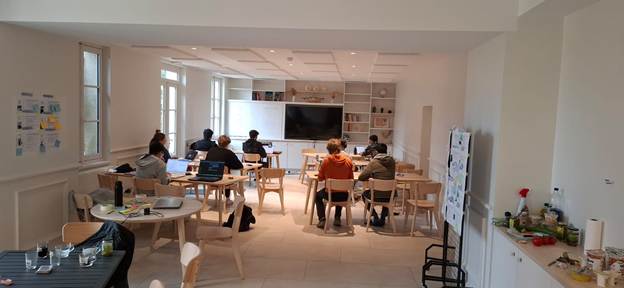
Some Memories from ML4Good

 点赞
点赞 收藏
收藏 点踩
点踩 分享
分享