Sean Parker Spreads the Gospel of AI Music


To the music industry, Sean Parker has been many things. As co-founder of Napster, he was first an “outlaw renegade,” as he himself puts it. After his time at Facebook, his next act was as an early Spotify investor—putting in money while at Peter Thiel’s Founders Fund—and as a longtime Spotify board member.
Parker today hungers to be the guy who gets recording artists and music producers hooked on artificial intelligence. And he hopes to do so through the quiet resurrection of Stability AI, the once red-hot startup that nearly cratered out of existence before he took control of it two years ago.
As Parker tells it, bringing change to the music world isn’t for the faint of heart. “Generally, you find that people who are very passionate about music go into the music industry, get burned and then maybe never come back,” he said, breaking a long-held silence on his hopes and plans for Stability. “I’m probably one of a very few people who is enough of a masochist.”
Stability is something of an unlikely vehicle for Parker’s return to music. After the startup’s founding in 2020, it was initially best known for its image-generation model, Stable Diffusion, which got talked about in the same company as OpenAI’s Dall-E. It zoomed to a $1 billion valuation. But overspending and staff unrest led to founder and CEO Emad Mostaque’s ousting in 2024. In came Parker and a group of other investors, who shored up the perilous financial situation with an $80 million infusion—and renegotiated with the startup’s cloud providers to forgive several hundred million dollars of debt. In the process, Parker became Stability’s executive chair, while the CEO job went to Prem Akkaraju, former head of Weta Digital—the special effects company started by director Peter Jackson—and a longtime friend of Parker.
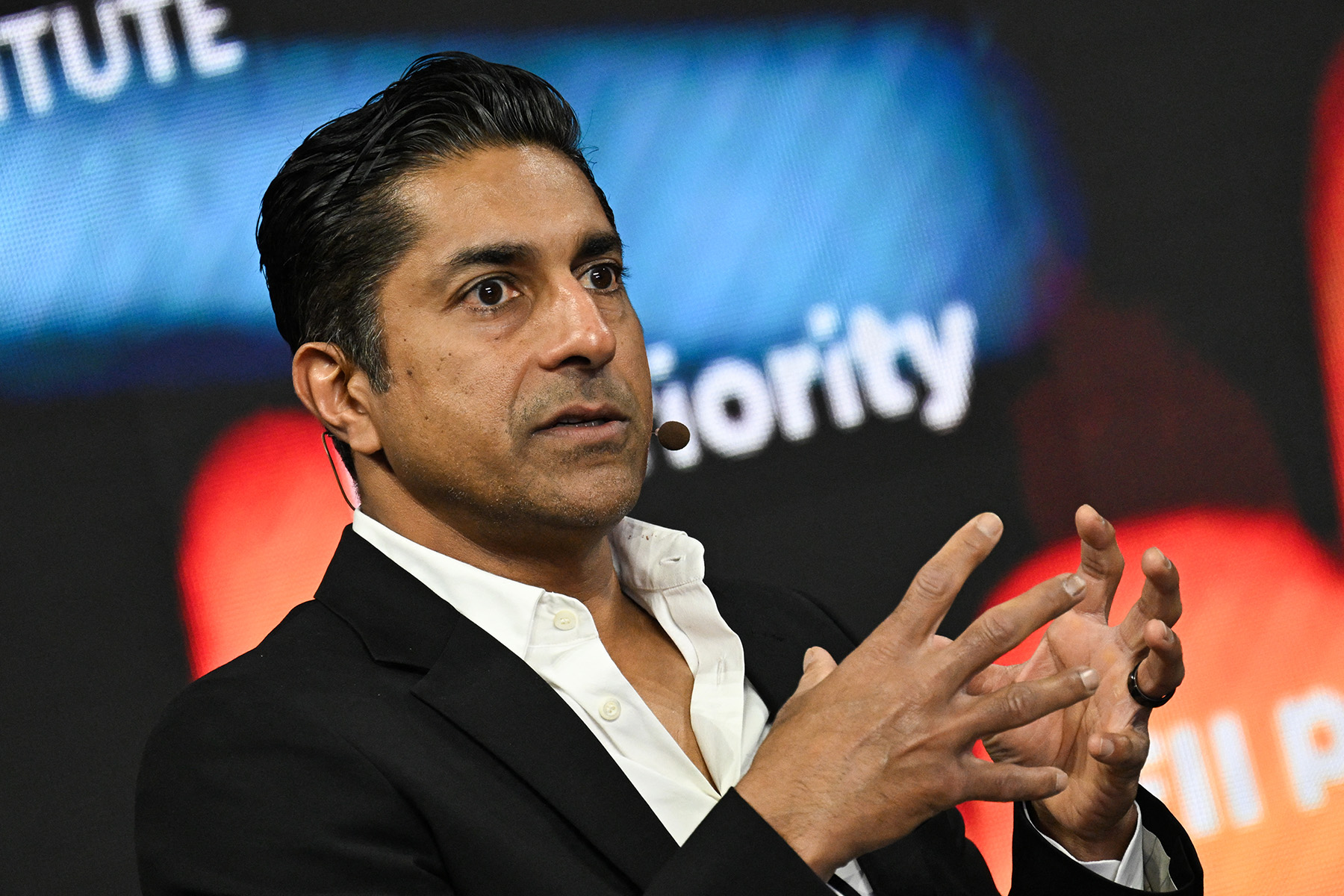
For a while, Stability seemed to disappear. A month or so ago, it rather unexpectedly rematerialized, saying it had raised $76 million in fresh funding, with a trio of prominent new investors: Sony Music, Warner Music Group and Universal Music Group, the three major record labels. (The startup is spending the funding on research, product development and compute; neither Parker nor Akkaraju would comment on the company’s new valuation.) With the money and investors, Parker and Akkaraju are now focusing the company on developing AI for music industry professionals.
In addition to the investment, the labels have also cut licensing deals with Stability, which will use their catalogs to train its AI. Already over the last few months, Stability has released three new audio-generation models and AI music-editing software.
Stability’s small and medium-size models are available for free for non-commercial use. Businesses with more than $1 million in revenue need to sign licensing deals to use any of the models.
The AI can generate whole instrumental tracks and small snippets of audio through natural-language text prompts. An upcoming update will let users also direct the AI through audio of themselves humming a melody or beatboxing a drum pattern. “Natural language is a pretty bad bottleneck for describing music,” said Zach Evans, Stability’s head of audio research. “People tend to want to actually use music itself to describe music.”
By focusing on AI for music professionals, Parker and Akkaraju are choosing to sidestep the crowded field of startups making AI music apps for everyday consumers, like Suno and Udio. (Those consumer apps generate both instruments and lyrics—Stability’s AI does not produce lyrics, as it assumes artists will want to keep control over that part of creating a song.) Still, those startups could refocus on the professional market. Meanwhile, Parker and Akkaraju are gambling that none of the big players in tech that have released their own AI music features—a list that includes OpenAI, Meta Platforms and Google—will choose to pay attention to their corner of the business and snuff it out.
The stiffest existing rival to Stability’s AI is probably Google’s audio-generation model, Lyria. But unlike Lyria, Stability’s models are open weight, which allows their users to tweak and customize them. Stability’s AI also allows for greater editing within a song and can handle longer song lengths.
When I spoke to Warner Music CEO Robert Kyncl, he readily acknowledged that the specter of competition looms over Stability. “What’s stopping a better-funded competitor from jumping in? Well, if you grew up on the internet, you know the answer is ‘Nothing,’” said Kyncl, who was previously YouTube’s chief business officer and an early key Netflix executive. “Like I always used to say when I was at Netflix or at YouTube: ‘We’re always paranoid, because our competition is just a click away and raising money from Andreessen Horowitz.’ That’s a way of life.”
Parker maintains that Stability has moved as fast as possible in its comeback efforts. He felt the licensing deals and record label investments were essential to secure first if Stability hoped to win legitimacy with major customers: Those negotiations with the labels weren’t going to happen overnight, and he had no interest in returning to his renegade past.
“With anything Hollywood related, it takes a little more time to do things the right way,” said Parker. “It’s a case of a lesson learned from when I was first starting out: Asking for forgiveness rather than permission is generally not the right strategy.”
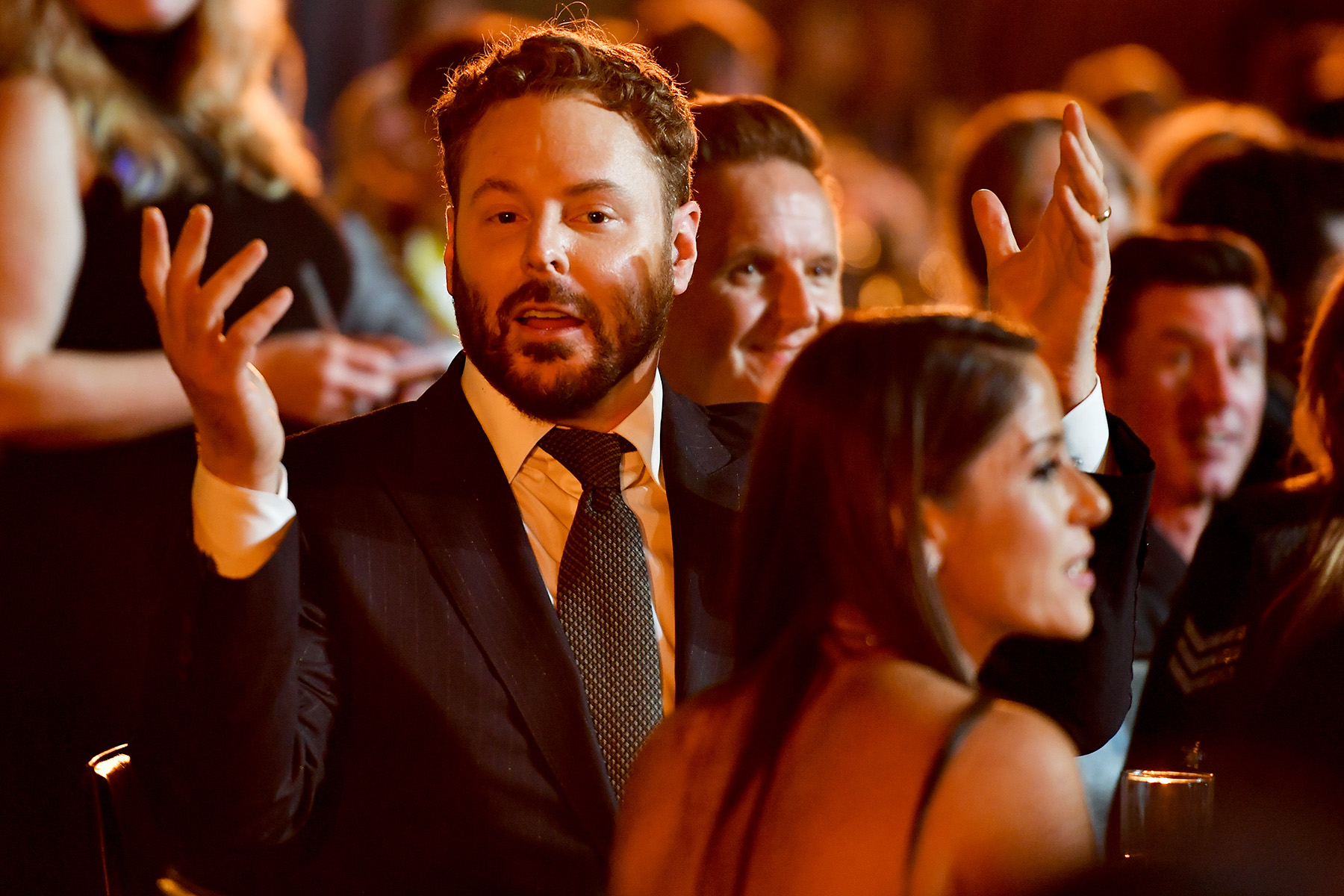
Kyncl said his decision to partner with Stability was a bet on Parker’s past at Spotify and “passion for solving issues within the music industry,” as he politely put it—as well as his yearslong relationship with Akkaraju, who led the talks with Warner. (Akkaraju and Kyncl originally met at a Cannes Film Festival party in 2014.) More fundamentally, Kyncl was also concerned about the idea of Warner sitting out the AI era. “I don’t want the lessons of the file-sharing era to go by the wayside,” he said. (Warner has also done licensing deals with Suno and Udio.)
As Akkaraju and Parker talk up Stability’s tools in the entertainment world, they find themselves in a landscape where the perception around AI seems to be shifting. The media and entertainment elite initially met the AI boom with a sense of dread—and waves of copyright litigation. Some of those legal battles continue. Universal Music and Sony Music, for instance, are still suing Suno over copyright infringement. (Warner Music has settled with Suno.) And The New York Times Co. and other publishers remain locked in a fight with OpenAI.
Yet there are some signs that entertainment is beginning to warm to AI. In March, actor Ben Affleck sold his AI startup, which has been working on movie-editing software, to Netflix for $587 million. Three months later, Google said it would invest $75 million in A24—the much-loved indie studio with a shelf of Oscar gold—and partner with it to develop AI tools.
Akkaraju tries to take every opportunity he can to coax the AI reticent to try Stability’s products. At a recent party for his child’s school at his Los Angeles home, Akkaraju dragged a music supervisor from one of the major studios away from the festivities and into his study to give the software a test spin. How’d it go?
“It was probably the same reaction as when a mailman saw email for the first time,” Akkaraju said. “He was super excited.”
When I asked Akkaraju about the tall challenges I can picture lying ahead for Stability, he had a succinct reply. “If I wanted to do easier stuff,” he said, “I would just sell crunchy, salty snacks.”
For his part, Parker sees nothing but fertile ground ahead. “The widespread use of AI tools and technologies for the creative class is, relatively speaking, in its infancy,” he said. “Ultimately, there’s a very big opportunity to augment the creative power of professional musicians who actually want to use these tools in a very creative, expressive way.”

 点赞
点赞 收藏
收藏 点踩
点踩 分享
分享