What Can Trump Do to Tame Diesel and Gasoline Prices as Midterms Loom?

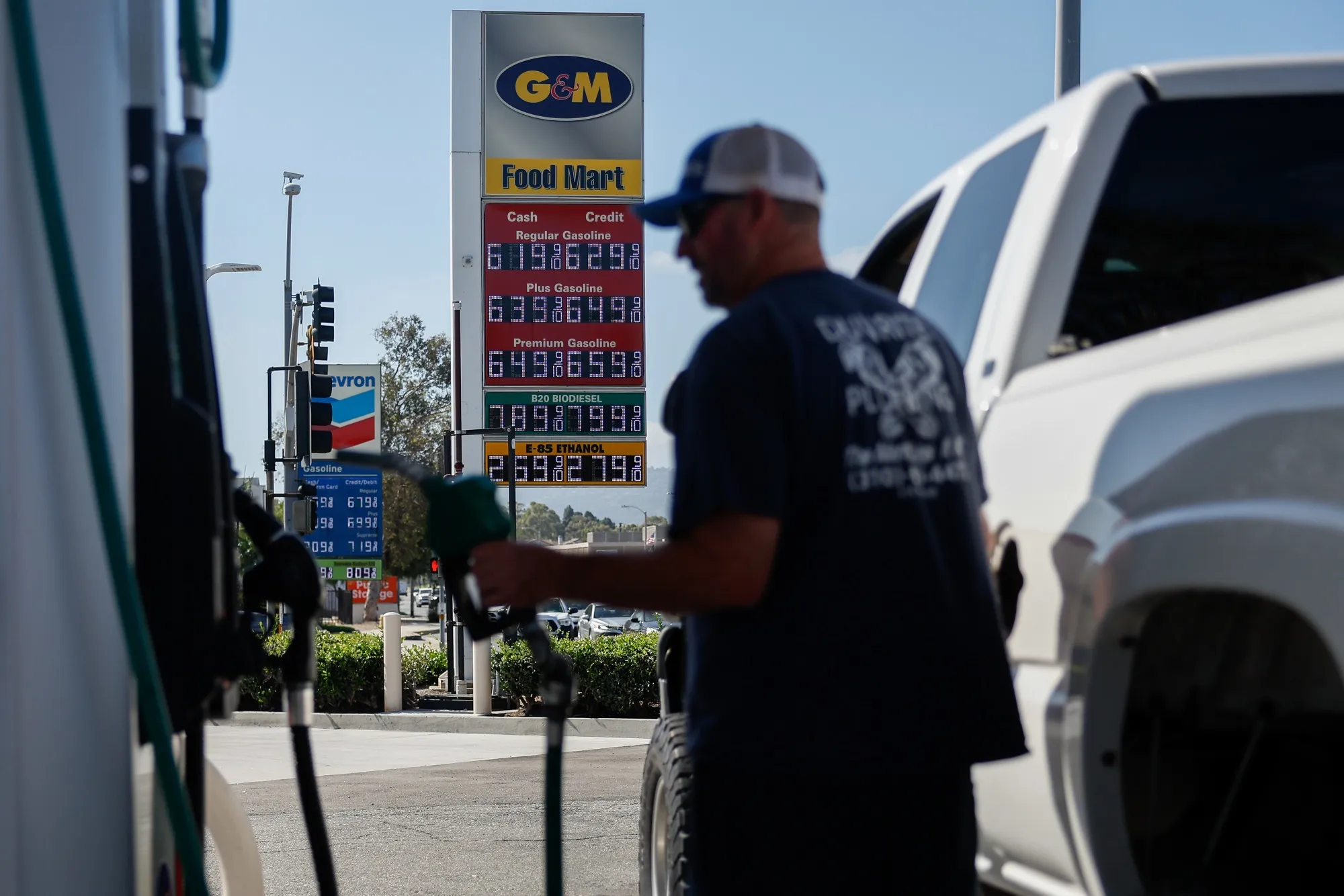
President Donald Trump returned to office promising to lower the cost of living for Americans. At the start of his second term, the price of gasoline in the US was, on average, around $3 a gallon. It’s now above $4 — a record high for this time of year — posing a problem for Republicans as they seek to hold onto both chambers of Congress in November’s midterm elections.
Voters often punish the political party that’s in charge for the pain they feel at the pump. Adding to the GOP’s challenges is the surge in the retail price of diesel, which has breached $6 a gallon for the first time. While most US drivers don’t fill up their cars with diesel, the fuel is used in trucks, farm equipment, trains and construction gear. So, when diesel gets more expensive, the cost of many goods and services often goes up, too.
Trump has blamed the rise in diesel prices on Ukraine’s attacks on Russian oil refineries. Russia, normally the world’s second-largest diesel exporter after the US, enacted a ban on most exports in July to protect its own supply. But the bigger issue for global fuel markets is the Iran war, as shipments of oil and refined oil products out of the Persian Gulf have been constrained for months. Short of striking a deal to reopen the Strait of Hormuz, Trump has limited options to bring down domestic gasoline and diesel prices, which are largely a function of global supply.
What options does Trump still have to try to contain fuel prices?
Trump has previously suggested that a deal to end the Iran war may only materialize after the midterms. That means high fuel prices could persist for weeks, if not months, piling pressure on his administration to seek other ways to try to contain the problem.
As of early October, US consumers had already paid more than $123 billion in extra gasoline and diesel costs — equivalent to around $940 per household — since the war began, according to modeling from Brown University’s Climate Solutions Lab.
— Curb fuel exports
Several Republican lawmakers are calling for curbs on US diesel exports as rising prices squeeze voters in battleground states. While Trump was initially supportive of such a move, he acknowledged concerns about how effective an export ban would be. Energy Secretary Chris Wright, who is among the officials to have expressed reservations, has floated the idea of US refiners voluntarily curtailing their diesel exports and European nations releasing supply from their strategic stockpiles.
A full or partial US export ban may provide temporary relief as the country holds onto more diesel and replenishes its domestic inventories. Prices would likely fall on the East and West Coasts. However, the amount of fuel that can be sent from the Gulf Coast, where US refineries are largely concentrated, is constrained by pipelines already being at or near full capacity. It also takes time to send tankers from states such as Texas and Louisiana to California and New York.
Restrictions on exports could ultimately backfire. The US produces more diesel than it consumes. If refiners lower their diesel output to adjust to the loss of overseas sales, this would likely push up prices globally.
Other fuels could become more expensive, too. When refiners process a barrel of oil, this yields a mix of products, not just diesel. They can adjust the share of diesel in this mix to a certain degree. But to significantly cut diesel output, refiners would have to scale back their overall crude processing, reducing the supply of gasoline and jet fuel as well.
— Suspend federal gasoline and diesel taxes
The federal tax on gasoline is 18.4 cents a gallon and on diesel is 24.4 cents a gallon. Trump said in May that he’d seek to suspend the gasoline duty “until it’s appropriate,” although he didn’t follow through. Oil executives have recently encouraged him to pause the diesel tax in lieu of an export ban. Suspending either tax would require approval from Congress, which is highly unlikely to happen before the midterms given the pre-election recess.
Suppliers may not pass on the full benefit of a gasoline tax holiday to consumers. Prices could drop by between 10 and 16 cents a gallon, according to research from the Bipartisan Policy Center, a Washington-based think tank. Independent budget analysis suggests that the government would face billions of dollars in lost tax revenue each month, adding to the federal deficit.
An alternative to pausing the duty on diesel would be to allow broader sales of a variety of tax-exempt diesel that’s dyed red to distinguish it from conventional fuel. This red diesel is generally reserved for use by farmers and other off-road consumers and cannot legally be used to drive on US highways.
Why the Price of Gas Is the Most Important Number in US PoliticsRecord Diesel Prices Hit at Worst Time in Key Battleground StatesWhite House Mulls Range of Options to Lower Diesel CostsExplainer: How Much Will Drivers Save If Trump Pauses the Federal Gas Tax?
— Incentivize more refinery capacity
Wright has said that the Trump administration is considering using the Defense Production Act to boost refinery capacity. Invoking this Cold War-era law, which gives the president emergency authority to direct resources toward domestic industry in the interest of national defense, could unlock federal funding to support new refineries or revive old plants. But additional fuel production wouldn’t come online overnight and refiners would need to be confident of a return on their investment for years to come. A major new oil refinery hasn’t been built in the US since the late 1970s.
Trump has urged US refiners to increase production. Plants have already been running flat out as their profit margins for making diesel from crude oil have surged. That means there’s little room for existing refineries to boost their output. Refinery equipment is also increasingly vulnerable to breakdowns if operated at high utilization rates for too long, bringing the risk of outages and a further tightening of supply.
What has Trump already done to try to counter the fuel price surge?
— Release of oil from emergency stockpile
The Trump administration ordered the release of 172 million barrels of oil from the US Strategic Petroleum Reserve in March. This was part of a coordinated effort by dozens of nations to discharge supply to the market from their emergency stockpiles and contain the Iran war-driven spike in oil prices. The staggered release from the US SPR is an indirect way of influencing fuel prices as the government mostly maintains strategic reserves of the raw material, crude oil, rather than finished products.
Once the drawdown is completed, the SPR is set to drop to around 244 million barrels — a third of its capacity and its lowest level since the 1980s. That could limit the scope for further releases. The reserve’s operational minimum — below which it becomes difficult for the infrastructure to function — is around 70 million barrels, according to ClearView Energy Partners, a Washington-based consulting firm. Wright has signaled that another major discharge is unlikely.
— Waiver of Jones Act
Trump temporarily waived the more than century-old Jones Act in March to make it easier to move oil, fuel and certain other commodities around the US. The 1920 federal law was designed to protect the American shipbuilding industry and requires goods carried by water between domestic ports to be transported on US-flagged, -built and -owned vessels.
By allowing the use of lower-cost foreign tankers, the waiver has unlocked more cross-country oil and fuel shipments. During the first seven months of this year, Gulf Coast suppliers shipped almost double the volume of crude and petroleum products to the West Coast than they did in all of 2025, according to Energy Information Administration data. West Coast states such as California are more reliant on fuel imports due to insufficient refinery capacity, a lack of interstate pipelines and the Jones Act shipping restrictions.
— Relaxation of fuel-blending requirements
The Environmental Protection Agency authorized an early shift to the sale of wintertime gasoline blends — a move the Trump administration said would boost domestic gasoline supply by hundreds of thousands of barrels per day. Winter-grade fuel contains a higher proportion of butane to gasoline, which increases volatility and makes it easier to start engines in cold weather. Summer blends are formulated to be less volatile to minimize evaporation that contributes to smog.
Some refiners want the government to go further, arguing that federal requirements to mix corn-based ethanol into gasoline and soy-based biodiesel into diesel are raising pump prices. Renewable fuel quotas are a thorny subject for Trump, dividing two of his key constituencies: the agriculture and oil industries. His administration unveiled record-high blending quotas earlier this year, although granted waivers to many small refineries.
— A US-Venezuela oil deal
Trump has said that the deal giving the US majority control of more than 65 billion barrels of Venezuela’s crude reserves will increase US oil supply and “substantially lower gas prices for all Americans.” But analysts have cautioned that any meaningful expansion in Venezuelan production could take years and that a near-term impact on consumer fuel prices in the US is highly unlikely.

 点赞
点赞 收藏
收藏 点踩
点踩 分享
分享