Supreme Court Weighs Shield for Oil Companies as New Term Opens

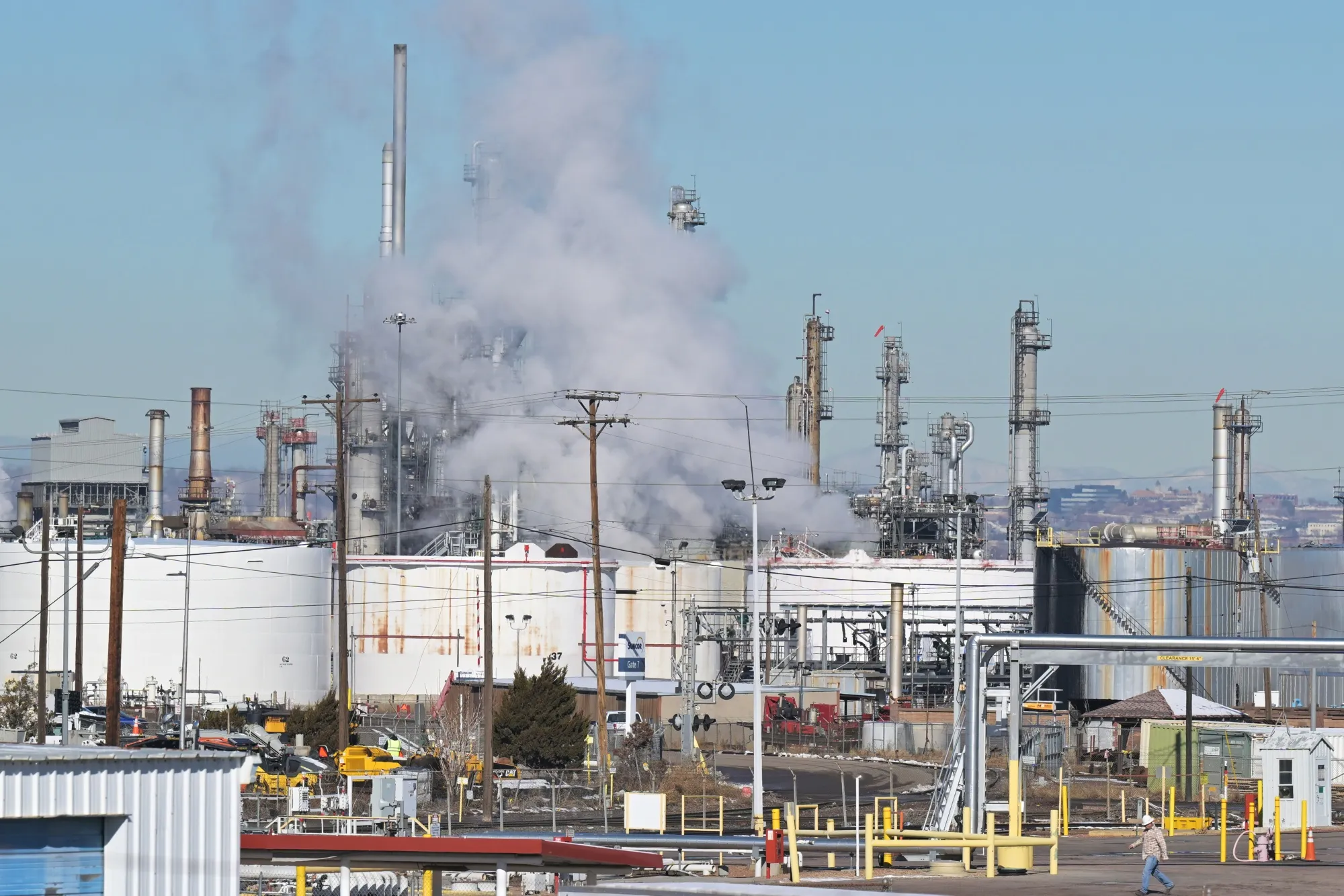
A yearslong legal campaign to hold the oil industry accountable for climate change risks running aground in the US as the Supreme Court takes up a case that threatens to undercut dozens of lawsuits.
The justices open their new term Monday with a Colorado clash that could shield oil and gas companies from claims for billions of dollars being spent by cities, counties and states to adapt to rapidly changing weather patterns.
The climate case will be one of the highlights of a nine-month Supreme Court term that will also feature fights over so-called assault weapons, religious school funding and rapid deportations of undocumented immigrants to countries other than their own. The conservative-controlled court could also be drawn more deeply into the 2026 midterms as Democrats seek to take control of Congress.
Exxon Mobil Corp. and Suncor Energy Inc. are asking the court to toss out a suit by the city and county of Boulder in what has become a test case for similar efforts across the country. Similar suits have been filed against BP Plc, Chevron Corp., ConocoPhillips, Shell Plc and Phillips 66, and others are likely to follow if Boulder’s claims get traction.
“It’s hard to overstate the significance of the case,” said Douglas Kysar, a Yale Law School professor who studies the law of climate change. “It would be within the Supreme Court’s power to entirely shut down a whole category of climate accountability litigation.”
The showdown comes at a fraught time for US efforts to stem the changing climate. President Donald Trump, who has called climate change “a hoax” and “con job,” has undone some of the initiatives and regulations steered by his predecessor Joe Biden. Trump’s Environmental Protection Agency has led the charge on systematically dismantling federal constraints on greenhouse gases, most recently by rescinding Biden-era controls on coal- and gas-fired power plants.
And even if a president takes office in 2029 with designs on addressing the issue, the Supreme Court has made it more difficult for a new administration to take significant steps without congressional action. The court’s conservative supermajority in 2022 sharply restricted the EPA’s ability to use the Clean Air Act to tackle planet-warming emissions.
Meanwhile, climate impacts are rapidly intensifying. The atmospheric level of carbon dioxide, a major greenhouse gas, is now more than 50% higher than it was before industrialization began. The extra heat trapped in the atmosphere is raising average and extreme temperatures, making rainfall more extreme, storms more intense and harming health, from heat-related illnesses to insect-carried diseases.
A 2023 scientific analysis noted by the World Economic Forum estimated that climate change was responsible for $143 billion a year in damage over the previous two decades, driven by loss of human life.
Tobacco Model
Still, the Boulder case underscores the unique obstacles facing lawsuits over the phenomenon. Advocates have long sought to model their efforts after the litigation that fundamentally changed the tobacco industry through a settlement with state attorneys general. The 1998 accord, which included stringent marketing curbs and more than $200 billion in payments, came after documents uncovered in litigation helped turn public opinion against the industry by showing a systematic disinformation campaign.
Climate suits, in contrast, have had trouble getting off the ground. That’s in part because of the Supreme Court, which closed off one avenue in 2011 by ruling unanimously that states can’t invoke federal law to force utilities to cut greenhouse gas emissions.
Boulder is now trying a different approach, suing under Colorado state law using traditional tort doctrines like nuisance and trespass, legal claims that are commonplace in pollution cases. The city and county say the oil companies misled the public about the risks of climate change while simultaneously contributing to the problem by producing and promoting fossil fuels.
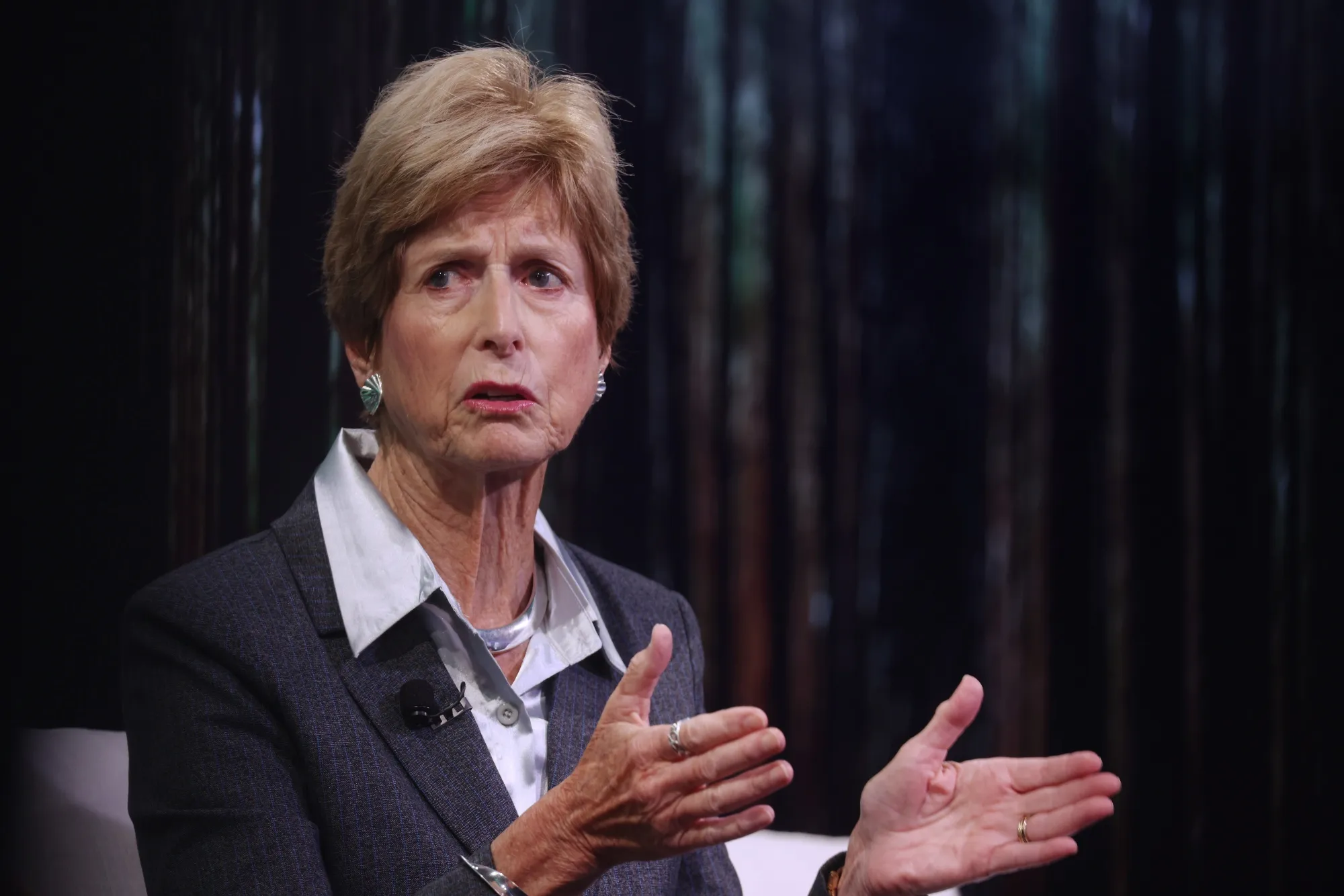
At the heart of the case is whether states can “take steps that the federal government is unwilling to take,” said Christine Todd Whitman, who ran the EPA under Republican President George W. Bush.
“That’s always been the assumption,” Whitman said in an interview at the Bloomberg Green summit in New York. “EPA regulations, to my mind, were always the floor and that if a state wanted to go beyond to protect their citizens, that they felt they needed to do more, that’s up to them.”
Global Issues
But the sheer magnitude of the problem may undercut Boulder’s case. The oil companies and their allies say climate change is a global phenomenon that doesn’t lend itself to state-by-state litigation the way fights over localized pollution do.
“A state cannot just sort of plop itself down in the middle of this turf and start making decisions about relative liability and relative contribution,” former Attorney General Bill Barr, whose clients include energy companies, said at a forum sponsored by mtf.news. “Those are things that have to be dealt with globally.”
In court papers, Suncor and Exxon contend the US Constitution’s structure precludes the Boulder lawsuit. The states “surrendered their ability to redress inherently trans-boundary issues such as global climate change when they agreed to enter the union,” the companies argue.
Boulder called that a “novel” argument that has no basis in the text of the Constitution. The company’s stance “invites a standardless judicial invasion of states’ traditional authority to protect their citizens from in-state harms,” the city and county argued.
The companies also contend that the lawsuit would interfere with the federal government’s control over foreign affairs and run afoul of the Clean Air Act.
The Justice Department backs those arguments, including the companies’ assertion that the Clean Air Act makes the EPA the primary regulator of greenhouse gas emissions. “This court has never countenanced the notion that a single state could dictate how the entire country – let alone the world – addresses a global problem with indivisible global effects,” US Solicitor General D. John Sauer argued in court papers.
That stance has complicated the administration’s move overturning the EPA’s pivotal 2009 “endangerment” finding, under which it concluded that greenhouse emissions threaten public health and welfare.
Frustrated Officials
It’s also opened the administration to accusations of hypocrisy. The EPA asserted in a February rulemaking that the agency lacked authority under the Clean Air Act to regulate vehicle greenhouse gas emissions. The agency doubled down in September, arguing in a separate proposal that a different section of the law doesn’t authorize the EPA to curb greenhouse gas emissions from power plants.
“There’s something brazen about the federal government taking the position that the Clean Air Act or federal law is the way to address climate change, while simultaneously saying, for a whole bunch of various reasons, that it doesn’t actually think federal law has anything to say about climate change,” said Kirti Datla, director of strategic legal advocacy at Earthjustice, which backs Boulder.
EPA officials were caught off guard by the Justice Department’s assertions, according to people familiar with the matter who asked for anonymity because the interagency conversations were not public.
Frustrated agency officials argued — unsuccessfully — there was no need for the DOJ to embrace the statutory argument and simultaneously undercut the administration’s push to jettison greenhouse gas curbs, given that the Justice Department was already asserting Boulder’s claims are constitutionally barred, the people said.
The EPA said in an emailed statement that it “strongly supports” the administration’s position. “It is simply false that EPA officials were ‘caught off guard’ by a position that EPA has consistently taken across multiple regulatory actions and in ongoing litigation for nearly two years,” the EPA said.
The Justice Department didn’t respond to a request for comment.
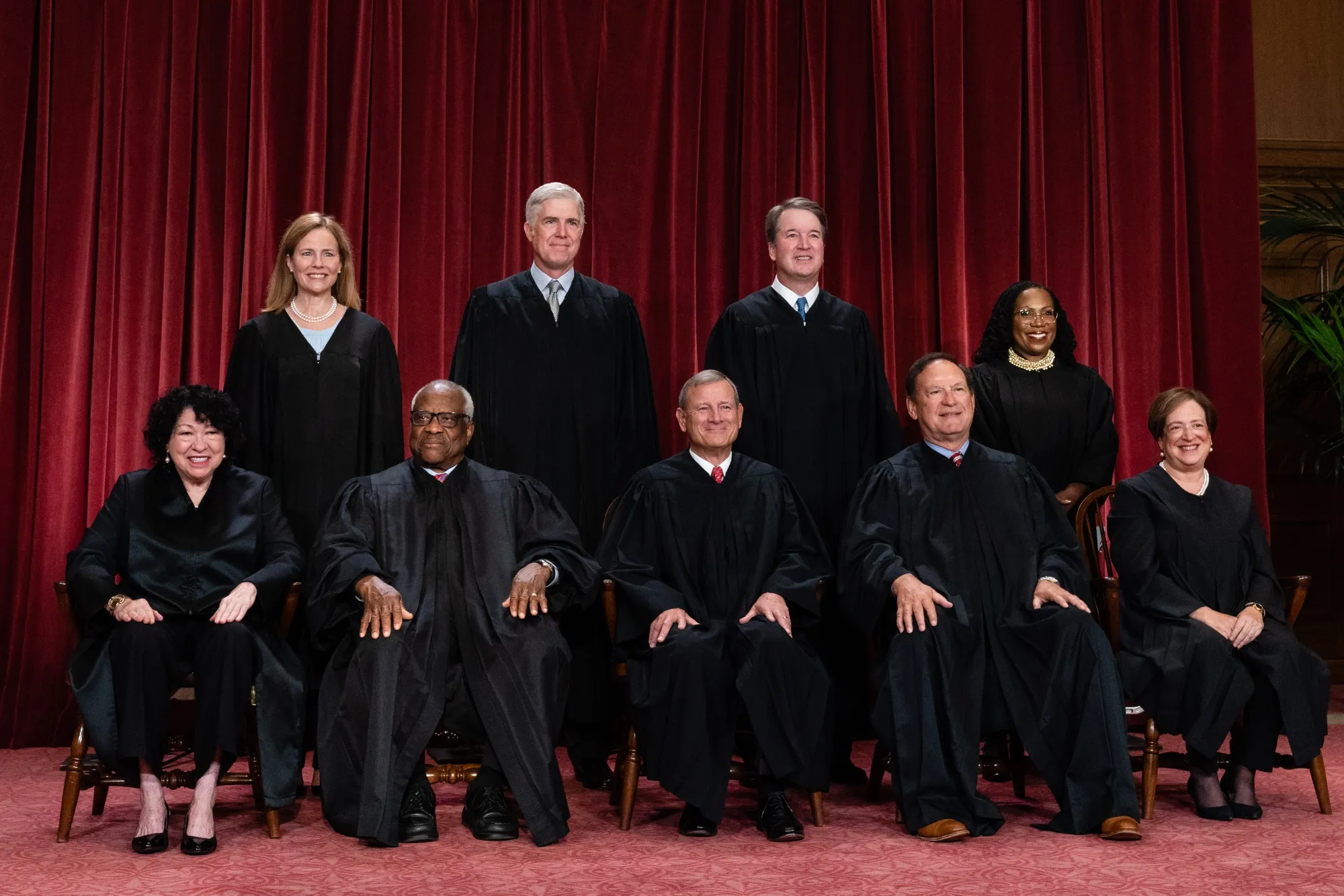
The energy companies got an unexpected setback this week when Justice Samuel Alito — a conservative likely to have been receptive to their arguments — announced he wouldn’t take part. Alito, whose wife owns shares in other oil companies, said in an interview Wednesday that the move was a “prudent step” he took even though the court’s legal office said it wasn’t required.
Alito’s recusal opens the possibility the court might split 4-4, a result that would let the Boulder suit go forward without setting a nationwide precedent.
Even so, the Boulder suit faces tough odds, said Deepak Gupta, a Washington lawyer who frequently argues at the high court but is not involved in any of the climate cases. Speaking on a panel sponsored by Georgetown Law Center in September, Gupta said the justices’ decision to take up the case suggests they are likely to block the lawsuit, even if it’s unclear what legal path they will take.
“It seems like the court is inclined to think this is a problem,” Gupta said. The case “is maybe a result in search of a theory.”
The court is scheduled to rule by the end of June. The case is Suncor v. County Commissioners of Boulder County, 25-170.

 点赞
点赞 收藏
收藏 点踩
点踩 分享
分享