JPMorgan’s Sundar Sees ‘Healthy’ Tumult of Two AI Cycles at Once

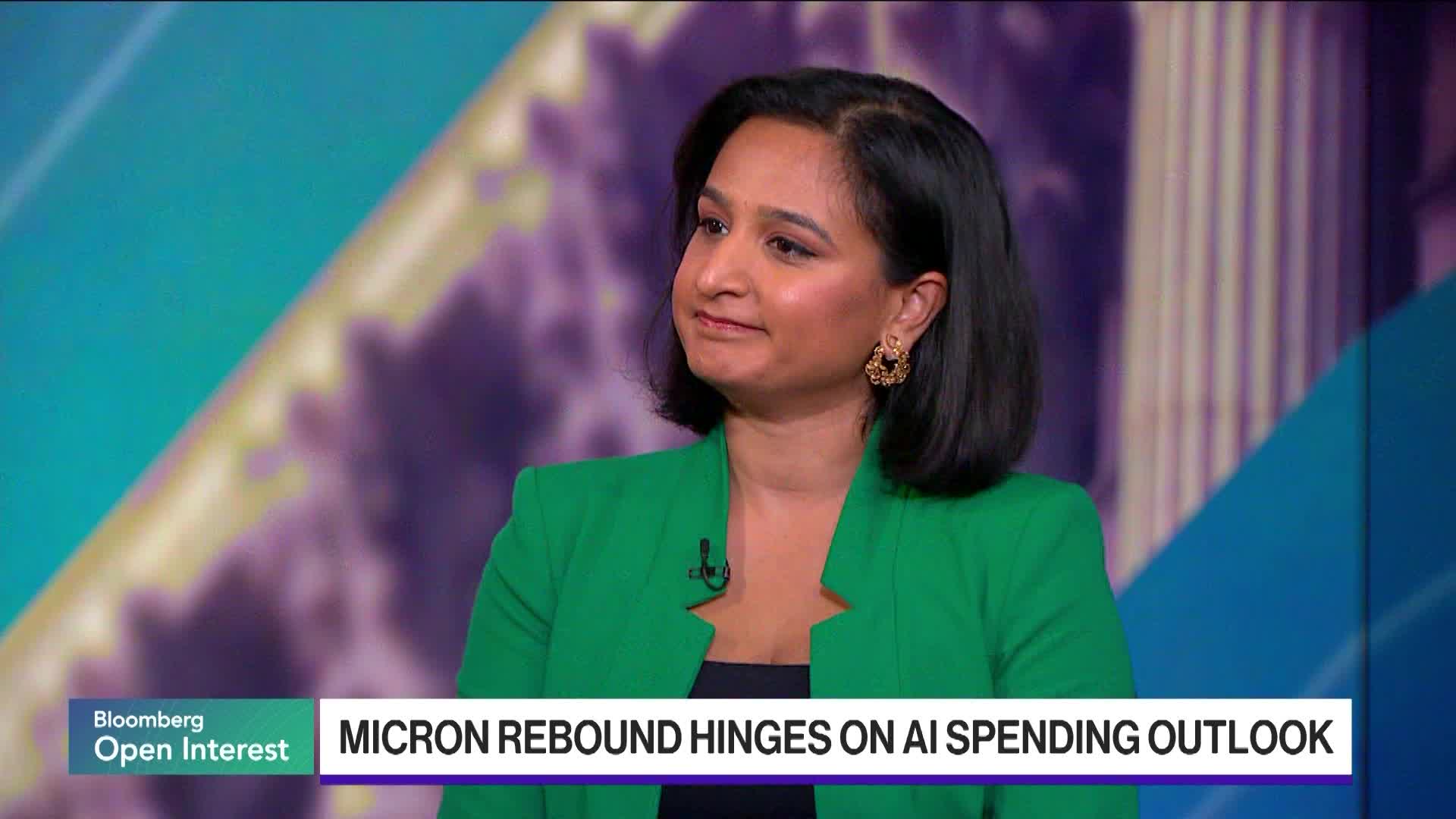
JPMorgan Chase & Co.’s Sitara Sundar urged investors to diversify their bets on artificial intelligence because the industry is caught in the “healthy” volatility of two cycles occurring at once.
The finance-and-infrastructure cycle is now in its “mid-innings,” Sundar said Wednesday in a Bloomberg Television interview, as hyperscalers move to capital markets issuance rather than relying on their own cash flow. At the same time, AI’s integration into the economy is still in the early stages, with productivity gains just starting to reach businesses, she said.
“The volatility that we’re seeing within the tech space, I think, is healthy. It’s normal, and it’s something that we probably anticipated coming into this year,” said Sundar, the head of alternative investment strategies at JPMorgan’s private bank.
The AI-driven surge in stocks this year masks huge variations across tech, with the Philadelphia Semiconductor Index surging 78% through Tuesday and the iShares Expanded Tech-Software Sector ETF down 0.4% in the same period. Sundar favors leaning into select hyperscalers, being choosy within semiconductors, and looking to venture capital and private equity-owned businesses that stand to benefit from AI-driven productivity over a three-year horizon.
Sundar applied her dual-track approach to assessing issues such as who wins in the upcoming expansion of enterprise AI, where Meta Platforms Inc. created a new platform this week.
Hyperscalers probably will still prevail when competing on broad, consumer-oriented use cases for AI, she said, while specialty operators likely will succeed in niches such as finance or law. “I think two truths can exist at the same time,” she added.
She was equally measured on the challenge from government bond yields at multiyear highs. The neutral rate for the AI buildout is “fundamentally different” from the neutral rate for the broader economy, Sundar said, because demand for AI compute remains unaffected.
(This story was produced with the assistance of Bloomberg Automation.)

 点赞
点赞 收藏
收藏 点踩
点踩 分享
分享