Apple Is Finally Ready to Enter Its Next Big Category: the Smart Home

Apple Inc. plans to make its long-delayed push into the smart-home market on Oct. 13, marking a critical product expansion for the company under new Chief Executive Officer John Ternus.
At the center of the strategy is a smart-home hub code-named J490, according to people familiar with the matter. Apple also plans to announce the first update to the HomePod mini since that device’s 2020 debut and its first new TV set-top box since 2022.
It’s a major early test for Ternus, who took the reins Sept. 1. The company sees the smart home as a lucrative opportunity — one of Apple’s famous “next big things” — but the tech giant has previously struggled to make much of a dent in the category, trailing behind Amazon.com Inc. and Alphabet Inc.’s Google.
The products also serve as a showcase for Apple’s new Siri AI assistant, technology that the company spent years developing. The revamped Siri suffered numerous delays, and the smart-home devices should help spotlight Apple’s efforts to finally catch up in artificial intelligence.
The home hub will take the form of a roughly 6-inch square display, with versions that can be mounted on a wall or placed on a countertop, according to the people, who asked not to be identified because the products haven’t been announced.
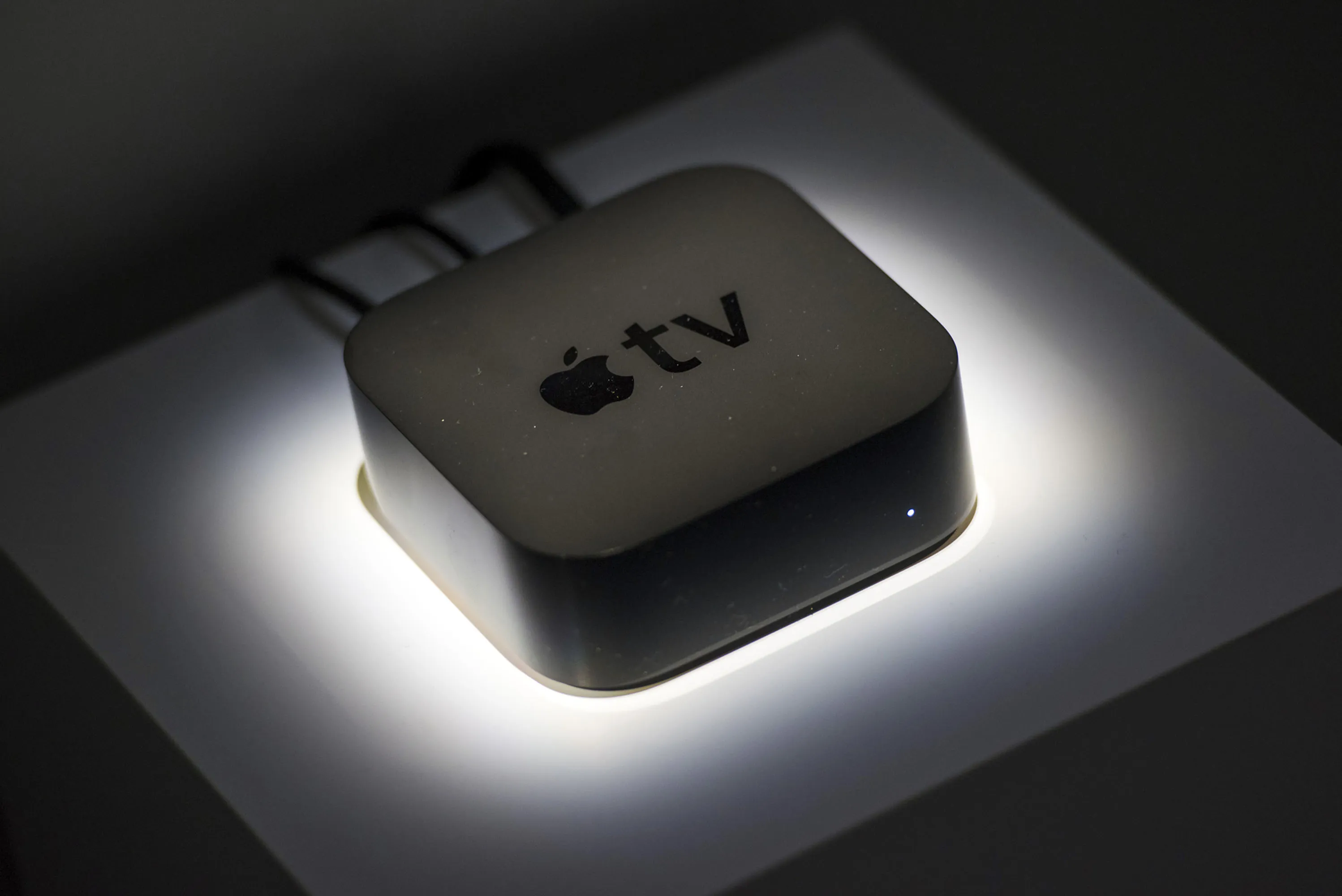
The new HomePod mini and Apple TV, meanwhile, will retain their current designs but include faster processors to support Siri’s more powerful AI models, the people said.
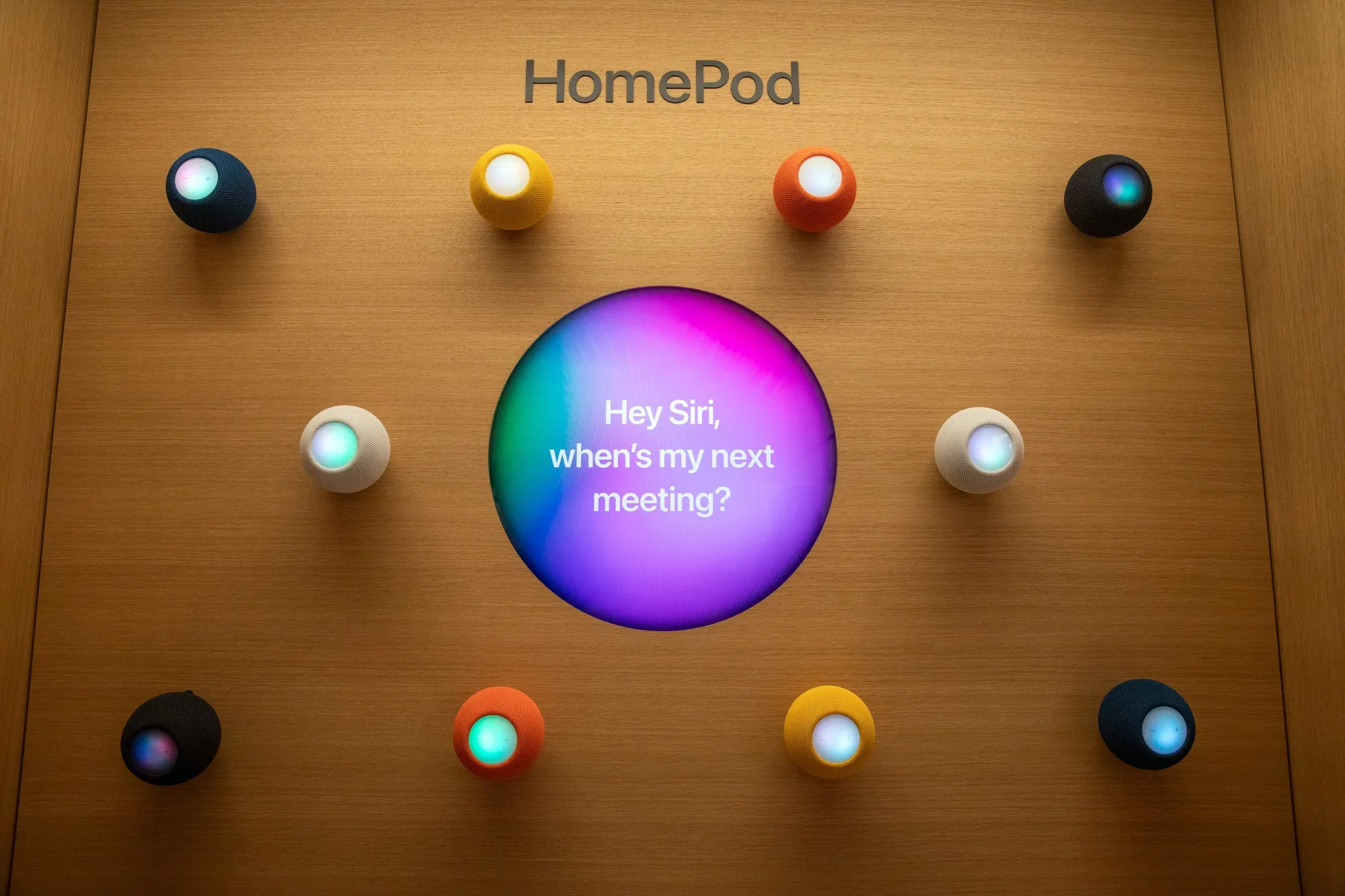
The new HomePod mini will also come in fresh colors, including green and pink. Apple aims to eventually update its larger HomePod speaker as well. Bloomberg News has previously reported on the new devices and their connection to Siri AI.
A spokesperson for Cupertino, California-based Apple declined to comment.
The hub’s defining feature will be its ability to serve multiple members of a household. It is designed to recognize who is speaking to it or approaching it, and then display personalized content and provide answers based on that person’s data and accounts.
When a user walks up, for example, the device will show that person’s contacts, messages, calendar appointments, notes and preferred app layout. The interface can then change automatically when another recognized household member approaches. It will also have a mode for visitors that hides personal information.
Read More: Apple’s ‘Personal Hub’ AI Strategy Hints at Upcoming Home Device
The device identifies users by their voices or through a facial-recognition system, though the latter is less reliable than Face ID on the iPhone. Users can require secondary authentication through an iPhone if they don’t want to rely solely on voice or facial recognition. The iPhone also serves as a fallback when the hub cannot identify someone correctly.
In dark rooms, a virtual white ring light illuminates the area around the screen to help the camera recognize the user.
Apple envisions customers placing several of the displays throughout their homes. They could be used to control thermostats, door locks and other connected products, as well as for video calls, intercom-style communication, music playback and viewing slideshows of photos stored in Apple’s iCloud service.
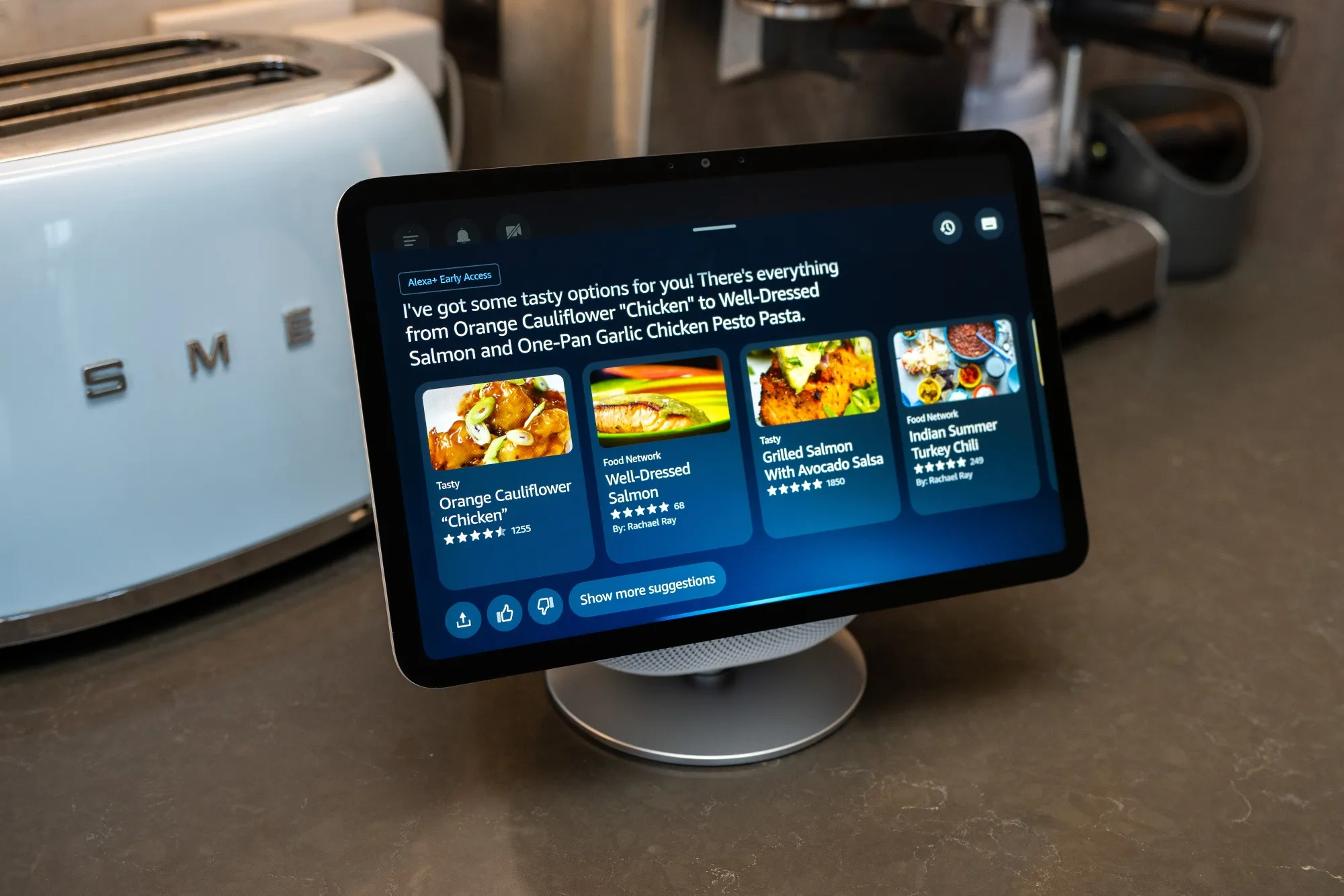
The company also sees the device as a communications and information hub for the kitchen, where users could look up recipes with their voice, watch videos or make FaceTime calls while preparing food.
Because the device is intended to remain stationary, it has a single FaceTime camera on the front and no rear camera. The product has microphones and speakers in its connected base.
The hub is about as thick as an iPhone, and its display is surrounded by a quarter-inch, black bezel reminiscent of older iPads. It has rounded corners and no sharp edges. The device lacks a battery, so it has to be plugged in at all times, and there are no volume or power buttons.
The product comes in Apple’s standard gray aluminum finish and includes a USB-C port for power. The screen sits above a metal, round base with multiple rings of perforated speaker holes and connects to it through a polished metal arm. Users can manually tilt the display forward or backward. And the base has a rubberized bottom to help it stay on a table.

The standard version looks reminiscent of the famous iMac G4 from 2002 that has a large display that sits on a half-dome-shaped base.
Apple has also developed a second version, code-named J491, designed to be mounted on a wall. It has a thin, square-shaped base beneath the display that houses the speakers and microphones. The base sits flat on the wall below the screen. This version also must remain connected to power through a USB-C cable.
The launch has been years in the making. Apple concluded several years ago that it needed a stronger presence in the home, a market where competitors such as Amazon and Google have made significant inroads. Apple’s first attempt, the original HomePod, struggled after its 2018 debut. The less expensive HomePod mini performed better but never became a major seller.
Apple eventually settled on a new approach: combining an AI-driven operating system and voice assistant with a HomePod-like device featuring a screen. The company is also working on a privacy-focused home-security camera and sensor, code-named J450, that can detect which room a person is in. That device, slated for release at a later date, doesn’t record video.
Another product under development is an upgraded version of the home hub. It pairs a larger, 9-inch display with a robotic arm that allows the screen to move through space. The display on the more advanced model is designed to swivel 360 degrees.
Apple initially aimed to launch its first smart-home display, new HomePod mini and Apple TV in 2024, alongside the revamped Siri. But delays to the digital assistant forced Apple to postpone the home devices as well. With Siri AI launching this month on the iPhone, iPad, Mac and other Apple products, the company is finally positioned to introduce its new smart-home lineup.
The new Siri relies on large language models — developed with help from Google — and can draw information from the open web. It’s also designed to work more reliably than the previous version of Siri. And it allows users to control their devices, smart-home appliances and apps more seamlessly.
Read More: Apple Set to Make Big Smart-Home Push With Siri AI at Center
The hub device carries over the dark visual style of Siri AI on Apple’s other products. Its operating system blends elements of the Apple Watch, Apple TV and iPad interfaces. That includes the use of iPad-like app designs and Apple Watch-style icons on its home screen. It also has iPhone-style widgets like those for viewing stock tickers, calendar events and the weather.
The interface is built heavily around photo slideshows and clock displays, similar to the new StandBy Mode on the upcoming iPhone Duo foldable phone. One clock resembles a lava lamp with an overlay of the time that shows the hour in digital form with minutes listed below. Users can then swipe up from the clock screen or photos to open the app launcher.

Apple is including many of its most frequently used apps, including Calendar, Messages, Photos, FaceTime, Notes, Reminders, Music and Podcasts. Users can choose a wallpaper and rearrange apps and widgets by pressing and holding them, much as they would on an iPhone.
Individual apps also borrow from the iPad. Messages, for example, uses a two-panel layout. When users touch a thread in their list of conversations, a second pane opens up to show the conversation. That interface carries over to many of the other preinstalled apps.
Alongside the hardware, Apple is developing a broader smart-home ecosystem that expands on HomeKit software and supports new categories of connected products. The company is working with third-party manufacturers on new devices designed for the Siri AI home platform.

 点赞
点赞 收藏
收藏 点踩
点踩 分享
分享