Mathematicians, Here's a Way to Think About Your Existential Crisis

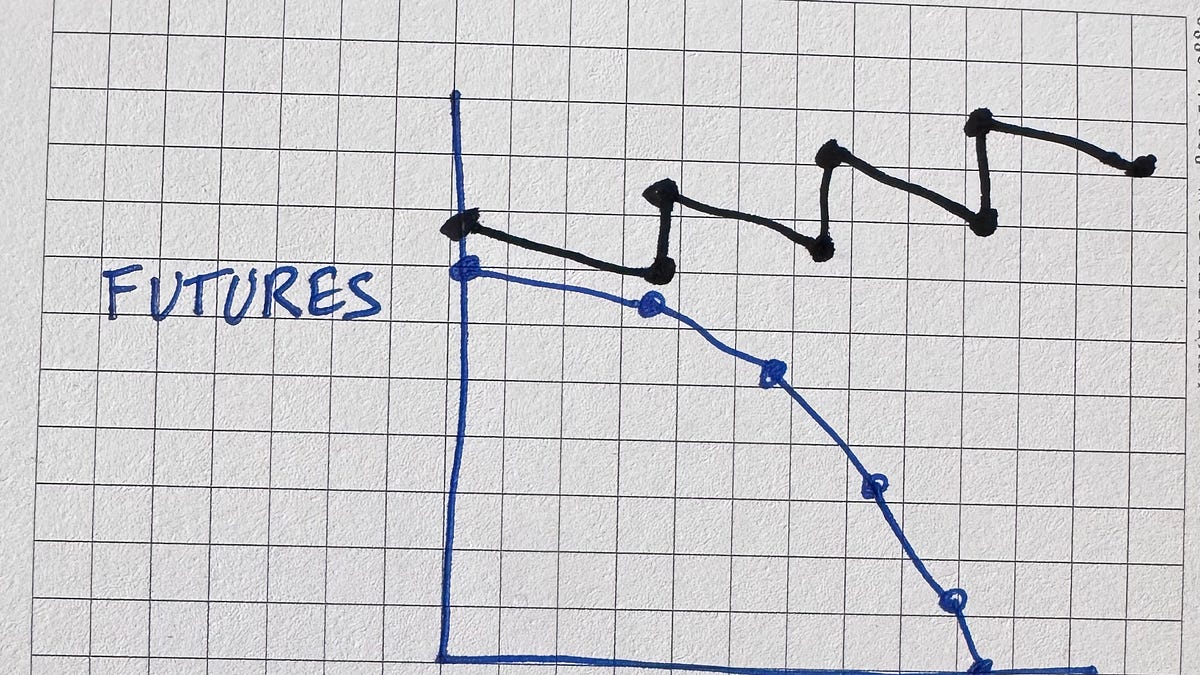
Two years ago programmers were all like, “What I do is code. Who I am is a coder. The genie codes. Now who am I?” Now mathematicians are all like, “What I do is prove theorems. Who I am is a theorem prover. The genie codes. Now who am I?” Here’s a framework I’ve found helpful for answer that question for myself.
Features & Futures
Something similar to the structure of the two fields, programming & math, is that there is a (relatively) visible part—features in the case of programming & proofs in the case of mathematics—& a huge (relatively) invisible part. The invisible part is understanding, education, simplification, enabling abstractions.
If all we work on is the visible part, progress on that visible part slows to a crawl. But nobody gets credit for the invisible work, so we rely on an ethos of work to ensure that the invisible work gets done and everyone can continue to make progress on the visible stuff.
I call this hidden dimension “futures”, although “optionality” might be a more accurate word (if less alliterative).
In programming we also call this inverse of this axis “technical debt”, coined by Ward Cunningham. Sometimes you have to pay off your debts to get “interest” payments low enough that you can get back to progress on the principal.
Genies Hate the Invisible
I wonder if the angst among mathematicians is because:
- The genie is so good at the visible stuff
- Without the invisible work, visible progress eventually slows to a crawl, genie or no genie
- Nobody gets credit for the invisible work
Put these together & you have a world where mathematicians no longer get any credit. The visible stuff is better done by machine. The invisible stuff is, well, invisible.
So What?
One constructive response to the identity crisis for programmers is to say hey I’m here to keep the genie on course. With the genie’s help I’m able to learn quicker than ever before. I still get to use my honed intuition to quickly stop useless directions. My reach has just extended. Yes, my work has changed, but my strategic decisions are more valuable than ever because they come more frequently.
I visualize this as taking breaks between visible progress to make invisible progress. I wonder if this way of thinking about their situation will help mathematicians take advantage of the powerful new tools available to them without losing their reason for being mathematicians. Good luck!
Most teams don’t have a strategy problem. They have an adaptation problem.
Your plan was never going to survive contact with reality. The question is whether your organization bends or breaks when it doesn’t.
I help teams bend. Adapt to Thrive.
Booking a handful of custom talks and advisory engagements now. I interview your people, measure your real software flows, and hand you the truth plus what to do about it.
Curious whether it fits? Tell me about your team.

 点赞
点赞 收藏
收藏 点踩
点踩 分享
分享