Lithuanian Premier Offers to Pay for Permanent US Troop Presence

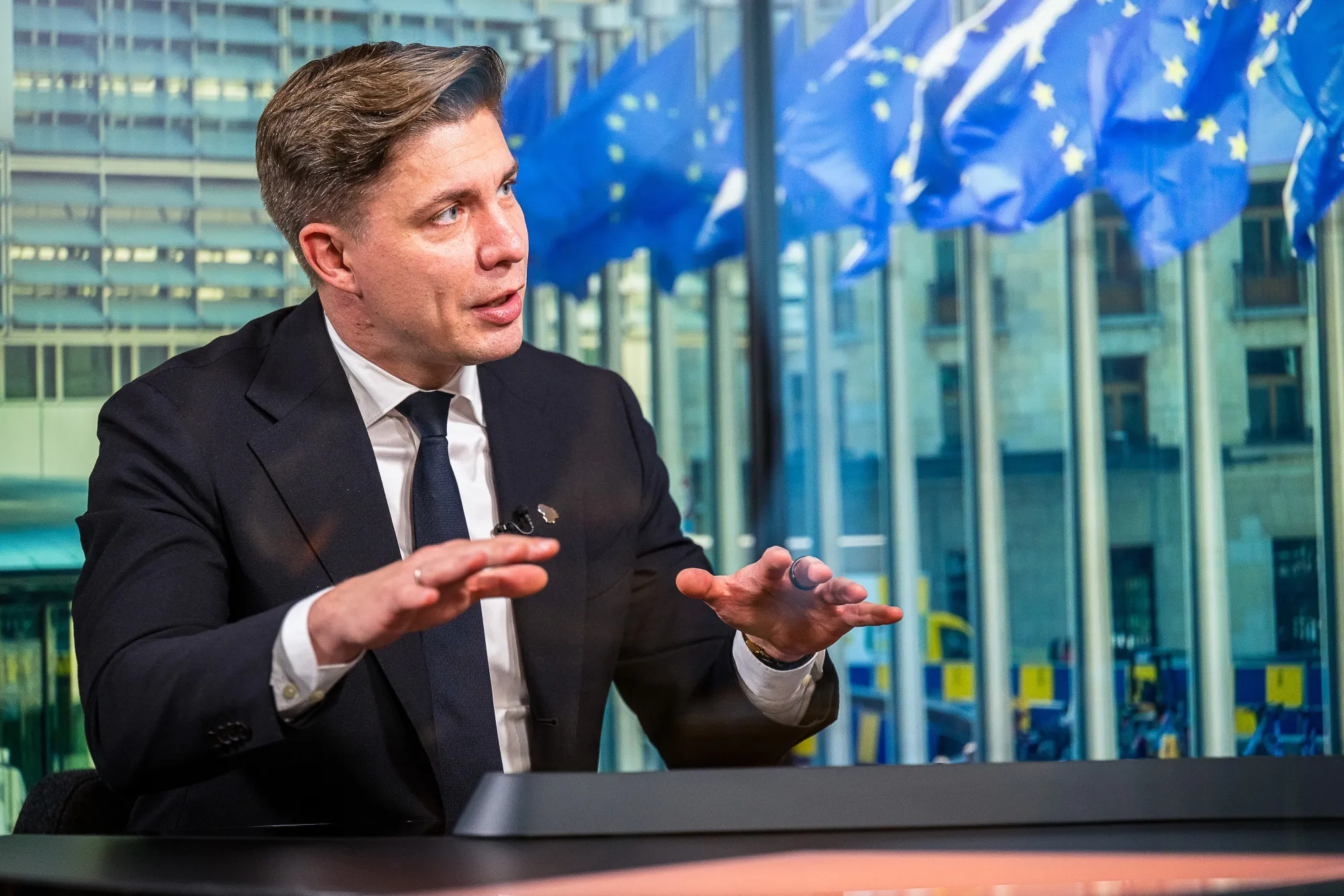
Lithuania is “ready to pay the bill” to permanently host US troops and has raised the issue with Washington as the Baltic nation seeks to lock in American security guarantees, Prime Minister Mindaugas Sinkevicius said.
“We would definitely go for it if they’re ready,” Sinkevicius said in an interview with Bloomberg TV in Brussels on Tuesday, adding that he spoke with John Coale, President Donald Trump’s envoy to neighboring Belarus.
He also thanked Trump’s administration for sending another rotation of “up to 1,000 US troops” to Lithuania, saying the move made Lithuania “feel safer” in the face of neighboring Russia’s “imperialist dreams.” The US decision ended three months of uncertainty over Washington’s military presence in the Baltic nation.
Sinkevicius is trying to bolster his country’s security as the Kremlin’s full-scale invasion of Ukraine increasingly spills over into the North Atlantic Treaty Organization’s eastern flank. Numerous countries have experienced drone incursions and NATO fighter jets recently shot down a Russian-made drone that entered Lithuanian airspace from neighboring Belarus.
Lithuanian President Gitanas Nauseda said the drone probably targeted Ukraine but was diverted by Kyiv’s electronic warfare measures. Still, the incident underscored mounting concern across the alliance’s eastern edge, where authorities blame Russia for numerous acts of sabotage.
Such incidents are becoming “business as usual” as Russia becomes “more reckless,” Nauseda recently told Bloomberg News.
Read More: Estonia Says Russia Behind Arson Attack on Defense Firm
Still, Sinkevicius pushed back against fears of a broader-scale Russian military operation in the Baltic states, saying that Lithuania’s intelligence agencies “didn’t see any intensified risk, but it’s better to be safe than sorry.”
In preparation, Lithuania has stepped up defense spending and is pressing allies to maintain a visible presence in the region. The government is allocating 5.38% of gross domestic product to defense this year, above NATO’s suggested target, and plans to maintain spending at 5% or more in 2027.
Lithuania is also considering amending its constitutional restrictions on nuclear weapons in a bid to benefit from the nuclear umbrella of other NATO member states.
Sinkevicius cautioned that the move would primarily enable the transit of allies’ nuclear weapons through the country’s territory and was not intended as an “escalation.”

 点赞
点赞 收藏
收藏 点踩
点踩 分享
分享