Meloni Crafts Budget to Appease Both Italian Voters and Markets

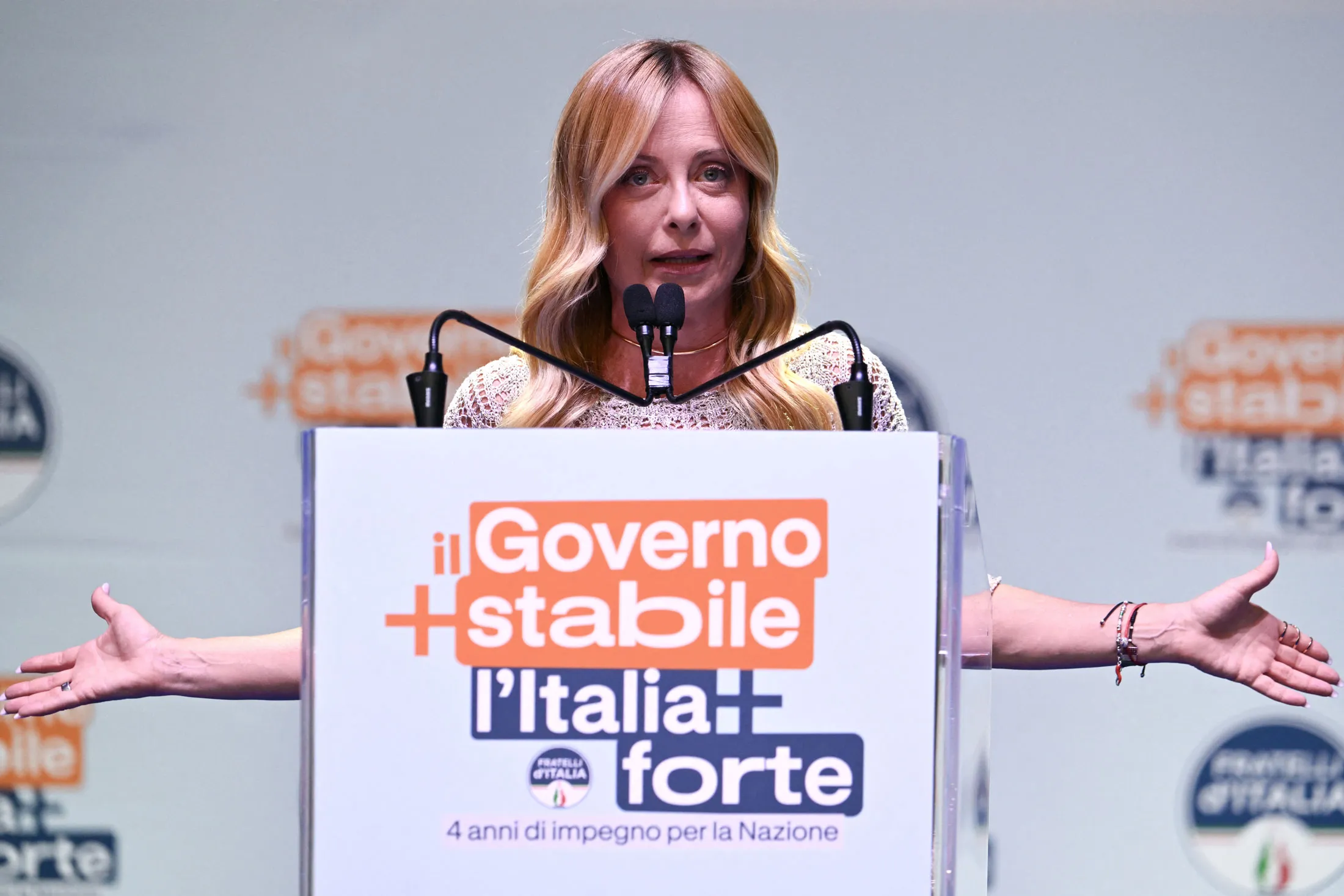
Prime Minister Giorgia Meloni’s upcoming budget will lay out multiple tax cuts, while aiming to reassure investors that Italy’s finances will remain under control.
The premier’s 2027 fiscal plan, the last before general elections next year, will feature giveaway measures primarily funded by faster-than-expected growth, a deficit narrowing to European Union limits, and debt falling in due course, people familiar with the matter said. They asked not to be identified because discussions on the matter are ongoing. The Finance Ministry declined to comment as the budget is still being drafted.
Those parameters will define a public-finance package for Italy designed to put Meloni on track for re-election just as her three-party coalition faces internal squabbling and an ultra-nationalist challenger to its support.
She and her finance minister, Giancarlo Giorgetti, are also trying to placate jittery investors at a time of rising global bond yields and increased scrutiny on other indebted euro-zone members such as France.
Meloni is trying to woo voters with giveaway measures across the board, for citizens as well as companies, aiming to keep at bay the resurgent National Future party led by former general Roberto Vannacci. The group has risen to around 8% in recent polls.
The government has already said it wants to widen an income-tax bracket to include more people, thus delivering on one of Meloni’s signature promises.
It would cut levies to 33% for earnings between €50,001 ($56,900) and €60,000 euros. Last year, the same measure was delivered for the category between €28,001 and €50,000, but a further widening of that bracket was deemed too costly.
Italy’s two other income brackets are currently 23% on salaries up to €28,000 per year, and 43% for those above €50,001.
The people said other planned tweaks include:
lower levies for younger workersa flat tax for companies that renew contractstax breaks for small storesa cut to taxes on Italy’s “13th salary” (an additional monthly payment traditionally received around Christmas)
To further woo voters, Meloni recently announced a sweeping reduction to fees paid for vehicle ownership. It will affect about 70% of all cars and motorcycles and will cost about €2 billion, according to the people.
The challenge will be to fund all this while keeping the country’s accounts in line with EU fiscal targets. So far, Meloni and Giorgetti have kept Italy mostly on track, instilling credit assessors such as Moody’s Ratings with greater confidence.
“The Italian economy has shown resilience to the energy price shock emanating from the Middle East conflict, and we expect the prudent fiscal stance to be maintained,” Moody’s said in recent days after a review of the country.
Such a stance has helped reassure financial markets. The spread between Italian 10-year government bonds and comparable German ones, a measure of risk in the region, has widened to almost 95 basis points. While that’s the highest since March, it remains well below the over 200 basis points reached when she first came to power.
New forecasts contained in the budget will give a clearer idea of the leeway for the government. Giorgetti said last month he expects gross domestic product growth to be near 1% this year, and the deficit to be below the EU’s 3%-of-output limit.
He recently admitted disappointment about missing out on an earlier arrival at that goal last year, with final data showing the shortfall at 3.1%.
The projections will likely show the deficit falling further in 2027, while growth will likely slow to around 0.6%, the people said. Debt will slowly start to decline on an unspecified timetable, they said.
Meloni to Abolish Italy Vehicle Ownership Tax to Woo VotersItaly’s Giorgetti Says Income-Tax Reduction Remains His PriorityEU Executive Challenged Over Fiscal Control of Italy and FranceMeloni Loses Hope of EU Reprieve With Deficit at 3.1%
Moody’s reckoned on Friday that the deficit will fall to 3% in 2026 and 2.9% in 2027.
“We project the public debt ratio to stabilize at around 138% of GDP in 2026 and 2027, and to start a gradual decline thereafter, based on solid primary surpluses and the fading effect from previous years’ housing renovation tax credits,” it said.
The budget must be presented before Oct. 15 so that it can go to the EU and to the Italian parliament for final approval by the end of the year. The final size and design of measures may still change as parties wrangle over funding in the coming weeks.

 点赞
点赞 收藏
收藏 点踩
点踩 分享
分享