A Difficult Budget Hangs Over John Healey at Labour Gathering

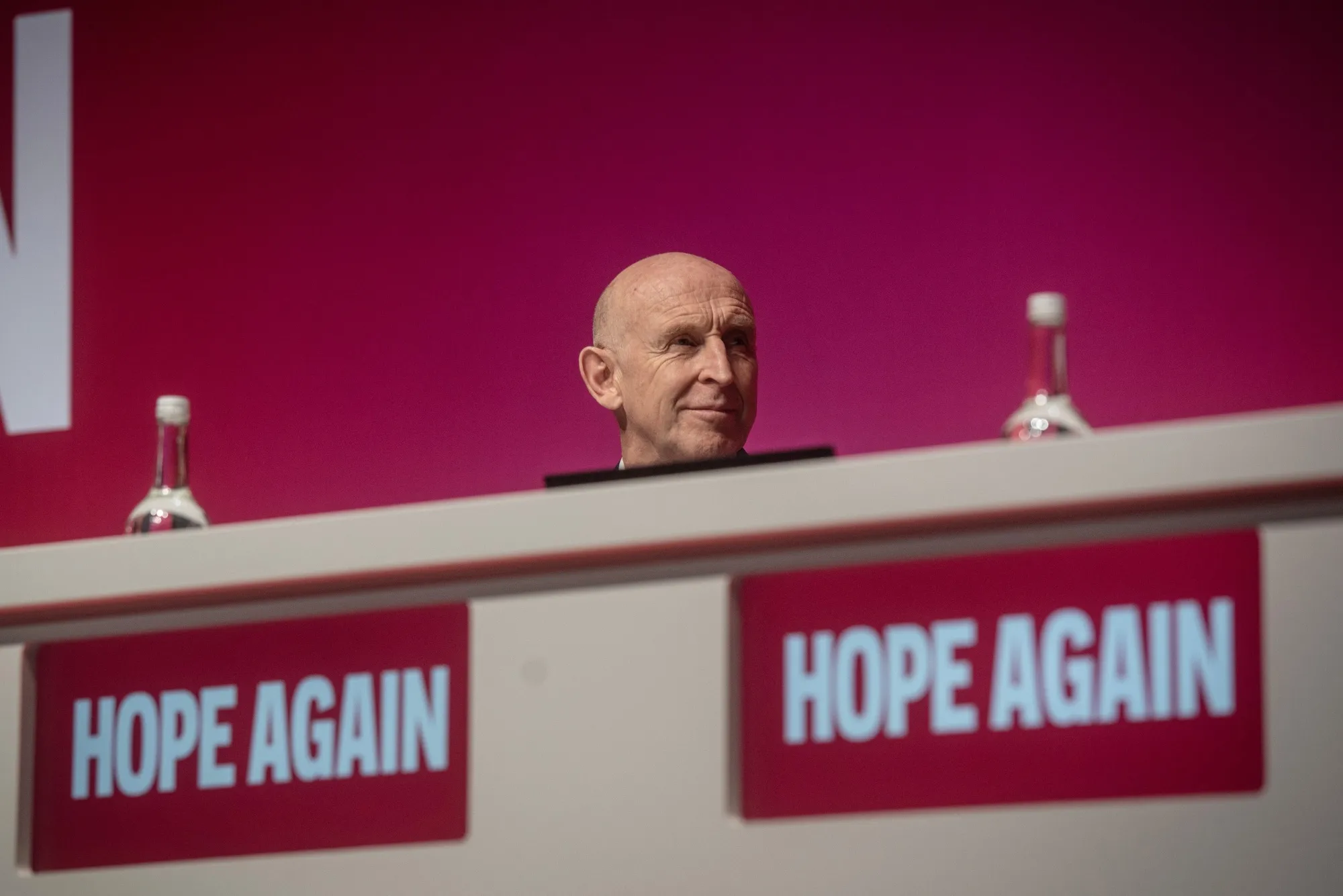
As Britain’s governing Labour Party gathers in Liverpool for its annual conference, one notable figure is trying to maintain a low profile: Chancellor of the Exchequer John Healey.
Healey will be skipping many of the usual fringe events and speaker panels to work on next month’s budget, according to people familiar with his plans. The Oct. 28 date he’s set is a month earlier than last year, and was chosen to limit policy speculation but has put a squeeze on the chancellor’s diary, the people said.
Healey’s focus at the party’s annual jamboree is a sign of the importance and difficulty of his fiscal set piece, which hangs over both him and new prime minister Andy Burnham while they’re feted by party members in Liverpool.
It’s a high-stakes moment for the pair, as they seek to land a pivot from the boosterish optimism of Burnham’s early days as premier to a tougher message of tax rises and spending restraint. They are seeking to repair the public finances after the US-Iran war caused bond yields to spike, raising the UK’s borrowing costs.
“There’s a recognition that we face big constraints and big structural challenges,” Secretary of State for Scotland Douglas Alexander told Bloomberg TV on Sunday.
The budget would have been much more ambitious had the war not defied peace efforts to drag on unresolved, according to one cabinet member, who like others interviewed for this story requested anonymity in order to be able to speak freely.
Still, Burnham began the week’s events by placing a very lofty — and expensive — challenge for the chancellor at the center of his longer-term plans, when he vowed to reform the social care system to make it free to users along the same principles that govern the UK’s National Health Service. He said the details would be put to voters before the next election.
Read More: Burnham Hints at New UK Taxes to Fund Major Reform to Elder Care
In the immediate term, Healey has no choice but to temper reforming aspiration with a dose of fiscal reality in his Monday conference speech, talking up reducing costs for businesses and investing in British industry, while also stressing the need for budgetary discipline.
Burnham’s de facto deputy, Louise Haigh, on Sunday gave a hint of the government’s re-industrialization plans with a promise to map out a long-term shipbuilding strategy “to bring an end to the feast and famine of public contracts.”
For Healey, a round of interviews planned for broadcasters Monday morning has been canceled in favor of appearances by Defense Minister Wes Streeting, after authorities foiled an incident early Sunday at RAF Fairford, a key launching point for US strikes against Iran.
The questions that will dominate discussions among executives in Liverpool is what Healey has in store next month, and how far he’ll go with any potential tax hikes and spending cuts. Their consolation may be that Healey would be reluctant to answer them, even if he appeared, because he has committed to limiting the speculation that roiled his predecessor Rachel Reeves’ preparations last time.
UK Chancellor Healey Vows Fiscal Rigor in First Big SpeechHealey Should Restore UK’s Fiscal Buffer, Economists SayBurnham’s Where He Didn’t Want to Be: ‘In Hock’ to Bond MarketsBurnham Warns Tough UK Budget Lies Ahead in Tonal Shift
Options the Treasury has been considering to raise revenue include a potential hike to capital gains tax, higher levies on pensions, plus windfall taxes on banks and oil and gas companies.
Healey is in the position of having to deliver a revenue-raising budget because of the double whammy of rising debt-interest payments alongside needing to find funds to cover new spending commitments revealed by Burnham. The list of announcements grew further on the eve of Labour conference, when Burnham revealed a new equity-loan program to help first-time buyers, with Healey to deliver further details at the budget. The chancellor also hinted at the possibility of a freeze to fuel duty in an interview with The Sunday Times, a move that would cost at least £1 billion ($1.3 billion).
“Where government can, we’ll do what we can to offer people a bit of breathing space,” Healey said when asked about fuel prices. “I’m conscious of these pressures.”
The chancellor was also asked about a wealth exodus from the UK that most recently saw hedge fund manager Chris Rokos — one of Britain’s biggest taxpayers — leave the country. He told the paper that raising business investment was one of his five priorities, and that the government wanted people to stay in the UK “because they create the jobs and they can create the wealth for us.”
Burnham and Healey’s main economic aim is to show markets that they are not going to be like former Conservative Prime Minister Liz Truss, according to a senior government official, referring to Truss’s disastrous borrowing-fueled 2022 mini-budget which roiled the markets and led to her ouster from office.
That means a key calculation for Healey and Burnham is how low they think they can leave the government’s buffer against its main budget rule — which requires day-to-day spending to be covered by tax receipts by the end of the Parliament, and which is estimated to have roughly halved from the £23.6 billion left by Reeves — without spooking investors.
“I can assure you, we will stick to our fiscal rules. The Treasury is fully aware of its responsibilities and John Healey will set out his thinking at the end of October,” Alexander, the Scotland secretary, told Bloomberg.
Should Healey decide against restoring most of the fiscal buffer he inherited from Reeves, it would “raise fresh questions about the government’s commitment to fiscal sustainability,” Bloomberg Economics’ Chief UK Economist Dan Hanson wrote in a note on Friday. That’s “something it should be trying to avoid given the current backdrop of elevated bond yields,” he wrote.
UK borrowing costs have continued to climb amid a global selloff, even as reports of negotiations between the US and Iran to reopen the Strait of Hormuz gave bonds some respite on Friday. Benchmark UK 10-year yields rose seven basis points last week, the fifth gain in the last six weeks, and at 5.37% are close to levels last reached in 2007.
Investors continue to be wary of the longer-end of the UK gilt curve ahead of next month’s budget, but many feel Healey is aware of the bond market’s concerns.
“There are lingering risks for gilts from the budget, but the chancellor seems to be aiming for a boring event with a slip in headroom versus March well flagged in advance,” said Jamie Searle, rates strategist at Citigroup. Max Kettner, chief multi-asset strategist at HSBC Bank Plc, said: “We think a lot of investor concern is now priced in.”

 点赞
点赞 收藏
收藏 点踩
点踩 分享
分享