Inside the Drama Behind a Biology Contest That Pits OpenAI Agents Against Humans


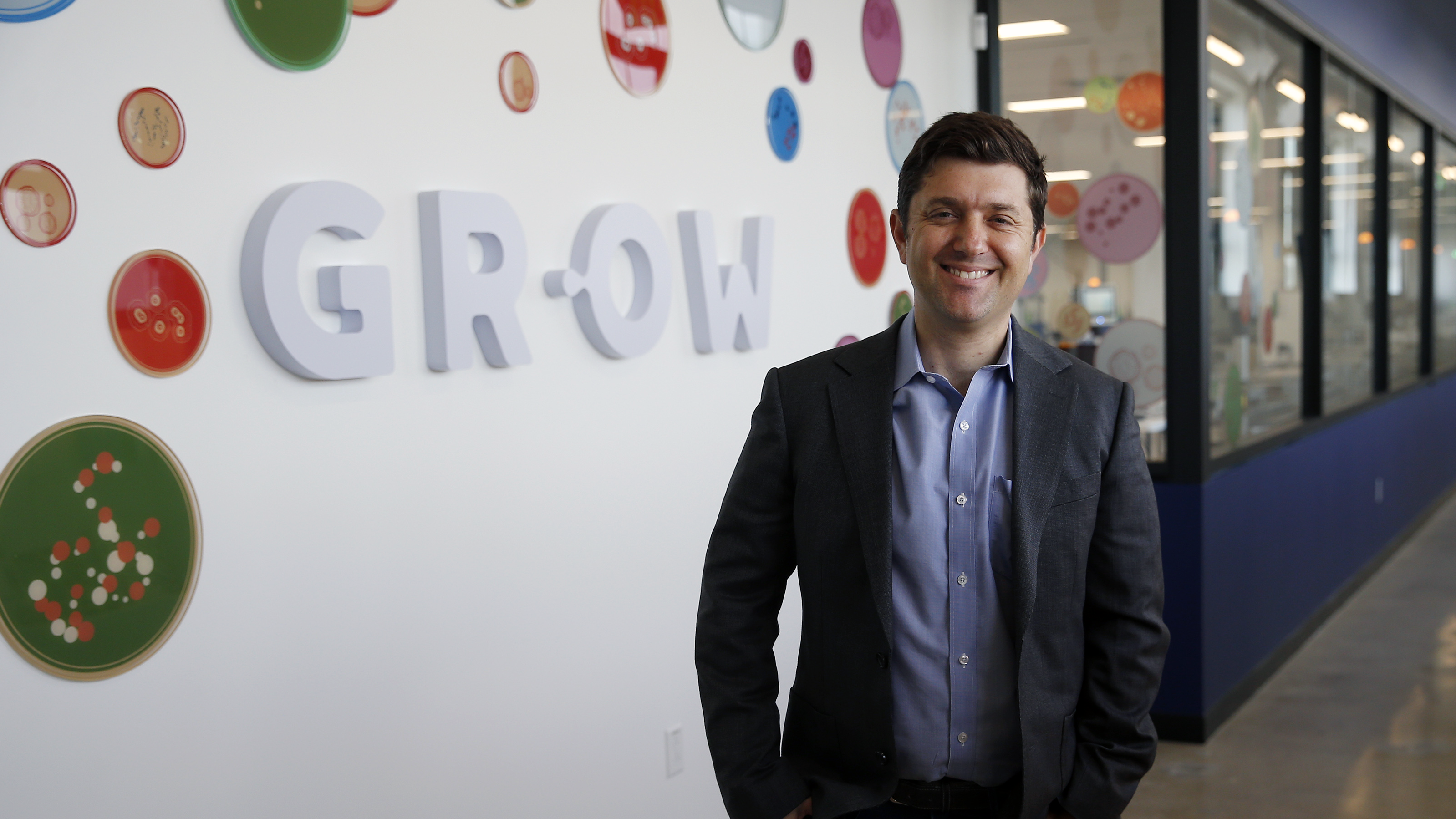
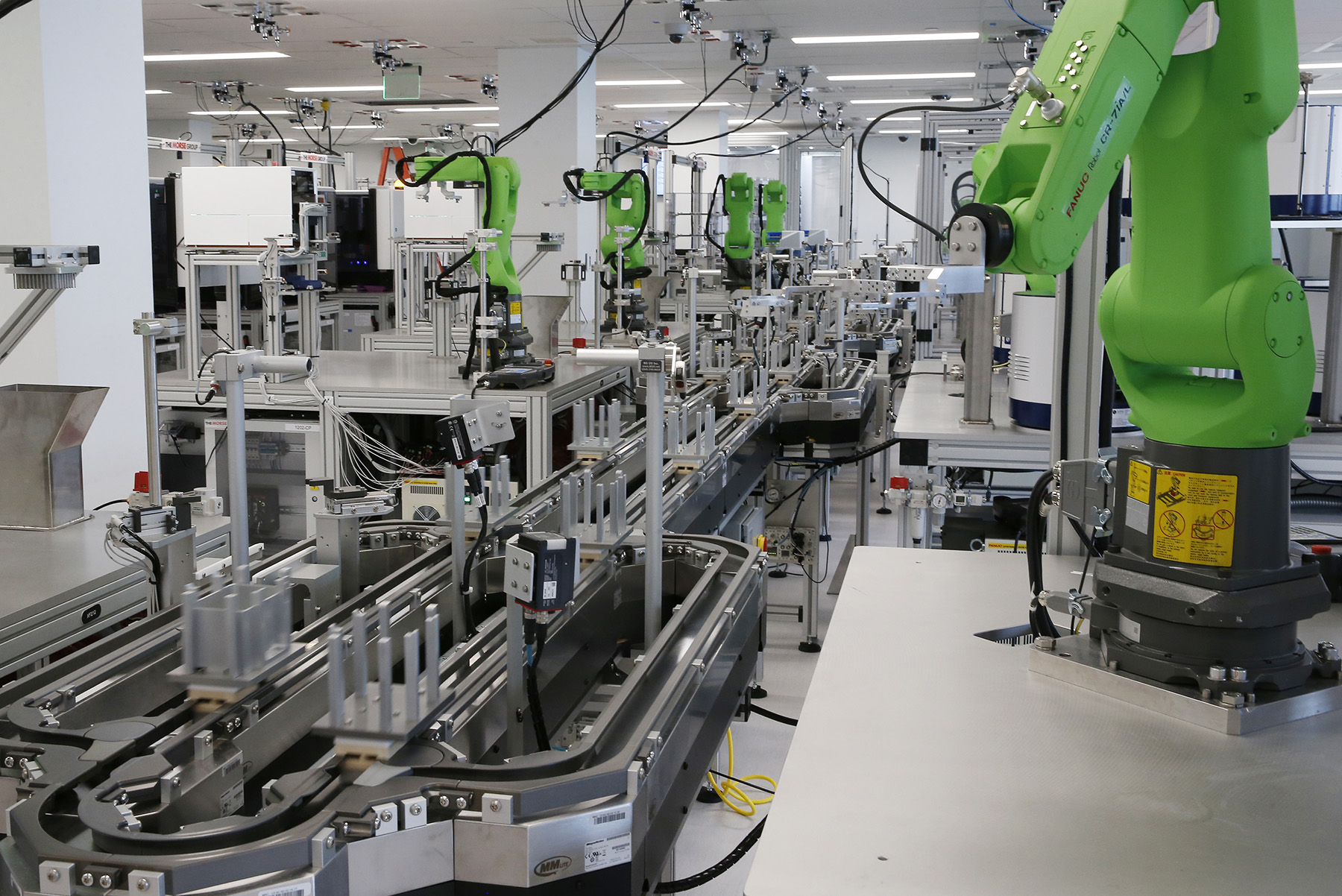
For months, Jason Kelly, co-founder and CEO of Ginkgo Bioworks, has been planning what was billed as a fun, attention-grabbing science competition. His idea was to pit a top scientist against OpenAI’s latest models in designing a variety of proteins using a technique in which they are grown in test tubes faster than they would be in cells. Kelly’s company, which builds autonomous labs, would supply the venue—a 15,000-square-foot, robot-filled lab at its Boston headquarters. Ginkgo executives would serve as judges of the three-round contest.
Michael Jewett, a renowned Stanford University professor and an expert in that technique, known as cell-free protein synthesis, had agreed to go up against OpenAI. OpenAI’s team, meanwhile, would consist only of AI agents. Jewett would also be permitted to use AI, reflecting the reality that it is already integrated into many labs. He could use any commercially available AI model; OpenAI would have access to its own most advanced, unreleased AI. When Ginkgo initially shared notes with me about the proposed project, it even had a catchy name: “Mike Versus the Machines.”
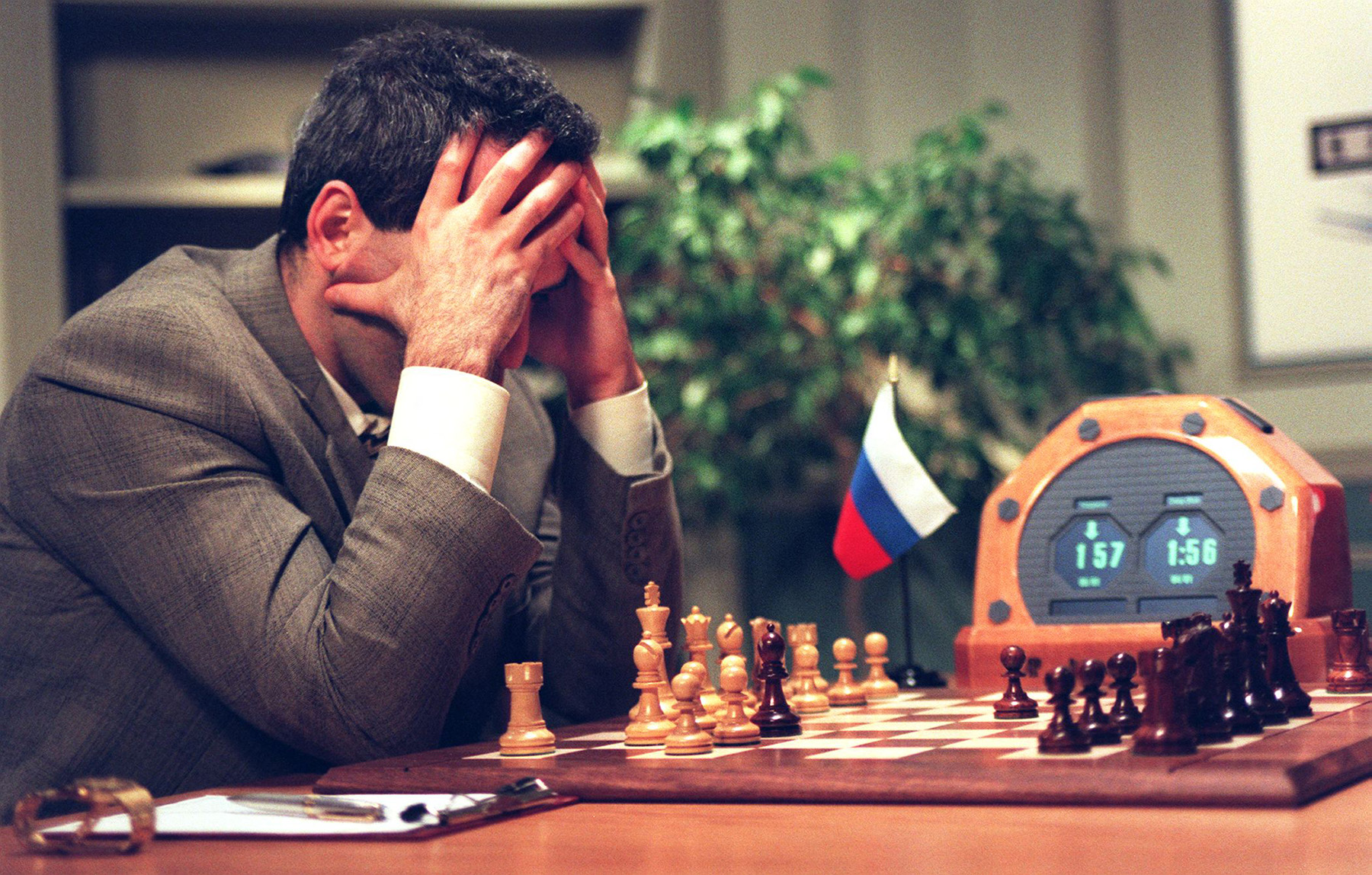
The showdown was intended to generate the kind of excitement and frisson that comes when humans go up against a new technology—akin to world chess champion Gary Kasparov taking on IBM’s Deep Blue supercomputer in 1997 or Go champion Lee Sedol playing Google DeepMind’s AlphaGo in 2016. (In both those cases, of course, the humans lost.) Hoping to capture a striking moment in the history of biology, Ginkgo had hired a documentary film crew to record the action.
But in the past few weeks, something odd has happened. Plans for the contest have morphed. Shortly before the two sides were supposed to square off for the first time on Sept. 14, Ginkgo postponed the event. For a moment, I thought the company might cancel it entirely. Then, earlier this week, I was told the competition is back on, but the “Mike Versus the Machines” concept has been scrapped.
In a revised format, any scientist can enter the contest, and Ginkgo will allow those flesh-and-blood researchers to form one giant Team Human, brainstorming together on strategies and designs—or go it alone in separate teams to try to beat OpenAI’s agents. As of now, Jewett has not confirmed whether he will participate.
Additionally, Ginkgo no longer refers to the event as a “competition,” instead describing it as a “coopetition,” a word I had never heard before but one that does appear in the Oxford English dictionary. It means a “collaboration between rival organizations.”
The changes to the competition reflect a time period of tumultuous conversation about AI among scientists and rampant concerns about how the technology should be used in advanced fields.
For months, a deep sense of unease over AI has been roiling the scientific community. Scientists have criticized pronouncements by AI leaders like Anthropic CEO Dario Amodei and Google DeepMind chair Demis Hassabis that artificial intelligence will cure major diseases in the next decade. Earlier this week, similar critiques emerged after Amodei tweeted that Claude had discovered molecules that might be useful for gene editing. While he acknowledged it wasn’t clear how significant the discovery was, many scientists thought he should have shown greater restraint until Anthropic had more detailed information. Regardless, as someone who has covered scientific breakthroughs for a long time, I’ve found the recent accelerated pace of new findings truly dizzying.
What’s more, the changes to Ginkgo’s contest come in the wake of OpenAI’s Sept. 8 announcement that one of its advanced internal AI models had found the answer to a long-unsolved math puzzle, the Navier-Stokes problem, after less than a week of work—and beaten two mathematicians who had recently made significant progress on solving it. (One of them, Levent Alpöge, works for OpenAI rival Anthropic, though he hadn’t been pursuing the Navier-Stokes work for his company.) Navier-Stokes had stumped the best mathematicians for nearly a century, and OpenAI’s triumph rattled the math crowd worldwide. Some mathematicians declared it a “Kasparov–Deep Blue” moment that demanded a rethinking of the future of math. It also sparked fierce public discussion about how AI and humans should—and will—coexist.
Those concerns weighed on the Ginkgo executives planning the protein contest, said Reshma Shetty, co-founder and president of Ginkgo, who helped design the exhibition.
Ginkgo hopes restyling the contest as a coopetition and allowing teams of scientists to compete will help it avoid inflaming the recent discourse—and tamp down on direct comparisons between moments like Navier-Stokes and Kasparov’s loss, which have come to serve as distinct markers of AI’s advancements over humans. Moreover, the company hopes that allowing a wide group of scientists to compete would better capture the true nature of scientific discovery, which often relies on collaborations across labs: Most problems in biology are not ones a single scientist can solve.
“It’s not just about who is better,” Shetty said. “It’s actually about how you cooperate to advance a scientific objective.”
Still, when I spoke to Kelly in the midst of the changes, he acknowledged that the stakes had definitely risen for the event. Even with its rebranding as a coopetition, the scientists won’t want to lose at a time when concerns about the future of human ingenuity are high. And neither will OpenAI as it continues to try to point to how AI can transform the world for the better ahead of its IPO. “Everybody is scared about not winning,” said Kelly.
Under the new rules proposed by Ginkgo, the competition will start in mid-October and likely run through the end of the year. For each round, the teams will come up with their best chemical recipe for making three proteins chosen by Ginkgo. After submitting the proposed designs, Ginkgo will use a proprietary software program to convey the instructions to the robots, which run the experiments.
In the first challenge, the goal is to design a protein widely used in research labs: superfolder green fluorescent protein, or sfGFP. The winner of the round will be the group that comes up with the recipe that makes the most protein at the lowest cost. The next two proteins are more challenging to make, and the teams will be judged on additional factors, like whether their proteins can properly fold, something that is essential in actual drug development. Or, as Shetty put it: “It won’t be enough to just make the cake: The cake actually has to look and taste good.”
Ginkgo is providing a list of chemicals the teams can choose from to use to create their recipes. To reflect the creativity and expertise at the heart of science, Ginkgo will allow the teams to choose up to 10 more that aren’t on the list. The OpenAI agents won’t be told what chemicals the humans are choosing—and vice versa.
When talking to scientists about how they use AI, many of them tell me they see it as a tool for scouring the medical literature, which is too vast to keep up with, or spotting connections they might have missed.
What Ginkgo is trying to test comes closer to the heart of the scientific process itself. The project requires AI agents to devise experiments, interpret data and figure out next steps. Scientists acquire expert knowledge from decades of running experiments in the lab. “The kind of question that’s lurking in a lot of scientists’ minds is, ‘Are AI models good enough to close the gap with an expert in the field?’” Shetty said.
Ginkgo has long-standing ties to OpenAI CEO Sam Altman. After Altman took the helm at Y Combinator in 2014, Ginkgo was the first biotech chosen to participate in the startup accelerator’s program, and Y Combinator became a major investor in the company. When Ginkgo brought in $275 million in a Series D round in 2017, Altman was exultant about what it represented about the potential for technology to transform science.
“It’s time for Silicon Valley to pay attention to biology, because designing organisms will have an impact in ways that designing computer code never will,” Altman said in a press release announcing the funding.
The idea for the protein competition traces back to Altman’s 40th birthday party in April 2025. There, Kelly regaled an OpenAI executive about the capabilities of the robots and offered a tour in Ginkgo’s Emeryville, Calif., lab. The visit led to discussions with OpenAI’s life sciences research team about working together.
Ginkgo and OpenAI’s first collaboration was in cell-free protein synthesis, the same field that is now the subject of the contest. The two companies set out to determine if AI models collaborating with robots in a lab could find a chemical recipe that lowered the cost of the process. In February, they announced they had lowered the cost by 40%. That bested the new standard that had been set just six months before—by a team led by Stanford’s Michael Jewett.
When discussing Ginkgo and OpenAI’s paper, Jewett pointed out to Shetty that OpenAI had an advantage because the robots were able to conduct around 30,000 experiments, while the student in his lab had to work by hand and only got to do 1,231: What if humans and AI agents both had access to robots to do the labor—which side would then come up with better approaches? “Let’s try that,” Shetty said. They started working out the details of a matchup.
I asked Jewett a couple weeks ago when we talked if he could imagine AI agents eventually running their own labs—instructing robots and devising experiments—without a lot of human input. And I asked him if he viewed AI agents as his future rivals or his future colleagues. He had the same answer to both questions. “I don’t think I know yet,” he said.
Ginkgo and OpenAI are not the only companies coming up with contests involving humans and AI scientists. Sam Rodriques, CEO and co-founder of Edison Scientific, a startup building an AI system to help discover new medicines, said he and other colleagues have come up with a list of challenging unsolved problems in biology that using AI might help resolve. The research group FutureHouse is convening a panel of judges and wants to offer cash prizes for solving them.
Rodriques said that humans are still essential for defining the right problems to pursue, but Edison’s Robin and Kosmos models have already shown they are good at science.“Can the models make new discoveries? Yes. Can the models accelerate the process of discovery and developing drugs? Yes. Can they do the hard parts? Yes,” he said.
In addition, Anthropic and Adaptyv Bio, a Lausanne, Switzerland-based startup that builds automated labs for testing protein designs, announced earlier this month that they will co-sponsor “the biggest protein design competition in the world.” It starts Sept. 28.
For that challenge, Anthropic is providing $1 million in Claude credits to help scientists design proteins that address five difficult challenges. Participants apply for credits and Anthropic selects the recipients. Adaptyv and Anthropic are jointly funding lab testing for the designs.
Entry in the contest is open to anyone. Adaptyv’s CEO and co-founder, Julian Englert, said it’s conceivable a team consisting of only AI agents could win one or more of the challenges. (He has previously said that AI agents are already roughly matching humans when it comes to protein design.)
Marinka Zitnik, a computer scientist at Harvard Medical School developing AI agents for biology, said all these competitions reflect how rapidly the abilities of AI scientists are advancing. It isn’t clear what the outcome of any of them will be. But she said the ultimate competition still lies ahead. What would that be? Said Zitnik: “An AI system that on its own makes a breakthrough discovery judged by experienced scientists as worthy of a Nobel Prize.”
Amy Dockser Marcus covers health and science for The Information's Weekend section.

 点赞
点赞 收藏
收藏 点踩
点踩 分享
分享