Pope Says Technology Must Help People, Warns of ‘Dehumanization’

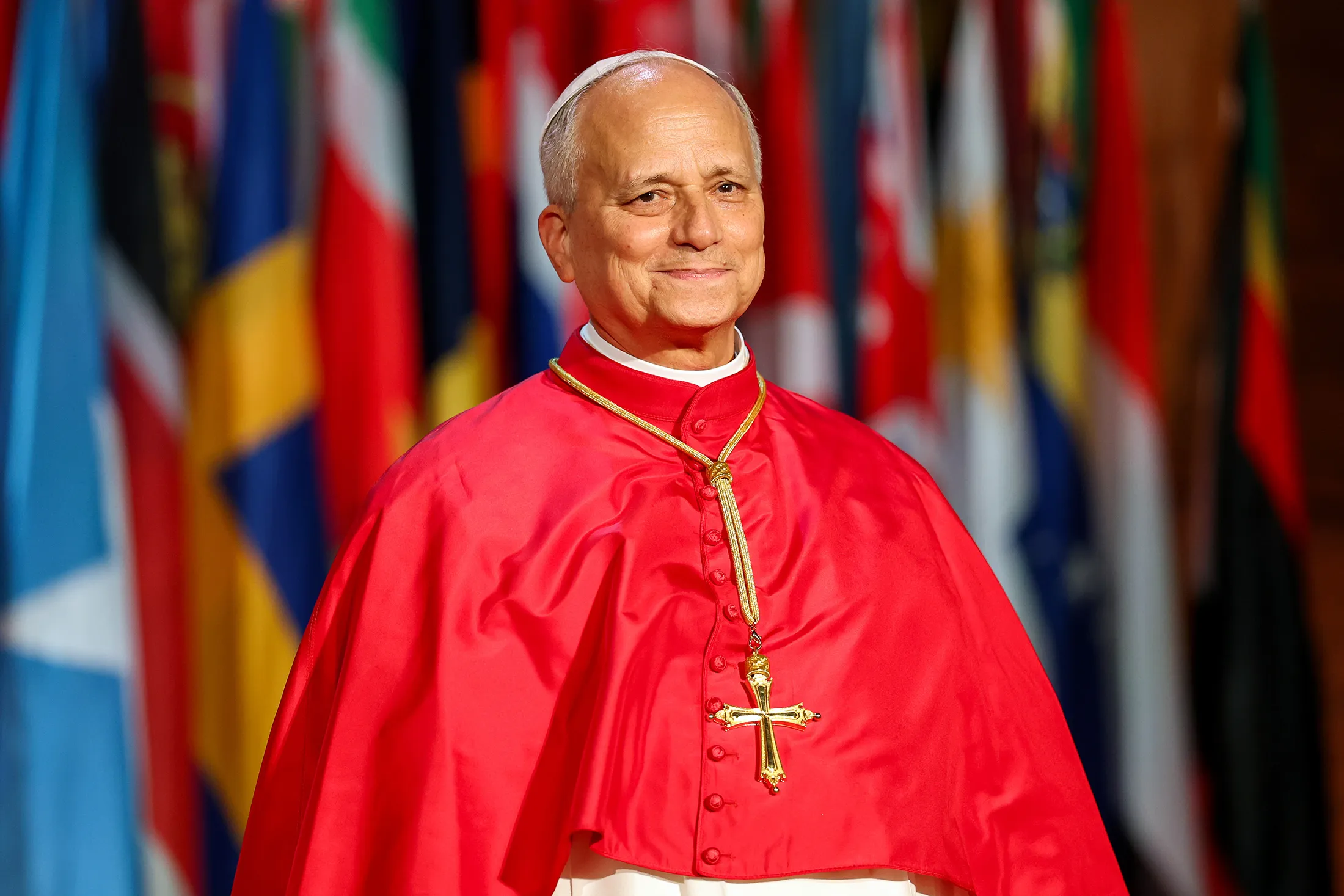
Advances in artificial intelligence and other technologies must remain at the service of people rather than become instruments of domination and injustice, Pope Leo XIV said.
Speaking at the Unesco headquarters in Paris on Friday on the first leg of a four-day visit to France, the American pontiff said many tasks once performed by human beings have been entrusted to machines.
“More recently,” he said, “certain artificial systems have even been given the name of our human faculty of thought: intelligence. At the same time, however, our ideas and relationships risk being impoverished by a process of dehumanization.”
The pope encouraged the international community to devote particular attention to the protection of children and young people. “In the digital age,” he said, “their vulnerability must never become an opportunity for exploitation.”
Read more: How Pope Leo’s AI Encyclical Reawakened My Catholic Faith
The risks posed by AI and emerging technologies were among the most anticipated topics of Leo’s apostolic journey to France, the first state visit to the country by a pontiff in 18 years. Leo has made the social and ethical implications of AI a central theme of his papacy. In May, in his first encyclical to the faithful, he said artificial intelligence should be “disarmed” to protect humanity from its dangers.
He returned to the issue earlier this week. Speaking to the members of Pontifical Academy of Sciences, the pontiff remarked that “in recent years, it has become increasingly evident how rapidly and profoundly digitalization, artificial intelligence and robotics are transforming our world.” The pope said that these tools “give us reason to hope for a brighter future for humanity.” At the same time, though, he warned AI “can be used for surveillance, manipulation and discrimination.”

 点赞
点赞 收藏
收藏 点踩
点踩 分享
分享