Jev Fervor Leads to Talk of Big Valuation Boost


Silicon Valley has a new AI startup to obsess over—and throw money at. We’re hearing that TypeSafe AI, the startup developing a new kind of model called Jev, has started to talk to investors about raising an enormous round—$1 billion or even more—and that some unnamed investors have offered to put money in at a valuation of $10 billion or more. All this for a startup that said only last week it had raised $40 million, at a valuation, according to PitchBook, of $200 million.
Talks are early and a lot could change over the next few days and weeks. But the buzz is palpable: on Wednesday at our AI Agenda Live conference in San Francisco, at least two speakers brought Jev up, with pretty glowing terms. “Incredibly fast,” remarked Nvidia’s senior director of high performance computing, Dion Harris, while noting the model’s limitations.
This buzz may be driving up its compute costs, making it more amenable to another round—a scenario that just played out with the startup behind Instinct.
If TypeSafe succeeds in raising the funds at such a high valuation, it would demonstrate that investors are still eager to back startups taking on the cost-intensive process of training new AI models, even after a proliferation of such neolabs—many started by Google DeepMind and OpenAI alumni—in the past two years.
The startup, co-founded two years ago by an ex-OpenAI researcher, designed Jev to produce outputs of numerical responses and probability estimates. Those estimates indicate how confident the model is in its response as opposed to generating text one word at a time in written out sentences, like OpenAI and Anthropic models do. Venture investors are excited because the model seems purpose-built for interacting with computer agents—rather than interacting with humans, as current foundation models are.
Jev’s creators maintain its design makes the model significantly cheaper and faster than traditional large language models. TypeSafe says, in some cases, its model can be nearly 200 times faster than leading frontier models, while costing just one-four-hundredth of the price. A spokesperson for the firm declined to comment.
Some users have said that they’re only using Jev for very specific applications, such as classifying emails, monitoring agents or model routing.
Jev is “so much cheaper and so much faster,” though it’s not as accurate as some leading LLMs, said Tamar Yehoshua, chief product and AI officer at productivity software provider Atlassian, at the conference on Wednesday.
She said the company has been testing it for tasks where it needs some kind of classification, rather than a block of text. “We see a ton of use cases where, it’s not only where we’re using an LLM, but also for places we’re not using an LLM because it wasn’t cost-effective and it was too slow.”
TypeSafe was cofounded by former OpenAI researcher Diogo Almeida, former Meta research engineer Sasha Sheng and entrepreneur Erik Gafni. DCVC led the seed funding.
TypeSafe is part of a group of startups that have emerged with alternative architectures to the one underlying today’s large language models. That group also includes Core Automation, a startup founded by a former OpenAI senior researcher Jerry Tworek earlier this year that wants to build models that continue learning after they’re trained, and Inception, which is building a language-generating model that takes inspiration from AI that creates images.
Companies like Core Automation have had no trouble raising money: the startup, founded in January, has already raised $630 million in funding, most recently at a $3.5 billion valuation, including the investment, according to a person with knowledge of the figures.
At the conference Wednesday, Tworek said he made the decision to launch his own startup based in part on his assessment that he’d be able to get more compute to fund his experimental research on his own than at a larger company.
Still, if an investor or larger AI company were to see Core Automation’s work and say, “Oh Jerry, what you are doing is really great now, and now I want to fund it with all the GPUs in the world,” Tworek said he’d consider a deal, as long as they have shared values.
(Updates with details on researchers and past funding.)
Today on TITV
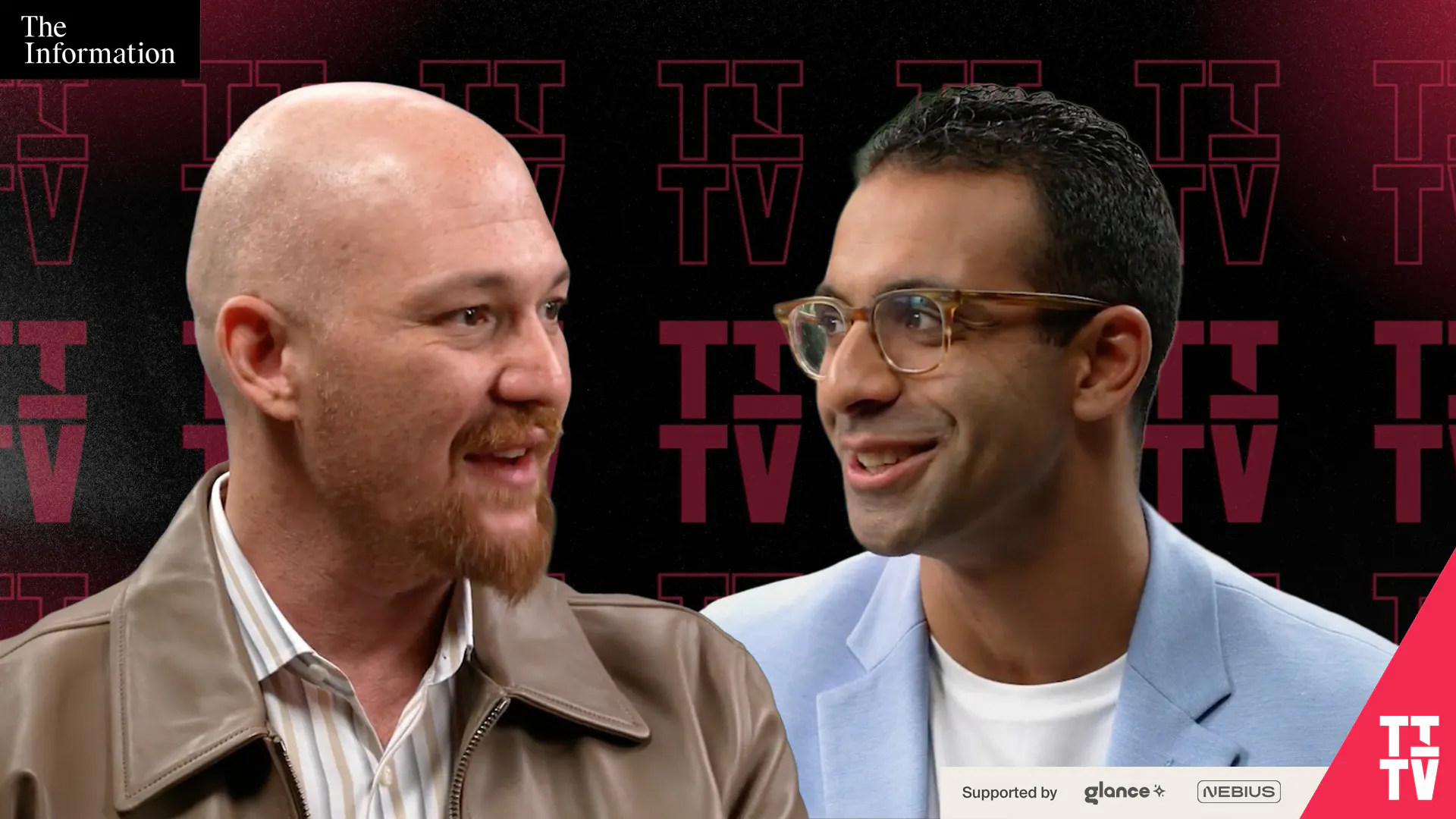
Check out today's episode of TITV in which we speak with the CEO of Replit about his view on AI safety regulation at our AI Agenda Live conference.

 点赞
点赞 收藏
收藏 点踩
点踩 分享
分享