Meta Launches Lightweight $1,299 VR Headset That Looks Like Glasses

Meta Platforms Inc. on Wednesday launched $1,299 virtual-reality glasses that undercut Apple Inc. in price and size while putting its headset line on track for profitability.
The new device, called Meta VR Glasses, represents a significant shift in headset design. Its processor, cooling fan, battery and other computing components are housed in an external pack that can clip to a user’s pocket or rest on a table. Meta’s previous models incorporated those components into the headset itself, while Apple’s Vision Pro leaves only the battery to an external pack.
The device has many of the same features as the Vision Pro and Meta’s existing Quest headsets, including immersive video playback, office apps, the ability to serve as an external monitor for a Mac or PC, web browsing, gaming, videoconferencing and a voice assistant.
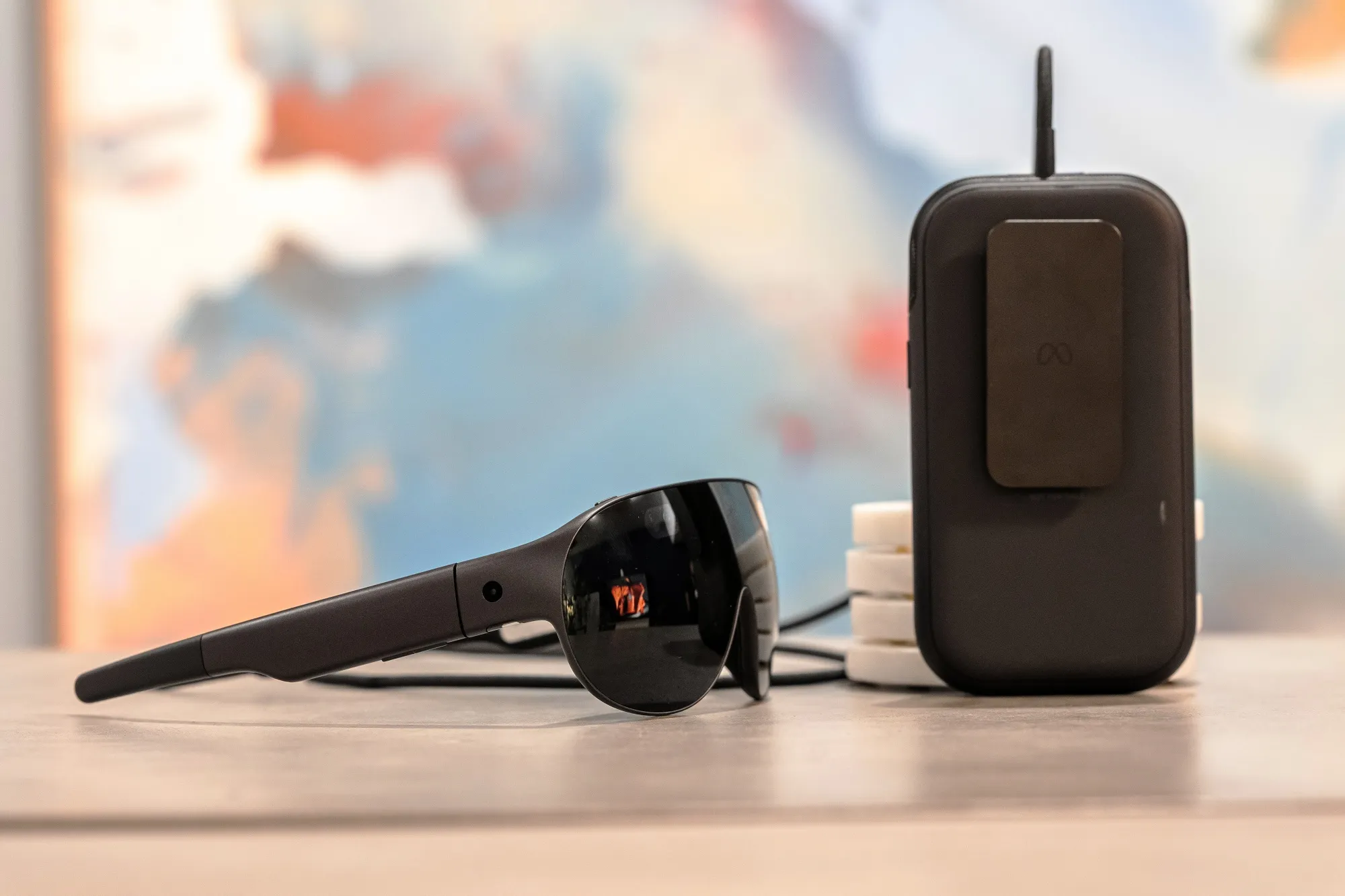
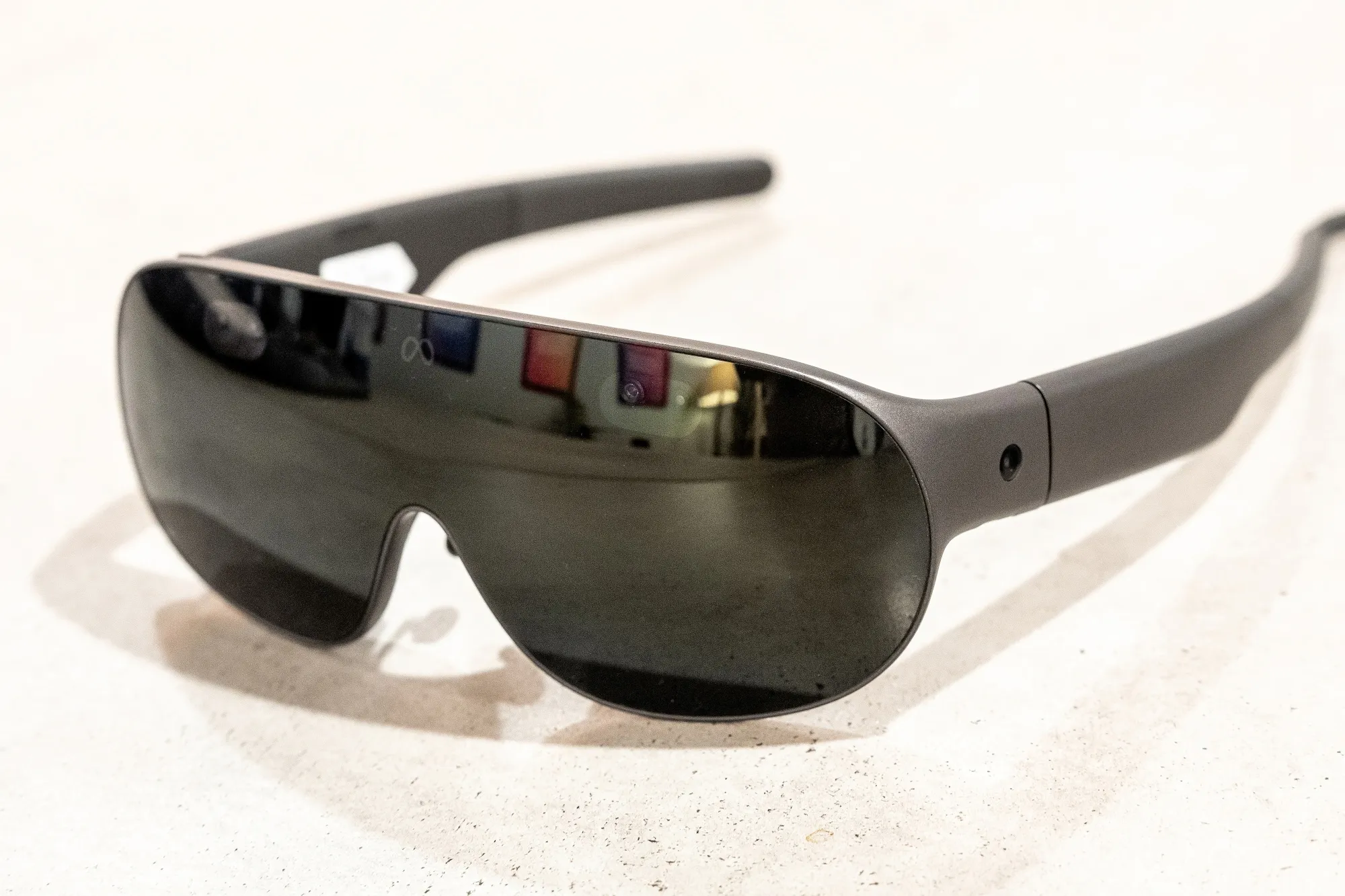
But moving the computing hardware outside the headset dramatically reduces its weight. At about 100 grams, Meta VR Glasses weigh roughly one-sixth as much as Apple’s device and one-fifth as much as the Quest 3S. That lighter design made the headset comfortable during an extended demonstration that included watching immersive highlights from an NBA game, navigating Meta’s redesigned operating system and working on a PC.
In an interview, Meta Chief Technology Officer Andrew Bosworth said the company owes Apple “a little bit of a debt of gratitude.” He said many entertainment partners first became excited about immersive computing because of the Vision Pro and credited Apple with giving the industry “permission to explore split architectures,” helping inspire Meta’s external-pack design.
“I think they definitely were pioneers on some of those pieces for us and did the heavy lifting,” Bosworth said. “But otherwise, there’s not a huge comparison,” he said, noting the lower price and weight.
“We all know they missed the mark in that you just couldn’t wear that thing for very long,” Bosworth added. “It wasn’t glasses — you looked goofy wearing it.”
At $1,299, the device costs about one-third as much as Apple’s $3,699 Vision Pro, though it is more than twice the price of Meta’s $599 Quest 3. The new device has three hours of battery life on a single charge, slightly more than the Vision Pro and up to double that of the Quest 3. It can remain plugged in at all times as well.
Its displays fall short of the Vision Pro’s specifications, offering roughly 2.5K resolution per eye compared with Apple’s 4K. In practice, however, text and graphics remained sharp, and the difference was not especially noticeable. It also uses Qualcomm Inc.’s new Snapdragon Reality Elite processor whereas the Vision Pro has dual chips, including an M5 processor.
One of the device’s major new features is an advanced photorealistic videoconferencing mode that uses hologram technology and artificial intelligence to create a virtual version of the user. In a demonstration, the holograms looked nearly identical to the person, a leap from Meta’s old virtual avatars used in VR environments. The feature is also coming to Meta’s Ray-Ban glasses with a display.
Bosworth and other Meta executives also said that the business model is changing with the new headset. The company assumed it would make up losses on the Quest hardware from profit via the store and also virtual goods.
With the price point of VR Glasses, Meta is on track to not lose money on each device. “We’re working to make VR a profitable ecosystem over the coming years,” the company said in a statement.
Reality Labs, the company’s wearable computing division, “is on the other side of the hill finally,” Bosworth said. “We spent all these years obviously building up and investing in capabilities, and now we feel like we’ve gotten to the point where we can do it really efficiently.”
Another marquee feature of the device is touch typing. The glasses can project a virtual keyboard and trackpad onto a table for a computer-like experience — a shift from the in-air keyboard used by prior Quest headsets and the Vision Pro. In a demonstration, the typing experience felt similar to typing on an iPad, allowing for fast input.

 点赞
点赞 收藏
收藏 点踩
点踩 分享
分享