The Story Behind Netflix's Rousing Bollywood Dance Comedy Best of the Best

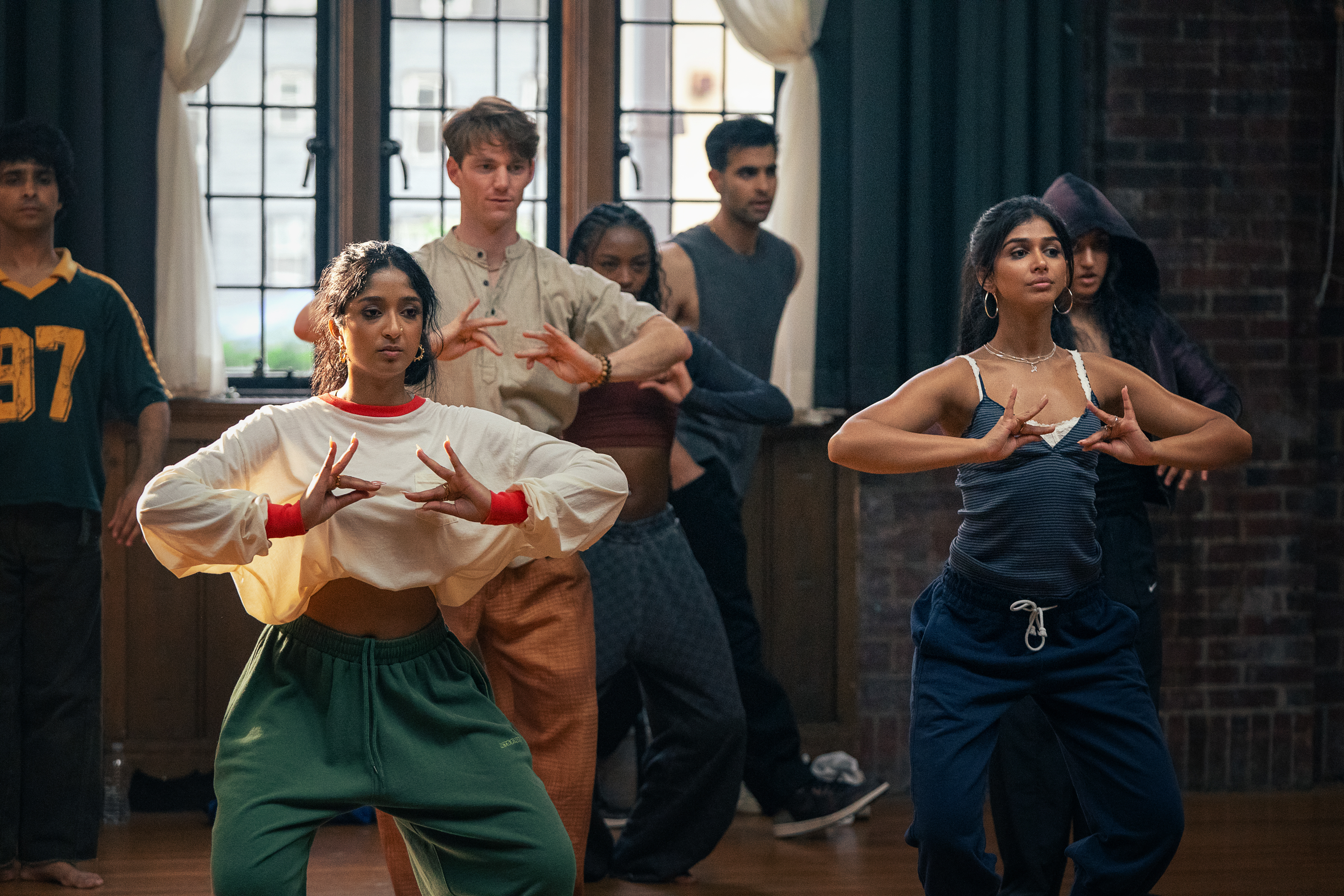
Maitreyi Ramakrishnan wants to make this clear: She had to audition for Best of the Best, the coming-of-age comedy playing out against the world of collegiate Bollywood dance competitions.
“Please include that Maitreyi Ramakrishan was not just offered this role,” she says, her almighty finger pointing hard at my notebook. “Maitreyi Ramakrishnan worked!”
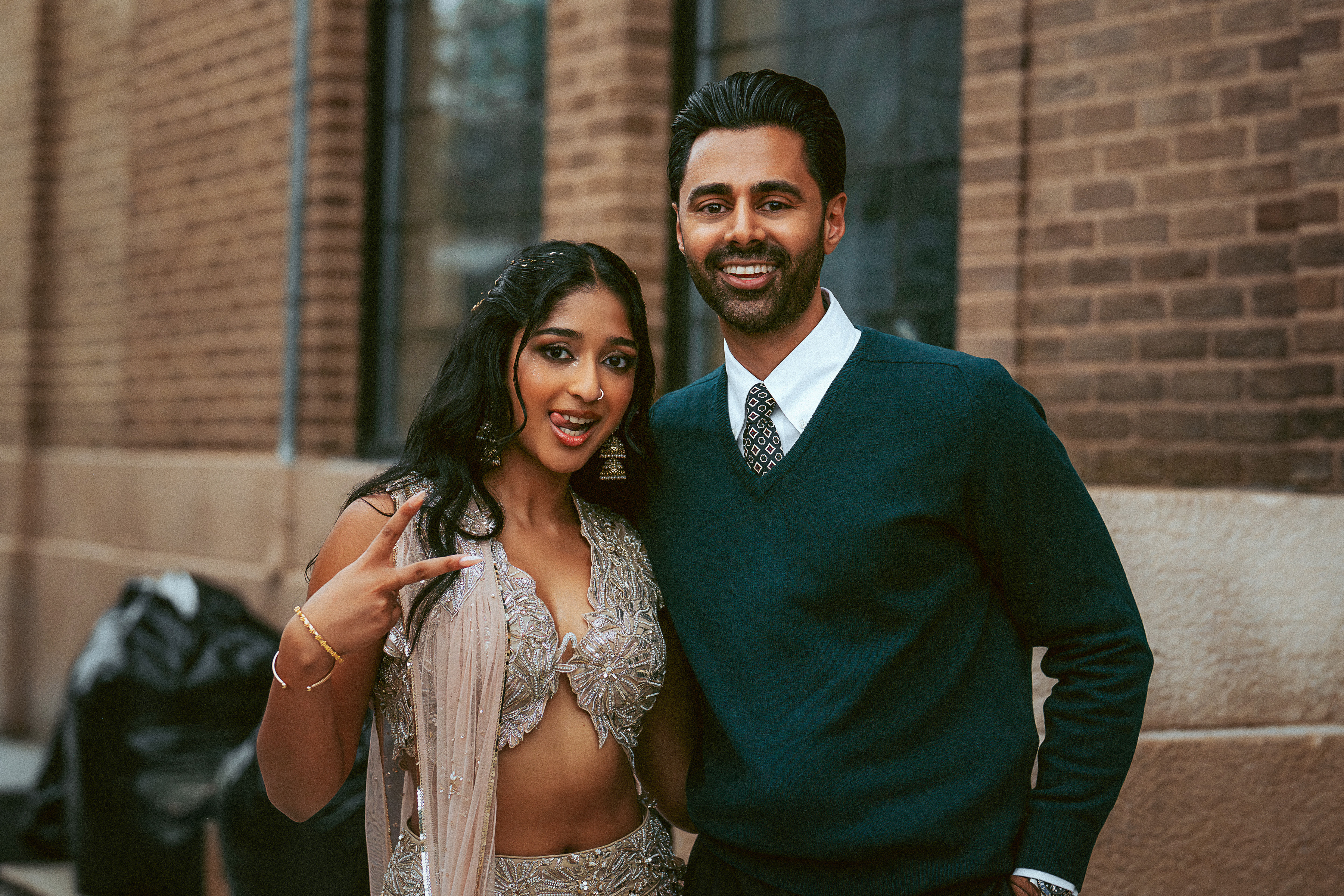
She’s responding, in her beguilingly animated way, to my suggestion that her character, Maya, feels as though she were written for Ramakrishnan, the Never Have I Everstar who was introduced to us in 2020 as the fabulously temperamental teen Devi in Mindy Kaling and Lang Fisher’s Netflix dramedy. Maya was actually conceived around the same time, whenPatriot Act host Hasan Minhaj and his writing and producing partner Prashanth Venkataramanujam spent their time in lockdown cooking up Best of the Best, their answer to the Step Up franchise, which is finally hitting Netflix on Sept. 18.
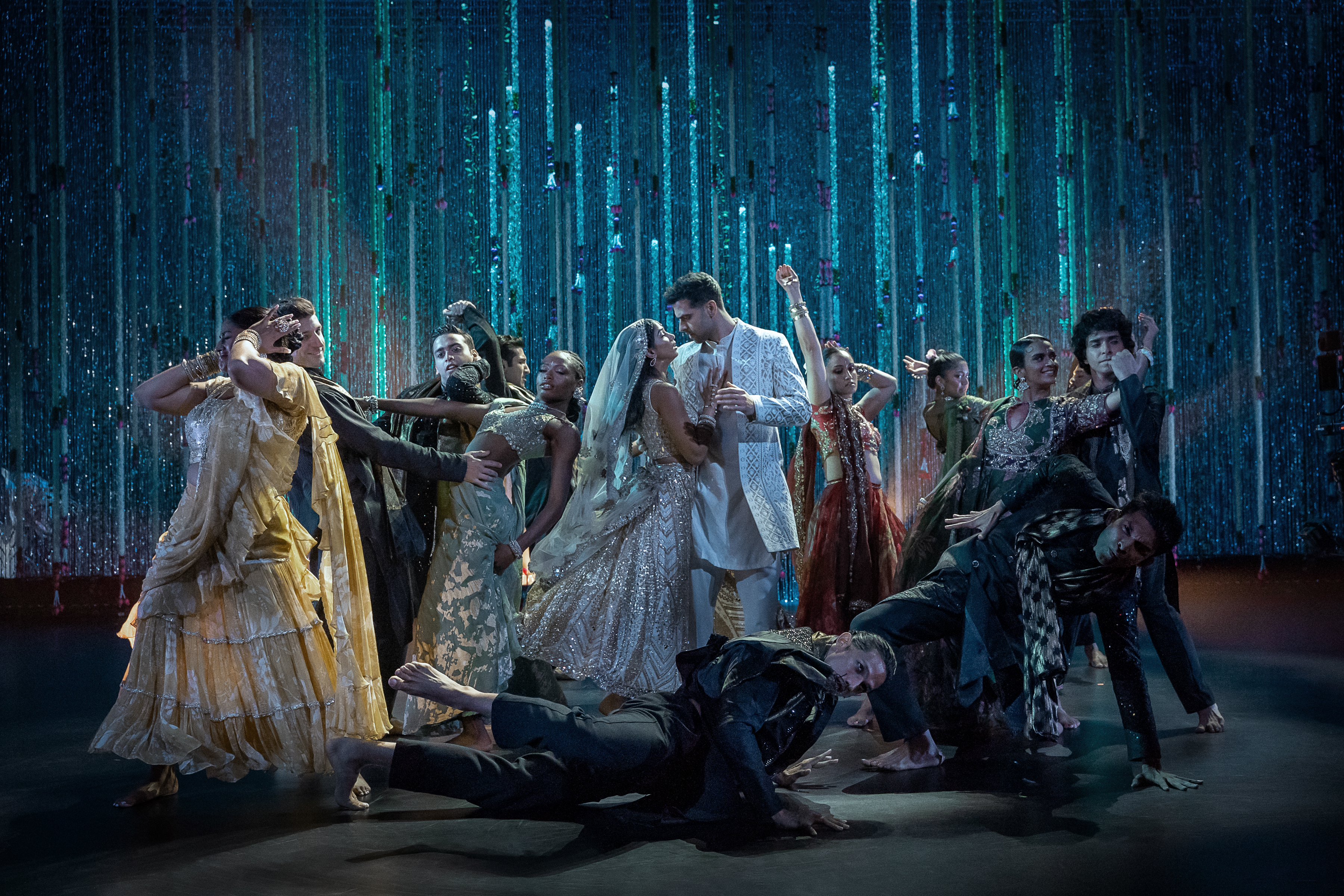
For some fans, who were eager to see Devi go to college, Best of the Best might serve as a suitable replacement for a continuation of the show, which ended in 2023 after four seasons. The movie reunites Ramakrishnan with one of her Never Have I Ever directors, Lena Khan, and co-choreographer Joya Kazi, who appeared in its first season, performing a Bollywood-style routine to the song “Nagada Sang Dhol.” In that scene, Kazi fluidly blended India's traditional Kathak dance with the swirling and romantic poses choreographed specifically for the big screen in Mumbai. That fusion, in a nutshell, is what Bollywood dance is all about.
Devi, who harbored complicated insecurities about her cultural identity, scoffed at the performance. Ramakrishnan’s Maya, on the other hand, would scoff at anyone challenging her Bollywood-style supremacy. “Maya is that bitch,” says Ramakrishnan.
A clear casting choice
We’re at dinner, discussing Ramakrishnan’s leap from leading a TV show to carrying a movie, a conversation we will pick up again a week later on a Zoom call with Minhaj. I meet up with Ramakrishnan at East Tea Can, a restaurant in her Mississauga neighbourhood, west of Toronto. She orders the cardamom black tea for us to share but insists she could finish off the entire pot by herself, and introduces me to mana’eesh, a stone-baked Middle Eastern pizza served with minced beef and lamb.
I’ve interviewed Ramakrishnan on several occasions, witnessing how young fans would swarm her in the wild. This time, she avoids all that by strategically choosing a table in the back and facing away from the diners, though our server recognizes her instantaneously, even behind her large burgundy frames. Her nose ring and traditional bell-shaped earrings are less flash and more a reminder that Ramakrishnan, 24, has always been more at home with South Asian culture than Devi was in that first season. That’s one of the many reasons Minhaj felt she was just right to play Maya, the UCLA freshman thrust into competition with her childhood best friend Anjali.
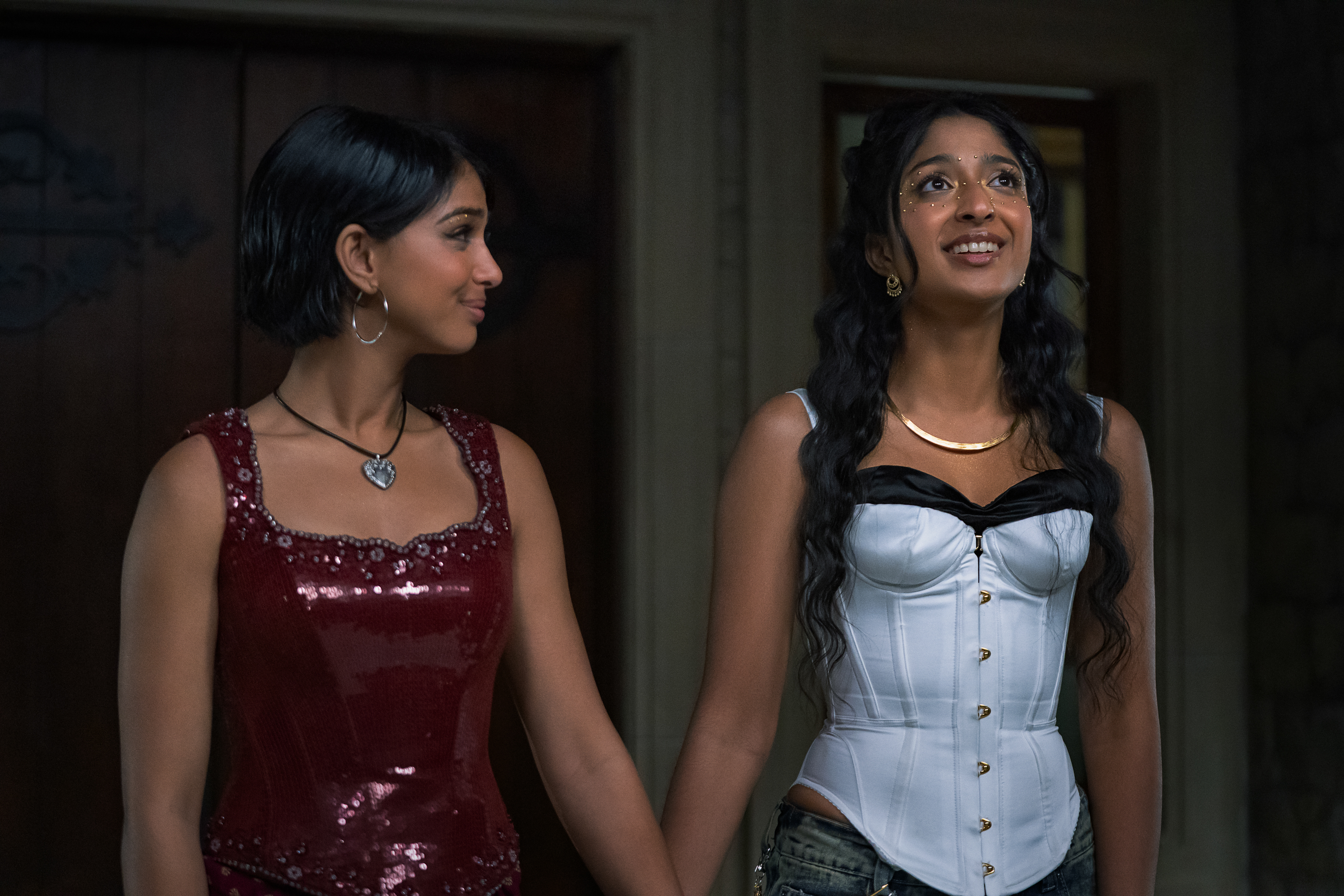
The latter is played by Priyanka Kedia, a fresh-faced Indian-American actor originally from the Bay area, who joined Best of the Best after graduating from NYU and catching a breakthrough part in Steven Spielberg’s Disclosure Day. Her Anjali is the more poised social butterfly to the headstrong and rebellious Maya, their lifelong relationship tested when they both make the school’s esteemed Bollywood dance team and must jockey for parts while adjusting to campus life, rigorous academics, and new relationships. Their story draws from Minhaj and co-writer Venkataramanujam’s own college experiences.
“I'll be honest with you,” says Minhaj later, on that Zoom call. “I for real felt, we would be so lucky to have Maitreyi. She was the person that I felt had the two things that I think Maya needed. Everybody knows that Maitreyi naturally is comedically brilliant. She has that ‘It’ factor that you can't teach. Your Amy Poehlers, your Kristen Wiigs, your Kate McKinnons.” But her comedic talents would also need to be balanced with something deeper. “If you look at Maitreyi’s work, especially in Seasons 3 and 4 of Never Have I Ever, there is an emotional depth, that pathos that she has. I was like, there's no other number one for this film than her.”
Despite, Minhaj’s confidence in her, Ramakrishnan auditioned to reassure the whole team she was ready to transition from the snappy sitcom pacing of Never Have I Ever to the more considered emotional stakes of a feature film.
Even Kazi, who went to college with Minhaj, had to jump through similar hoops. “She was a dance Superstar at UC Davis,” says Minhaj. “Even when we were interviewing, I had to recuse myself. I needed her LinkedIn profile to speak for itself. The friendship is real. It goes back to the second Bush Administration.”
Minhaj is at his parent’s home in Sacramento, dressed in a blue and white baseball jersey. He’s immediately heartened to see my daughter’s bedroom, where I set up shop, in the background, pointing out the kids’ toys scattered on the floor around him. He pulls out framed photos of baby Hasan, clearly taken at some department store photo studio. The space feels familiar, if only because you could immediately imagine it filled with the characters he’s intimately described in his semi-autobiographical standup specials like Homecoming King and The King’s Jester.
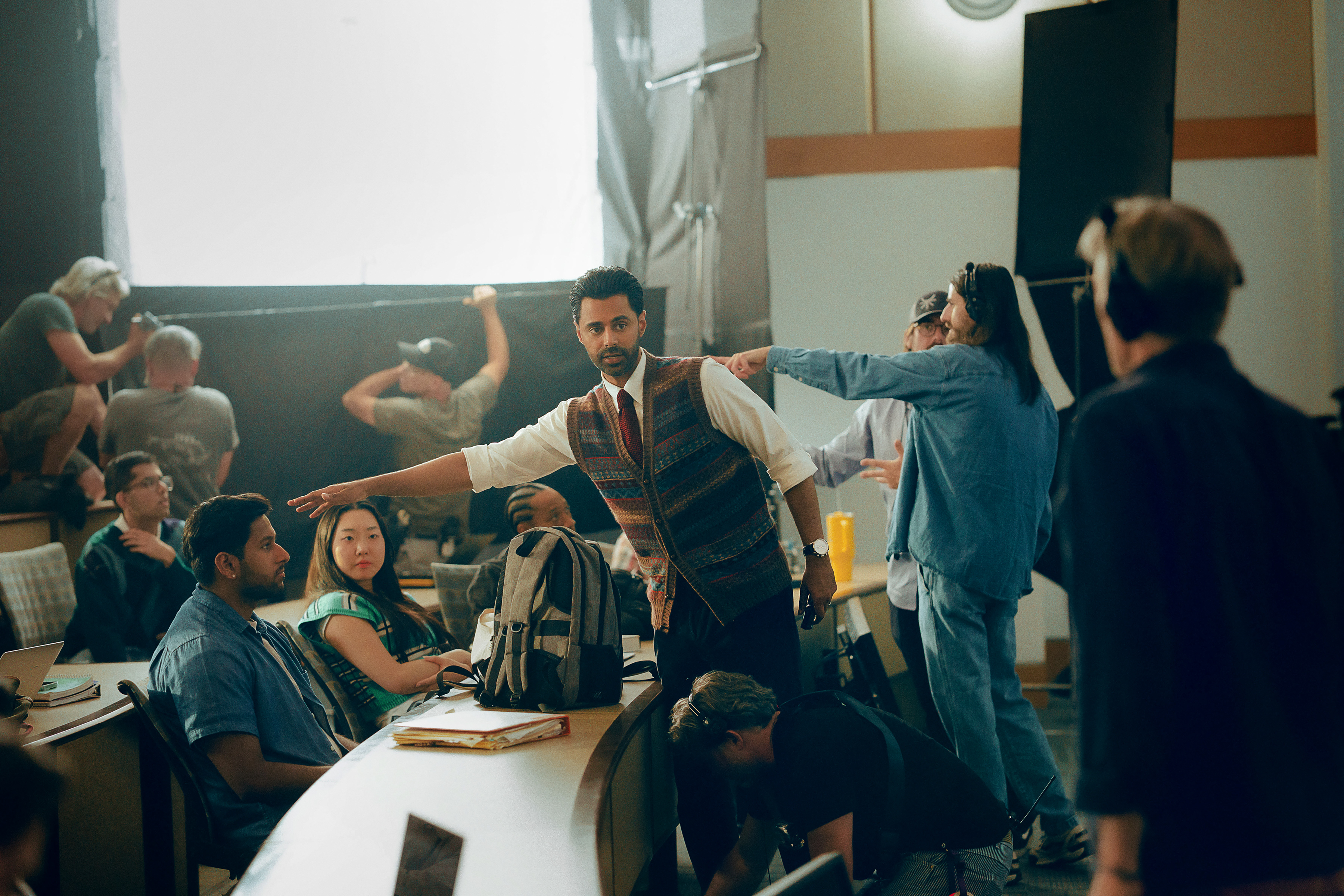
Small talk with Minhaj includes some history on the Punjabi community in Northern California, the early 19th century immigrant farmers who would later hide their identity after the Chinese Exclusion Act. “This becomes the milieu of South Asian identity, specifically in Northern California,” says Minhaj, who just unpacked the context behind where his family resides as if he were freestyling a Patriot Act segment for an audience of two.
Long before they met, Ramakrishnan was a huge fan of Patriot Act, a Netflix series in which Minhaj wielded punchlines and PowerPoint presentations to unpack politics and the perils of unchecked capitalism.
“The first time I met you was way later at one of your first ever performances of Hasan Hates Ronnie / Ronnie Hates Hasan,” she tells Minhaj, referring to his live comedy tour with Ronny Chieng.
“And you were in full costume, right? You were dressed as Princess Leia or something like that?”
“It wasn’t a costume,” says Maitreyi. You can hear the eyeroll in her voice. “It was fashion.”
“Wait wait,” Minhaj says, shrinking.
“But it’s fine. Whatever. Wouldn’t expect you to know, Minhaj.”
“You had a full hood.”
“It was sick.”
“It was a karate gi meets Obi-Wan Kenobi up top.”
This jabbing rapport reads as a playful generational tete-a-tete between millennial and Gen Z, but it also speaks to the exchange of perspectives that informed their collaboration on Best of the Best. “What you're seeing in the movie,” says Minhaj, “is Maitreyi and Lena coming together, and really masterminding and creating the tone and the feeling of the film.”
A fusion of many styles of dance
During weekly script sessions, Ramakrishnan would join Khan, Minhaj, and Venkataramanujam to share her input on drafts, and her character. These workshops would come at the end of the day for Ramakrishnan, who had a jam-packed training schedule to ensure she could convincingly play the part of a teen who’s been dancing all her life.
Ramakrishnan is the first to admit she’s not a dancer. She spent a year as a child learning Bharatnatyam, the traditional 3,000-year-old dance originating from Tamil Nadu in India, but decided that all that ballet-like discipline wasn’t for her. “The structure of being told, ‘This is what you have to do in this order,’ over and over again, didn't work for my child brain,” says Ramakrishnan. “I just wanted to run around.”
She was in her nerves about signing on to do a dance movie and potentially misrepresenting a community that she admires. “Dancers are no joke,” she says. But she says her mother offered the objective perspective she needed to face the job: “You read the script. You don’t need to be a great dancer. You just need to be good at seven dances.”
Choreographers Phillip & McKenzie, who tapped Kazi’s cultural expertise, organized a two-month boot camp for Ramakrishnan in L.A. She attended six classes a day, six days a week, training in everything from Bharatnatyam and Kathak to contemporary, hip-hop, heels, and groove. Then it was off to New Jersey, where she joined the rest of the cast and dancers for another two months. That’s four months of training for an eight-week shoot that left Ramakrishan physically broken but with an even deeper appreciation for the commitment and the craft.
“I got to witness so many great talents,” she says. “I noticed the dancers that have this sparkle. There’s many that can nail the choreo, be on time with the counts, understand musicality, do the trick and the flip. But then there’s some dancers that can do it all in a way that makes an audience member, who has never danced before in their life, want to get up and dance with them, because you’re as intimidated and impressed by their dancing as you are welcomed and invited.”
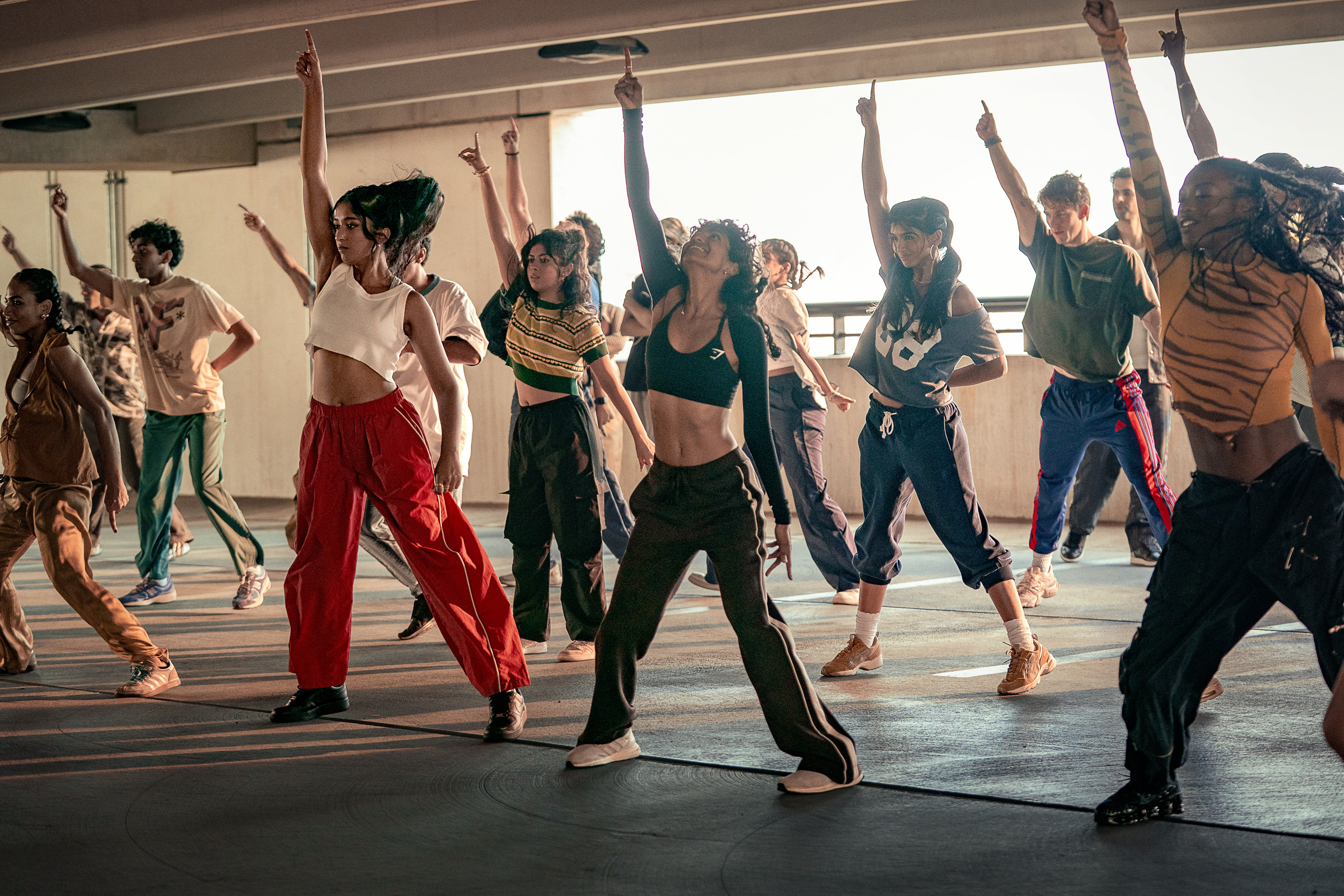
That welcoming and invitational vibe can be applied to the movie’s diverse approach to the dances, as well. The term “Bollywood dance” is a bit misleading. Best of the Best boasts a fusion of styles, reflecting trends within Bollywood dance competitions, and the culture online. In the same way that Save The Last Dance folded hip-hop into the ballet space, young classically trained Bharatnatyam dancers in North America have been blending traditional movements with krumping and breaking.
The real-life sister dance duo Poonam and Priyanka Shah went viral a decade ago, performing butterflies and splits to the Bollywood song Ramta Jogi, taking their “Bfusion” routines from the collegiate circuit to the internet. In recent years, French-Tamil dancer Usha Jey broke the internet busting moves in a saree to Lil’ Wayne. These children of South Asian immigrants have been using fusion dance to broker a new cultural identity for themselves, with one foot in their ancestral lands and another in the place they call home.
Best of the Best is the first popular movie to explore that fusion, and its evolution. There’s storytelling in the dance sequences that shift between Bharatnatyam and Brooklyn styles like bone breaking. That intentionality extends to the soundtrack, which at one point tips its hat to the music that got this cultural exchange started, the early-2000s hip-hop produced by Timbaland and Dr. Dre sampling Bollywood. One extravagant Bollywood musical number features the Truth Hurts song “Addictive,” produced by Dre, battling with the iconic 1969 Hindi song that it famously sampled, “Thoda Resham Lagta Hai.”
“The beautiful thing that we wanted to do in this film,” says Minhaj, “is to take all of these things that make our identity and create something new with it.” He turns his attention to the varied identities spread across South Asia. “This is a rare opportunity where all of us from the diaspora can reconcile a lot of paradoxes that we couldn’t necessarily participate in if we were to do this film in India. There are all these other social, political and language barriers that separate Pakistan, Bangladesh, India, and Sri Lanka. They become sequestered to their own cinema. In the States, all of that becomes kind of irrelevant.”
Best of the Best breaks up monolithic representations of being South Asian, with a cast hailing from all regions, and a dance troupe composed of cheeky character types. These go beyond the nerd, the heartthrob, the Paul Rudd in Clueless sensitive type and the mean girl, to include the rich slick-haired wealthy “FOBs” (meaning “fresh off the boat”), and even a token white guy (Nico Greetham) so hilariously obsessed with Indian culture that he speaks fluent Hindi.
Prioritizing cultural specificity
The filmmakers also accounted for Ramakrishnan, and the very specific Eelam Tamil identity she brings to the film, with all its fraught political connotations. When Maya introduces herself at one point, she says, “I'm Tamil. My family's from Sri Lanka.” The wording is precise. Ramakrishnan’s family is not, for instance, from Tamil Nadu in India, like Devi’s in Never Have I Ever. Nor do they identify as Sri Lankan. The state, which her family fled, stands accused of perpetrating a genocide against the Eelam Tamil population in 2009, after a 25-year civil war. For Ramakrishnan’s family, calling themselves Sri Lankan would be akin to a Palestinian identifying as Israeli.
“Is it something that I expect everyone to catch?” asks Ramakrishnan. “No. Everyone will catch that she's saying she's Tamil. She doesn't understand Hindi, because not every South Asian person understands Hindi. But I think the Tamil Eelam folks, like yourself, will catch that.”
Ramakrishnan has never shied away from discussing her identity and that history, and how both have shaped her. As a child, she joined her activist parents at protests in Toronto, calling for a ceasefire and an end to the genocide in Sri Lanka. She kept that spirit alive last year, at a “No Tyrants” rally in Vancouver, holding up a sign that said, “Never Have I Ever Thought Genocide Was OK."

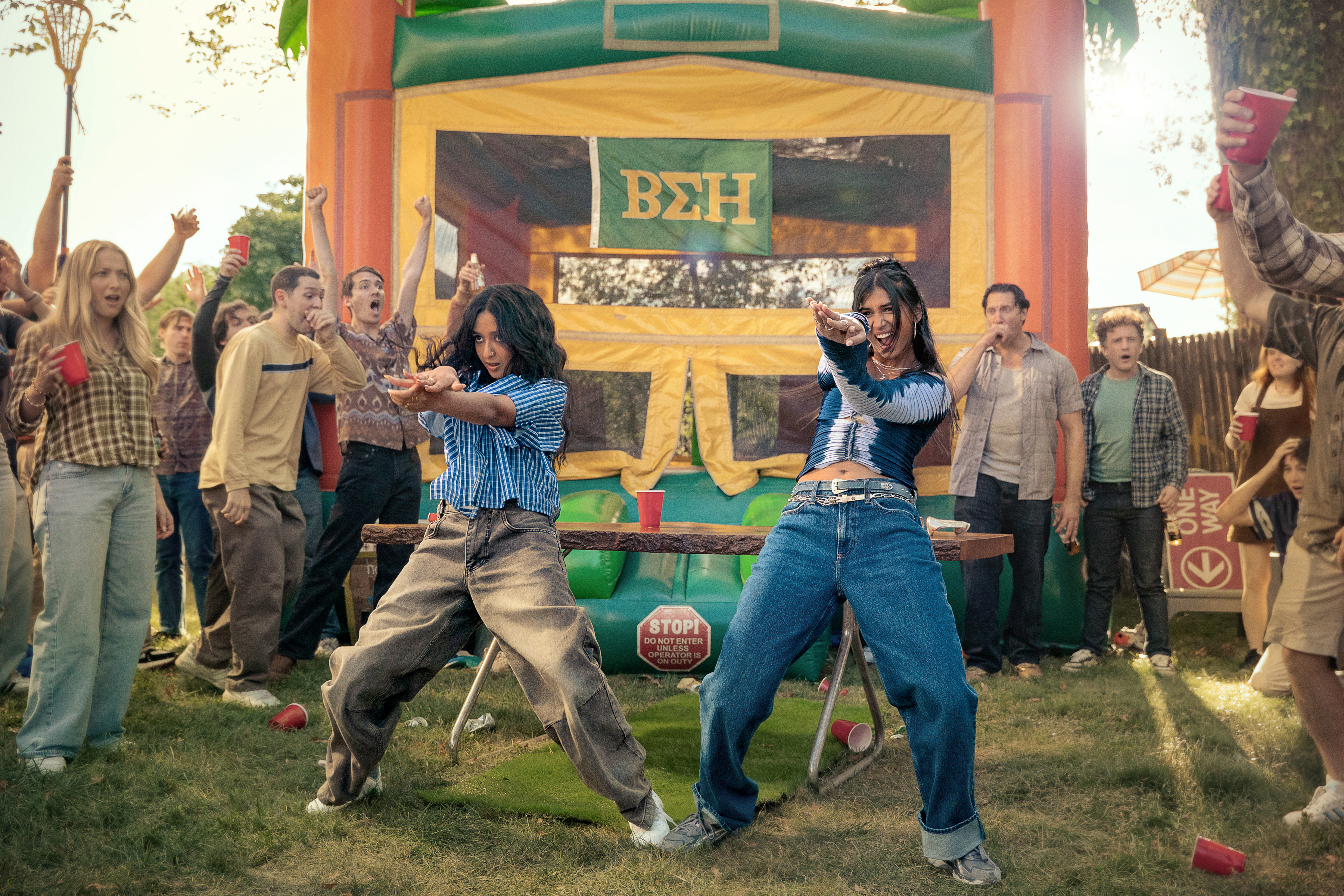
“Maitreyi has such a strong sense of self, and such a strong sense of pride in her culture,” says Minhaj. He describes one of his favorite moments on set, seeing that cultural pride pour out of her when Ramakrishnan and Kedia’s characters perform a Kuthu dance at a frat party. Kuthu is a high energy, high impact Tamil folk dance that can appear like jumping jacks and aggressive pelvic thrusts colliding. It’s the kind of dance that isn’t taught in professional studios. “A lot of people over time have seen Kuthu as lower-class rowdy street dance,” says Ramakrishnan,
She likens Kuthu to Bhangra, which started as a dance for Punjab farmers, and is now a common sight at Indian weddings. The best place to learn both Bhangra and Kuthu? “At the function,” she says. Regarding Bhangra, “You learn it at the wedding. You learn it with the vibes. You get the beat in your shoulders and you're going.” As for Kuthu: “It’s at whatever banquet hall birthday party, for some 2-year-old kid who will never remember any of this, because he’s passed out in the corner while all the uncles and aunties are going off on the dance floor.”
The Kuthu sequence is riotous, befitting the chaos of the frat-party environment. Ramakrishnan and Kedia bound over lawn furniture and kick up grass. Ramakrishnan gets all the background actors hyped while she tugs at the collar of her blue checkered shirt, a nod to the red flannel that Prabhu Deva wears during the dance number he wears in the 2007 gangster movie Pokkiri.
A grand and meaningful finale
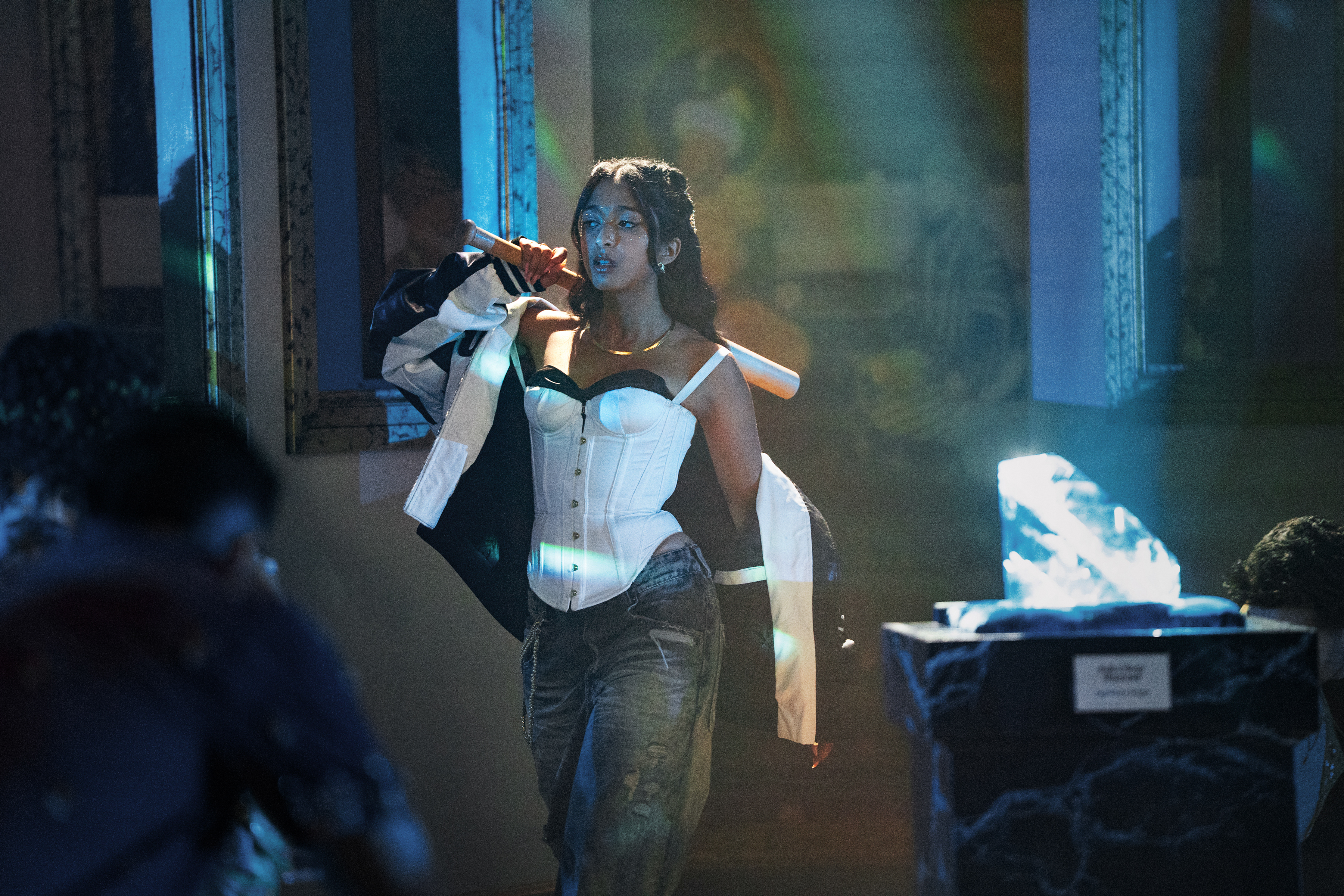
Minhaj also says that he and Venkataramanujam leaned into Ramakrishnan’s identity for the film’s spectacular finale, which plays out on a stage decorated like a museum, a playground of colonial artifacts. The climactic dance number, according to Minhaj, is meant to inhabit and challenge the South Asian literary discourse on colonial reparations. Did you expect anything less from the duo behind Patriot Act?
The finale incorporates the Koh-i-Noor, the 105-carat diamond recorded to be from India that had changed hands across Asian empires for centuries before being surrendered to the British during the Victorian-era. It’s currently set in the Queen Mother’s crown and housed in the Tower of London. Indian politician Shashi Tharoor and British MP Kieth Vaz are among the voices who have called for the diamond’s return. New York City mayor Zohran Mamdani echoed their sentiments earlier this year when pressed about what he would discuss if given the opportunity to meet with King Charles.
Minhaj questions whether such a symbolic reparation is useful, especially when it could sow further division in a region torn apart over centuries. Pakistan, Bangladesh, and Afghanistan all lay claim to the diamond of obscure origin, which, as Minhaj points out, could just be an anchor tying a new generation down to a complicated colonial history as opposed to encouraging us to flourish.
“Even if the Koh-i-Noor diamond would be returned to us,” he asks, “What does that change for us today? How does it shape our tomorrow? The uncomfortable reality is that it's up to us to shape that, irrespective of that diamond ever coming back to us."
I won’t spoil how, but it’s Ramakrishnan, as Maya, who steps up to embody what Minhaj has in mind as the way forward.
“Maitreyi is the actor for this moment because she comes from very special cloth. Her parents are incredible activists and academics. She understands her political and social place in history and in time. It only feels right that she's the lead of our film, and the voice of what is new and what is to come.”

 点赞
点赞 收藏
收藏 点踩
点踩 分享
分享