Apple Considers Return to Server Market, Has Talked With Nvidia to Use Network Tech

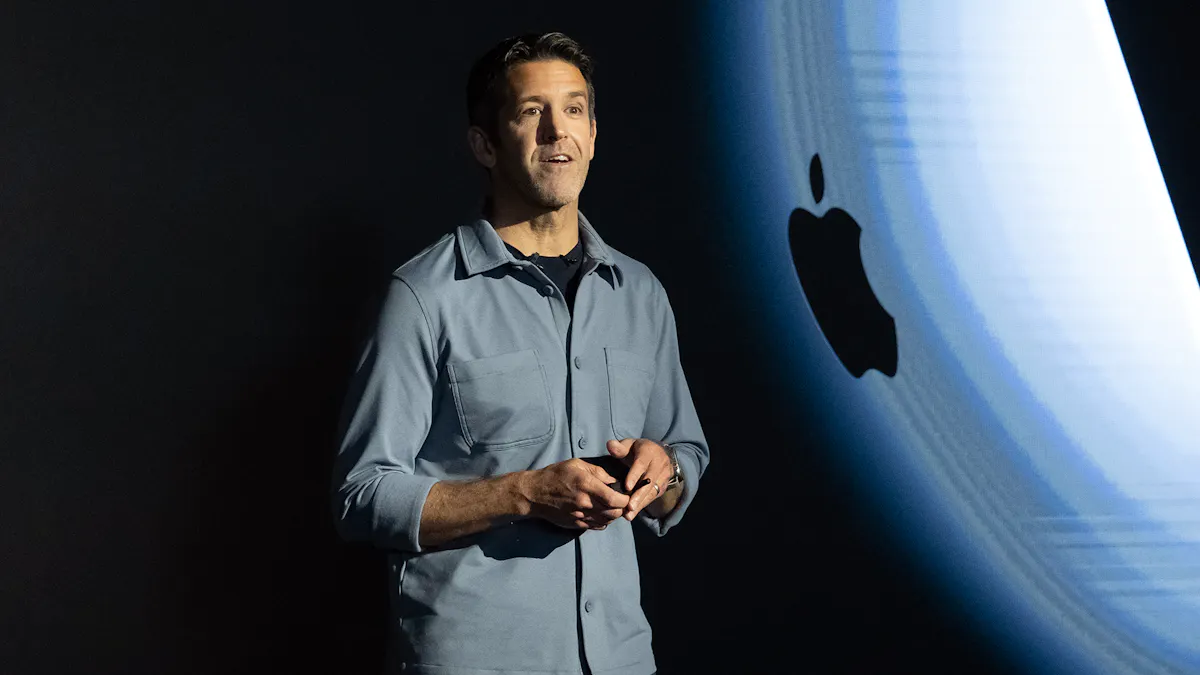
Apple has been working on plans for an enterprise server using its own chips that could incorporate networking equipment from Nvidia, people familiar with the project said, as the Mac maker looks to capitalize on surging interest in its computers for AI.
Apple has been developing the server with plans to sell it to AI developers, other businesses and governments, the people said. The product under consideration would come in two versions—a smaller one with two of Apple’s planned M8 Ultra chips clustered together and a bigger one with four M8 Ultra chips. The M-series Ultra chips are Apple’s highest-performance chips and power products including the Mac Studio.
Apple has considered connecting the M8 chips in the server using an Nvidia set of products called NVLink Fusion, which includes switches, chiplets and software that help chips communicate with each other in data centers, the people said. Any such move would expand on a nascent warming in what have long been frosty relations between the two tech giants.
NVLink was originally designed to connect Nvidia chips together for fast communication so that multiple chips could operate as one, but the company has opened it up for other companies to tie their chips together even if they aren’t from Nvidia. Some Apple staffers on the project believe the Nvidia equipment may offer the best connectivity technology, the people said.
The Apple product isn’t currently expected to hit the market until 2029, and could still be cancelled or proceed without the Nvidia technology. But Apple’s new chief executive, John Ternus, who took over earlier this month, was a backer of the project at its inception around a year ago when he headed Apple’s hardware engineering, and saw an opportunity for Apple’s chips in the booming environment for AI compute, said some of the people.
Apple and Nvidia have had chilly ties stretching back decades. The partnership began in 2001 when Apple equipped its Macs with Nvidia graphics processors to improve graphics capabilities. Apple CEO Steve Jobs, at the time, called it a “great relationship.”
But tensions rose behind the scenes, stemming from business disputes that originated around the same time over issues including Jobs’s belief that Nvidia products contained technology copied from the Jobs-founded animation studio Pixar, The Information previously reported.
Tech Giants’ Ties Start to Thaw
Now the relationship is showing signs of improving. As part of its recent overhaul of Siri, Apple is running part of the new AI on Nvidia chips inside data centers at Google, its partner for the overhaul, The Information previously reported. Since then, Apple and Nvidia have been in conversations about Nvidia’s technology and other areas it could help Apple catch up in AI, such as Nvidia’s open-source AI models, said people familiar with the relationship.
The planned AI servers would help Apple feed a market hungry for its hardware. Over the past year, Apple has encountered an unexpected surge in demand for its Mac mini and Mac Studio–boxlike computers lacking a keyboard, mouse and display–among AI developers, as The Information has previously reported. Large AI labs have snatched up tens of thousands of the computers, and other companies have started deploying them in their operations. Dragonfruit AI, for example, is using them to power security camera analysis for retailers, and a startup called Mount Thor is building a cloud-computing business using already available Apple hardware.
This demand has led to an extreme shortage of these Mac computers. Mac was the fastest growing product segment in Apple’s most recently reported quarter, with sales surging nearly 29% to $10.4 billion.
But Macs are still overwhelmingly consumer products, lacking some features that enterprises demand, such as remote management software.
Apple already builds its own servers for Private Cloud Compute, its internal system for processing heavy-duty AI tasks that are too big to run locally on iPhones and Macs. For most of its current servers, Apple is still using internally developed connectivity technology, but it is too slow and expensive to use at large scale, the people said.
Partners have asked Apple for access to these Private Cloud Compute servers, but Apple has turned down their requests, The Information previously reported. For the future server product being developed, Apple has to secure enough components years in advance in preparation to sell to external customers, said the people.
Nvidia’s Shifting Strategy for Networking Equipment
An Apple foray into servers would mean new competition for Nvidia. Although Nvidia dominates the market for AI servers, it also is increasingly positioning itself for a world with more chip competition. NVLink Fusion, announced last year, is a key element of how Nvidia aims to partner with customers that sell competing server chips. Networking equipment can amount to 10% to 15% of AI data center hardware costs, and such gear accounted for a fifth of Nvidia’s data center revenue in the April quarter, when Nvidia last reported networking revenue.
“We would always rather sell something than nothing,” Dion Harris, Nvidia’s senior director of high-performance computing and AI infrastructure, said in an interview. Harris declined to comment on whether Apple is an NVLink Fusion customer, but said that “Apple has always been a great customer and partner of ours.”
Harris’s hope is that every company making a competing AI server chip uses some element of NVLink Fusion. He said Nvidia has had “extensive conversations with a broad mix of customers and partners” around NVLink Fusion use.
Last month, Amazon’s cloud division announced it would be expanding its use of NVLink Fusion for its next-generation AI servers.
With the server product it’s working on, Apple sees a particular opportunity to make inroads in the market for AI inference, or the running of AI models, especially among companies and other customers that want to run models on their own servers rather than on public clouds.
A new server product would mark a re-entry into the server business for Apple. Between 2002 and 2011, it sold a server product called Xserve, which were powered by chips from IBM and, later, Intel. But the product failed due largely to Apple’s indifference to the enterprise market and lack of support for customers, said people who worked on the project.
Enterprise customers have never been a major focus for Apple. It doesn’t have an engineering team focused on that type of customer and has no developer relations dedicated to enterprise, Todd Dailey, a former enterprise marketing manager for Apple’s AI products, previously told The Information.
But Apple has been recently making efforts to change that. On June 23, it held an event called “Business at the Park,” where it hosted a number of large corporations, as well as AI players to talk up its hardware capabilities for running AI.
One investor in the AI hardware business said networking technology is the biggest missing piece for Apple’s ambitions to be a big AI server business. It’s possible that Apple has considered relying on Nvidia’s networking hardware now, as a temporary solution, while it develops its own products, he said.
If Apple wants to make future enterprise servers competitive, it will likely have to hire more people for teams focused on those kinds of customers. It will also have to provide software tools for AI developers to better take advantage of the hardware, similar to Nvidia’s CUDA framework.
Apple already offers a tool for efficiently running AI models on Apple hardware called MLX, but the team behind it is small and its leader, Awni Hannun, departed earlier this year for Anthropic.
And the hardware market is advancing quickly. OpenAI plans to deploy its custom AI chip, Jalapeno, starting later this year, and Nvidia is quickly evolving its hardware to capture the AI inference market and to better serve privacy-sensitive customers who don’t want to use the public cloud.

 点赞
点赞 收藏
收藏 点踩
点踩 分享
分享