AI’s ‘Pacing’ Obsession Misses Real Political Problem


Dario Amodei typically isn’t considered some camera-ready media maestro. His interview quotes aren’t particularly pithy, and he struggles to control his strained facial expressions. But his habit of sending his most high-stakes messages via essays posted on his own website, darioamodei.com, has proven to be a brilliant media strategy. “The medium is the message,” the ubiquitous half-century-old wisdom from scholar Marshall McLuhan, still resonates. The approach conveys authority and diligence, putting Amodei above the fray.
Amodei’s latest essay, on Saturday—suggesting that the industry slow down the pace of AI development—set off a weekend full of takes on the tech industry’s preferred medium, X—well-meaning, conspiratorial, annoying, breathless, thought-provoking takes, including nods of agreement from Amodei’s rivals, Sam Altman and Elon Musk. Timing is important here, too, of course. AI doom is dominating the headlines, not just in Washington and Silicon Valley but around the world. (We reported today on discussions underway between the companies).
What was lost in the fervor was that Amodei’s essay said little that was truly newsworthy (though it was big news for the obscure world of nonprofit AI safety evaluators). And what Amodei was proposing wouldn’t seem to damage Anthropic’s business or, when it goes public in the next few weeks, its stock price. (“To be clear, pacing does not mean halting model training or technical progress,” he wrote.)
I wonder if we’ll look back at this news cycle as one of the last times when the AI industry really could control the conversation. Silicon Valley, more self-obsessed than ever, is transfixed by the minutiae of AI safety politics: What are the antitrust implications of companies coordinating on an AI slowdown? Who’s funding the “independent” evaluators? It’s all embodied by three words that should be enshrined in the tech jargon hall of fame—“pacing the frontier.”
Meanwhile, a bigger question consumes politicians and voters: Is AI even good for us? Their concerns aren’t just about the existential risks posed by superintelligent AI that are dominating headlines out of the tech industry right now, like bioterrorism, agent swarms and hacking capabilities. They also see more tangible risks, like people losing their jobs, their critical thinking skills, their supervision of their children. The product, not the pacing, is the problem.
That’s where Amodei might lose the high ground—as well as Anthropic’s IPO investment case. Democrats have a good chance to win the House of Representatives, and possibly the Senate, in a couple months. Former President Barack Obama has urged party leaders to focus on AI oversight. Vermont Sen. Bernie Sanders penned a bill that would put people in jail if they tried to build AI systems that are more intelligent than humans. President Donald Trump, whose hands-off approach to AI rules has helped the industry mightily, is nearing the end of his run.
The winds, which have been at Amodei’s back for years, seem to be changing. Will he still be able to control the message?
Spiegel to See for Himself
Elsewhere in high-priced gadget land, Snap is having an event on Wednesday to drum up attention for its forthcoming Specs, augmented reality glasses it unveiled a few weeks ago, to much derision.
Not only do the glasses look ugly and weigh a lot, they retail for $2,195, as we detailed. Spiegel doesn’t seem to care. As he repeated in a note to employees last week celebrating Snap’s 15th anniversary, he sees Specs as “the future of personal computing.”
Maybe he’ll be proved right—Snap has said they’ll be available this fall—but that’s not a bet anyone seems to be taking right now, given Snap’s languishing stock price. The stock is down so far this year by 30%.—Martin Peers
• A swarm of OpenAI agents conducted a cyberattack on software service RubyGems in May, months before the company’s agents hacked model platform Hugging Face, researchers at AI safety organizations Nightingale Collective and AI Futures Project found. RubyGems allows software engineers to download ready-made pieces of code in the Ruby coding language.
• Salesforce, ahead of its annual Dreamforce customer conference next week, is removing the word “Agentforce” from the names of some of its top products, according to two people with direct knowledge of the matter. Salesforce had made Agentforce a centerpiece of its product sales and marketing strategy after launching it in late 2024.
• Polymarket appointed former Amazon executive Warren Jenson as its first chief financial officer as the prediction markets startup looks to grow in the U.S.
• Microsoft Chief Communications Officer Frank Shaw will leave the company at the end of the year, he announced in a LinkedIn post Friday. Shaw has spent more than 28 years at the company, including 17 overseeing its communications.
• Shanghai Enflame Technology surged on its first trading day Friday after the Chinese AI chip developer raised about 6.12 billion yuan ($911 million) in an IPO, underscoring strong investor appetite for domestic alternatives to Nvidia chips.
• Nvidia has discussed investing in Anthropic’s upcoming initial public offering that would raise as much as $100 billion at a valuation of around $2 trillion, Reuters reported Friday. Nvidia could invest as much as $10 billion in Anthropic at the IPO price, according to the report. Anthropic last raised capital at a $965 billion valuation in May.
• Tesla teased an October 1 Roadster reveal on Saturday. The company shared a photo of what appears to be the back of the vehicle with the words “Go for launch” on X and updated its Roadster webpage with a countdown to October 1.
• Oracle founder Larry Ellison has canceled plans to sell up to 50 million of his shares in the company, worth around $7.5 billion at current prices, Oracle said on Saturday. The announcement came a day after Oracle disclosed that Ellison had adopted a trading plan to sell the shares by late October.
Friday on The Information’s TITV
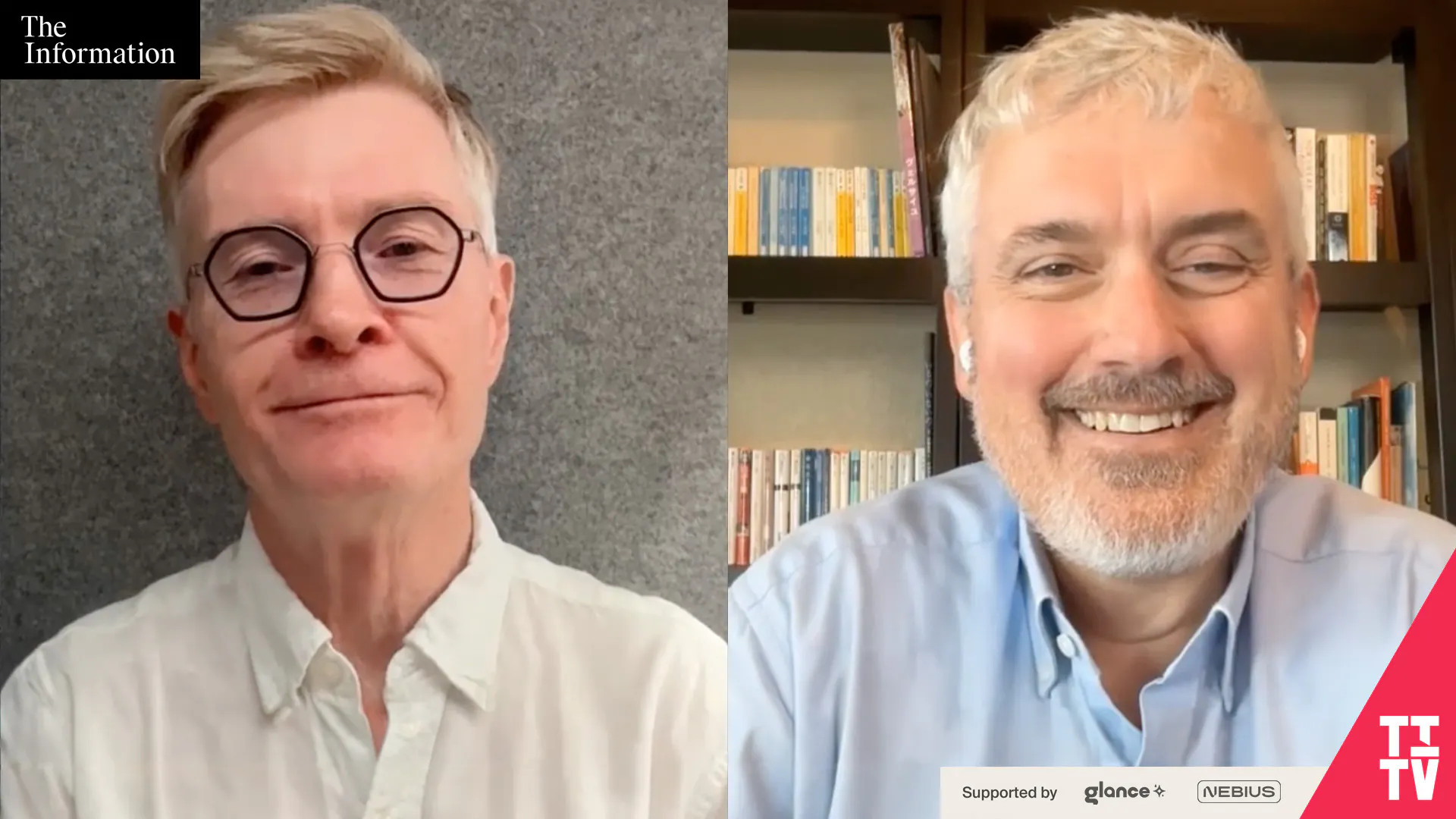
Check out Friday's episode of TITV in which we discuss the current discourse around AI being the end of humanity.

 点赞
点赞 收藏
收藏 点踩
点踩 分享
分享