French Tech Prowess Mints Billionaires and Questions Back Home

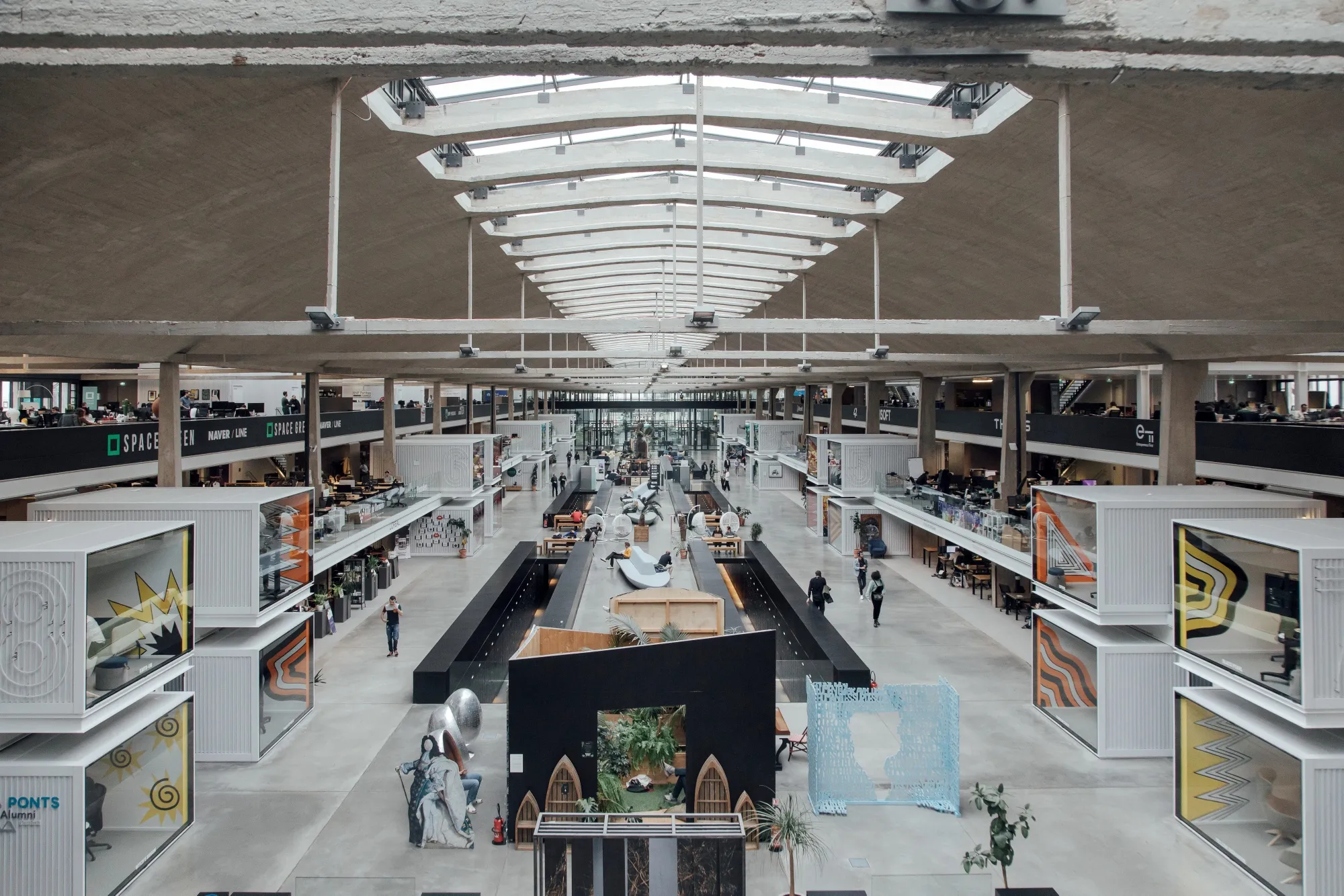
At the tech incubator known as Station F, housed in a refashioned Paris railway depot, all the latest chatter is focused on the riches being minted at several French startups.
A handful of entrepreneurs with links to France are making waves in the global race for artificial intelligence, fueling the fortunes of their founders and investors. French developer Mistral AI just unveiled Europe’s biggest-ever tech funding round, a quantum computing company listed on the Nasdaq and Hugging Face agreed to be taken over by Nvidia for about $13 billion.
“I always knew we would see unicorns coming out of Station F but I never expected to see an acquisition on this scale,” said Roxanne Varza, its longtime head. Sitting near a desk commemorated with a plaque where Hugging Face once worked, she said the news provided proof “we can build big companies.”
Beneath the celebratory tone lurks a malaise about the huge spending firepower putting the US ahead of European peers. While an increasing number of French tech founders have become billionaires, it’s often been because of the growth they found after moving across the Atlantic to work and raise money.
“Europe has a much more limited capacity than the US to support their hyper-growth champions,” said Virginie Morgon, a former CEO of asset manager Eurazeo SE before founding Ardabelle Capital. “The US has supremacy in terms of depth of capital markets and number of actors financing scale ups.”
This sentiment is illustrated by a recent survey by EY and France Digitale showing that while AI is the priority for venture capital, nearly three quarters of respondents described hurdles to attracting investment beyond early stages due to a lack of funds and exit opportunities.
Last year US startups raised $97 billion for generative AI compared with $5.9 billion in Europe, according to a separate EY report. Within Europe, France led the UK and Germany in attracting funds, and among companies, Open AI got the biggest chunk of money in the US while Mistral came out on top in Europe.
Over the years the EU has put in place mechanisms to fund innovation including the European Tech Champions Initiative, backed by six countries including France and targeting €20 billion for scaling up growth in sectors like AI, fintech and life sciences. There’s also the new Scaleup Europe Fund designed to respond to “the urgent need for Europe to boost investments in scaleups and close the gap with global leaders.”
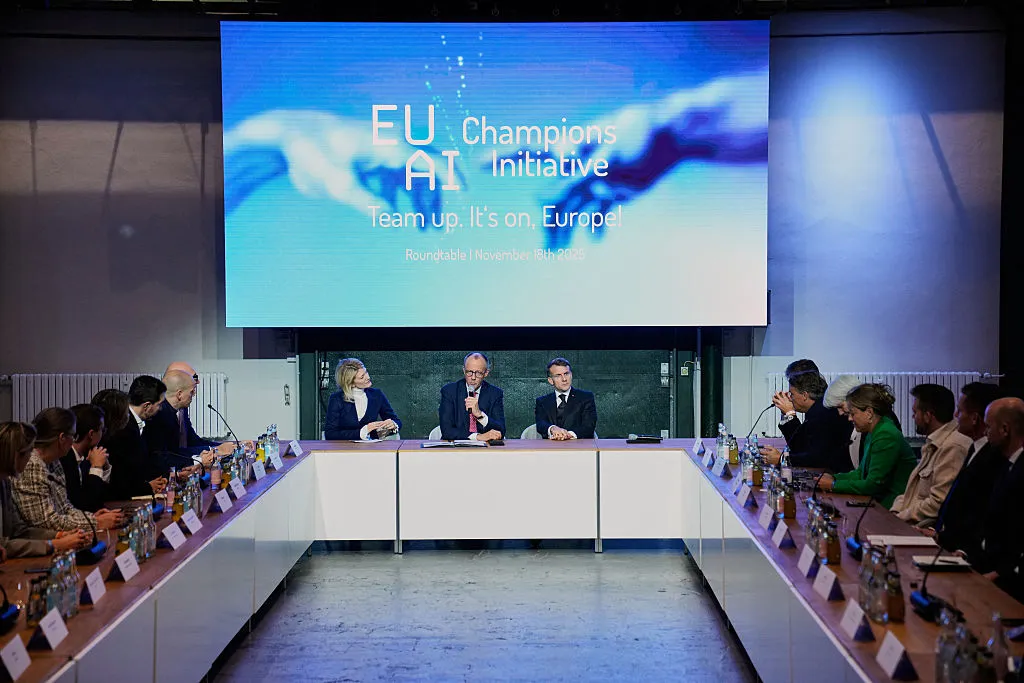
Such initiatives, while laudable, remain relatively small says Morgon. She also points to the sluggishness of the European IPO market for tech companies as hurting the region’s attractiveness for raising capital.
Take Mistral AI’s €3 billion fundraising round, which was only partly sourced in Europe. Led by South Korea’s Samsung Electronics Co., the Scaleup Europe Fund shared co-lead status with PSG Equity, a venture capital firm based in Boston. The previous round was led by ASML Holding NV, the Dutch chip-machine maker.
That particular financing “exposes the scale of Europe’s challenge: even a record-breaking round leaves Mistral with substantially less capital than leading US peers,” Pitchbook analyst Navina Rajan wrote in a note. This reinforces “the need for deeper pools of European growth capital if the region wants its AI champions to remain globally competitive.”
A lot is riding on the success of Mistral for France and Europe because the company has been selling itself as an alternative to US behemoths Open AI and Anthropic PBC. It’s counting on gaining traction with European governments and big corporate customers like BNP Paribas and TotalEnergies, fearful of relying too heavily on AI products owned by American and Chinese companies.
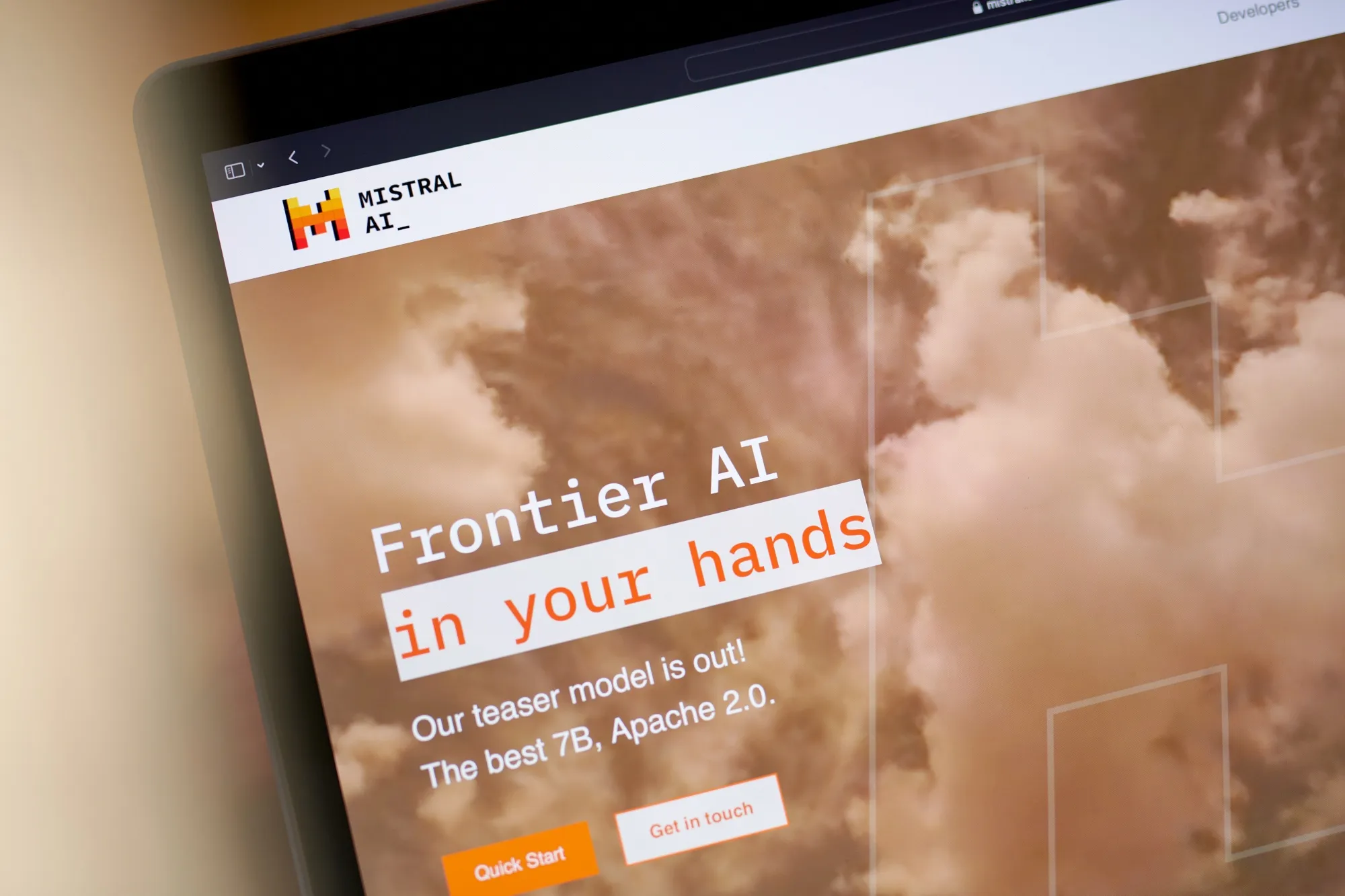
Mistral’s most recent funding round nearly doubled the startup’s valuation from a year ago to more than €21 billion, and came three years after the firm was founded by a trio of French engineers, Arthur Mensch, Timothée Lacroix and Guillaume Lample. They created the company, that is still based in Paris, after stints at Google and Meta.
French Finance Minister Roland Lescure has lamented the region’s dearth of sector champions. “If European AI is concentrated solely on Mistral, then we are doomed,” he told Agence-France Presse in San Francisco earlier this month. “We can’t put all our eggs in the same basket.”
The company’s French base contrasts with other leading techies native to the country. While Hugging Face’s three founders were educated in France and spent time at Station F, they developed their extensive open platform for AI models in New York, where the company is headquartered. Similarly, the engineering pair who started US-based Datadog Inc. and have also become billionaires, decamped after their studies in Paris and haven’t looked back.
Nvidia Deal Makes Billionaires of French Hugging Face TrioFrench Tech Founders Reap $3 Billion Windfall From DatadogMistral’s Three Founders Become First AI Billionaires in France
That overseas success has sparked some hand-wringing in France, where President Emmanuel Macron has made turning the nation into a serious global AI competitor a policy priority.
While observers say raising money abroad and keeping headquarters and intellectual property back home in France isn’t such a bad thing, one example that could test that balancing act could be quantum computing company Pasqal Holding SA. Co-founded in 2019 by five scientists including a Nobel prize winning French physicist, it listed last month on the Nasdaq via a blank-check firm.
The France-based company said it was a first step to be followed by a listing on Euronext. CEO Wasiq Bokhari said in an interview with Sifted that Europe simply doesn’t have sufficient late-stage capital, leaving companies like Pasqal “structurally disadvantaged.”
Mistral’s Mensch himself touted his company’s future listing as a way to raise funds and guarantee its independence instead of being acquired. “I don’t know if the IPO will take place in France or elsewhere,” he told newspaper Les Echos.
Eléonore Crespo, the co-Founder and co-CEO of business planning platform Pigment that is based in France but makes 60% of its revenue in the US, is more categoric, saying any listing of the company would be in the US.
“The key to success in tech is moving very quickly,” she said, noting that raising capital, signing on customers and hiring staff happen much faster in the US even as European engineering talent remains “unmatched.”
One high-profile example to watch is French AI pioneer Yann LeCun, who departed Meta Platforms Inc. to launch Paris-based Advanced Machine Intelligence, or AMI. The startup reached a valuation of $3.5 billion earlier this year in Europe’s largest seed funding to date.
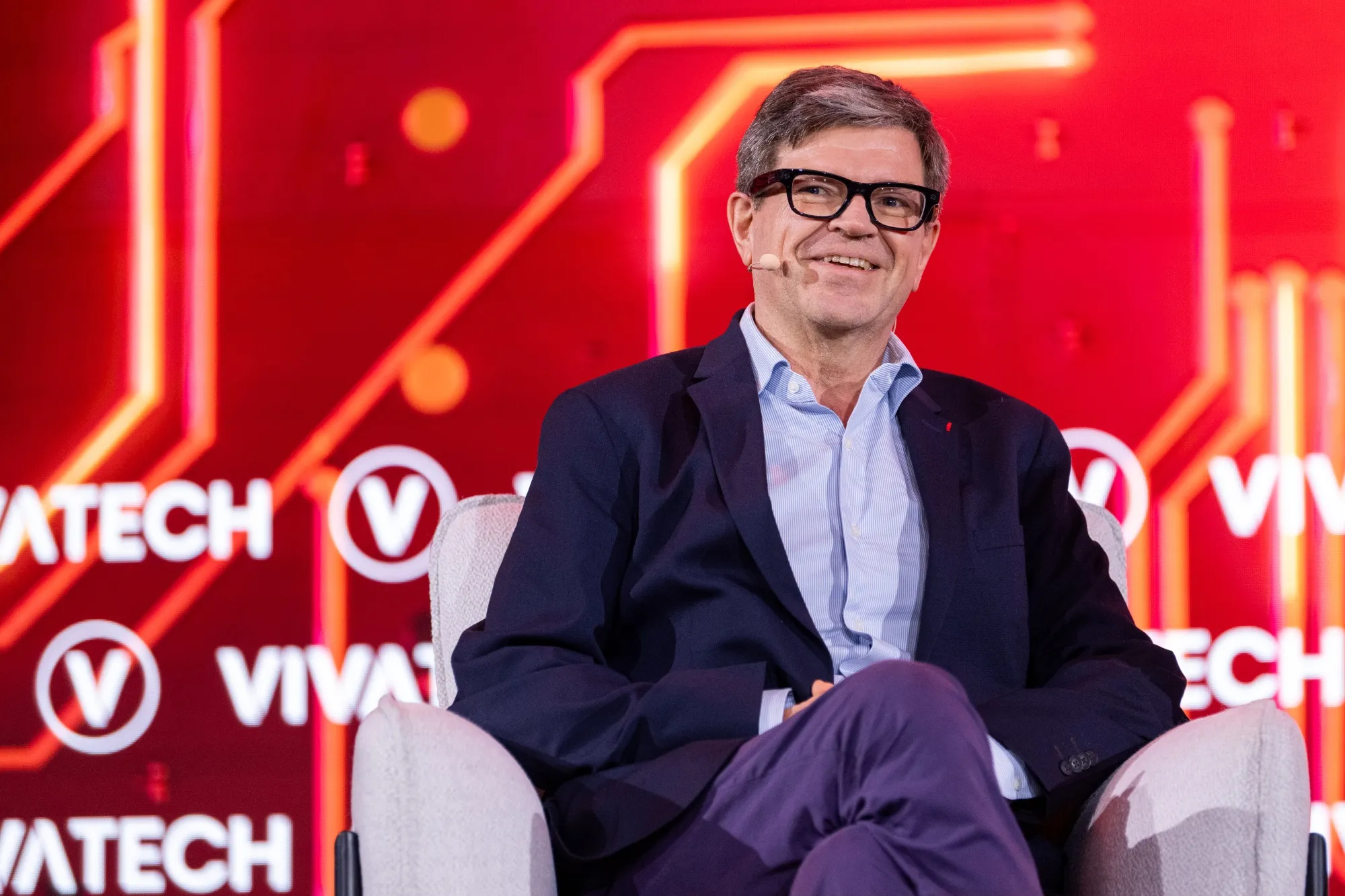
“There are less risk takers in Europe than in the US,” said Ghislain de Pierrefeu, partner at consultancy Wavestone. “We’ve managed to close a lot of the gap in venture capital and there are more business angels. But there’s a need to go further on a much larger scale.”
This sentiment is echoed in New York by one of the earliest investors in Hugging Face, John Borthwick, who said he tried and failed to help the company gain European backing. Now, he said, the region needs to get its act together.
“Europe needs AI and AI needs Europe,” said Borthwick, the founder of venture capital fund Betaworks. “There is going to be and has been a tremendous magnetism to the US. If there were to be a stronger, more clearly articulated European vision of the future, that would retain and draw talent back.”
For Wavestone’s de Pierrefeu, France-linked tech stars will create a sort of diaspora that will feed the country’s eco-system. Companies like Mistral and Hugging Face, which employ a lot of people in the country, will also invest in and create new startups.
That’s what Station F has been aiming to do since it was founded nine years ago by billionaire Xavier Niel. So far it takes credit for helping produce five unicorns including Hugging Face. The Nvidia deal makes that New York-based company its top performer by far, but one in which neither Station F nor Niel invested in.

 点赞
点赞 收藏
收藏 点踩
点踩 分享
分享