Oracle Keeps a Lid on Capex as Customers Pay Up-Front
'%20fill-opacity='.8'%20d='M3.256%203.913a3.083%203.083%200%200%200-.003%204.397L8%2012.998l4.743-4.684a3.085%203.085%200%200%200%20.001-4.4c-.6-.593-1.4-.914-2.233-.914a3.17%203.17%200%200%200-1.91.635L8%204.087l-.601-.452A3.17%203.17%200%200%200%205.489%203c-.834%200-1.634.321-2.233.913m10.19%205.111-4.748%204.69a.996.996%200%200%201-1.397%200L2.549%209.02a4.083%204.083%200%200%201%20.004-5.82A4.17%204.17%200%200%201%205.488%202c.907%200%201.787.29%202.512.835A4.17%204.17%200%200%201%2010.51%202c1.093%200%202.146.422%202.936%201.202a4.085%204.085%200%200%201%200%205.822'%20/%3e%3c/svg%3e)
'%20stroke-opacity='.75'%20stroke-width='1.5'%20stroke-linejoin='round'/%3e%3c/svg%3e)


Forget all that chatter about AI killing us all. We’re back to looking at what really matters—the revenue! Oracle demonstrated on Thursday that demand for AI computing capacity remains pretty darn robust. Larry Ellison’s software and cloud firm reported 30% top-line growth for the quarter ending Aug. 31, a tad better than the company projected in June, sending its battered stock up 4.4% in after-hours trading.
The quarterly update demonstrated how much Oracle is benefiting from customers so desperate for capacity that they're paying up-front—what the company calls prepayments—for computing rental deals. Oracle brought in $11.4 billion in such customer prepayments in the quarter, doubling the amount of cash its operations generated. These payments help Oracle finance data center construction without dipping as much into its own pocket. While it spent $28.5 billion on capital expenditures in the August quarter, Oracle only burned $5 billion of its own money.
And prepayments aren’t the only way the company is keeping a lid on its own cash outlays. Some customers have bought their own AI chips and are bringing them to its data centers. Oracle is striking more such deals. Its executives said on Thursday night that most of an additional $30 billion of AI computing deals struck in the quarter involved customers prepaying or doing BYO AI chip deals.
(One of Oracle's big customers, OpenAI, demonstrated its urgent need for more computing capacity on Thursday when it suspended new sales of its $200 a month Pro subscription because it was having trouble meeting demand for its new Astra AI models.)
Both prepayments and BYO hardware deals are smart ways for Oracle to keep down its financing costs, although Oracle presumably doesn’t earn as much from them as it would for traditional rental arrangements. Still, that may not be a huge deal: Oracle co-CEO Clay Magouyrk said on Thursday that Nvidia chip rental deals renewed in the quarter had a 20% premium to previous contracts. That revelation echoed comments from other cloud executives about chip rental prices soaring, another sign of intense demand. (Having to make prepayments isn’t great for startups, as we showed here.)
Oracle stock has been crushed over the past year—it's down 53%—due to anxieties about the amount of debt it has to take on to fund its ambitious AI expansion plan. In July, S&P downgraded Oracle’s credit rating, citing its reliance on OpenAI as a customer and its hefty capex projections for this year. Oracle is also facing delays in some high-profile data center projects. (On that score, Magouyrk said on Thursday’s call that “all our eggs are not in a single basket,” meaning it has many other data center sites to lean on.)
Despite all those worries, Oracle is delivering, so far at least. Will investors begin to give the company the benefit of the doubt?
Tricks of the Hacking Trade
Never connect to a hotel’s Wi-Fi. That’s one lesson from a report Anthropic published Thursday on cyberhacks it had identified involving its technology.
The report—which makes a fetish of jargon, like “generative threat groups” or GTGs, for bad people—described one hack where, among other things, the bad guy hacked firms that operated hotel Wi-Fi systems for guests. People who then connected to the hotel Wi-Fit had details of their device (and traffic) sent to the bad guy’s servers, while malware went to the victims’ phones or computers. AI was used at “every point” in the operations.
That was one of the more pedestrian hacks described in the report, which delved into a variety of ways bad guys are using Claude to do everything from steal AI tokens to spread misinformation and influence opinion, particularly in countries such as Ukraine. Some of the examples are scary: The report highlights five examples of criminals using Claude “in ways that could support” development of biological weapons.
Anthropic took action to block the uses of its models for those purposes, to be sure, but these examples are perhaps one reason why folks connected with Anthropic have been warning this week about the dangers of the technology. There’s a lot in the report, including information about Chinese AI startups Moonshot and DeepSeek sending user requests to Claude for answers without telling users. It’s worth reading.
• Digital conglomerate Bending Spoons is buying whiteboard software firm Miro at a valuation of $1.355 billion, the latest in a series of purchases the Italian firm has done at knock-down prices. The price for Miro is a huge discount to its peak valuation of $17.5 billion dating from late 2021, according to PitchBook.
• The U.S. Senate formally launched an investigation into the July hack of Hugging Face, when a swarm of OpenAI agents broke out of a testing environment and gained access to the open-source repository (more here).
• The Department of Justice is looking into whether Nvidia tried to avoid antitrust scrutiny in its $20 billion deal to license the technology of chip startup Groq and hire most of its employees in December, Wednesday.
• Chip startup d-Matrix said Thursday it plans to use Nvidia’s networking hardware to connect its chips for running AI models to each other and to Nvidia’s Vera central processing units, used in data centers.
• SpaceX has signed another cloud computing rental deal to an identified customer that will pay it about $1.11 billion per month starting on Dec. 1, the company’s chief financial officer, Bret Johnsen, said in an interview at Goldman Sachs’ Communacopia + Technology conference on Thursday.
• Microsoft is planning to more than triple the size of its Azure cloud unit’s data center capacity to over 38 gigawatts by 2032, up from 12 gigawatts today, Bloomberg reported Thursday. A gigawatt of capacity would be able to power a city the size of San Francisco.
• Adobe reported 13% higher revenue for the quarter ending Aug. 28. On an earnings call, Adobe chair and CEO Shantanu Narayen said annual recurring revenue from AI products—the value of its contracts over the next 12 months—surpassed $650 million during its August quarter, up more than 150% from last year.
Today on The Information’s TITV
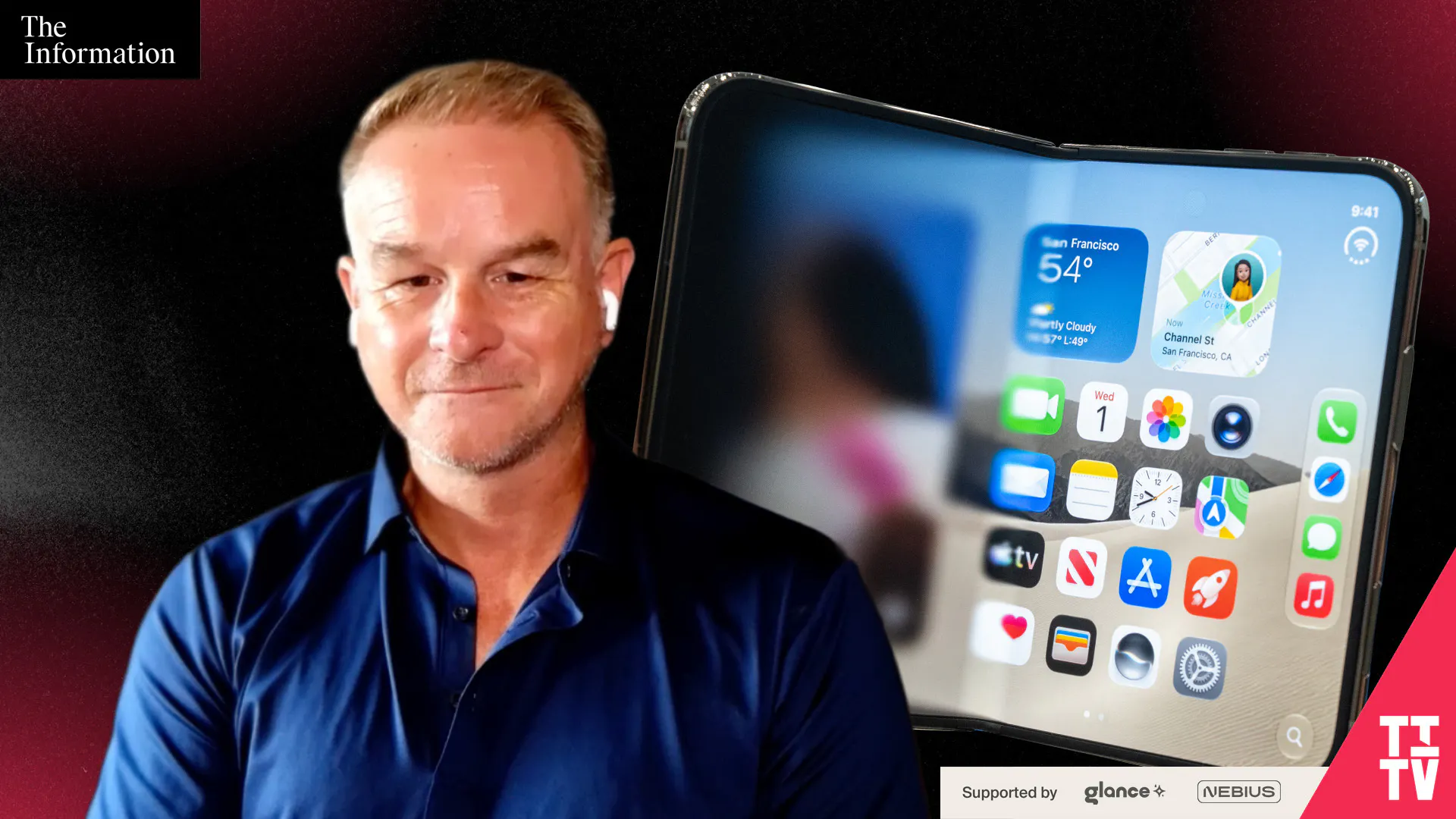
Check out today’s episode of TITV in which we talk about who the iPhone Duo is actually for.