How Two Citizen Sleuths Spent Decades Trying to Solve the Double Homicide of A Killer Story

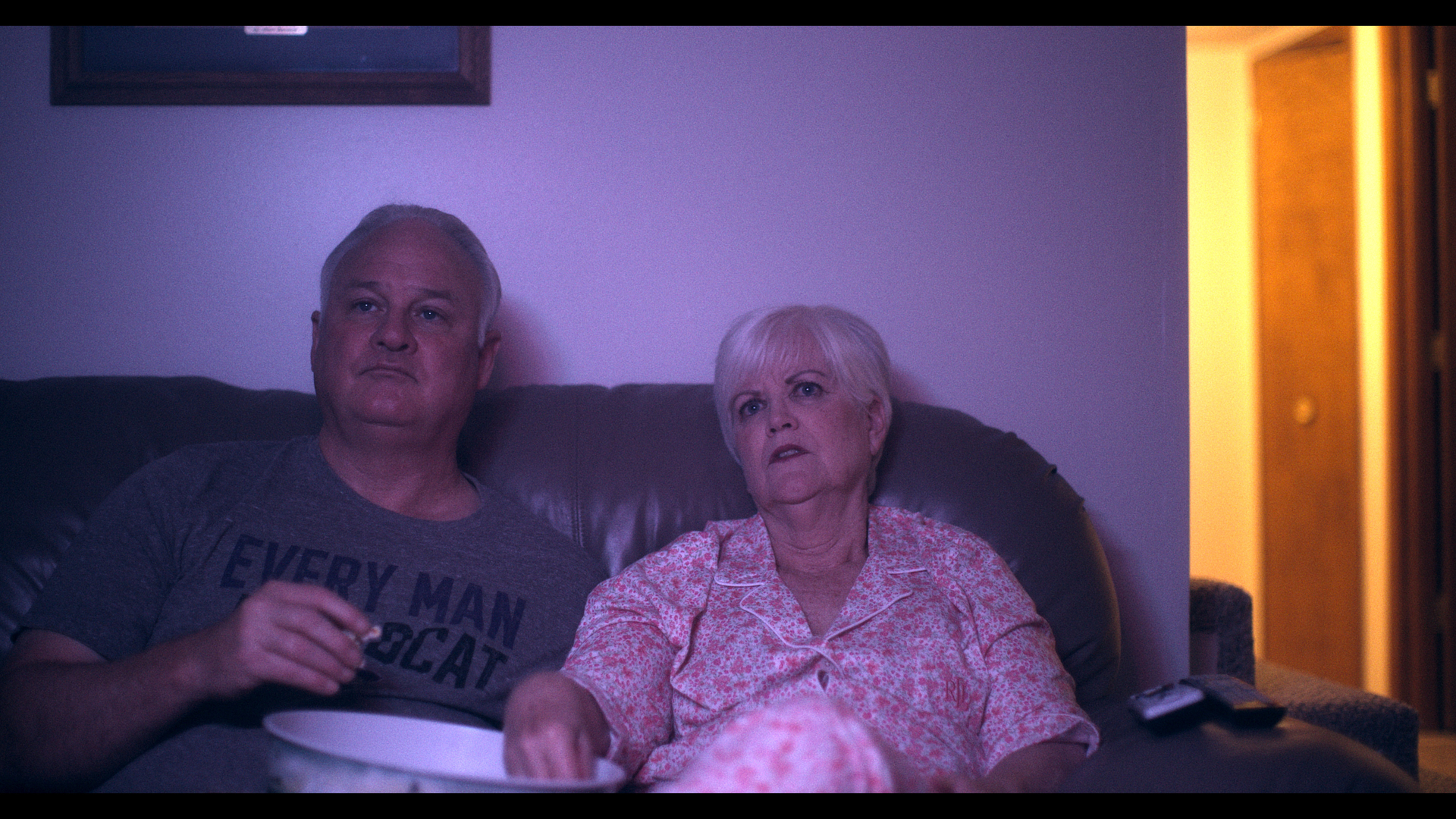
The tip came in 2017 from Alma, Kansas, from a stay-at-home mother. Eileen Umbehr asked whether Joe Sexton, a veteran investigative journalist who worked at The New York Times and ProPublica, wanted to know the truth about a double homicide in Topeka. Karen Harkness, daughter of a bigtime Topeka businessman, and her boyfriend Mike Sisco, a divorced father of two kids, were murdered on July 7, 2002, in the middle of the night, and authorities were convinced that Sisco’s ex-wife Dana Chandler was the killer. She was arrested, tried, and convicted of first-degree murder. Sexton, who thought the case was closed, emailed Umbehr back a polite “thanks, but no thanks.”
Umbehr kept writing Sexton, anyway. Some weeks brought 10 emails, then none for two, then 25 in a single day, packed with packed with court records, ballistics reports, property filings. Her correspondence grew from hundreds to thousands of letters. Sexton wasn’t sure whether to call the police on Eileen or hire her for her thoroughness. But he gave her a nickname: “pen pal.” By then, Umbehr and her husband Keen, a lawyer, had spent years working the case and advocating for Chandler at their own expense. Then came email 2,714. The Kansas Supreme Court, Umbehr explained, had thrown out Chandler’s murder convictions, a rare occurrence. Sexton replied in six words: “Perhaps I should come see you.”
Those six words began a journey which is now the subject of A Killer Story, a three-part documentary premiering Sept. 10 on HBO. Featuring Sexton alongside the married true-crime enthusiasts who recruited him—strangers to Chandler when they took up her case—it unspools the story of the deaths of Sisco and Harkness, and the case against Chandler, who was convicted in 2012, granted a new trial in 2018, retried to a hung jury in 2022, and convicted again in 2025.
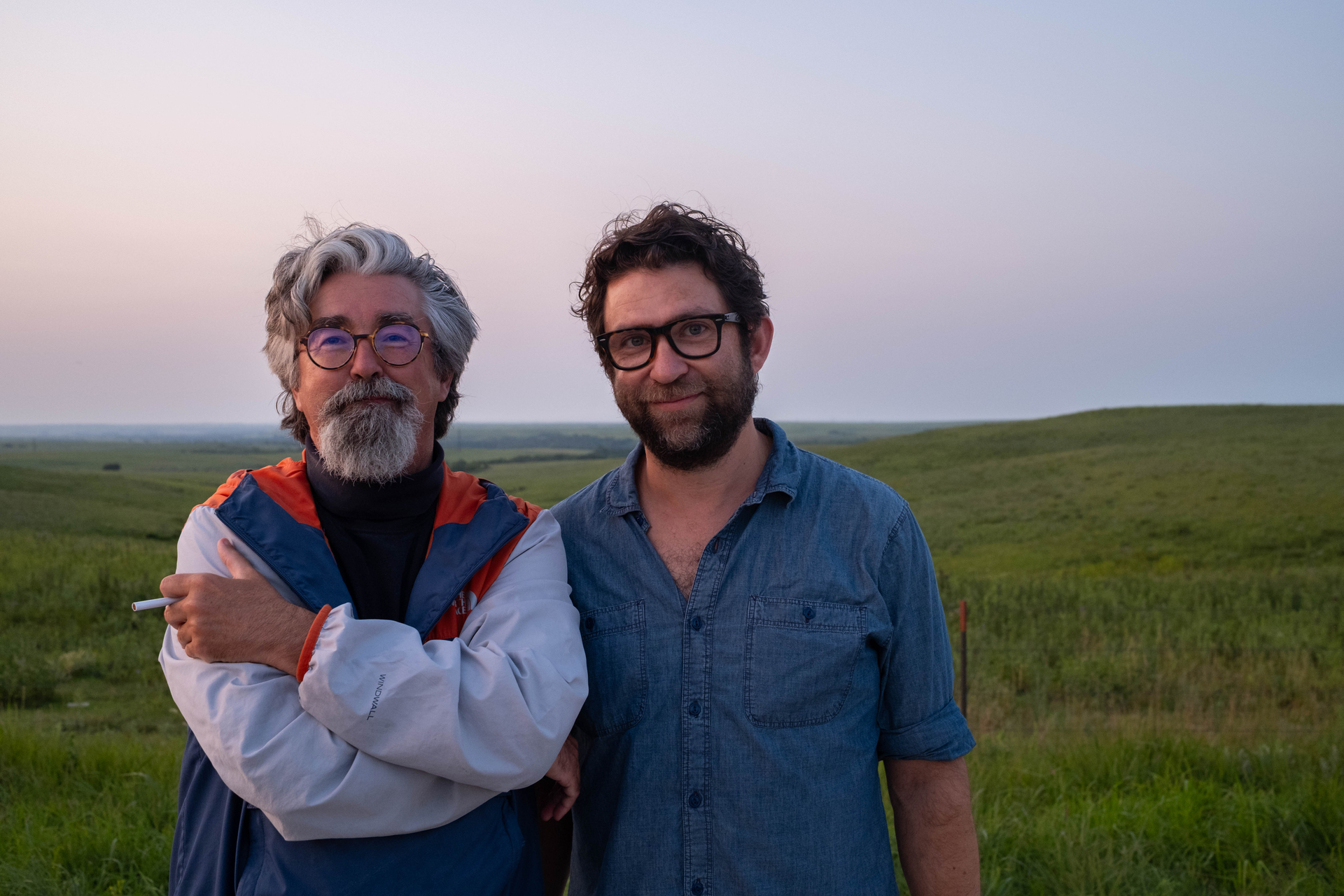
Directed by Matthew Galkin and executive produced by Joshua Levine, the series, filmed across the final six years of the case, explains how the final verdict was reached, without pretending a verdict also doubles as a definitive answer. Its deeper subject is the more amorphous notion of certainty: how detectives, prosecutors, and true-crime believers cling to it, and the collateral damage it can leave behind.
The initial draw to the project, according to Levine, was how much material piled up before their cameras even arrived to capture it. “There were two decades, really, before we even came into it, where there were all these other layers beyond the crime itself,” he tells TIME. Those layers built up at the intersection of the media and a couple whose devotion, and what it cost them, kept changing the course of the case.
A crime pointing to overkill
The facts of what took place on July 7, 2002 are clear. Harkness and Sisco spent the previous evening at a casino, cameras catching them until they left around 1:30 a.m. They were home at her townhouse before 3. Harkness’ father later found their bodies; both had been shot repeatedly.
Investigators ruled out robbery almost immediately. Cash lay in plain view and in Sisco’s wallet; Harkness still wore her jewelry. There were no fingerprints on the shell casings, no eyewitnesses, and no gun. The ammunition, though, was distinctive: Israeli-made subsonic rounds most commonly fired from an Uzi-style weapon. To Ray Lundin, then of the Kansas Bureau of Investigation, the scene read as “overkill,” a murder driven by emotion, as he puts it in the docuseries.
Sisco’s family immediately suspected his ex-wife. Two people nearly 40 miles west, watching the same case unfold, would eventually conclude otherwise. Chandler made out poorly following a bitter divorce after 15 years of marriage, which had been strained by her drinking; Sisco kept the house and custody of the children, and received a child-support order in his favor. She went on to earn a master’s degree in accounting, got sober, and moved to Denver—540 miles and roughly eight hours from Topeka. When Detective Richard Volle interviewed her days after the killings, she walked him through her errands on July 6, including a stop at an AutoZone. What she did not mention was on the receipts: two five-gallon gas cans. Investigators built a theory around them. With enough fuel aboard, a driver could make it from Denver to Topeka and back without stopping.
For nearly a decade, this remained only a theory. District Attorney Robert Hecht declined to charge Chandler, noting, as he does in the docuseries, that no one placed her in Topeka around the time of the murders. But his successors saw the case differently. Authorities arrested Chandler in Oklahoma in 2011, and in March 2012 a Topeka jury only needed 83 minutes to convict her of two counts of first-degree murder. She was sentenced to consecutive life terms with no possibility of parole for 100 years.
At the trial, prosecutor Jacqie Spradling had told jurors that Sisco obtained a protection from abuse (PFA) order against Chandler, and Volle testified to it. In Kansas, a court issues a PFA order to protect someone from abuse by a household member or intimate partner. When Keen Umbehr, Eileen’s husband and by then Chandler’s research attorney, went hunting for the PFA, he could find none. The prosecution’s decision to tell the jury that one existed, he says in the docuseries, was a way of suggesting that Chandler was dangerous.
On appeal, the Kansas Supreme Court found that no such order existed. In April 2018, the justices reversed both convictions, but also found the circumstantial evidence legally sufficient, which is why the reversal led to a retrial rather than Chandler’s release. Spradling's reckoning arrived on a separate track. Keen filed an ethics complaint against her in 2016; a disciplinary panel recommended disbarment five years later, and in May 2022 the Kansas Supreme Court disbarred her.
Two unlikely advocates
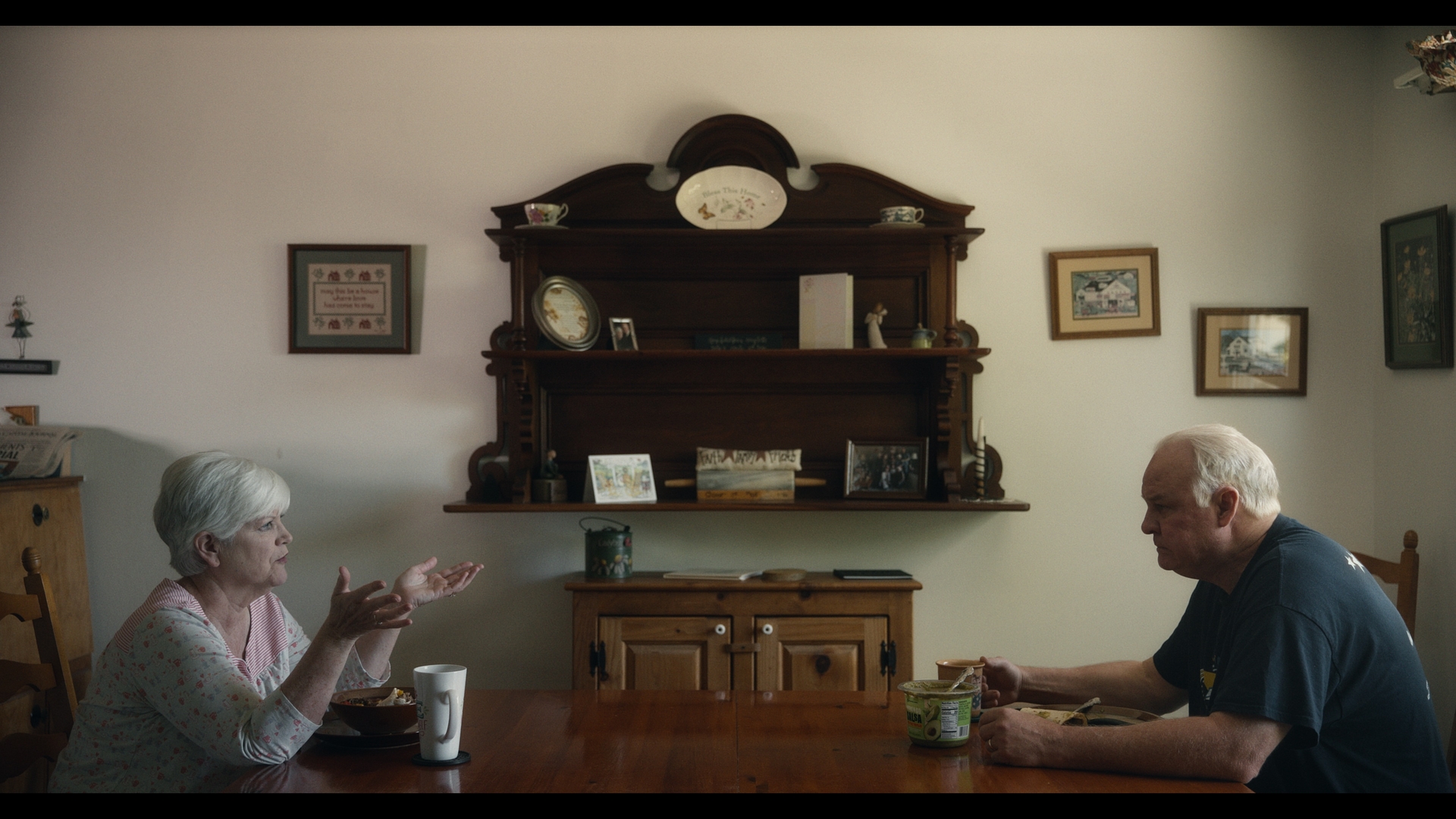
Over the two decades that followed, the Umbehrs gave the case nearly everything they had. had given the case most of two decades, which raises the question Galkin partly built the series around: Why are these people so obsessed with this case? “They will dedicate their lives, give up their financial security, to defend someone who, at the beginning of the process, they did not know personally at all,” Galkin tells TIME.
The couple is, on paper, an improbable pair of crusaders. High school sweethearts, they settled in Alma, where Keen hauled trash for a living until 1989 while writing a muckraking column for a local newspaper. When Wabaunsee County commissioners terminated his contract, in what he contended was retaliation for the columns, he sued, and in 1996 the U.S. Supreme Court ruled that independent contractors are protected from government retaliation for their speech. He eventually went to law school and opened a practice. Eileen, a lifelong true-crime devotee, says in the docuseries that her own drive came from faith and scripture’s instruction to speak for those who cannot. After Chandler’s 2012 conviction, Eileen wrote to her until she agreed to meet; Keen became her research attorney. Eventually he closed his practice, and the couple sold 500 acres of family land to work the case full time.
Both were convinced of Chandler’s innocence. Levine, asked how two strangers became her most devoted advocates, tells the origin story in a different order. “They quickly realized that the son-in-law of Karen Harkness, one of the victims, was someone that they knew and had encountered over the years,” he says. They believed he could have done it, and that no one was watching him. “I think that was their entry point into it.” The suspicion of a man they knew came first, in 2002, nine years before the state charged Chandler. The certainty of her innocence followed.
Galkin does not pretend the sequence is incidental. “It’s not just that they are convinced that Dana Chandler is not guilty; it’s that they are also convinced that they know who did it,” he says.
The hair on the casing
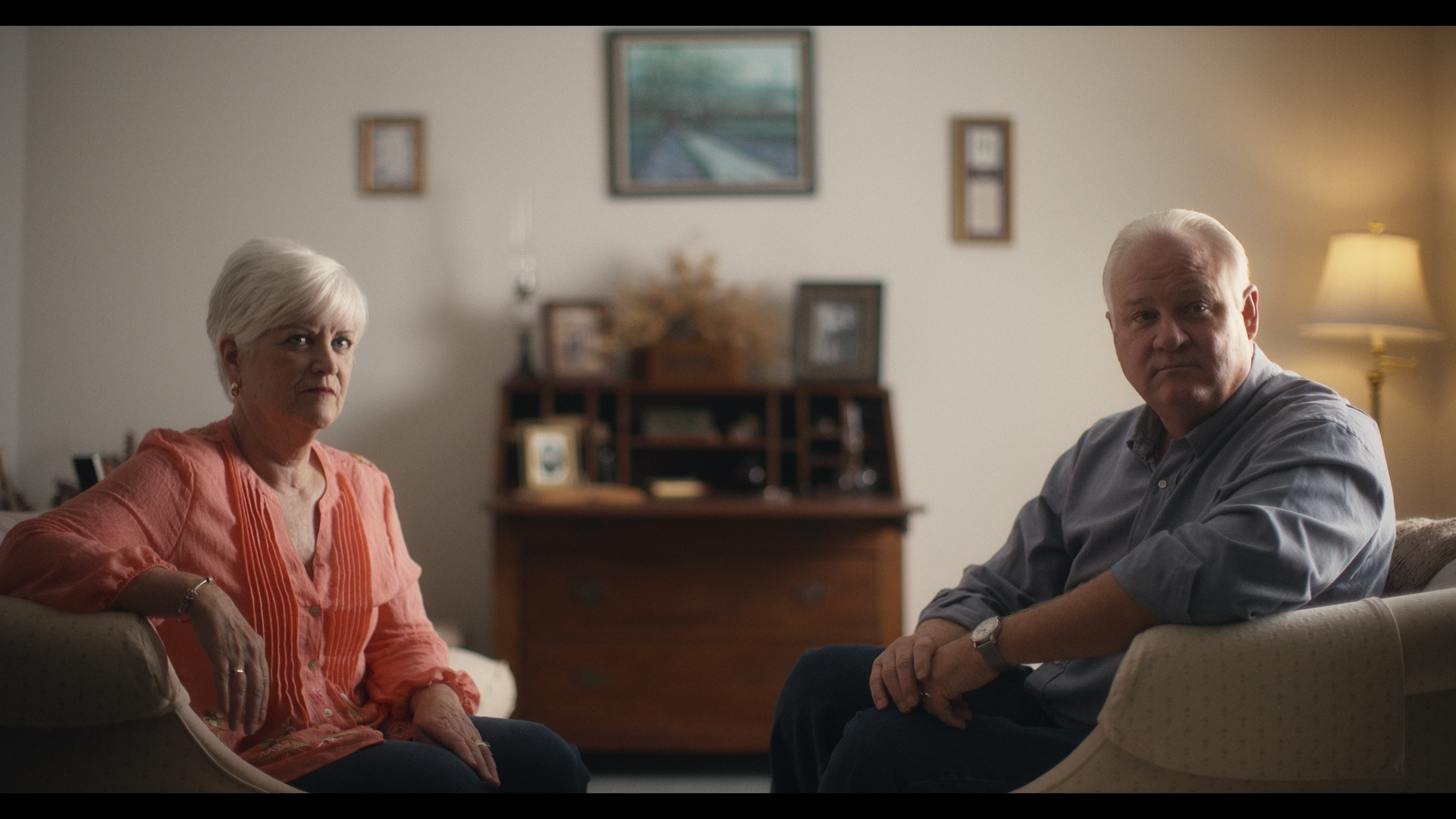
The man they suspected was Jeff Sutton, husband of Harkness’ daughter Erin, and formerly the county attorney of rural Wabaunsee County. The Umbehrs compiled a 200-page dossier on Sutton, asserting a history of violence, access to the townhouse, a federal license to deal in high-powered weapons, and an unusual arrangement that let him take confiscated guns from the county sheriff’s inventory as payment for casework. Keen came to believe one gun missing from that inventory was an Uzi, and a sheriff’s deputy told him she had personally seen Sutton with that type of weapon. The couple sent the dossier to virtually every law enforcement agency in Kansas, though none responded.
What they wanted was a comparison. The lone piece of DNA in the case is a single hair singed onto a shell casing found in the bedroom, which prosecutors tested only on the eve of the 2012 trial.The results matched neither victim, nor Chandler. Keen developed a theory based on the test results: casings eject to the right, so a left-handed shooter’s right forearm hangs above the arc, where a hot casing could sear off a hair on its way down. For the theory to work, Sutton had to be left-handed. Eileen found a newspaper photograph of him signing his oath of office as a prosecutor, which showed that he was. Using a Kansas provision that lets any citizen submit what amounts to a probable-cause affidavit, the Umbehrs went before a judge to compel his DNA.
Sutton, remarkably, sat for the docuseries, after what Levine describes as years of careful groundwork by Sexton. “We didn’t know what Jeff Sutton was going to say in that interview chair,” Galkin says. But what he says is unequivocal: He denies killing Sisco and Harkness, and says Keen held a grudge against him but he “never had a beef” with Keen, despite the fact that Sutton was a target of some of Keen’s early muckraking, dating back to the late 1980s. No law enforcement agency ever named him a suspect. When the DNA testing results came back, the hair on the shell casing proved not to be his. Still, the Umbehrs’ suspicions around Sutton persisted.
“People believe what they want to believe, rightly or wrongly,” Levine says. “It blinds you from the truth sometimes.”
Filming without an ending
Galkin and Levine had no way of knowing how, or even whether, any of these open questions would resolve. Production began before Chandler’s second trial, meaning the filmmakers committed to covering a murder story with no ending in sight. The resolution came in installments, the first in the summer of 2022, when the second trial opened and prosecutor Charles Kitt conceded at the outset the ground the defense had held for 20 years. “This case is not based on DNA,” he told jurors. “This case is not based on hair. This case is not based on fingerprints. This case is based on jealousy, rage, and obsession.” Defense attorney Tom Bath called it a textbook argument for the presumption of innocence. On the stand, Volle conceded what the Supreme Court had already established: there was never a PFA order.
Chandler’s own conflicting accounts of what she did and where she was the day before and the day of the killings did the most damage to her case. A friend, Jeff Bailey, testified that weeks after her police interview, she gave him a different story entirely: She had been camping alone in the mountains, sleeping in her car, and had given police a different alibi because she doubted they would accept the true one. Then, on day 11, prosecutors announced a surprise witness. Terri Anderson, a neighbor of Harkness’, testified that late that night she heard gunshots, saw movement, and briefly saw a face she believed was Chandler’s, and that she called 911. But a records custodian could produce no record of the call, or of any police response. Casino cameras showed Sisco and Harkness alive well past the hour she described. The jury deliberated six days and split—seven for conviction, five against—resulting in a mistrial.
A week after her testimony, Anderson sat down with Sexton, who walked her through the records on camera. “I’m second-guessing myself right now, and I’m thinking, could I have misremembered something?” she says in the docuseries. “I wish the prosecutors would have shown me this prior to me testifying.” If they had, she would have asked to be excused. “I would not put myself out there if I was going to tell a blatant lie about anything.”
Levine is gentle in his opinion of Anderson. “I don’t blame her,” he says. “I think she truly believed what she testified to.”
Mounting her own defense
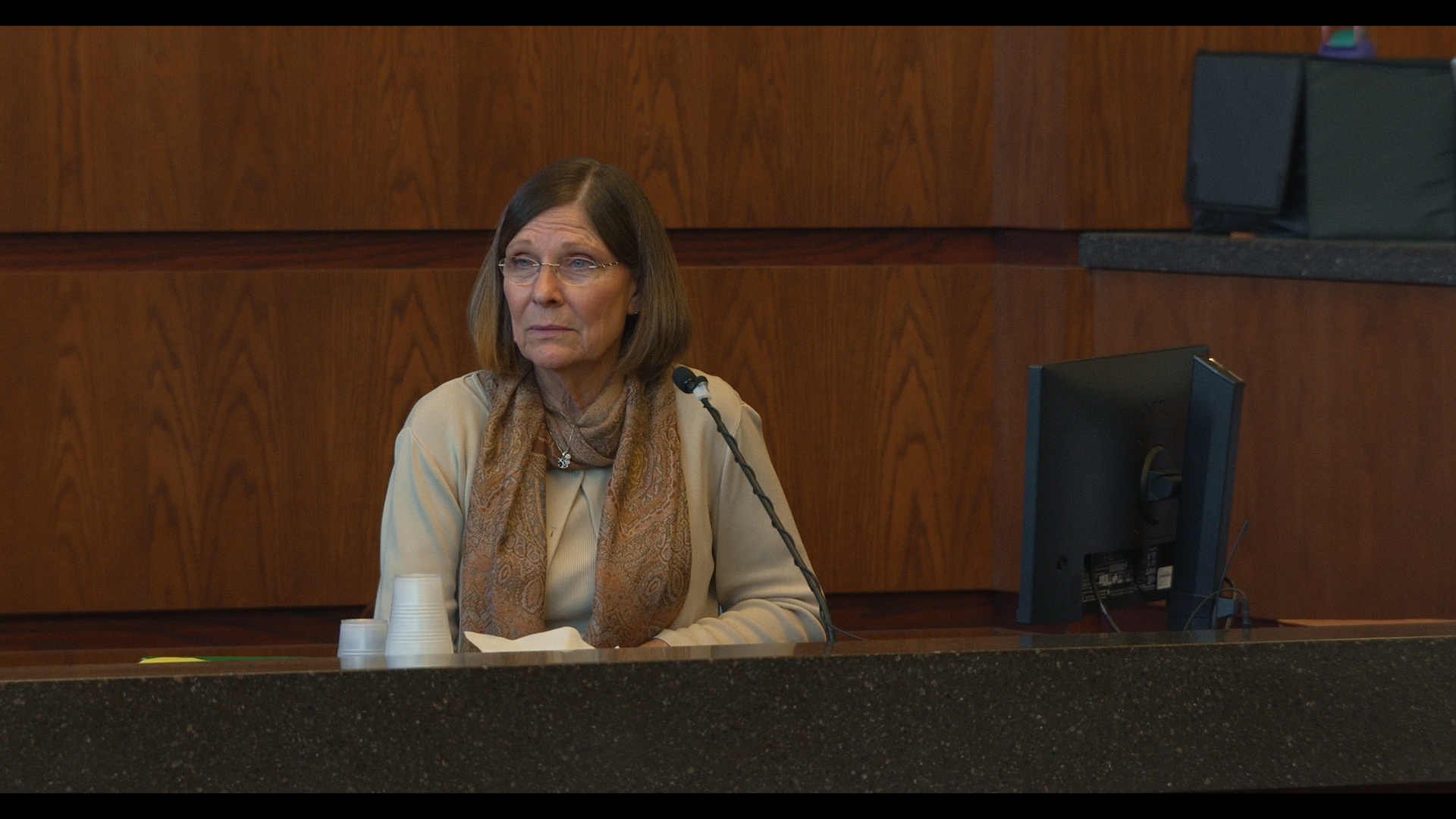
Prosecutors elected to try Chandler a third time, and the case moved to the small town of Westmoreland, far from the Topeka jury pool. With opening statements about to begin in February 2025, Chandler dismissed her defense team to represent herself. She had never testified in the previous trials, but now she would conduct her entire defense, including the cross-examination of her own children, who would be witnesses for the state as they had been in past trials. “How rare to see, in the third trial, a mother cross-examine her daughter,” Levine says. “It’s just unbelievable. For the family, they just have to keep reliving this publicly.”
On the stand for days, Chandler told her life story: born in New Mexico before moving to Colorado where she met Sisco, had children, began drinking, and endured a marriage she called “so broken and toxic” that sobriety kept slipping away. During cross examination, the prosecution laid her different alibis side by side: the errands-and-early-bedtime she gave Volle, the solo camping she gave Bailey, the version she now offered the jury. In closing, Kitt told jurors the case was not finally about revenge or jealousy but control.
Chandler, during her own closing remarks, reminded the jury there was no evidence she was in Topeka at the time of the killings or that she ever purchased or owned a 9-mm firearm. “I submit to you that the state has woefully failed to meet its burden to prove beyond a reasonable doubt that I killed Mike Sisco or that I killed Karen Harkness,” she said.
The jury needed hours, not days, and they found Chandler guilty on both counts. Galkin suggests Chandler’s decision to represent herself this time was the wrong one. “You just sort of watch someone squander a really good opportunity to not be in prison for the rest of her life,” he says. The sentence this time: consecutive life terms with no parole eligibility for 50 years.
What the verdict left open
Ask the filmmakers for their own verdict, and what comes back is uncertainty. “I think Josh and I are still, seven years on, in this mindset of: We don’t really know if [Dana] did it or not,” Galkin says. The absence of physical evidence keeps him circling. “Just when you think that you have convinced yourself that she did do it ... you start questioning: Well, how did she do it?” he adds. “Because she would have had to pull off the perfect murder.”
For years, one voice was missing from the chorus: Chandler’s. Only when she fired her lawyers to represent herself, then testified, did the filmmakers hear her perspective at length; the one time she insisted on telling it entirely herself, with her freedom in the balance, a jury rejected it. Sexton’s observation from the courtroom, as Galkin recalls it, was that “knowing your story and arguing it well are two very different things.” Galkin puts his own opinion more directly: “Regardless of whether she told her own story compellingly or not, she did not argue her case well.”
Levine wants viewers to finish the docuseries asking the same questions he and Galkin have not stopped asking themselves. Galkin’s wish, meanwhile, runs even further against the grain of the true crime genre: for the audience to manage what almost no one in this story could, by sitting with a case that’s “beautifully unsatisfying.” It is an unusual wish, but an honest one. More than two decades of presumed certainty produced three trials and a family broken in ways no verdict could ever repair. The genre conditions its viewers to expect a clear-cut answer, but A Killer Story asks them to live without one.

 点赞
点赞 收藏
收藏 点踩
点踩 分享
分享