Anak Krakatau Rumbles Again

- Science
- Earth Observatory
- Anak Krakatau Rumbles Again
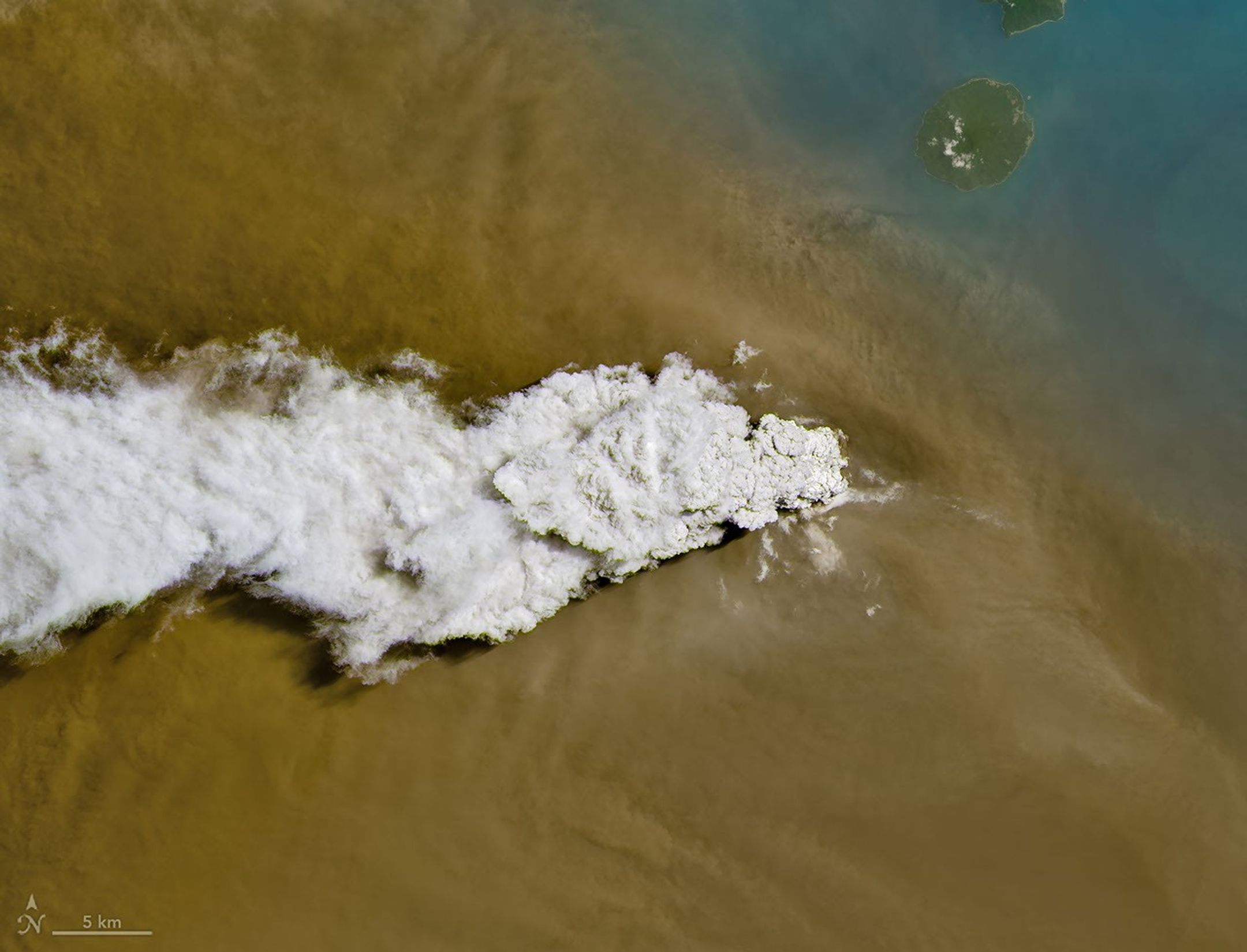
Eruptions are a regular occurrence at Anak Krakatau, a small volcano between the Indonesian islands of Java and Sumatra. Much of its activity remains relatively mild, but it occasionally puts on more impressive and hazardous shows of force. In early September 2026, a booming eruption lasting more than 24 hours sent gas and ash high into the atmosphere, disrupting thousands of flights and degrading air quality in parts of the country, including the capital city of Jakarta.
Satellites passing over the area during the eruption on September 5 captured images of the explosive activity. In the scene above, acquired with the OLI (Operational Land Imager) on the NASA-USGS Landsat 8 satellite, a white plume of volcanic gas billows over a brown ash cloud. Below, a wider view captured by the VIIRS (Visible Infrared Imaging Radiometer Suite) on the Suomi NPP satellite shows the volcanic material dispersing over a large area.
Indonesia’s meteorological agency reported that ash had reached altitudes up to 6,000 meters (20,000 feet) to the east of the volcano and 15,000 meters (50,000 feet) to the west by September 6. The presence of ash in the atmosphere prompted the temporary closure of eight airports on Java and Sumatra, disrupting nearly 3,000 flights in and out of the area, according to news reports.
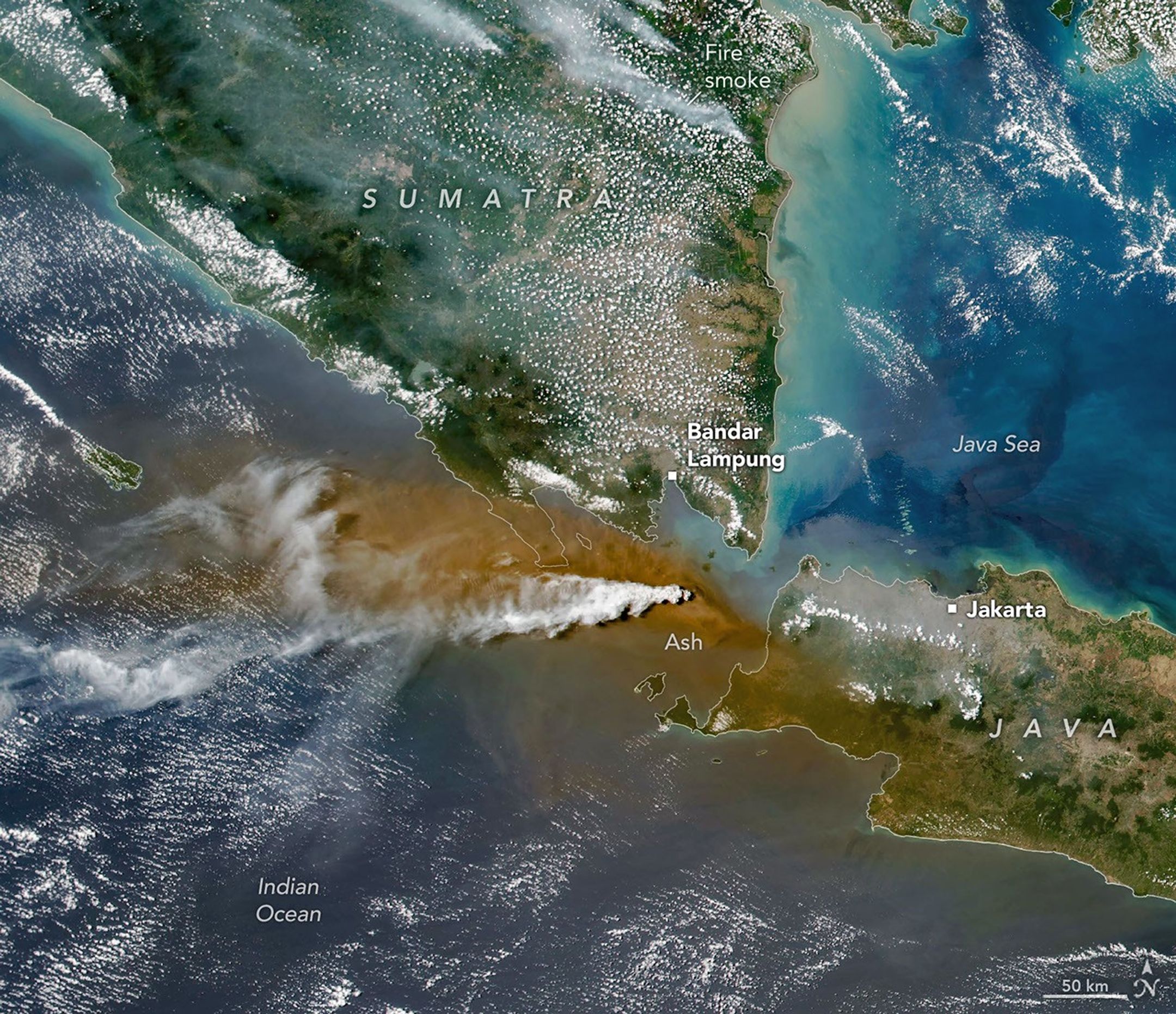
Ashfall affected populated areas, particularly to the east of Anak Krakatau in Jakarta and other parts of West Java, the Indonesian Humanitarian Coordination Platform (IHCP) reported. Volcanic ash poses health risks to people and can irritate the respiratory tract, eyes, and skin. However, this air quality hazard differs from the smoke produced by peatland fires elsewhere in the country in terms of particle characteristics, dispersal patterns, and protection measures, the IHCP noted.
On September 6, the continuous explosive eruption from Anak Krakatau subsided, though the volcano kept rumbling. It returned to a more typical pattern of Strombolian eruptions, characterized by intermittent spurts of ash and volcanic material. Airports had resumed operation by September 8, but the volcano remained at the second-highest alert level on the country’s scale, as it has been since early July.
NASA Earth Observatory images by Michala Garrison, using Landsat data from the U.S. Geological Survey, and VIIRS data from NASA EOSDIS LANCE, GIBS/Worldview, and the Suomi National Polar-orbiting Partnership. Story by Lindsey Doermann.
Downloads
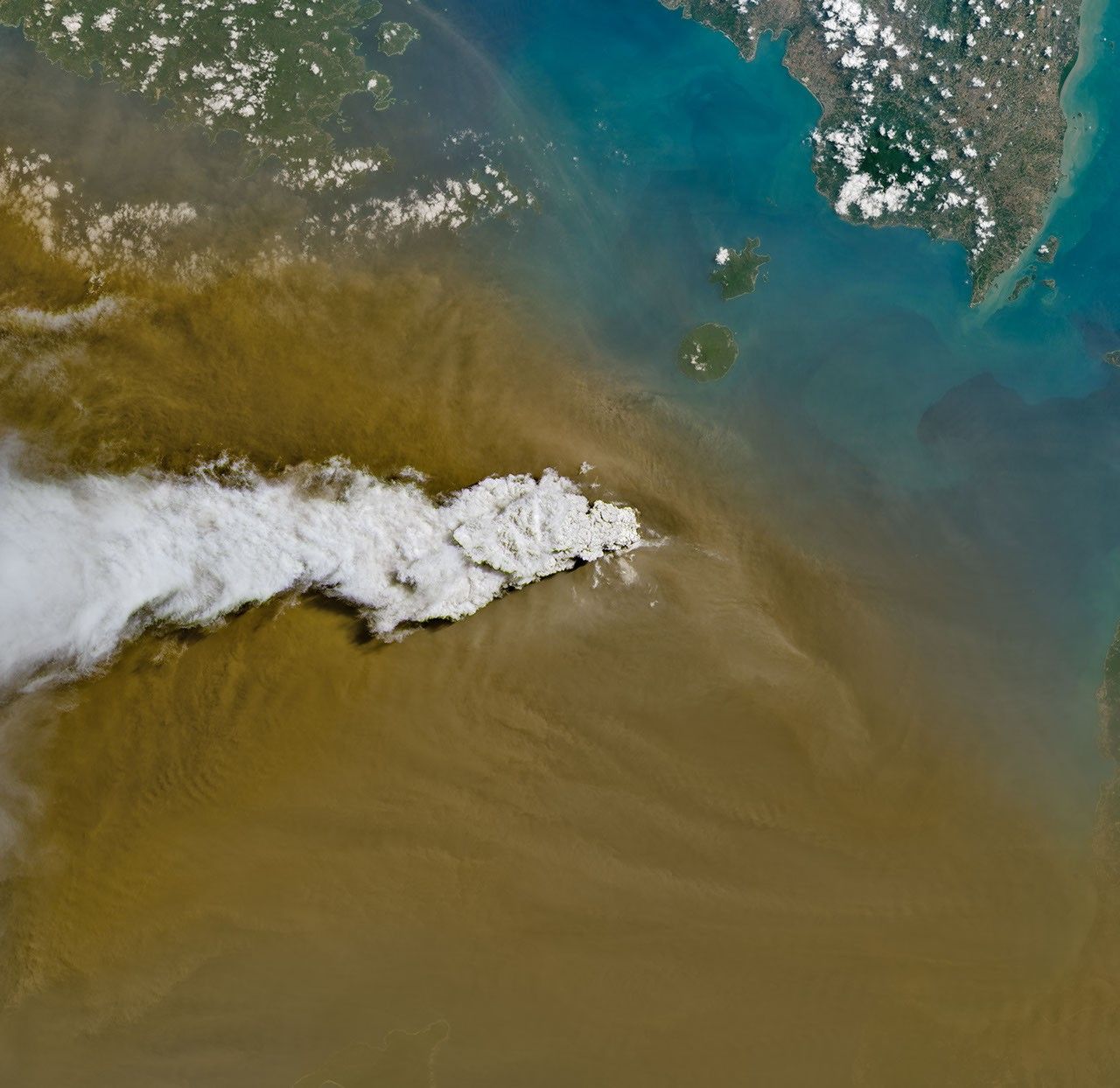
September 5, 2026: Landsat
JPEG (14.89 MB)
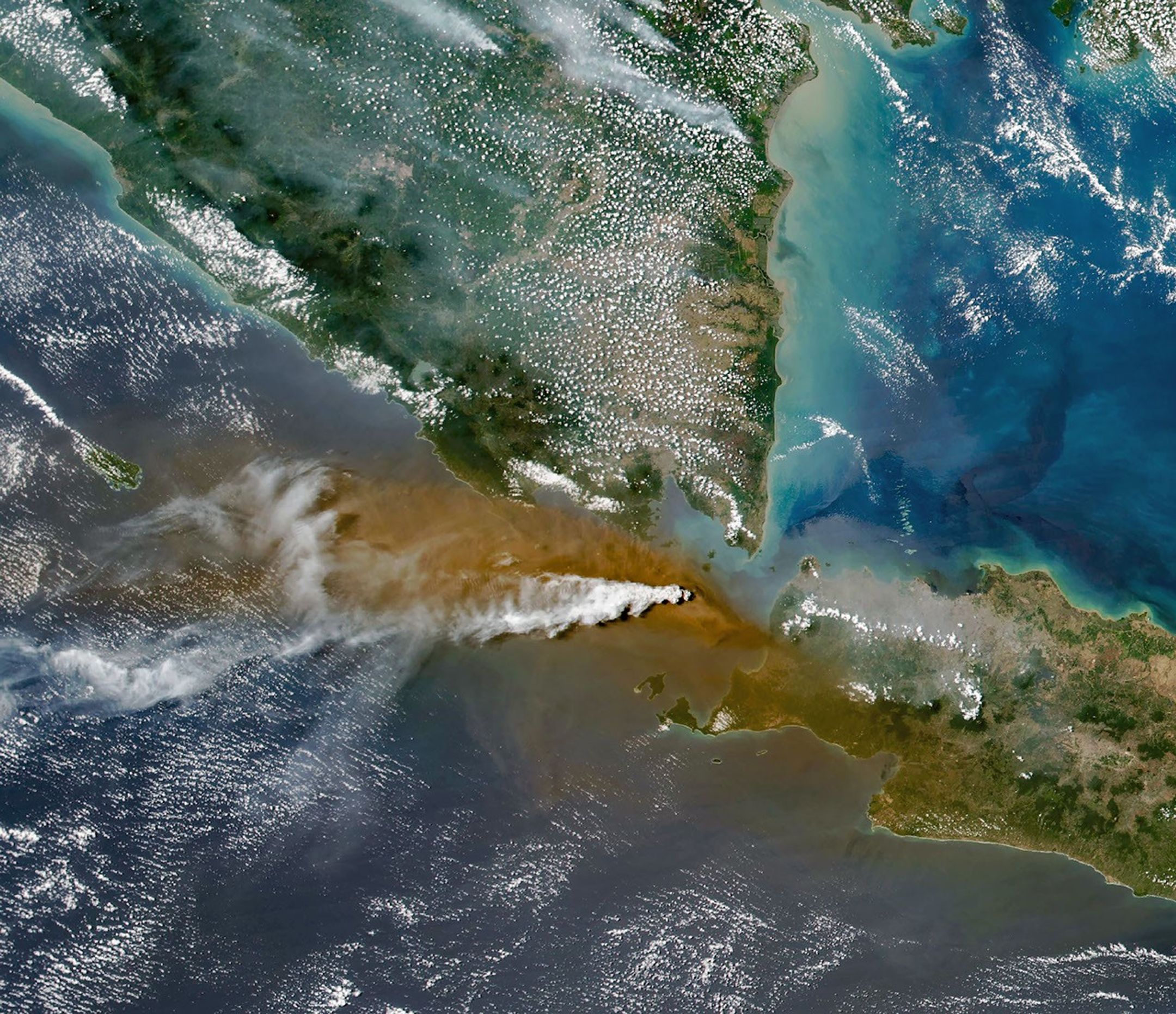
September 5, 2026: VIIRS
JPEG (3.38 MB)
References & Resources
- ABC News (2026, September 7) Flights to and from Indonesia’s capital resume after volcanic eruption forced a 2-day closure. Accessed September 8, 2026.
- BBC (2026, September 8) Indonesia airports reopen after volcano eruption leaves 340,000 stranded. Accessed September 8, 2026.
- BMKG (2026, September 7) Imbas Sebaran Abu Vulknaik Anak Krakatau, 8 Bandara Ditutup Sementara, BMKG Minta Waspada dan Tenang. Accessed September 8, 2026.
- BMKG (2026, September 6) BMKG Terus Pantau Dampak Erupsi Gunung Anak Krakatau. Accessed September 8, 2026.
- Global Volcanism Program (2026) Krakatau. Accessed September 8, 2026.
- Indonesia Humanitarian Coordination Platform (2026, September 6) Anak Krakatau Eruption, Volcanic Ashfall and Concurrent Forest Fire & Haze Situation. Accessed September 8, 2026.
- NASA Earth Observatory, Anak Krakatau. Accessed September 8, 2026.
You may also be interested in:
Stay up-to-date with the latest content from NASA as we explore the universe and discover more about our home planet.
Ever Restless Mount Dukono Erupts 2 min read
The volcano on Indonesia’s Halmahera Island routinely ejects ash, volcanic gases, and volcanic bombs.
Article
New Eruption in the Bismarck Sea 5 min read
Satellite imagery shows a surge of new volcanic activity in the ocean near Papua New Guinea.
Article
Melting Snow Off Shivelyuch 4 min read
Near-constant activity continues on the volcano in Russia.
Article
1
Keep Exploring

 点赞
点赞 收藏
收藏 点踩
点踩 分享
分享