
Paytm Bets on Workplace AI Agents in Pivot Beyond Payments
'%20fill-opacity='.8'%20d='M3.256%203.913a3.083%203.083%200%200%200-.003%204.397L8%2012.998l4.743-4.684a3.085%203.085%200%200%200%20.001-4.4c-.6-.593-1.4-.914-2.233-.914a3.17%203.17%200%200%200-1.91.635L8%204.087l-.601-.452A3.17%203.17%200%200%200%205.489%203c-.834%200-1.634.321-2.233.913m10.19%205.111-4.748%204.69a.996.996%200%200%201-1.397%200L2.549%209.02a4.083%204.083%200%200%201%20.004-5.82A4.17%204.17%200%200%201%205.488%202c.907%200%201.787.29%202.512.835A4.17%204.17%200%200%201%2010.51%202c1.093%200%202.146.422%202.936%201.202a4.085%204.085%200%200%201%200%205.822'%20/%3e%3c/svg%3e)
'%20stroke-opacity='.75'%20stroke-width='1.5'%20stroke-linejoin='round'/%3e%3c/svg%3e)

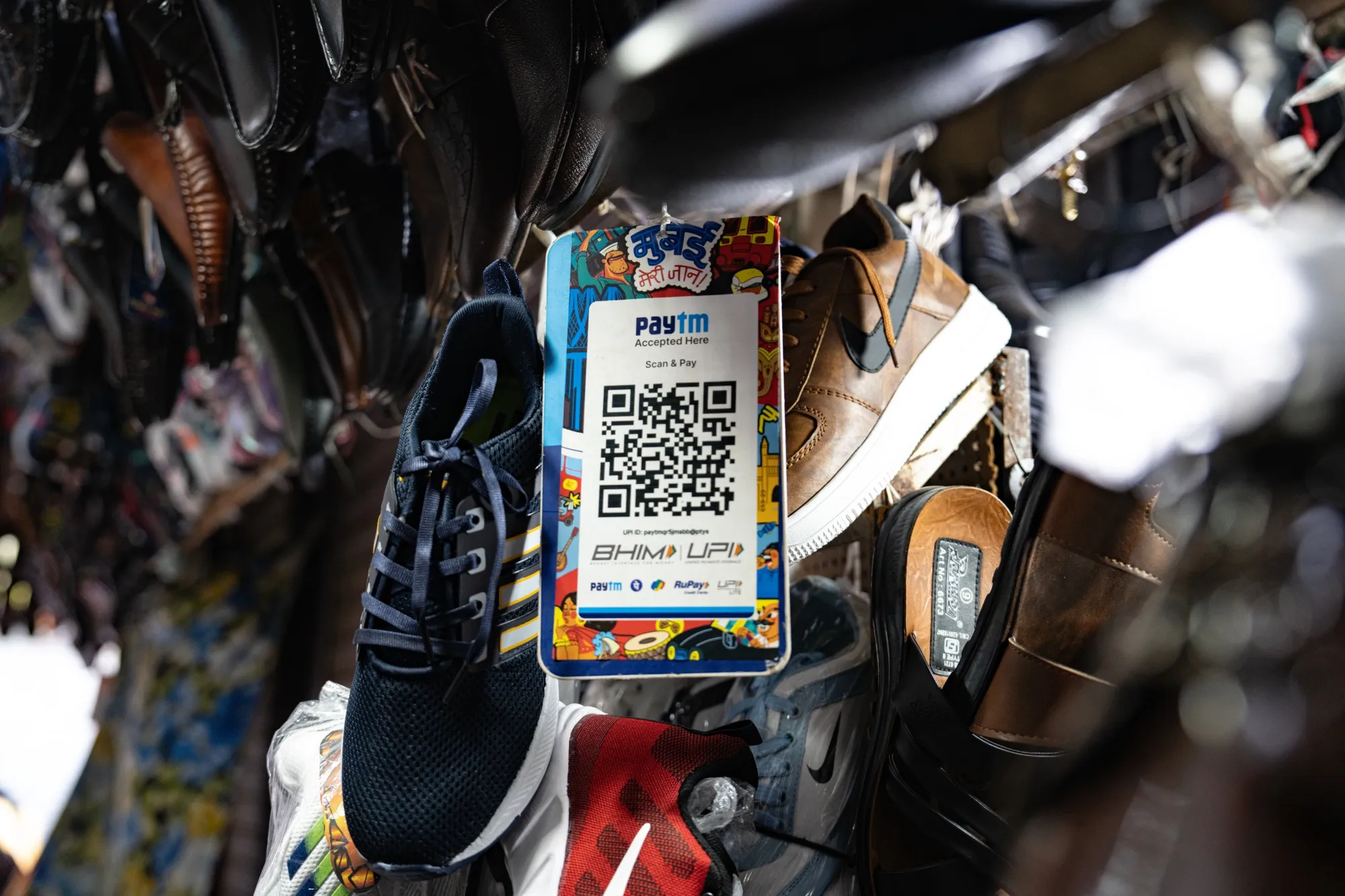
Indian digital payments pioneer Paytm is expanding to a new business, jumping on the agentic AI bandwagon to accelerate a rebound in revenue growth.
The company will start selling artificial intelligence agents to enterprise customers, betting on rising demand for such bots that can automatically handle a variety of workloads and tasks with minimal supervision, people familiar with the matter said. That marks a major departure from its core business of handling digital payments for consumers and businesses, and offering a slate of related services like loans and investing.
The new Paytm Intelligence, or Pi, service can deploy AI agents across functions such as sales, customer service and operations, the people said, asking not to be named as the information is private. Pi will initially target banks, smaller lenders, insurers and other financial institutions in India and the United Arab Emirates, the people said.
Paytm has overcome regulatory hurdles that threatened its business model two years ago, giving it confidence to attempt a pivot into becoming an AI provider. The company has returned to revenue growth and reached profitability — yet tough competition in digital payments has left it with limited expansion possibilities in that market.
Digital payments companies the world over are embracing AI. Stripe LLC last month agreed to buy OpenRouter Inc. to push deeper into the infrastructure powering the AI boom. Klarna Group Plc has struck AI pacts with Google and OpenAI.
At the core of Pi is a financial services AI model that Paytm has been developing for about two years. The model, built on massive numerical data sets accrued through years of processing financial transactions and analyzing customer behavior, is capable of predicting fraud, credit-worthiness and the credibility of a claim, the people said.
The first wave of fintechs in India are maturing — from a period of rapid growth in customers and transactions — into finding new ways of making money through their technology and data. Payments businesses in particular face pressure to build higher-margin revenue streams as competition intensifies and return on basic services is thin.
For Paytm, Pi marks the first big business pivot that brings together payments intelligence, behavioral models, voice technologies and workflow automation, the people said. Its AI agents can assess customer needs, run business campaigns, help win over new customers as well as cross-sell to existing clients, they said.
What Bloomberg Intelligence Says:“AI adoption is set to drive sharp performance divergence across fintechs: leaders will use proprietary data and model feedback loops to sharpen their edge while laggards face margin pressure as AI-native rivals reset benchmarks for speed, accuracy and personalization. The bigger unlock will come from embedded models and automation that cuts cost-to-serve and enables new AI-driven businesses like agentic commerce projected to be $1.7 trillion by 2030.”-Diksha Gera, analystClick here for research
Paytm, publicly listed as One97 Communications Ltd., has already begun offering Pi to a few customers and is planning to expand it to others soon, the people said. Representatives of the company didn’t respond to a request for comment.
Paytm has said it plans to be an aggressive adopter of AI across its operations. It intends to hire about 4,000 people by early next year as part of a move to expand its merchant network and AI-driven product offerings.
Founded by Vijay Shekhar Sharma in 2010, Paytm began by offering prepaid mobile recharges but soon focused on digital payments and banking. A currency note ban in late 2016 helped the company cement its place as a frontrunner in India’s fintech arena where it now competes with rivals including Walmart Inc.-controlled PhonePe and Alphabet Inc.’s Google Pay.
Shares of the company have more than doubled over the past two years as it cut costs and started to churn out consistent profit.