
Apple’s $2,000-Plus Foldable iPhone Was a Decade in the Making
'%20fill-opacity='.8'%20d='M3.256%203.913a3.083%203.083%200%200%200-.003%204.397L8%2012.998l4.743-4.684a3.085%203.085%200%200%200%20.001-4.4c-.6-.593-1.4-.914-2.233-.914a3.17%203.17%200%200%200-1.91.635L8%204.087l-.601-.452A3.17%203.17%200%200%200%205.489%203c-.834%200-1.634.321-2.233.913m10.19%205.111-4.748%204.69a.996.996%200%200%201-1.397%200L2.549%209.02a4.083%204.083%200%200%201%20.004-5.82A4.17%204.17%200%200%201%205.488%202c.907%200%201.787.29%202.512.835A4.17%204.17%200%200%201%2010.51%202c1.093%200%202.146.422%202.936%201.202a4.085%204.085%200%200%201%200%205.822'%20/%3e%3c/svg%3e)
'%20stroke-opacity='.75'%20stroke-width='1.5'%20stroke-linejoin='round'/%3e%3c/svg%3e)

Around 2020, Apple Inc. Chief Executive Officer Tim Cook returned from a trip to Asia unusually energized about a new product category: foldable phones.
During visits to China and elsewhere in the region, the executive saw growing numbers of consumers using folding devices from Samsung Electronics Co., Huawei Technologies Co. and other smartphone makers. He came back convinced that Apple needed one of its own and pushed the company to accelerate its efforts in what was still a nascent market.
As it happened, Apple’s secretive core technology development teams within the hardware engineering organization had already been studying foldable phones, displays and related components for years.
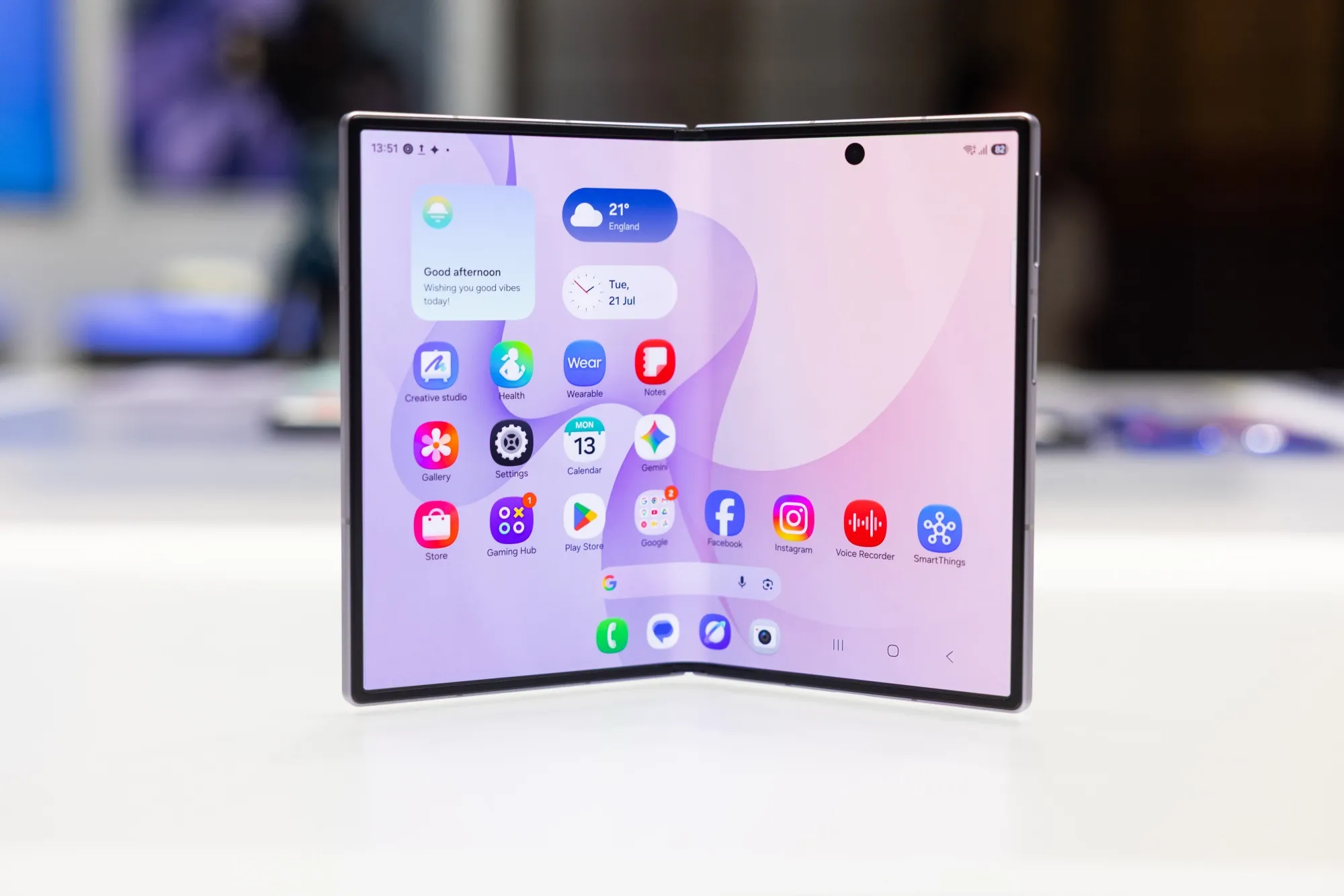
That effort dated back to well before Samsung put the category on the map with the first Galaxy Fold in 2019, according to people with knowledge of the matter. Like most of the people interviewed for this story, they asked not to be identified because the work was confidential.
The project will reach its defining moment on Wednesday, when Apple is poised to unveil its first foldable phone. The device represents the biggest single design change in the nearly 20-year life of the iPhone, which accounts for roughly half of Apple’s sales.
The introduction will also serve as a debut of sorts for CEO John Ternus, who took the job on Sept. 1. The timing of the leadership transition was meant to help herald a new era for Apple products and allow Ternus to be the one to unveil the foldable device. Cook, now executive chairman, will instead be in the audience.
Read More: Apple to Start Ternus Era With Record-Size Pipeline of Products
Getting to this point required years of tinkering and development. In the time before Cook helped put the project on the front burner, engineers, designers and executives had been debating what form an Apple foldable device should even take. One of the earliest concepts was essentially an iPad mini that could unfold into a larger tablet.
Cook’s enthusiasm helped change the direction of the work to something that could be more mainstream. Rather than begin with a foldable iPad, Apple turned its focus to creating a foldable iPhone. “Tim was the earliest and biggest champion of this,” one of the people said. “He saw them everywhere in Asia and said Apple needed to play in this space.”
A spokesperson for Cupertino, California-based Apple declined to comment.
Cook’s level of involvement was notable. Throughout his tenure as CEO, Cook was best known for focusing on Apple’s finances and supply chain. He participated in product demonstrations and major decisions, but generally stayed away from the conception of new products.
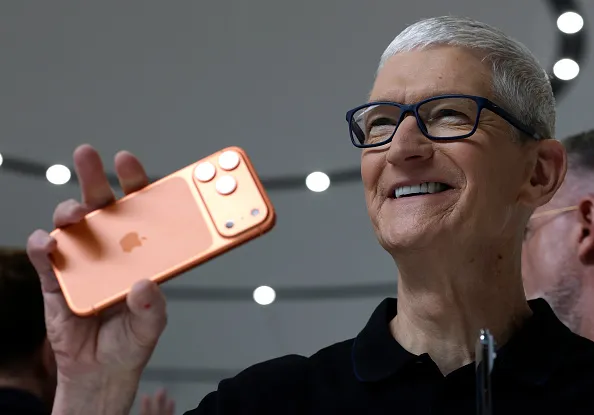
Cook’s insistence that Apple build a foldable phone therefore carried stronger-than-usual weight and helped propel what would become one of the most complicated hardware projects in the company’s history.
The foldable category is still a small fraction of the total phone market, but it’s been outpacing the rest of the industry. The segment is expected to grow 13% this year to 22.9 million units, according to IDC. That compares with more than 1 billion for total smartphone shipments.
Apple’s foldable device has carried the code name V68 inside the company, with some referring to it as the iPhone Ultra during development given that it will sit above the rest of the line. Price has long been a focal point inside the company, with the phone long envisioned as a premium product.
Early in development, the company targeted a price of $1,999, seeking to come in just under the potentially controversial $2,000 barrier. Apple used a similar approach with the iPhone X in 2017, when it charged $999 — just under $1,000 — for what was then its most premium model.
More recently, Apple has discussed pricing the foldable product as high as $2,199, according to one of the people, who said various options have been considered in recent weeks and that the memory shortage has led Apple to blow past its cost goals.
Some larger-storage configurations of the device could approach $3,000. Compare that with the standard iPhone, which currently starts at $799, or the iPhone 17 Pro, which begins at $1,099.
The price threatens to generate sticker shock for consumers, but some buyers have already shown a willingness to spend more. Recent iPhone Pro models can approach $2,000 with the top storage tiers, and their success helped convince Apple that an upscale foldable device was worth bringing to market.
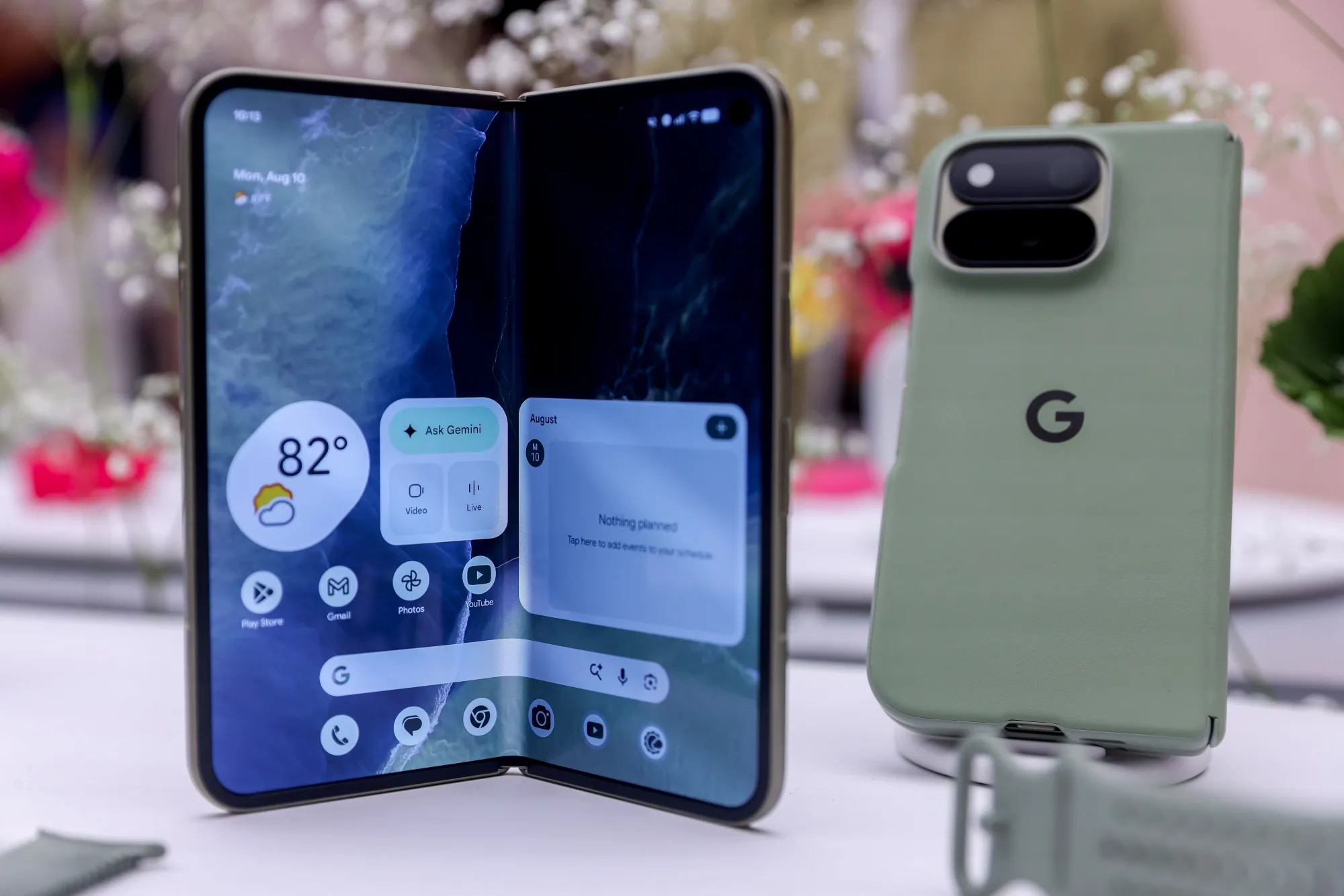
The recently launched Apple Upgrade subscription program, which works similarly to a leasing service, should also help, along with aggressive trade-in promotions and installment plans from wireless carriers. The prices of competing Android phones are also high, with the latest foldables from Samsung and Alphabet Inc.’s Google starting around $1,899.
The phone will feature a roughly 7.8-inch interior display that is considerably wider than those on many Android foldables, though not unprecedented. Google employed a similar design for its original Pixel Fold in 2023 before quickly pivoting away from it. And Samsung recently embraced the form factor with its Galaxy Z Fold8, which has seen strong sales, after years of favoring a squarer inner screen.
The idea is to make the folding display well suited to watching video and multitasking. On the outside is a relatively short 5.5-inch screen designed to make the device easier to hold and fit in a pocket.
During development, Apple designers envisioned the folded device as being about the size of a passport, while the unfolded proportions would resemble those of a Magic Trackpad, the company’s wireless Mac touch pad.
Ternus will now need to persuade consumers — beyond the most devoted Apple customers — to shell out more money for a device that introduces new complexity and some trade-offs. The phone has to be opened to take full advantage of it, and it may be less durable than a conventional iPhone. It also offers a weaker camera system and less battery life.
Even with those drawbacks, Apple employees believe the company will sell every foldable phone it can produce. Wall Street estimates point to sales of about 7 million to 10 million units this year.

“Trust me, despite the high price, the foldable iPhone will be wildly successful,” said Nabila Popal, a longtime senior smartphone market researcher at IDC. “I won’t be surprised if it becomes the ‘Birkin’ of smartphones in China,” she said, referring to the luxury handbag made by Hermès.
At the same time, the product’s engineering complexity makes it an ideal showcase for Ternus. Apple has positioned the former hardware chief as an executive capable of delivering a new generation of innovative products, in part because of his engineering background and long history overseeing the company’s devices.
The foldable will kick off a multiyear rollout of other ambitious hardware, including a touch-screen MacBook, tabletop robot, smart glasses, AirPods with cameras and a novel home security system that eschews video recording.
People close to the foldable’s development say the project was conceived under Dan Riccio, Ternus’ predecessor as head of hardware engineering. Riccio oversaw much of the early technology work alongside Apple’s industrial design team.
Cook and Ternus later emerged as the product’s biggest champions, with the latter “using his power to push it over the finish line,” according to a person with knowledge of the device. Arriving at this point, though, was far from a sure thing.
Early on, Apple’s hardware teams prioritized four main challenges: reducing the visibility of the crease that marred many early foldable phones; improving the reliability of the hinge; creating a new type of flexible cover glass for the display; and developing camera technology that could place more components behind the screen itself to maximize usable display area.
Apple ultimately landed on an advanced titanium-and-aluminum hinge system paired with custom cover glass developed alongside partner Corning Inc. The combination creates a crease that is far less visible than on currently shipping foldables, something Apple plans to highlight as a major competitive advantage.
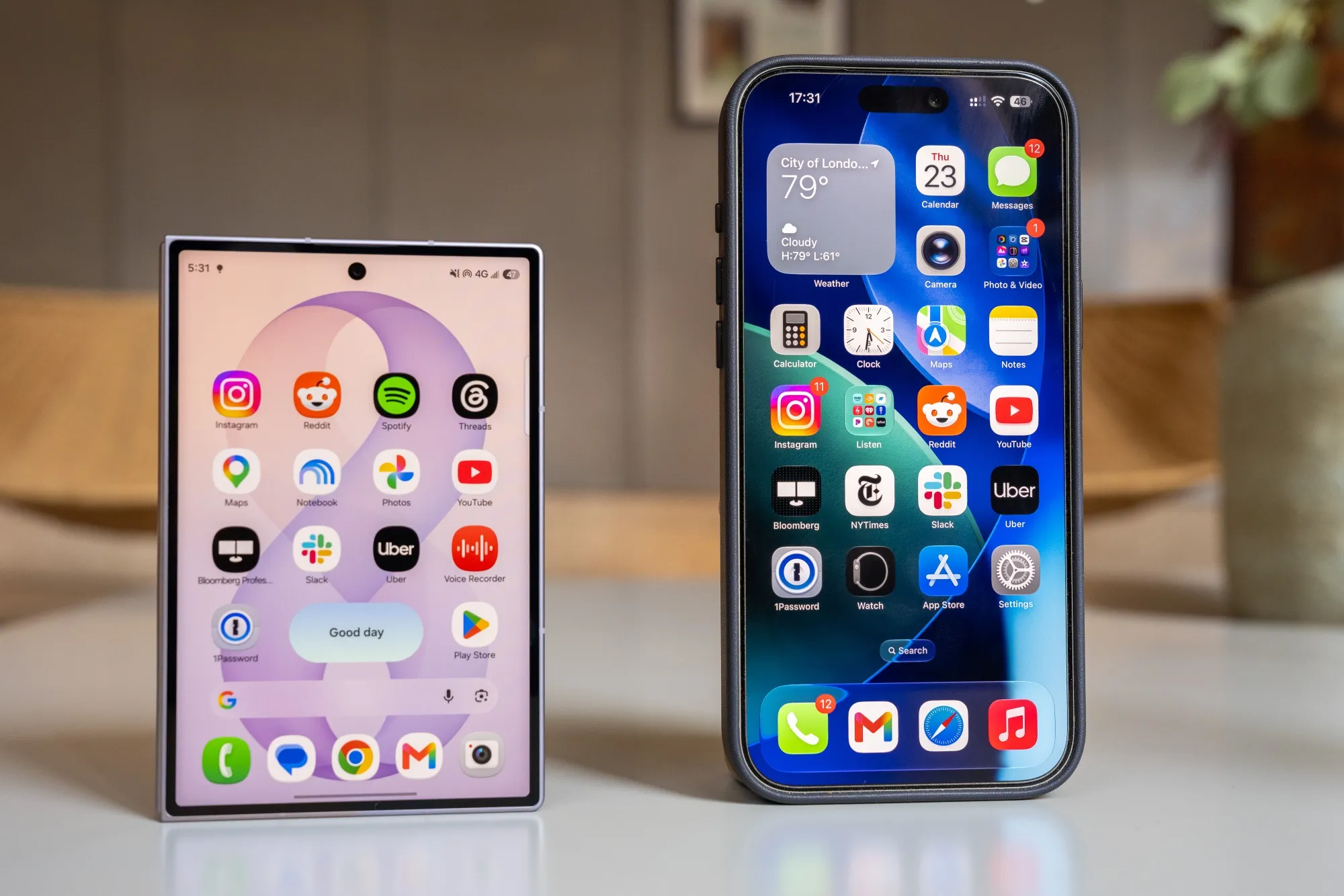
While the device may be less durable than the iPhone 18 Pro line and other recent models, Apple believes its construction quality is industry-leading for the foldable market.
It also believes it has a leg up in software over the more fragmented Android ecosystem. The company recently tasked its software engineers with upgrading many of Apple’s apps to work better on the wide display. It’s also tweaking the iOS operating system so apps can run better on a more diverse range of screen sizes.
The biggest challenge was making the phone compelling enough to offset its inherent compromises. Around 2023, Apple’s design studio settled on the short-and-wide approach, believing it would provide a meaningful point of differentiation and create enough excitement for consumers to look past the deficiencies.
Apple also needed some of the core technologies to reach the point where they were functional enough to use. That combination coming together finally convinced Apple that the concept made sense.
After years of waiting for foldable technology to catch up with its ambitions, the company is now betting that the form factor is ready for the mainstream — and that customers outside of its most loyal fan base will pay a historic premium to get it.