How to Read the Room

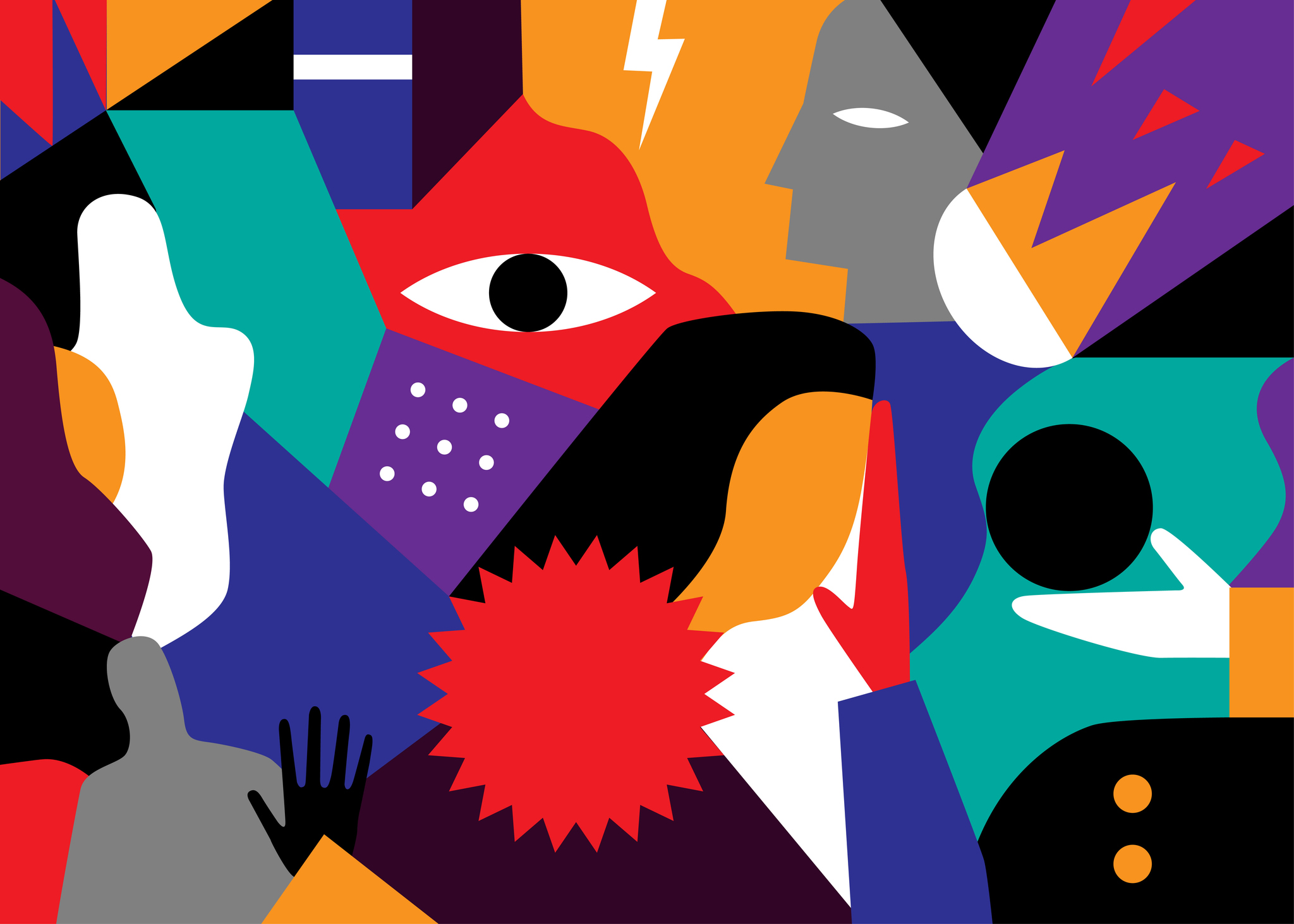
Every room has a parallel conversation running underneath what appears on the surface. It’s a pulse, a vibe, a temperature. This undercurrent of unspoken behavior delivers data instantly, but only if you can decipher it.
Neuroscientists, psychologists, anthropologists, and linguists have studied subtle behaviors for years in a quest to unravel the mystery of how humans create meaning together. I’ve spent the last decade training others how to spot invisible signals, detect who holds power, identify which relationship will influence a decision, spot who has already made up their mind, and decipher who is lying.
These are the very skills you need to read the room—and they are all learnable. Here are four science-based approaches to improve your ability to do this:
Declutter your mind to get an accurate read
Your mood influences your judgment, and cognitive load distorts what you see. Happy people tend to predict positive outcomes and underestimate negative risks. Stressed minds can find hostility in neutral interactions, according to research by Australian psychologist Joseph Forgas. Landmark work by J.A. Easterbrook showed that emotion and strain reduce the range of cues we can take in and process.
Overload your mind, and you will misread the room. Heightened cognitive load, the baggage you carry into a meeting or conversation, distorts what you see. When your mind is cluttered with thoughts of a fight with your spouse or an unfinished project, you stop observing what’s happening and start reading others through the prism of your own stress. In this mindset, a flat “thanks” can become a slight, and a colleague’s distraction can feel like contempt.
When a room feels like it’s turning against you, the first question worth asking is whether the room changed or your bandwidth did.
Manage what you transmit
Every gathering has a vibe. While that may sound like astrology, science tells us it’s brain circuitry, and that we probably catch each other’s moods far more often than we think.
Yale neuroscientists led by Joy Hirsch paired strangers face-to-face and used brain imaging to track what transferred when one person watched emotionally charged videos while the other person watched only the video-watcher. The second person began to mirror the video-watcher’s emotional state, even though they never saw the videos themself.
A 2023 study in Communications Biology timed the process: strangers watching television together synchronized their emotional responses within 850 milliseconds. The synchronization ran strongest during positive moments, suggesting joy travels freely while we keep our darker feelings hidden.
The emotional state you bring into a room can also shape how everyone else behaves before anyone has consciously registered that you’re anxious or angry. An anxious person can make people rush or interrupt others more frequently. A contemptuous person can license cruelty and make dismissive jokes or harsh judgment feel acceptable. A calm person can reduce the temperature long enough for rational thought to return.
The message? Manage your own state of mind before you attempt to manage anyone else’s.
Take note of who is missing in the room
A group’s intelligence is not the sum of its IQs. Research by Carnegie Mellon Professor Anita Williams Woolley into the collective intelligence of teams found that group performance had less to do with average or maximum individual IQ than with collaboration. She found that strong groups have good communication skills, open minds, and an equal flow of ideas among participants. A room where one person dominates may feel decisive, but it may be losing intelligence in real time.
Watch who grabs attention and who recedes into the background. Who gets interrupted? Who is allowed to finish? Who tried to get into the conversation and then gave up? The smartest thing to do, for the group, is to allow everyone to speak and to be heard.
Read body language like a pro
Amateur room readers imbue simple gestures with definitive meaning: crossed arms signal defensiveness, eye contact suggests honesty. The pros observe changes from baseline and look for clusters of behavior that point in the same direction.
Science tells us how badly shortcuts deceive us. For example, many people believe that liars avoid eye contact. Researchers at an international airport asked 338 passengers from 81 countries to tell the truth or lie about their travel plans on camera. The liars held eye contact longer—deliberately, a beat past comfortable. Meanwhile, honest people, nervous under questioning, glanced away and looked guilty.
Fidgeting is also meaningless as a single gesture. Let’s say someone taps their foot in a meeting or plays with their pen nervously. Maybe that’s their norm. The behavior only becomes a signal when their pattern shifts. The savvy room reader asks what triggered the shift from baseline and watches for a cluster of behaviors. Did a particular question cause them to shift their posture, stop their normal foot-tapping, and freeze their blink-rate? That’s worth noting.
The question is never, “What does this gesture mean?” The better question is, “What does this gesture mean here, from this person, under these conditions?”
Room reading is a powerful skill that’s part social observation and part emotional intelligence.
As you start to see people and interactions more clearly, you’ll alter your own behavior accordingly. And when you do, many more doors will open because you won’t be guessing what the moment requires.

 点赞
点赞 收藏
收藏 点踩
点踩 分享
分享