How Andreessen Horowitz Turned Its AI Bets Into an $8 Billion Bonanza


Last month, Martin Casado and his team of AI investors at Andreessen Horowitz hit the jackpot when two of the group’s recent startup bets panned out. SpaceX bought coding tool Cursor, and Stripe agreed to buy model marketplace OpenRouter. The deals combined are worth over $8 billion to the venture capital firm, an early validation of Casado’s strategy when Andreessen Horowitz launched its first fund dedicated to AI tools and software two years ago.
Those and other investments flow in part from Casado’s own deep technical background. A startup founder and VMware executive before he joined Andreessen a decade ago, Casado has embraced AI tools in business and his personal life. He uses one AI agent to help him bid in wine auctions. Another manages his home. Yet another manages the other bots. “I’ve always been YOLO on technology—I just love it,” Casado said, using an acronym for the phrase “You only live once.” (He says he wouldn’t use agents if they were to “critically impact” himself or his family, however.)
The recent startup sales extended a hot streak of exits for Casado’s AI infrastructure team, a group of six general partners and 10 other investors backing the gamut of AI startups making software to help run AI applications, as well as foundation models, developer tools, databases, cybersecurity products and, more recently, chips.
The Cursor and OpenRouter deals will enable Andreessen to return the money the firm’s limited partners invested in the funds that backed the two startups, along with additional money, according to a person with direct knowledge. That’s a quick turnaround for funds formed just a few years ago (venture investors typically think of returns on a 10-year timeline).
These sales follow six earlier ones this year, including Stripe’s $1 billion acquisition of AI billing startup Metronome and Anthropic’s roughly $300 million purchase of developer tools startup Stainless.
The slew of deals has drawn some unwanted scrutiny. Andreessen Horowitz is the focus of a Department of Justice probe over whether it has run afoul of antitrust rules, since firm co-founder Ben Horowitz holds a board seat at Databricks, and Casado has one at Fivetran, a Databricks rival, according to Bloomberg. The review started last year, around when the Justice Department reviewed Fivetran’s merger with data management company dbt Labs.
Nonetheless, the past year’s sales endorse Casado’s argument that AI will force a reboot of software that connects startups and supports developers—and that limited partners should back a dedicated fund around this idea.
That concept was unusual when Andreessen Horowitz raised its first $1.25 billion infrastructure fund in 2024. Most large VC firms invested out of funds segmented by startups’ stage rather than theme. Years earlier, Andreessen Horowitz had broken that mold by setting up dedicated biology and crypto funds. In 2024, it also unveiled funds devoted to apps, games and defense tech. Earlier this year, it raised a slew more, including a new $1.7 billion vehicle for AI infrastructure.
Casado’s crew has invested in startups like Mistral AI that are developing open-source models, as well as those like Fal and OpenRouter, which help developers access such models. Andreessen partners have argued that open-source AI can be safer than the kind of proprietary models developed by OpenAI and Anthropic because developers can find security vulnerabilities in them.
Casado thinks one of the next opportunities lies in technology that allows companies to make their raw data more easily accessible by agents. This includes tools showing the connections between different types of data and ones that translate a company’s raw data into standard categories, such as the difference between gross revenue and net revenue.
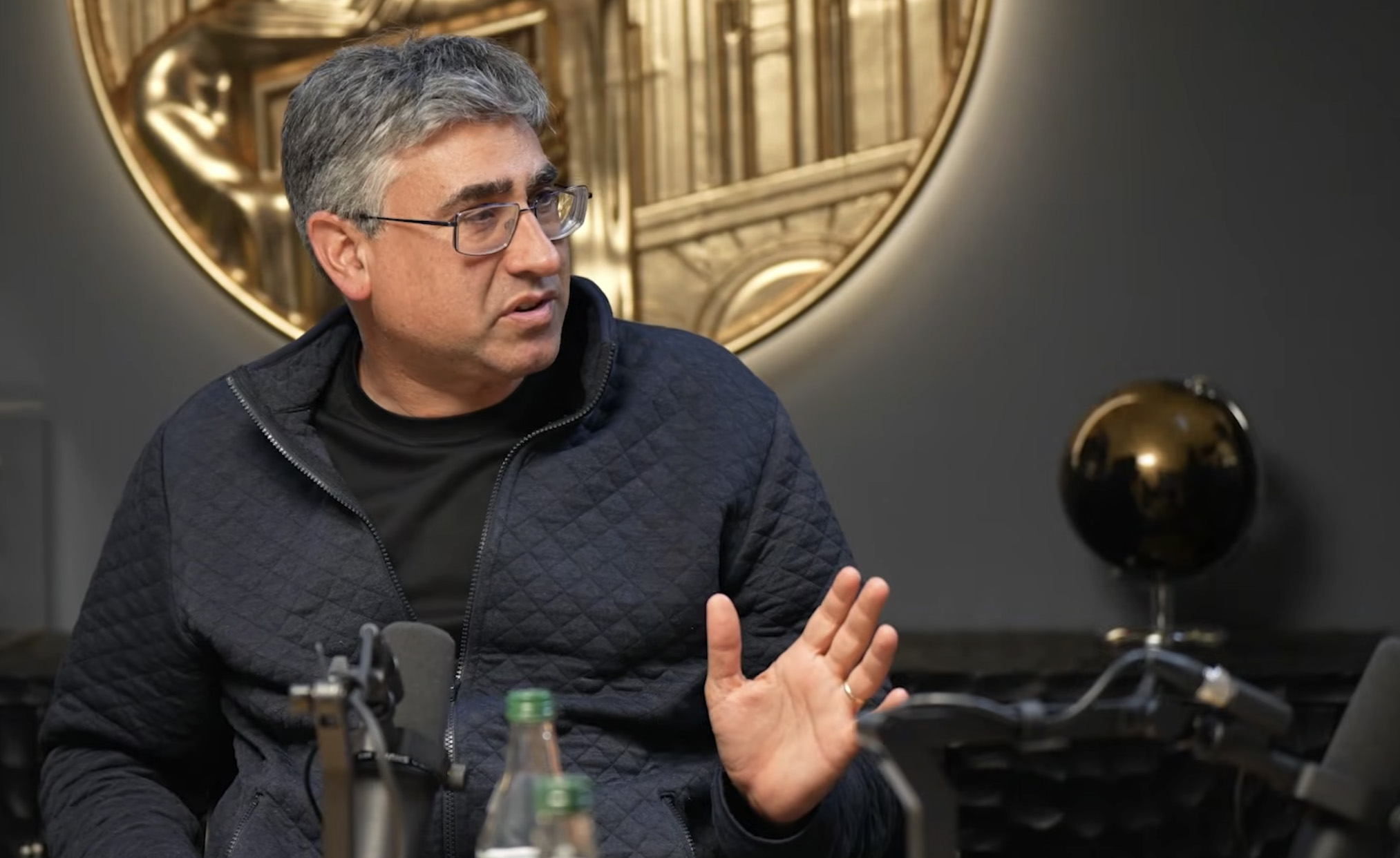
Hardware is another more recent focus for the infrastructure team. Last year, it co-led the seed round for chip startup Unconventional AI, founded by Naveen Rao, who previously led AI at Databricks. More recently, general partner Raghu Raghuram led a funding round for Gimlet Labs, which routes AI work across different types of chips, at a $3 billion valuation.
Casado estimated that, a few years ago, only about 5% of the pitches he heard came from founders of hardware companies. In recent months, that’s surged closer to 20%, he said.
That constraint goes all the way down to power—and even power is a constraint.
He has plenty of capital to make those hardware bets. Last week, the firm said it had raised $1.1 billion to invest in AI hardware, including chips, networking and storage companies. Casado’s team will invest the new funds with Andreessen Horowitz’s defense-focused American Dynamism team, helmed by David Ulevitch, and growth team, run by David George.
The fund will back companies that attempt to remove roadblocks to the physical buildout of AI. “You’ve got constraints on cost, performance and latency,” Casado said of AI models. “That constraint goes all the way down to power—and even power is a constraint. There’s no aspect of the supply chain that we don’t have to change.”
Casado has thought about those issues for years. He initially won the attention of Horowitz and his co-founder, Marc Andreessen, when they invested in Nicira, the networking startup Casado co-founded in 2007. Nicira helped pave the way for cloud computing’s proliferation with software that made it easier to manage large-scale networks. VMware bought the startup in 2012 for $1.26 billion, generating a rich payout for Andreessen Horowitz. Casado spent almost four years at the data center software provider before joining Andreessen Horowitz in 2016.
Coding Tests
To win deals, investors working with Casado at times act as coach, sales rep and recruiter as well as address the compute constraints faced by AI founders.
Matt Bornstein, a general partner on the infrastructure team, and his colleagues spent a year or so wooing the Cursor founders before the firm led its Series A in 2024. Former partner Marco Mascorro organized a graphics processing unit cluster for Cursor to use for an early experiment. Bornstein even convinced Cursor co-founder Michael Truell to send him the company’s notorious coding interview—though the second problem on the test was so complex that Bornstein had to “pretend I only had time for number one,” he said.
As Cursor grew, it faced an outage from a major cloud provider on a Friday night; Casado and Raghuram called connections at the provider to restore service, according to someone with knowledge of the effort. Jennifer Li, also a general partner on the team, described Casado as having “worked two full-time jobs in the last two years—one for Cursor, one for Andreessen Horowitz.”
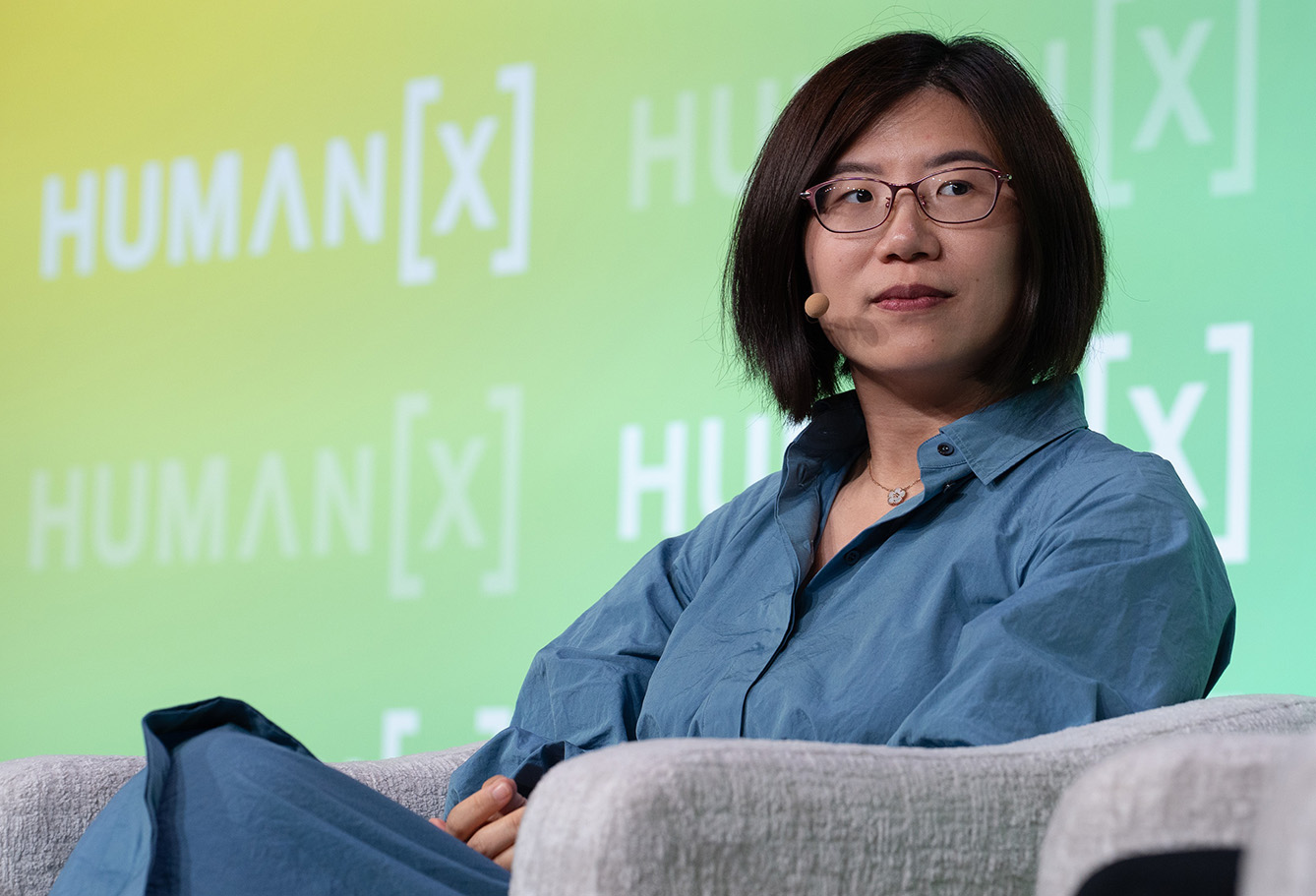
She had a taste of this with ElevenLabs. In its early days, the voice AI startup was having trouble securing video and audio clips from publishers and aggregators to train its models on data beyond what is publicly available on the internet. Li, now a board member, helped the startup’s staff hunt them down. In 2023, the VC firm co-led the startup’s Series A; it was valued at $11 billion early this year.
This level of handholding extends to how these startups interact with clients. General Partner Zane Lackey helped Feross Aboukhadijeh, founder and CEO of developer security platform Socket, navigate contract negotiations with enterprise customers.“He’s been operating like an extension of our executive team,” Aboukhadijeh said.
Of course, the infrastructure team has missed some winners, notably sitting out the wave of neocloud startups like CoreWeave, which is now publicly traded, as well as Lambda and Together AI, which have recently raised at increasingly high valuations.
“There’s always regrets,” Li said. “The thing I always like to say is, ‘Luckily, we have a fix-it fund, called our growth fund.’”

 点赞
点赞 收藏
收藏 点踩
点踩 分享
分享