John Malkovich and Sam Rockwell Are Pure Delight in Martin McDonagh's Wild Horse Nine

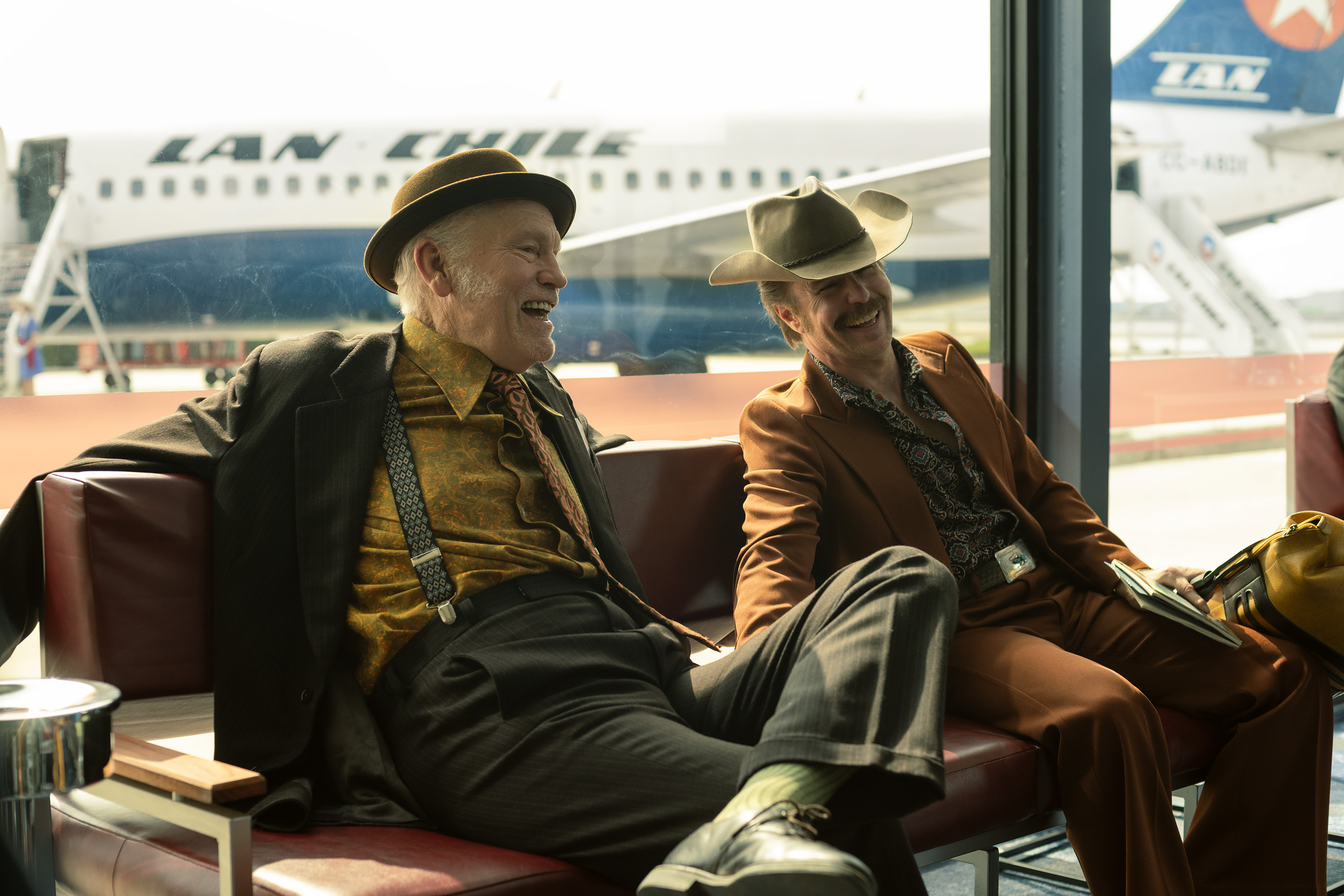
Where's the line between shtick and style? If a filmmaker returns to similar themes over and over again but folds them into entertaining shapes each time, is that consistency or a lack of imagination? Writer-director Martin McDonagh’s Wild Horse Nine—playing in competition here at the Venice Film Festival—might prompt you to ask those questions, though it doesn’t fully answer them. Like In Bruges and The Banshees of Inisherin, Wild Horse Nine—in which John Malkovich and Sam Rockwell play 1970s CIA agents stationed in Santiago, Chile, sent to Easter Island on a special mission—deals with fractious male friendships. There are some beautiful four-legged animals—in this case, horses—but one of them must die; it’s as if McDonagh feels he needs to toughen us up to the realities of nature, rather than just allow us to enjoy an animal’s spirit and beauty. And there are ways in which McDonagh gets tripped up by his own excessive cleverness: the screenplay is so packed with quirky quips that you might long for a little breathing room.
But if the writing sometimes comes off as winking and belabored, the acting is not. Malkovich and Rockwell are a joy to watch, and that, after all, is what we continue to go to the movies for: to see actors at play, even as they work. Malkovich’s Chris and Rockwell’s Lee are an odd-couple duo who have been working together long enough to intuit one another’s thoughts and moods. They also bicker, a lot. Lee seems annoyed by his elder partner’s tendency to tootle down trails of fanciful thought. In an early scene, Chris complains that his apartment in Santiago is riddled with moths, and he doesn’t want them to ruin his clothes. But he also doesn’t want to kill them. Instead, he says, “I’ve been escorting them outside.” It’s 1973, not long before socialist president Salvador Allende will be overthrown in a military coup—Chris and Lee know that’s going to happen, given that their job is to destabilize democratic governments here and there around the world. In one of his many pensive moments, Chris muses, “Sometimes I think I care about the moths in Chile more than I care about the people in Chile.”
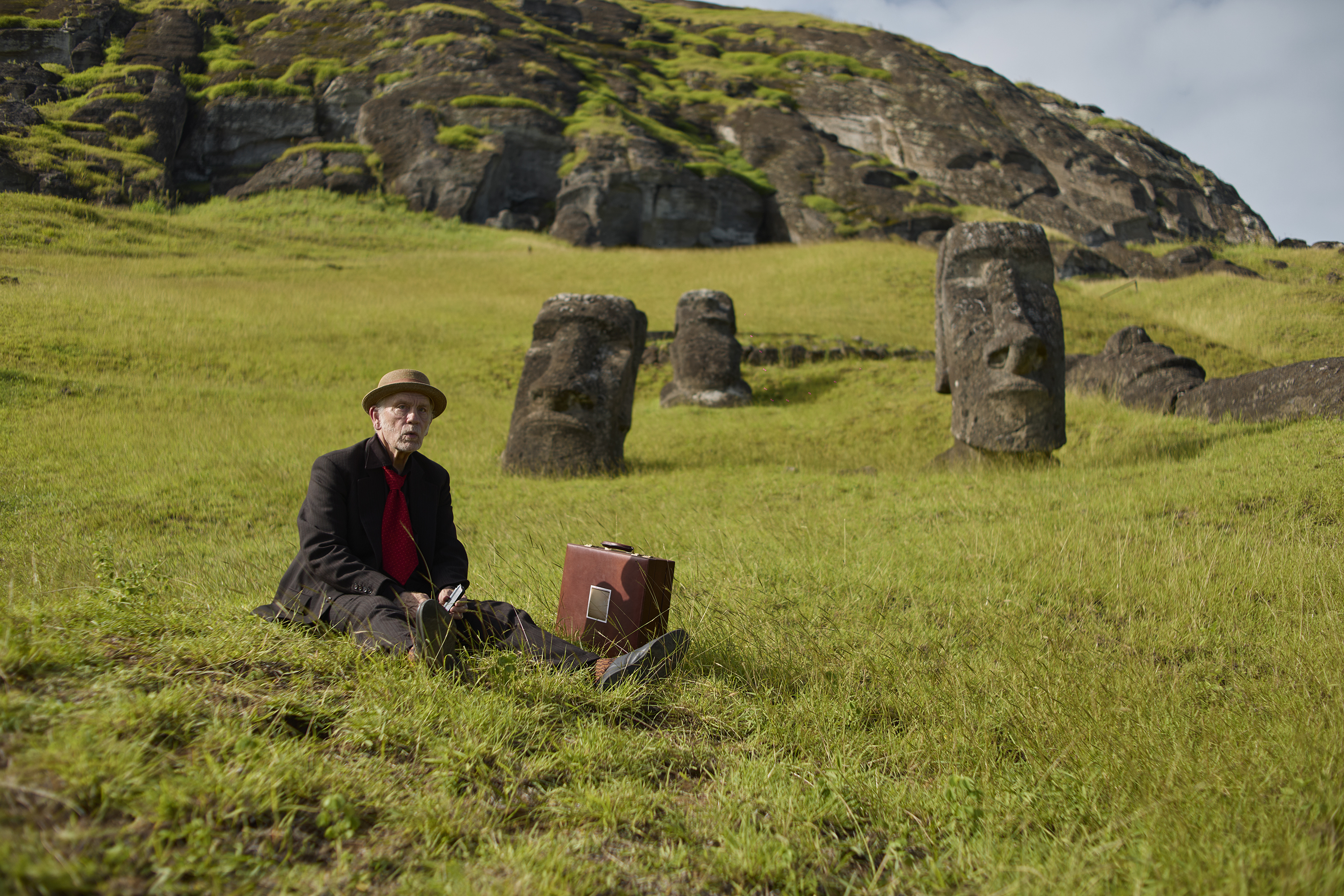
Yet somehow Chris does care, despite having secretively killed some 68 people in his long career, and possibly, as one of the movie’s running gags suggests, having had a hand in some grassy-knoll shenanigans in November 1963. He falls asleep listening to one of the saddest ballads ever written, Hank Williams’ “I’m So Lonesome I Could Cry.” He not-so-secretly hates his boss, MJ (a delightfully ruthless Steve Buscemi) and joyfully spreads lies—or are they?—that he’s a junkie. But Chris himself does heroin, not for pleasure, but because cancer is killing him. He’s happy to have been dispatched to Easter Island—he has long wanted to see what he calls “the big heads”—and he claims that he’s going to get some work done on his long-planned memoir. Lee reminds him that his memory is like a sieve; Chris asserts that working on the memoir will bring it back. He wants his book to begin with a surprise opening, not a boring one, so he decides he’s going to open by talking about dinosaurs. “Did they have souls?" he wonders aloud. Lee scoffs at this idea, but by this point, we’ve already seen the affection, mingled with annoyance, between these men. Chris considers Lee his only friend.
That basic framework sets the stage for lots of acerbic CIA jokes, some flirtation with a duo of pretty student tourists (played by Ailín Salas and Mariana Di Girólamo), and a truly fantastic gag about how the “gay” countries produce the best cheeses. (Chris’ definition of what makes a country gay or not is far from sound, but even so, he may be onto something.) Chris delights in the wild horses that roam Easter Island, forming a kind of soul communion with one in particular, a striking, sensitive beast who nods his head perceptively whenever Chris asks him a question. McDonagh never wants our emotions to get too squishy—remember the donkey in The Banshees of Inisherin?—and thus this noble creature meets an unexplained, albeit gentle, end. But there’s still a degree of warmth here, perhaps more so than in most of McDonagh’s films. This one, at least, has none of the smug superiority of Three Billboards Outside Ebbing, Missouri, a film ringing with condescension toward small-town America.
McDonagh may often be excessively arch, but he does know how to write for actors. Rockwell’s Lee is essentially the straight man here, absorbing the vibrations of his friend and colleague’s meandering thoughts on mortality and other subjects. That doesn’t make it a minor role; Lee is Chris’ mirror and sounding board, the trustworthy compatriot who both protects his friend and gives it to him straight. This is a generous performance, one that favors listening over mere line delivery. And Malkovich is simply wonderful. Chris, nearing not just the end of his CIA career but his life, has blown out his filter; now he just blurts the truth. When one of the young, earnestly leftist tourists speaks, with sparkling eyes, about the power of organized protests, Chris gives it to her straight: “Marches are just the places we can get the clearest photos of you without your knowing.” Malkovich doesn’t make the line sound cruel or demeaning. He launches it with a kind of bounce, the way you’d serve a tennis ball. He’s having fun here, and his pleasure becomes our delight. He makes you believe in a guy who would send an invasive, wool-munching insect out into the night air without crushing it. No one can deliver a moth soliloquy like he can.

 点赞
点赞 收藏
收藏 点踩
点踩 分享
分享