Let's normalize debunking each other

We're back! Thanks for sticking around as I took a very much needed break. I hope you managed to get some rest, too. I'm really excited for the pieces coming your way this fall — enshittification, data voids, safe streets and much more. Let's go!
💙 Amanda
Do you remember how Covid-19 spread? It passed person-to-person. Some people were more susceptible, some groups more exposed. Fake news does this, too. In fact, researchers who study the spread of misinformation use the exact same models that are used to study the transmission of viruses. When fake news "goes viral", it's more than just a metaphor.
I explored this recently in a piece for the Straits Times. Using simulations, Youjin Shin and I showed the runaway spread of misinformation and ways to stop it.
A month after the piece published, I'm still thinking about something Edson Tandoc Jr., a professor at Nanyang Technological University, said when I interviewed him: "We should normalize fact-checking and being fact-checked. And when we are corrected by others, we should actually appreciate that."
I love this idea — in theory. Ever confronted an uncle for telling the family WhatsApp that mRNA vaccinations can be found in shrimp? Or tried to convince a friend that wearing sunscreen doesn't increase the risk of cancer? It's hard. And feelings can get hurt.
But we really do need to get better at it. For one, misinformation itself can cause much greater harm than hurt feelings.
And then there's the fact-checking industry — it may be shrinking. Duke University's Reporters' Lab has been tracking active debunking initiatives (in 116 countries!) for over a decade. In 2025, they saw the first notable drop. And so far, 2026 isn't looking better.
A decline in fact-checkers continues into 2026
Active fact-checkers per year, 2017 to 2026 (as of June).
One of last year's lost fact-checkers was Glenn Kessler, a colleague of mine back when I was at the Washington Post. The Post shut down Kessler's influential Fact Checker column after he took a buyout. It had been running for nearly twenty years.
This drop in debunkers is concerning, but realistically it may not impact people who ignore those kinds of corrections anyways. So, the really important reason you need to confront your loved ones?
We're all more likely to believe debunking when it comes from close ties.
On WhatsApp, people are more likely to re-share corrections when they come from family or good friends, and on social media, people are more receptive to corrections that come from their friends or followers.
But there's a cost to relationships, too. A 2025 paper that shows successful debunking from close ties also notes that correcting others "can lead to conflict and stressful situations." Keeping the tone civil can mitigate this, say the researchers. Correcting nicely, instead of "calling out," goes a long way.
That same research found that some of our friends and family are better at this than others. Older people tend to stay polite, while younger people are quicker to get rude. That's a fact that may require some patience when you realize that Gen Z is also more prone than other generations to fall for misinformation in the first place — along with women, conservatives, and those with less education.
Politics, gender, education and age affect susceptibility to fake news
Number of standard deviations away from the 'compared to' group.
Gen Z's relative inability to catch false claims surprised me. I guess being digitally native doesn't make you better at detecting misinformation. Researchers think it's because this group gets lower quality news from social media.
Ultimately, it's simple. We just need to get better at telling those close to us that they're mistaken (when they are). And better at accepting these corrections ourselves.
Again, the virus analogy works. This debunking should be part of our information hygiene — a term popularized by Mike Caulfield describing the "metaphorical handwashing you engage in to prevent the spread of misinformation." The pandemic taught us that small habits, done by everyone, protect people. The same logic applies here.
If you love them, tell them they're wrong.
Let's chart the chaos.
Not-Ship's data dispatch. In your inbox, weekly.
No spam. Just lots of charts. Unsubscribe anytime.
I HAVE THOUGHTS
Creator Spotlight interviewed me about all things charty. If you want my take on visualization choices, quality data, and where this newsletter is headed: listen, watch on YouTube, or read their recap. (If you make it to the end of the conversation, you'll catch an 80-year-old spoiler about the origin of the Not-Ship name 🫣.)
GOOD FEELS
Not-Ship's paid members get the data behind each week's newsletter. It's spreadsheets all the way down! What else do supporters get? Maximum good feels for supporting independent journalism and for helping turn this newsletter into a sustainable source of income for this friendly data nerd. (Hi! It's me!)
FROM ELSEWHERE
Here's what I found interesting, important or delightful this week:
A, B, C, Ч, D ... I got to see RobWords at the Edinburgh Fringe Festival this year. During his show, the YouTuber proposed an improved English alphabet (based on this video of his). I thought it was brilliant and should be implemented immediately.
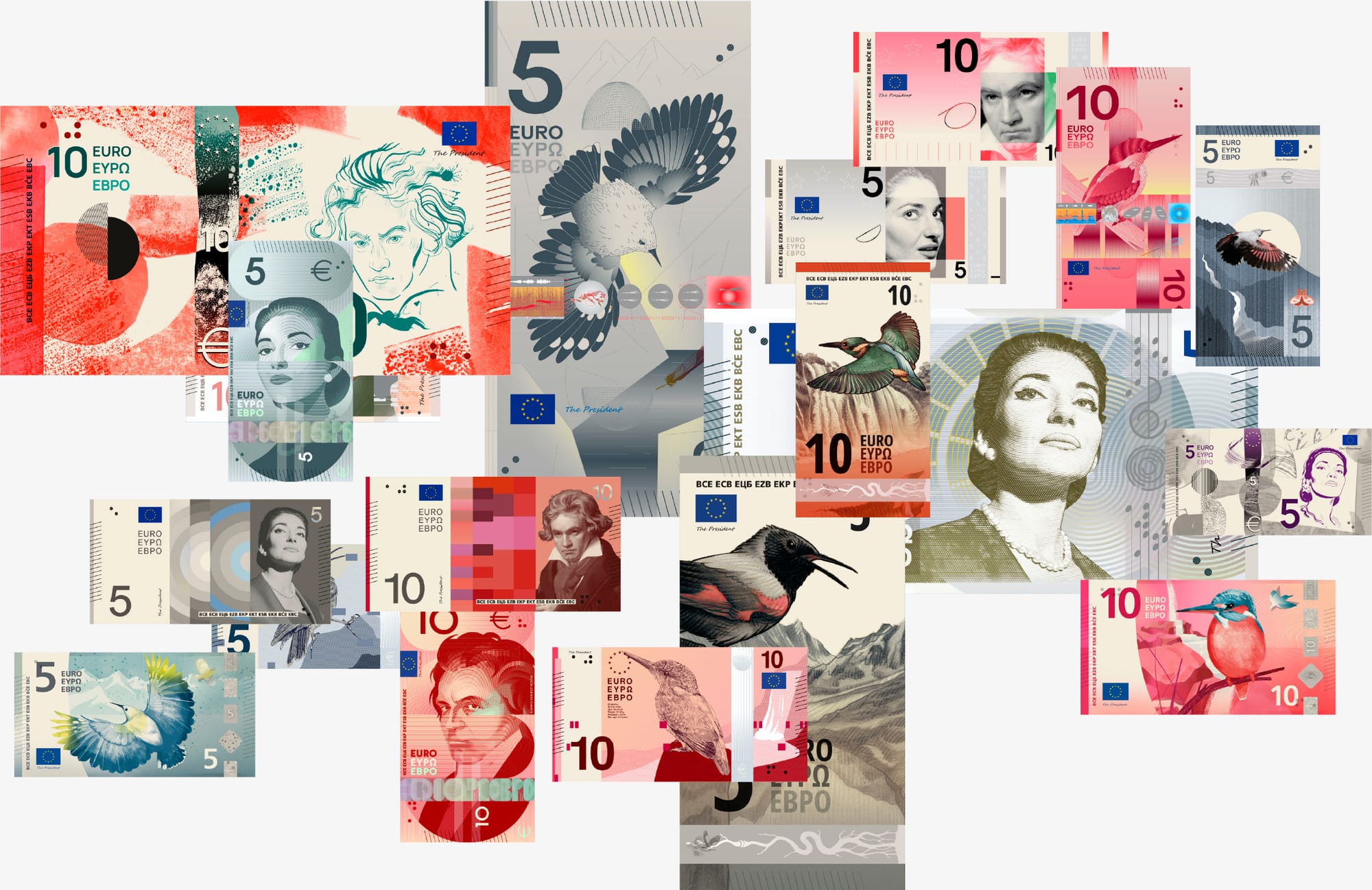
Pretty money! The Euro is getting redesigned, and the European Central Bank has proposed designs on view. You can even vote on your favourites.
"The feeling of not-quite-reality is exactly the feeling of being in a catastrophe". I recently read this 100-page philosophical examination of life during a mass extinction: All Art is Ecological by Timothy Morton. I'm still thinking about it! But truthfully, I can't tell if it was profound or rubbish. (If I understood Morton, I think it can be both at the same time ...). Anyways, can someone else read it and tell me?

 点赞
点赞 收藏
收藏 点踩
点踩 分享
分享