Sonos Unveils New Headphones, Soundbar and Major Push Into AI

Sonos Inc. unveiled new headphones and an upgraded soundbar and said it’s opening up its audio platform to third-party artificial intelligence assistants, marking the company’s biggest moves yet under Chief Executive Officer Tom Conrad to reimagine itself as more than just a speaker brand.
The new hardware, announced at a press event on Tuesday, includes the $449 Ace Ultra headphones and $699 Beam Ultra soundbar. The products will be released on Sept. 29, with preorders kicking off on Tuesday. The company also rebranded its audio platform operating system to Sonos 27.
In taking an open approach, Sonos will allow a number of popular AI assistants — including OpenAI’s ChatGPT — to hook into its devices. Additionally, the company is broadening the capabilities of its own voice assistant through a new in-house large language model, or LLM.
Ace Ultra headphones
The headphones, the second generation in this product line, have redesigned audio components and offer more powerful noise cancellation, according to Sonos. More importantly, and unlike the original Ace, the new pair will support full integration with Sonos’ platform, allowing customers to move music from a speaker to the headphones and vice versa. As just one example, if someone has a turntable hooked into their Sonos system, they could stream audio from vinyl records to the Ace Ultra anywhere in the home.
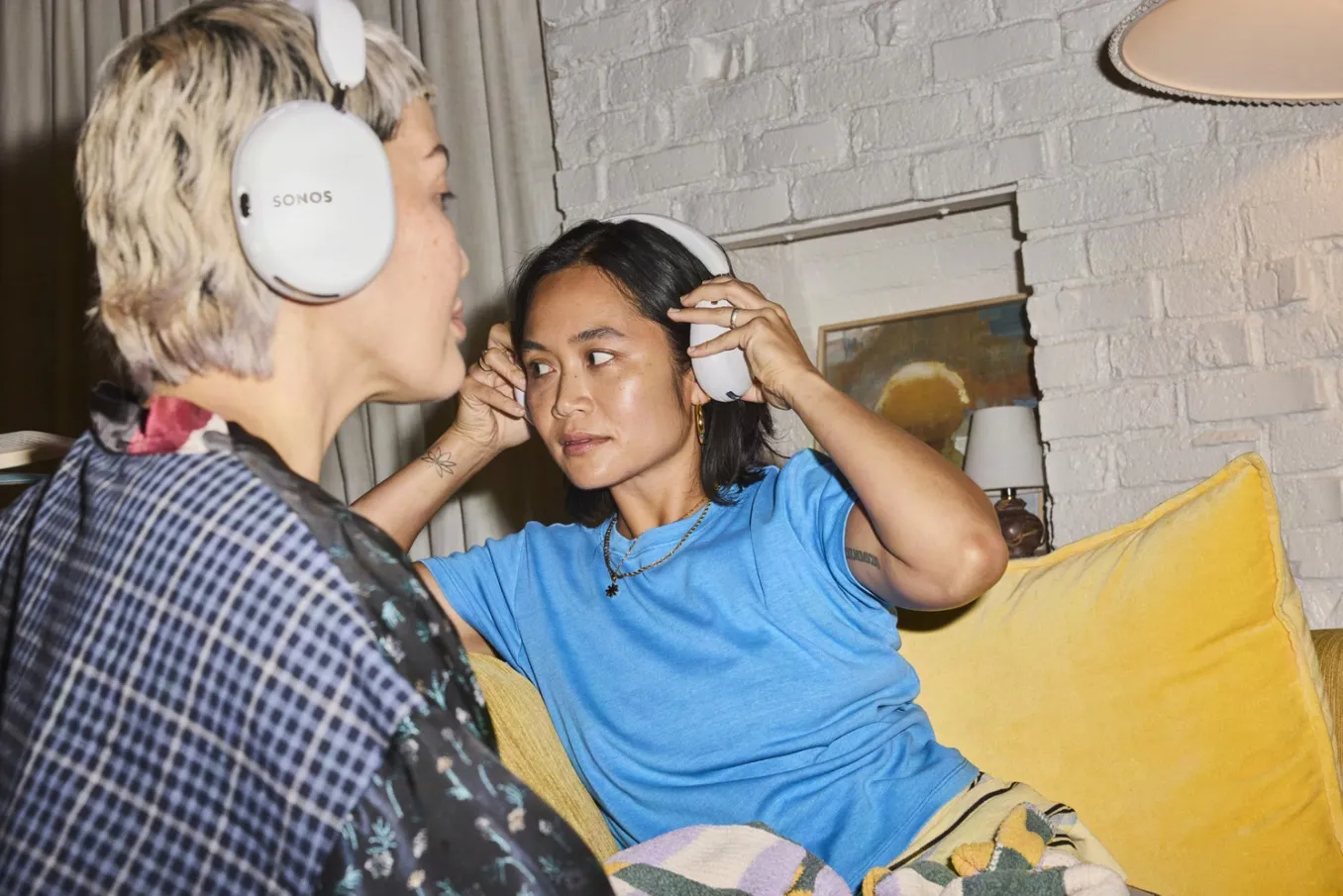
The deeper platform integration is possible because the company’s engineers have built Wi-Fi connectivity directly into the headphones. A single button press transfers whatever’s playing on your Sonos system to the headphones, and another press will seamlessly return that audio to the speakers. “Think of it as like wearing an Era 100 on your ears: There’s Wi-Fi on your head,” said Sidharth Patel, Sonos’ vice president of software, in an interview ahead of Tuesday’s event, referring to one of the company’s connected speakers.
Sonos has also increased the rated battery life to a maximum of 35 hours, up from 30 hours in the original Ace. The headphones’ battery is now user replaceable, so it can be swapped out whenever the battery ages. As before, the ear pads attach magnetically, making it easy to replace that component if it’s ever damaged.
Beam Ultra soundbar
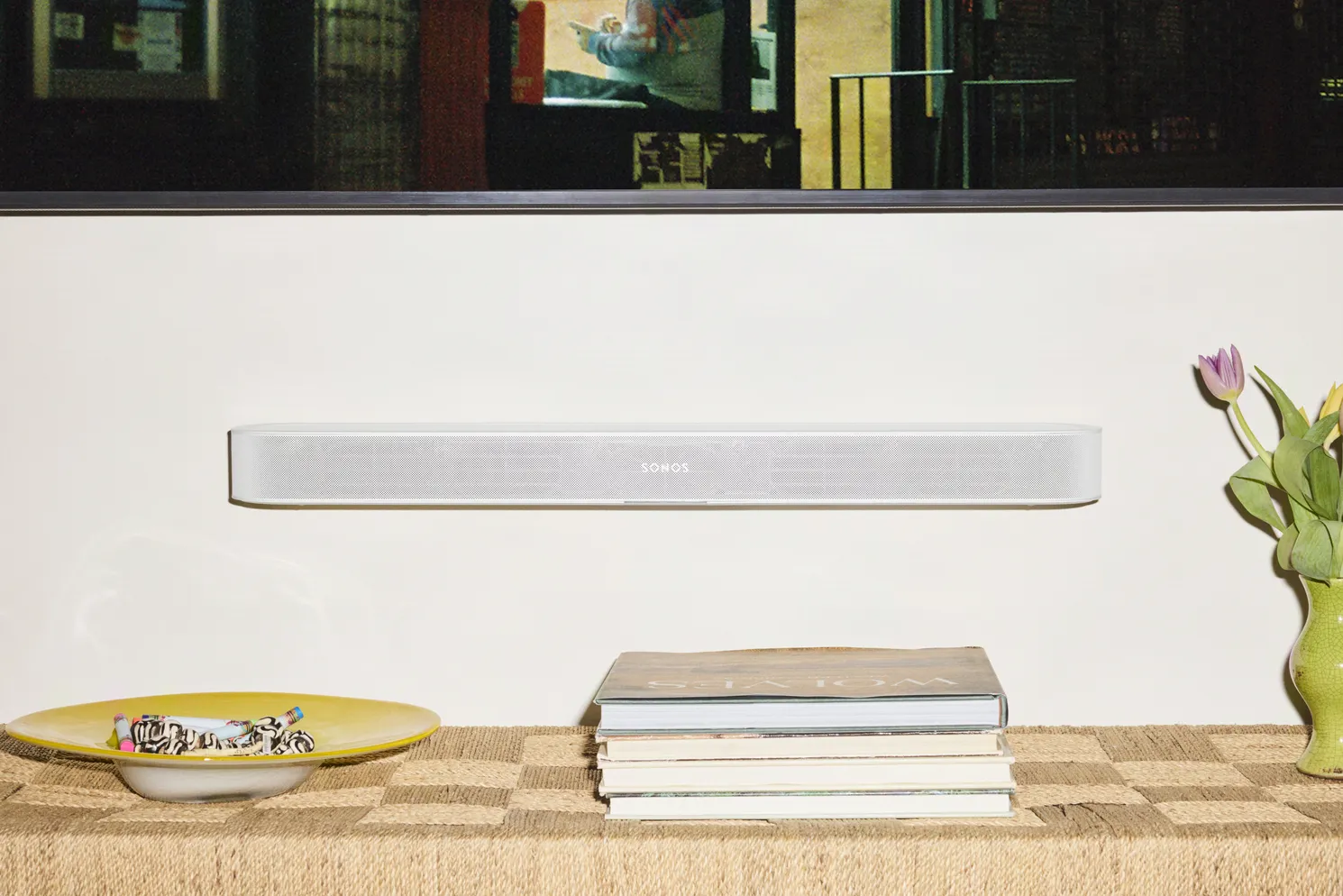
The Beam Ultra soundbar makes good on customer requests by adding dedicated upward-firing speakers for more immersive Dolby Atmos surround sound. The product now contains a total of nine drivers and delivers richer bass notes than the second-generation Beam, Sonos said.
It also sets itself apart from the earlier model by including a new AI Speech Enhancement feature that lets users choose between four different levels for improved dialogue clarity. The internal audio architecture has also been tweaked to make it easier to hear what’s being said.
Brandon Holley, interim hardware lead, said in the same interview that Sonos had reengineered the center channel in the Beam Ultra “from the ground up.” Different components — such as the driver, mechanical design, digital signal processing and AI — are “all working together to provide a really strong dialogue,” he added.
The Beam Ultra costs $200 more than the second-generation Beam, which has a suggested retail price of $499. Given the price bump, Sonos will continue to sell the older model. The original Ace will also still be available at its $399 list price.
Sonos Bets Big on AI
Sonos’ in-house voice control is now known as “Sonos 27voice” and has gained the ability to answer general knowledge questions in addition to handling music playback and controlling smart home devices.
Sonos 27voice will include a built-in filter that allows the company to dismiss requests “if someone’s asking for something that’s not really something that we want to expose,” Patel said.
Sonos expects most customers will use its native voice assistant for playing audio and then connect to outside options like ChatGPT, Google Gemini and Amazon.com Inc.’s Alexa+ for other tasks. As with music streaming services, Sonos says it isn’t giving any of them preferential treatment on its platform.
And the company has bigger ambitions ahead. In the coming months, Sonos will give users the option to create their own AI agents, each with its own model and voice. But with some consumers growing increasingly wary of AI, the company will need to toe a line between adding new features without alienating a loyal customer base that is used to Sonos software looking and functioning a certain way.
Sonos Fabric
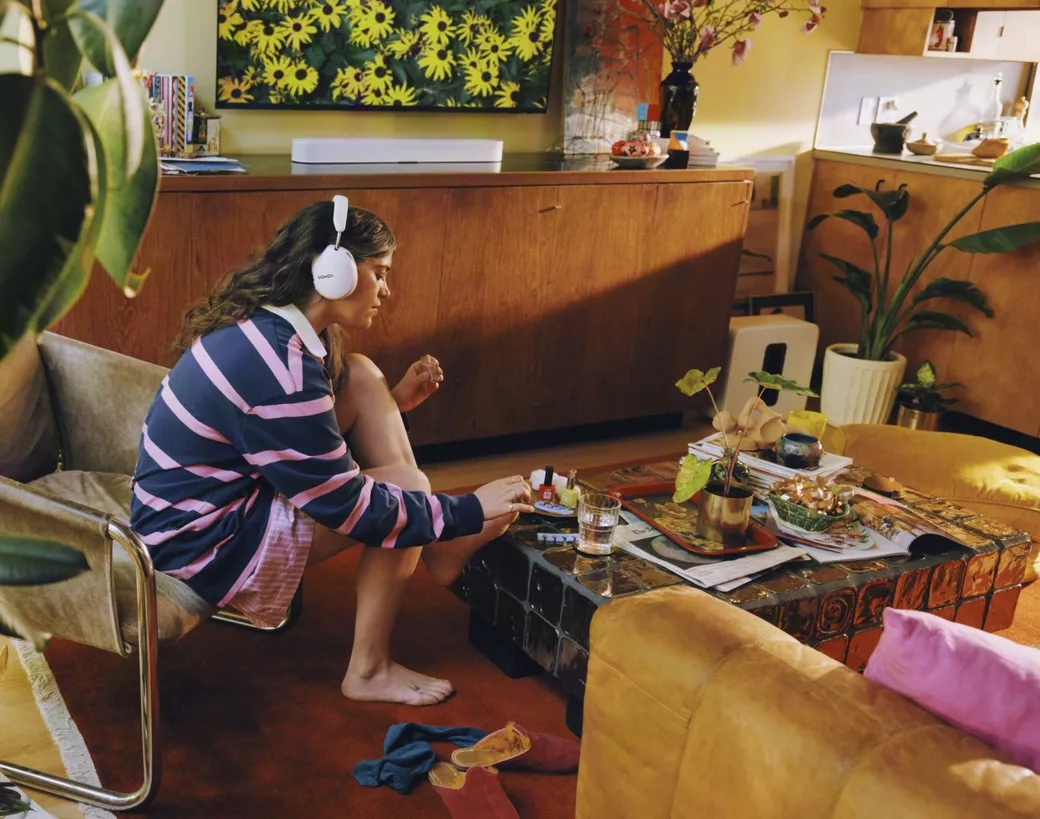
The company also announced a new home theater software capability called Sonos Fabric that will allow a pair of its Move 2 and Play wireless speakers to serve as rear surrounds when placed in the same room as a soundbar. The firm highlighted this as a unique strength of Sonos devices’ ability to sense each other when linked together as a system.
In the case of the wireless speakers, Sonos uses high-frequency sound to determine a speaker’s location and automatically adjust its role within the system based on that. So if you bring a Sonos Play into another room, it will unlink from the home theater mode and function like normal.
Sonos is bringing the new operating system update to a wide mix of past products. Any hardware that’s already on the current S2 platform will support Sonos 27 to some degree. “Our first voice speaker we ever shipped will support this,” Holley said of the new AI features. The company has been going back into code for older products to optimize memory usage, Patel added.
There are some limitations. For example, the first-generation Sonos Move cannot be used as a portable surround speaker, with Holley saying it “just does not have the same connectivity platform that Play and Move 2 do.”
Sonos is also stopping short of granting one frequent customer request: You still can’t use any speakers as dedicated front left or right surround channels. It’s an idea that the company is continuing to explore, Patel said, adding that third-party software already allows for such scenarios. But “it doesn’t meet our bar” for acoustic performance, he said of those solutions, adding that “we’re building infrastructure to get us there the right way.”
Similar to Apple Inc.’s operating systems, Sonos 27 will be renamed on an annual basis, so next year it will change to Sonos 28 and so on. The company plans to start rolling out an improved navigation experience, which has spent months in public beta testing, to all customers beginning on Sept. 8.

 点赞
点赞 收藏
收藏 点踩
点踩 分享
分享