How Salesforce Is Overhauling the Way It Charges for AI

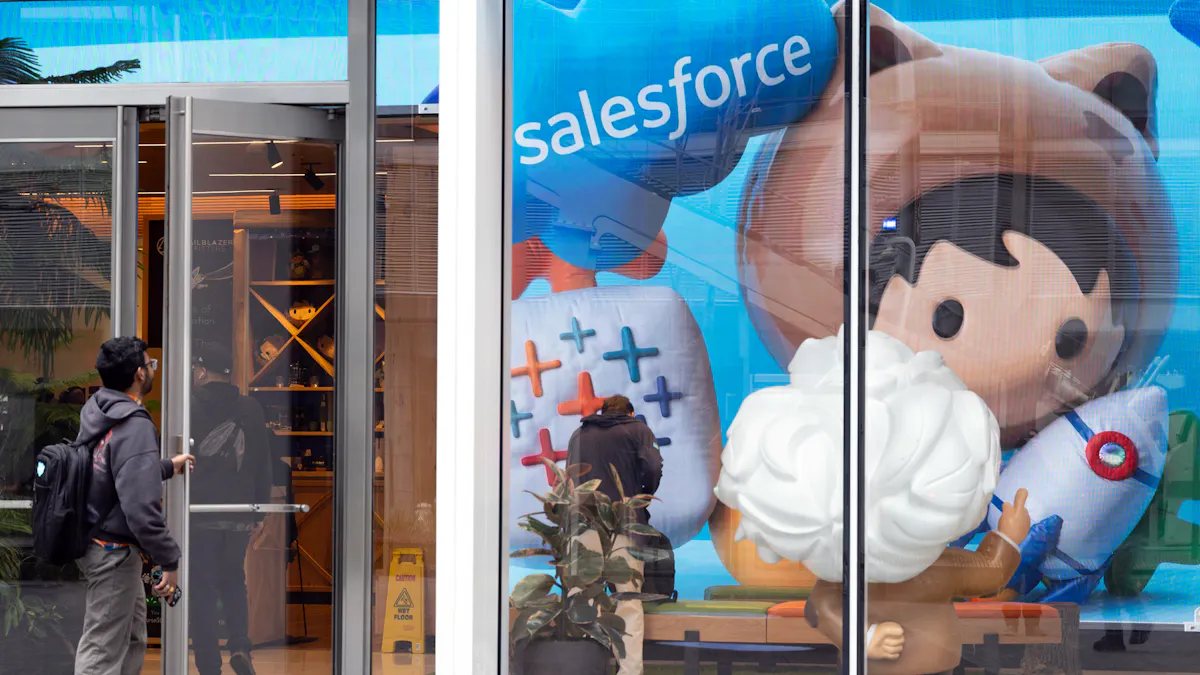
As software firms sell more AI, they are shifting from subscription fees to charging based on how much customers use it and whether it actually helps their business. Salesforce shows how complicated this transition may be.
A provider of software for managing customer relationships and other tasks, Salesforce is starting to let businesses choose how they want to pay for its Agentforce AI. That includes negotiating custom contracts that charge businesses based on how much the AI either grows revenue by helping salespeople close more deals or cuts costs by automating more customer service interactions.
“Customers want to buy and want to price in different ways. This is something I’ve learned really aggressively recently,” CEO Marc Benioff said in a call with investors Wednesday.
Benioff’s comments show the uncertainty hovering over software pricing in the age of AI. Software firms are at odds over that question, and many have been under pressure because the AI tools they’ve launched haven’t accelerated overall revenue growth. Salesforce and its ilk are also reacting to competition from startups that have launched “outcome-based” pricing in which customers only pay when the AI works.
In one previously unreported example, OpenAI in recent months has started giving some major customers the option of paying only when its AI completes tasks like handling customer support interactions, according to a person with direct knowledge of the matter. (An OpenAI spokesperson declined to comment.)
Customer management startups Sierra and Fin—which Salesforce is in the process of acquiring for $3.6 billion—similarly charge customers only when the AI completes tasks without human intervention. Coding assistant Cognition, meanwhile, is promising enterprise customers up to $10 million in credits if it fails to deliver engineering results worth at least what customers pay for it. And some older software firms, including Adobe Systems, HubSpot and Zendesk, have already moved in the direction of charging for AI only when it works.
Pricing Quandaries
These firms are figuring out how to make money from AI products that can be costly to provide to customers. That can be a challenge, as customers’ IT budgets have already been strained by a plethora of competitive AI tools, such as Anthropic’s Claude.
The rise of Anthropic, which sells such AI agents, presents Salesforce with even more pricing quandaries. As companies use advanced AI agents like Claude to handle more complex tasks involving software applications such as Salesforce’s, workers are less likely to interact with the apps themselves, which could reduce the influence of enterprise incumbents.
For now, Salesforce is leaning into the new paradigm: Last week it announced Claudeforce, which provides a way for customers to use Claude to access or do lots of tasks involving Salesforce apps without using those apps directly.
Salesforce is likely to give customers various ways to pay for Claudeforce, which is tied to an initiative to make money anytime AI from other providers taps data in Salesforce apps. Customers will need to pay for a higher subscription tier to enable this, according to a person with knowledge of the sales strategy.
Mirroring Palantir
Salesforce’s move to charge for AI based on whether it boosts sales or saves costs mirrors pricing long offered by software firm Palantir, which negotiates highly customized deals with its enterprise clients to unify their data and develop applications. It charges a combination of flat fees and usage- and outcome-based pricing.
According to Benioff, the flexible approach to AI pricing allowed the company “to sign very large transactions” with customers.
Perhaps anticipating future disputes between customers and vendors, payment provider Stripe has published guidelines for outcome-based pricing.
Salesforce said last week that growth in the sales of Agentforce and a data management service more than tripled year over year. While that growth didn’t boost overall revenue much, investors were pleased, sending the stock up about 23% since then.
“We’re moving to not just kind of outcome-based pricing, which is [like,] ‘We completed this many phone calls, therefore, give us $2,’” Benioff said. “We want to be able to say, ‘No, we improve revenue by this much, so give us $2 because we made you $20 or we made you $40.’”
He noted software suppliers can “get huge prices for their products” with this model. That’s certainly true for Palantir, which uses this method with some customers and whose revenues have skyrocketed over the past year.
Benioff has a unique understanding of how pricing models can be a competitive advantage. More than a quarter century ago, Salesforce led an industry shift away from customers buying business applications outright to renting them via recurring subscriptions based on the number of employees they had. This spared smaller firms the up-front expense of buying software and made it simple to increase their usage as they added more employees.
As an additional benefit, Salesforce handled all of the application upgrades on its end, saving customers from a traditionally expensive and time-consuming process.
The changes ushered a two-decade bonanza for firms that followed this software-as-a-service mode. It wasn’t always easy: Revenue at Splunk, which makes software for monitoring computer systems, temporarily fell as that company transitioned to a subscription business model from licensing software.
Attribution Disputes?
But AI has turned the subscription model on its head, and Salesforce now finds itself following others’ lead in how to price software. The results of this period of experimentation will determine whether older enterprise software companies like Salesforce can survive the upheaval triggered by AI.
As outcome-based pricing gains steam, the process of determining when a cost savings results from the enterprise customer’s own efforts or from the software could get messy. Perhaps anticipating future disputes between customers and vendors, payment provider Stripe has published guidelines for outcome-based pricing.
A sales conversion of other successful outcomes “could stem from product tweaks, marketing campaigns or seasonality” rather than the software, Stripe said. “Unless attribution rules are explicit, customers could argue over whether the outcome belongs to you,” meaning the software provider.

 点赞
点赞 收藏
收藏 点踩
点踩 分享
分享