Exclusive: SpaceX Lays Groundwork For Turbine-Blade Factory to Solve Data Center Power Crunch


Elon Musk intends to bypass the power supply chain for AI data centers in a way others assumed was impossible, by making highly complex components himself.
It’s a move no one else has been bold enough to attempt.
SpaceX has taken steps to develop a foundry in Bastrop, Texas, about 30 miles from Austin, to make vanes and blades for large gas turbines, according to job listings and other indicators.
Update: After this story was published, Musk confirmed the reporting by tweeting that despite large investments in solar energy, “natural gas will still be needed to supplement and bootstrap solar for several years. By doing in-house casting [of blades and vanes] at SpaceX, we can accelerate nat gas turbines coming online by up to 18 months, which is a profound game-changer.”
In recent months, SpaceX advertised that it is seeking a senior operations engineer “to serve as the extreme owner of the construction, buildout, and operational ramp-up of a new blades and vanes foundry.” It has sought a senior materials engineer, an automation engineer, a senior tooling engineer to design castings.
SpaceX also says it is looking for a programmer to assist in the milling of parts in high-temperature superalloys at “SpaceX’s new industrial gas turbine (IGT) blades and vanes manufacturing line in Bastrop,” the Austin-area location.
Morgan Stanley analyst Adam Jonas says his research also shows Musk is developing such a plant.
Until now, a global oligopoly of four casting companies has tightly controlled production of these vanes and blades, engineered for ultrahigh heat of 3,000 to 3,600 degrees Fahrenheit, 800 degrees above their own melting point. The maxing out of their foundries is a key reason large turbine makers like GE Vernova are sold out until 2030 and why the AI building boom is short on power.
‘The Limiting Factor’
Musk previously stated in a February podcast that blades and vanes are “the limiting factor” to faster provisioning of turbines and ultimately to standing up data centers. (Blades are also known to crack under stress running volatile AI workloads, so having a few extras handy might be helpful.)
At the current production rate, Musk said, “it’s not clear to me that there’s enough usable electricity to turn on all the AI chips that are being made.”
His prognostication continues to prove accurate, as we have been chronicling in this column week after week.
If he succeeds in making the parts and using them to build or refurbish more turbines, Musk could potentially build some of the 10 gigawatts or more of terrestrial data centers he has told SpaceX investors he could put up by the end of 2027.
Musk said earlier this month that he had secured Nvidia chips for these future sites, and AI cloud providers I spoke with argued that he has the capital and gall to bootstrap his way to power.
SpaceX shares plunged after the call on fears about what it would all cost. Debates continued to rage between traditional energy experts who asserted that powering hyperscale data centers off grid is far harder than it looks and AI bulls like Dylan Patel of research and investment firm SemiAnalysis, who stated his belief that Musk could pull it off.
“This is because you have no idea how to build infrastructure,” Jigar Shah, a clean energy and power entrepreneur who ran President Biden’s energy loan office, shot back at Patel on X.
Musk’s potential to unlock even more fossil fuel power for AI data centers would represent a setback to low-carbon energy advocates who had hoped the supply crunch for turbines would encourage renewables. BloombergNEF has estimated that if planned off-grid gas plants for data centers come to fruition, they would boost U.S. carbon dioxide emissions 20%. That figure wouldn’t include Musk’s latest efforts, but it would count 2 GW of off-grid gas deployments that SpaceX’s xAI unit has said will be running by the end of the year at its data centers in the Memphis, Tenn., area.
Dual Use
It couldn’t be learned where he is seeking to locate his new data centers, but Grace reported last month that Musk was laying the groundwork for a major facility in Texas, where he also has plans in various stages for a massive chip foundry and solar panel manufacturing complex. He has also said he would expand facilities in the Memphis area.
Morgan Stanley’s Jonas believes SpaceX is standing up a Texas turbine-component foundry for both its data center needs and its Raptor turbopumps, vital internal components of the company’s rocket engines.
“Raptor turbopump castings and data center turbine airfoils draw on the same alloys, furnaces and trained workforce, letting a single foundry spread fixed cost across the space and AI businesses,” Jonas said in a report this month.
To be sure, nailing the casting process to replicate what leaders like Precision Castparts have done for decades isn’t easy and could take years. But it’s critical to SpaceX’s relatively recently adopted quest to become a cloud provider on par with today’s incumbents.
Getting Turbines
In the interim, Musk is working to access several gigawatts of bridge power in the also-scarce market for smaller turbines. Jonas said Musk could access about 3 to 4 GW of power by the end of 2027 through a mix of purchase agreements.
In recent months, Musk has worked quietly to source turbines with Wall Street hedge fund Fortress Investment Group, which has invested in at least two separate suppliers.
Fortress sold a supplier of mobile industrial turbines, APR Energy, to Musk personally, according to a Federal Trade Commission filing in May. APR said in January it had about 1 GW of turbines in its fleet, suggesting they would become available to Musk.
SpaceX may also be purchasing turbines from FTAI Aviation, which modifies and refurbishes the machines for commercial aircraft engines. FTAI, spun out from another Fortress portfolio company, announced a $1.465 billion turbine sale in July via its Chinese joint venture partner to “a leading international cloud services provider.” Jonas has identified FTAI as a possible supplier to SpaceX.
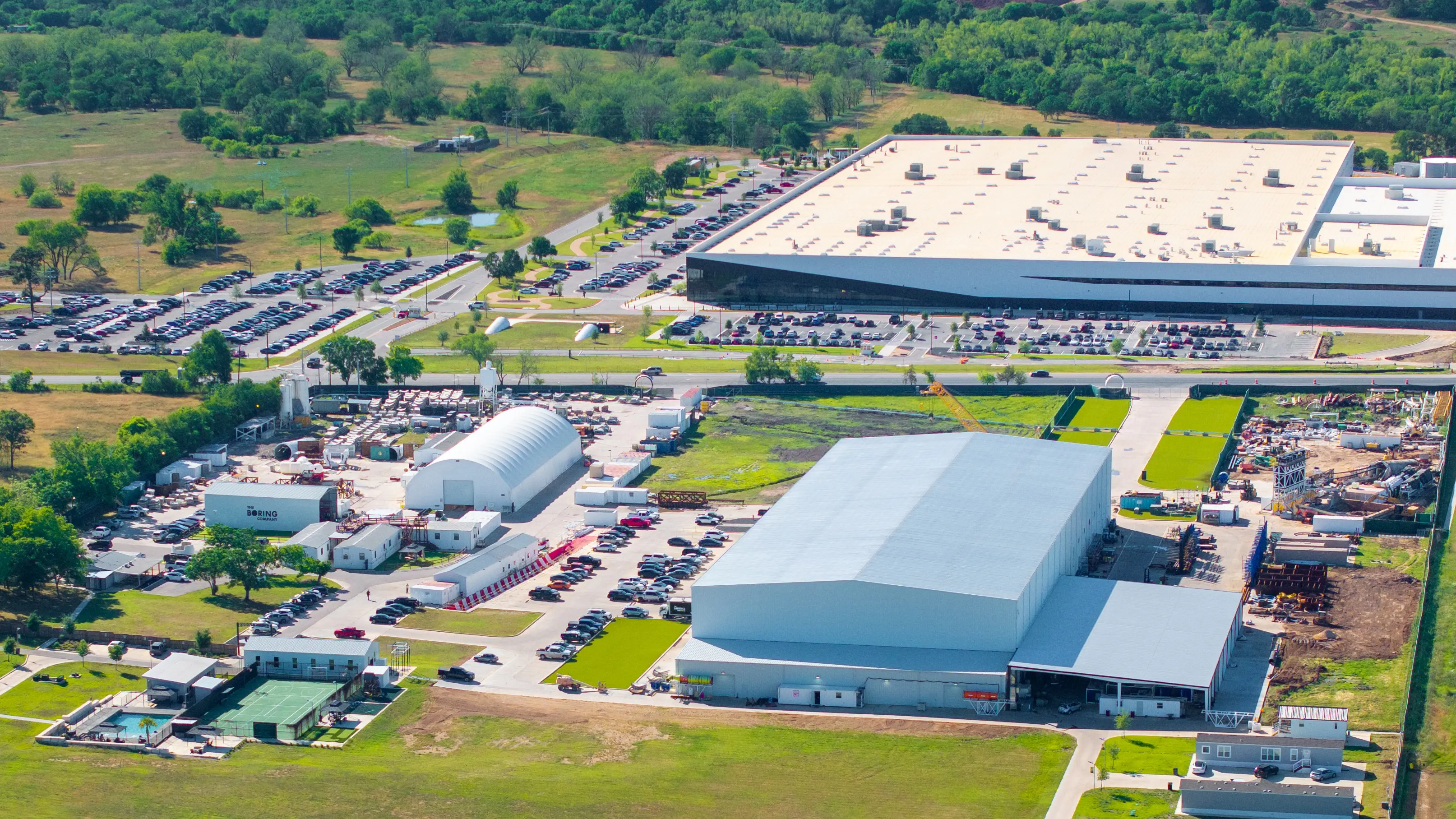
The Bastrop foundry plans are relatively new. SpaceXAI already operates a factory there, related to its Starlink satellite business, but between March and June it bought about 830 nearby acres, according to Corey Trinetti, a due diligence specialist who publishes detailed reviews of AI infrastructure sites in his newsletter, Measured AI. Two newly developed buildings adjacent to the Starlink factory that were not there a year earlier appeared in satellite imagery in July.
Trinetti was unable to find foundry permits or construction filings in Texas environmental or building records, however, so it isn’t clear whether SpaceX has started a permitting process.
Musk already stunned the data center industry once by completing the Colossus data center in Memphis in record time two years ago. It wasn’t the highest-quality facility, to be sure, but SpaceX is now making a lot of money from renting it out to Anthropic.
He’s trying to do it again with power, and betting against him is usually a risky strategy.
Ann Davis Vaughan is the author of the AI Infrastructure newsletter for The Information. She is a former senior Wall Street Journal investigative reporter turned investment strategist who has tracked the energy, industrial and financial sectors for three decades.

 点赞
点赞 收藏
收藏 点踩
点踩 分享
分享