Nvidia Agrees to Buy Open Source Model Repository Hugging Face For $12.9 Billion

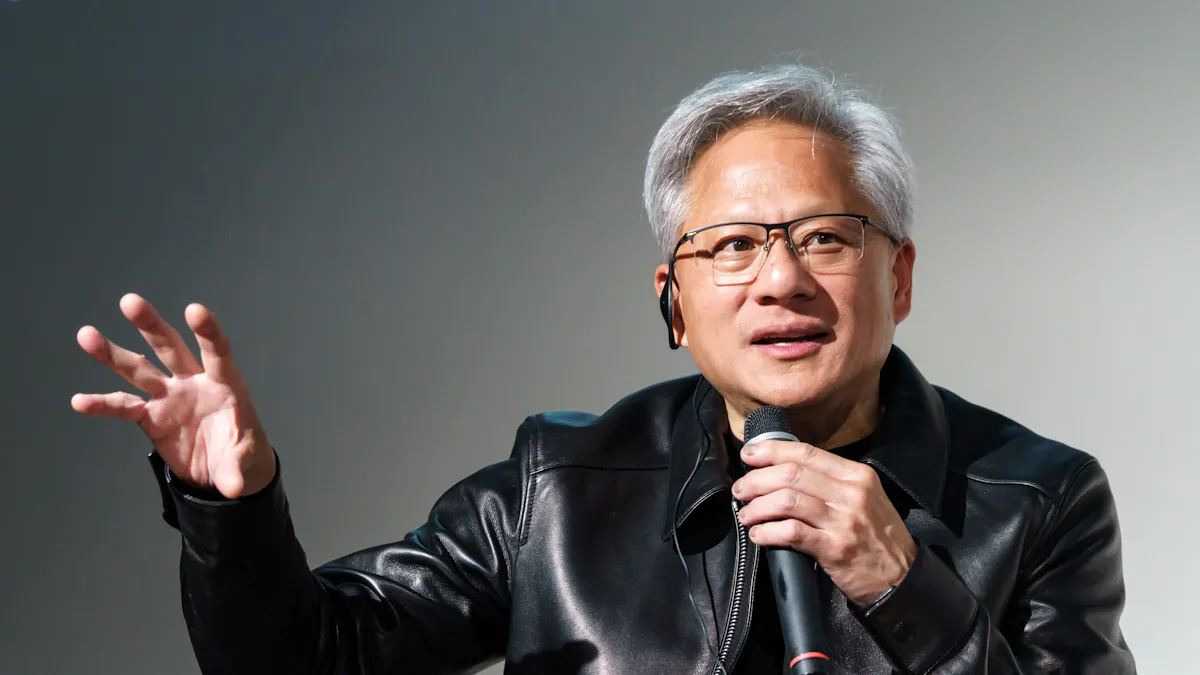
Nvidia has agreed to buy Hugging Face, a company known for its GitHub-like repository of open-source AI models, for $12.9 billion, according to a person with knowledge of the agreement.
The move will put Nvidia in charge of a strategic asset in the race among open-source model developers to catch up to closed-source AI models from Anthropic and OpenAI. Nvidia leaders believe that a plethora of successful open models will help preserve its AI hardware dominance because they will be a counterweight to the closed-source AI developers, each of which is trying to develop competing AI server chips and lessen their reliance on Nvidia’s.
For that reason, Nvidia has been boosting its own effort to develop Nemotron-branded open-source AI models and has committed to spend tens of billions developing its own open models.
Other AI server chip makers such as Google, Microsoft, Amazon previously invested in Hugging Face, as did Nvidia.
Besides storing their models, Hugging Face helps AI model developers to optimize models for different server hardware, and it also offers cloud services to power the models in AI applications.
Hugging Face, which is 10 years old, isn’t generating a lot of revenue, though; it recently was generating $150 million in annualized revenue, typically a figure that multiplies the prior month’s revenue by 12. That means Nvidia is paying about 80 times the forward revenue of the startup, which is high by today’s standards.
But Hugging Face revenue has grown relatively quickly of late; it was generating about $100 million in annualized revenue a couple of months ago. That may be because interest in open source AI has surged as the capabilities of Chinese open-source models from Z.ai, Moonshot and DeepSeek improved to the point where more American businesses said they are using them.
Hugging Face customers pay flat-fee monthly subscriptions and added fees tied to the amount of computing power they use and data they store. In June, co-founder and CEO Clem Delangue told The Information that the startup had doubled its number of paying subscribers in the first half of 2026. Delangue said on a recent podcast appearance that the company is “close to profitability.”
Nvidia, the Cloud Provider?
Nvidia, by buying Hugging Face, would in effect be resuscitating its AI cloud business, a business it backed away from a year ago. The business, DGX Cloud, had put Nvidia in quasi-competition with Amazon Web Services. Nvidia had committed to spend $13 billion to rent back its own AI chips from bigger cloud providers that had purchased them, including AWS. Nvidia has then turned around and rented out some of those chips to companies such as Amgen and ServiceNow that develop their own AI applications. Nvidia believed the cloud business could one day help it generate $150 billion in revenue.
Hugging Face could also serve as a contingency plan. Nvidia said during earnings that it had committed to $36 billion in cloud services contracts as part of credit support agreements with its customers. If market conditions shift and customers aren’t able to lease that capacity out to third parties, Nvidia would end up responsible for some of that compute. It would be an alternative to directly re-leasing that capacity out to other customers. If Nvidia finds itself with more compute than it can use internally, it could use the capacity to power AI for Hugging Face customers while expanding that business.
The Hugging Face deal caps a frenetic series of investments for Nvidia CEO Jensen Huang in Nvidia customers and users of its chips and data center firms that work with Nvidia customers, in order to lock in the company’s hardware bundle. Nvidia has put tens of billions of dollars in everything from AI application developers such as Perplexity and OpenAI to companies that develop land and power for data centers.
Last week Nvidia raised eyebrows by signing a $6 billion deal to license AI development tools from a Poolside, which develops open source AI models, and made offers to hire more than 100 of its employees. Nvidia earlier this summer acquired Kumo AI and Essential AI to help develop model training tools as well.
Nvidia disclosed Wednesday that it holds $99 billion in equity investments and had as of the end of July committed to invest another $25 billion. Nvidia previously committed to make a $30 billion equity investment in OpenAI, and it also disclosed $108 billion in credit support on behalf of OpenAI, which plans to lease a large data center facility in Ohio, filled with Nvidia chips, likely starting in 2028.
Kress said that while “some will call circular financing, we see it differently” because Nvidia is aiding companies that will “become the largest technology companies in history.”
Customers Launch Their Own Chips
She said that a quarter of Nvidia’s revenues next year would be related to AI labs that Nvidia is supporting financially.
That could be problematic if OpenAI as well as Anthropic end up succeeding in their efforts to develop their own AI server chips while dominating the AI model and application market. OpenAI on Tuesday released an evaluation of its new Jalapeño AI server chip, claiming it is faster and more powerful than Nvidia’s flagship Blackwell chips. But the chips haven’t yet been tested as thoroughly against Nvidia’s latest chip, Rubin, nor have they been used at scale.
Huang told CNBC Wednesday that he wasn’t worried about such efforts and had confidence that Nvidia’s technology would be the most practical hardware for AI developers, no matter the alternatives.
However, Nvidia faces a more serious rival in Google, which has been trying to sway Nvidia’s most loyal customers to use Google’s tensor processing units in addition to Nvidia’s hardware.
Early investors in Hugging Face include Salesforce, Lux Capital and Addition. Hugging Face has had several potential suitors among its investors, including Salesforce, said a person with knowledge of the interest.
Business Insider earlier reported that Nvidia was in talks with Hugging Face over a potential merger.
Hugging Face gained more notoriety last month when OpenAI said its AI broke out of an internal testing software and hacked not only OpenAI’s systems but also those of Hugging Face and other firms. Hugging Face said it used AI, including open source models, to combat the hack.

 收藏
收藏 点踩
点踩 分享
分享
 回复
回复