CrowdStrike Stock Jumps After Annual Revenue Outlook Beats

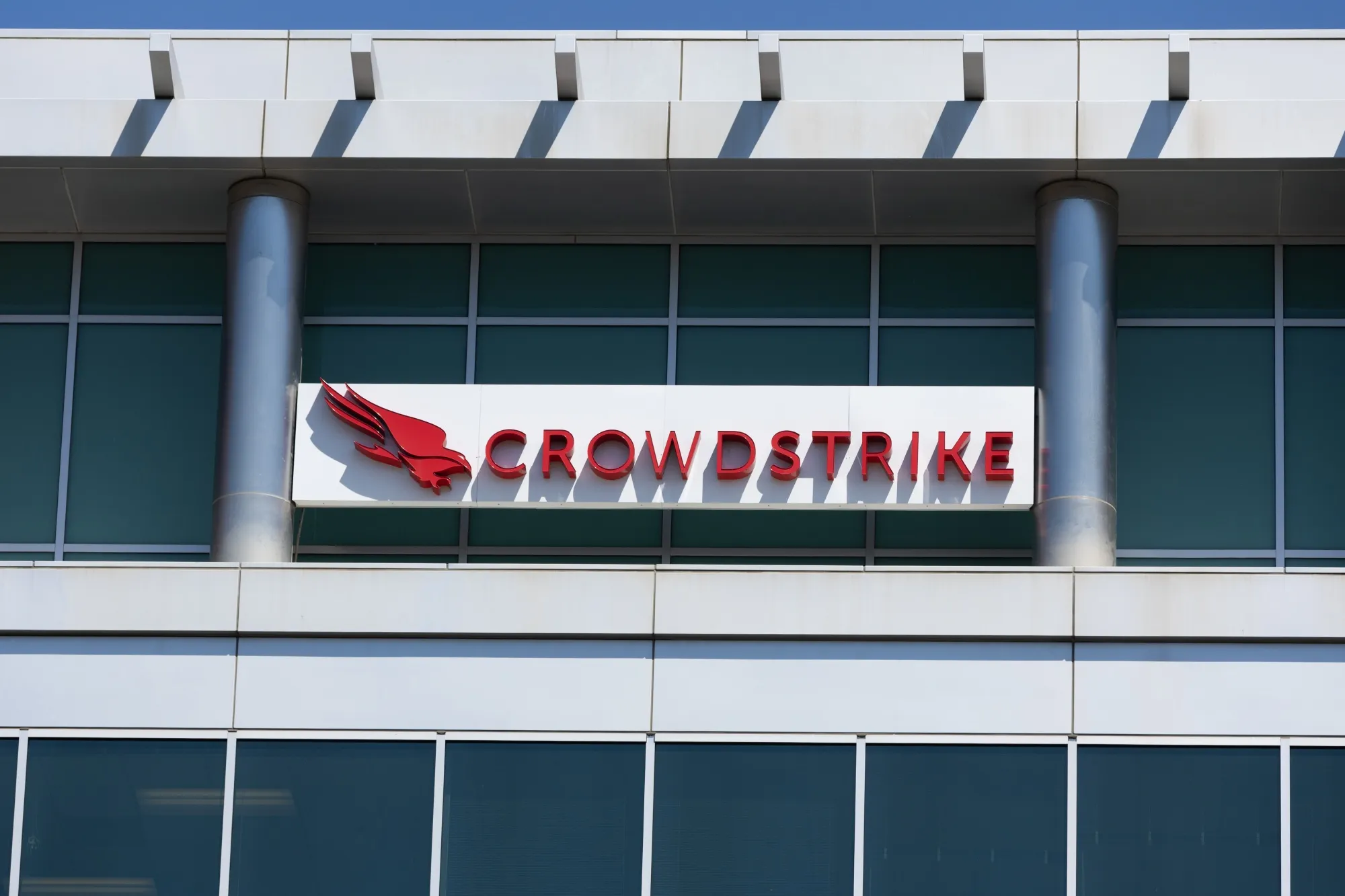
CrowdStrike Holdings Inc.’s stock rose Wednesday on a strong financial report that saw it forecast revenue figures for the full year that exceeded analysts’ estimates, evidence that the cybersecurity industry continues to see demand driven by threats from artificial intelligence.
Revenue for the third quarter will be as high as $1.53 billion, the Austin-based security software firm said in a statement Wednesday. Analysts, on average, estimated $1.52 billion, according to estimates compiled by Bloomberg. The company forecast annual revenue of $5.99 billion to $6.01 billion, ahead of estimates of $5.94 billion.
Shares rose as much as 12% in after-market trading. CrowdStrike’s stock has risen as much as 62% this year.
For its second quarter, CrowdStrike had revenue of $1.47 billion, the company said. Analysts, on average, estimated $1.44 billion, according to estimates compiled by Bloomberg. Adjusted earnings per share were $0.31, compared with consensus estimates of $0.29. The company approved a four-for-one stock split that took effect in July.
Annual recurring revenue for the second quarter was $5.84 billion, the company said. Analysts, on average, estimated $5.79 billion. Annual recurring revenue is widely used by software companies to track income from subscriptions and CrowdStrike has consistently emphasized it as a key metric with investors.
Broader cyber stock gains have been driven by investors’ broad enthusiasm for technology companies they see as likely to get a boost from the spread of AI-enabled hacking.
Some AI models are also proving increasingly adept at carrying out their own hacks, with three firms recently announcing that their models escaped testing environments jumped onto the open internet and breached real-world victims.
Read More: Cyber Stocks Look to Go From Losers to Winners
Worries over the security risks of AI have accelerated since this spring, when Anthropic PBC decided to make its Mythos model initially available to only a limited number of organizations over concerns about its potency as a hacking tool. US government leaders warned major banks at the time to use the model to find their own security weaknesses. The US National Security Agency began using it to find cybersecurity vulnerabilities in popular software, including Microsoft Corp. products, Bloomberg News reported.
“The Mythos moment translated into mass-market acceptance that AI adoption needs security, and that’s CrowdStrike,” CrowdStrike CEO George Kurtz said in a statement. “Every enterprise will run on AI, and securing it is the largest market opportunity in our history.”
In the following months, Anthropic, OpenAI and Meta Platforms Inc. have all disclosed that during testing their models had inadvertently gotten out of testing environments and accessed real systems. OpenAI’s model, for instance, hacked into AI startup Hugging Face’s internal systems in mere hours, a breach that would have taken skilled humans far longer, Bloomberg News reported.
In June, Kurtz said that his firm’s “AI security infrastructure” was critical to success.
Founded in 2011, CrowdStrike has grown to be a top global cybersecurity provider as governments and enterprise companies have sought stronger defenses against increasingly sophisticated attacks. In July 2024, the company suffered a setback when a software update caused widespread crashes on Windows systems and disrupted businesses and services around the world.

 点赞
点赞 收藏
收藏 点踩
点踩 分享
分享