Positrons pass test for the Future Circular Collider

TOPIC:Experiments
Positrons pass test for the Future Circular Collider
An experiment at the Paul Scherrer Institute in Switzerland used novel technologies to demonstrate the feasibility of the positron-source concept for the proposed Future Circular Collider at CERN
—
26 August, 2026
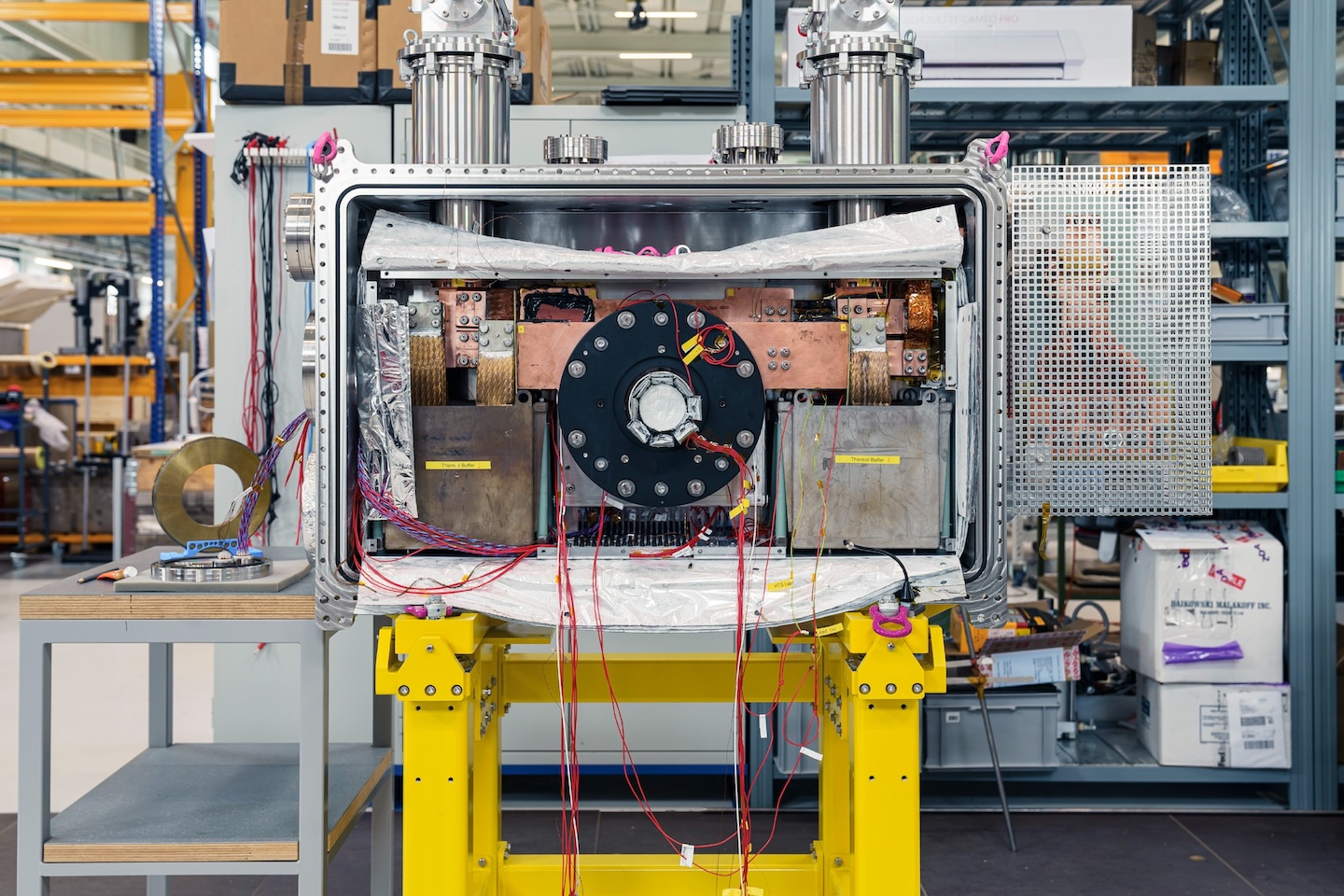
An experiment at the Paul Scherrer Institute (PSI) in Switzerland has successfully produced, captured and transported positrons using a novel system developed for CERN’s proposed Future Circular Collider (FCC). The results show that the key elements of the FCC positron-source concept can operate together, representing an important advance for this technically demanding aspect of the FCC’s design.
“These are the first positrons for the FCC project, so it’s an important milestone,” said Paolo Craievich from the PSI Center for Accelerator Science and Engineering, who is co-leader of the PSI Positron Production (P³) project.
The FCC is a proposed 91-km research infrastructure currently under study as a possible successor to CERN’s Large Hadron Collider (LHC) in the 2040s. Whereas the LHC collides protons, which are made up of quarks and gluons, the FCC would collide electrons and their antimatter partners, positrons, which are elementary particles. This would enable extraordinarily precise measurements of the Higgs boson and related particles, and open new paths to address outstanding mysteries about the Universe.
One of the major technical challenges for the FCC is its positron source. While positrons can be produced easily by firing electrons into a dense target, capturing them in large numbers and efficiently channelling them into a tight beam that is useful for a collider is much more difficult.
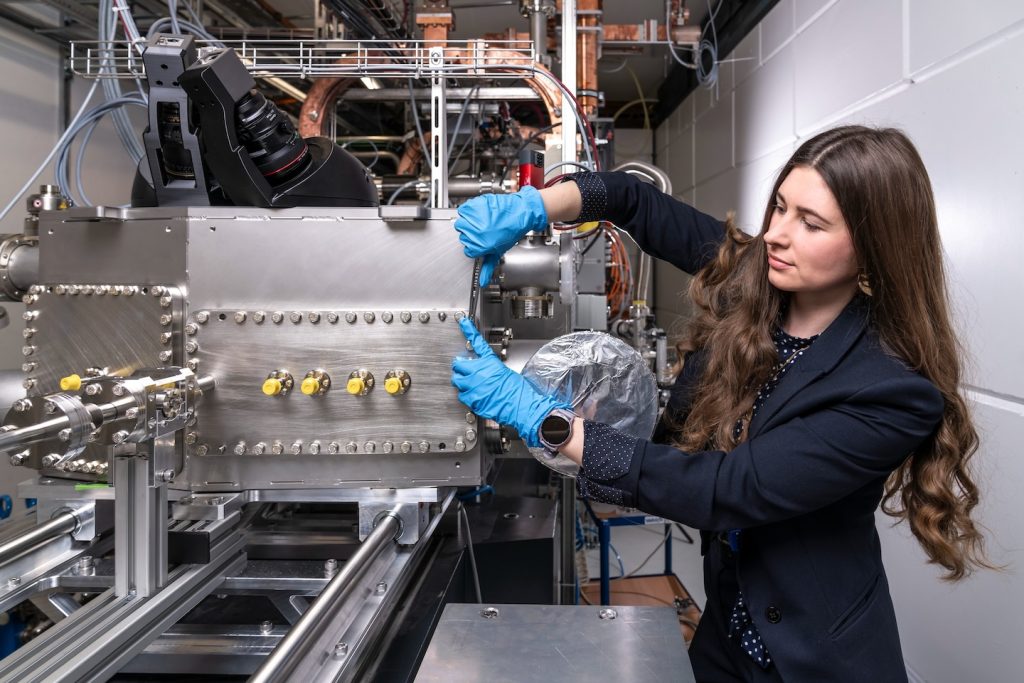
In the P³ setup, electrons accelerated by the SwissFEL light source strike a tungsten target, where they generate a shower of positrons travelling in many different directions. The target system, including a mechanism that allows the target position to be adjusted to optimise the positron yield, was designed, produced and assembled by CERN.
A powerful superconducting magnet surrounding the target then captures as manypositrons as possible. To meet the strict technical requirements of the FCC positron source, PSI researchers developed a compact magnet made from high-temperature superconductors, reaching a field of around 15 tesla.
Additional novel components guide, separate and measure the positrons before radiofrequency cavities accelerate and bunch them so that they can be efficiently transported and eventually injected into a collider.
The P³ project shows that all these components work together as an integrated system, which forms part of a wider collaboration between PSI and CERN on the design of the FCC injector system.
“My congratulations go to the P³ team and the many colleagues across PSI who made this achievement possible, together with their collaborators from CERN, IJCLab–Université Paris-Saclay and KEK,” said Michael Benedikt, FCC Project Leader at CERN. “This work also reflects the vital support of the Swiss CHART programme in helping to build the expertise and advanced technologies needed to turn the FCC vision into a technically credible project.”
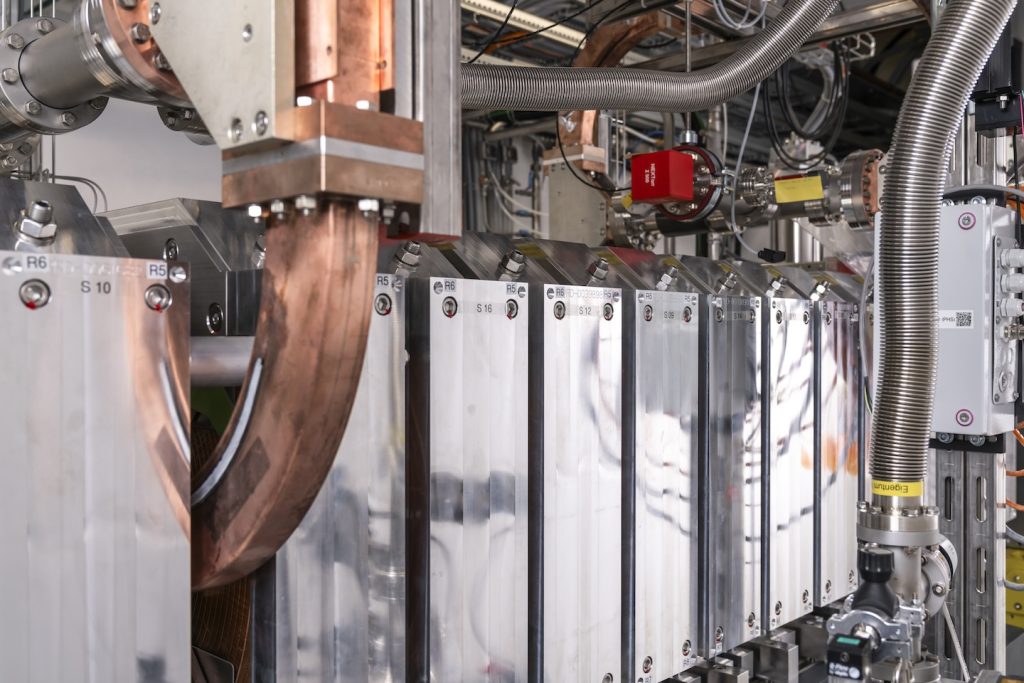
The next step for the P³ team is to increase the beam intensity and optimise the system, with the aim of scaling up positron production to the levels required for the FCC. The high-temperature superconducting magnet technology developed for the P³ project is also being investigated for applications in proton therapy and fusion research.
The CERN Council is expected to be in a position to take a decision on the FCC in 2028, taking into account elements such as the scientific, technical and financial feasibility of the project, as well as results from public consultation exercises in CERN’s Host States, France and Switzerland.
Text adapted from the Paul Scherrer Institute
Electron FCC General public Higgs boson Media News positron superconductivity Switzerland
Related Articles
No posts were found. Try to change the category or the date filters.

 点赞
点赞 收藏
收藏 点踩
点踩 分享
分享