A Video Subscription Site Gets a New Life From Licensing Videos to AI

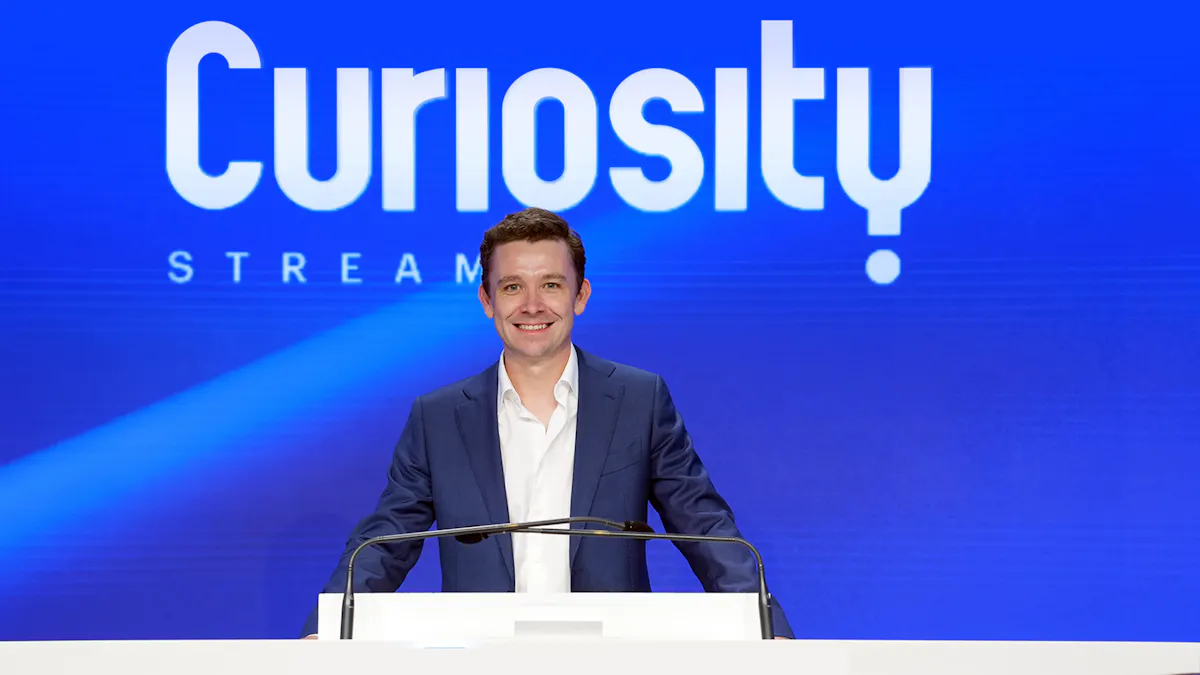
A streaming service called CuriosityStream, which offers documentaries on ancient Egypt, the Persian Gulf and other topics, was nearly delisted by the Nasdaq Stock Market three years ago. Squeezed by a post-pandemic glut of online streaming services, its revenue dove 27% in 2023 to a four-year-low. The service’s decision last fall to license thousands of hours of films—for which it held the rights—to companies training AI models has brought it back from the brink, though.
Earlier this month, the company, which was started by Discovery Channel founder John Hendricks in 2015, reported record profits, driven by revenue from licensing documentaries to AI companies. Meta, Google, xAI, OpenAI and Anthropic have all licensed its data, according to a person close to the company.
The stock, which closed Monday at $2.84, has recovered from a February 2024 low of 45 cents, though that is still far from its 2021 high of $24.
“We keep doing streaming but the growth has come from AI data licensing for the past two years and it’s accelerating,” said John Higgins, CuriosityStream’s vice president in charge of data partnerships.
CuriosityStream’s turnaround is the latest example of how companies in a wide array of industries—from media to healthcare to airlines—are capitalizing on voracious demand for data to train AI models. The internet forum Reddit just disclosed $43 million in data-licensing revenue for its second quarter, up 24% year over year.
Even the creditors of bankrupt companies can profit from the demand. Google, along with data labeling startups Mercor and Micro1, have all bid for the internal business and software data of collapsed budget carrier Spirit Airlines. (Micro1 said Thursday it offered $12.5 million for the data, in an attempt to overturn Google’s $10 million winning bid.)
In the past two years, the demand from AI companies has extended to video, as companies train video models such as Meta’s Movie Gen, Google’s Veo and xAI’s Grok Imagine Video to generate footage from text prompts.
At the same time, agreements made between entertainment union SAG-AFTRA and Hollywood studios have restricted how members’ performances can be used to train AI. The studios have also fought unpermitted use of their work. Netflix earlier this year sent a cease-and-desist letter demanding that TikTok-owner ByteDance prevent its AI video generation model from training on its videos, according to Deadline. (ByteDance earlier this month signed an agreement with the Motion Picture Association to strengthen its copyright safeguards.)
The environment made an opening for CuriosityStream. Its documentaries use mostly non-union talent, narrators, scientists, historians and wildlife production crews. The service also owns most of its titles.
“CuriosityStream was in that sweet spot in the middle where we had high-end films and series and also no rights complications,” said Higgins.
CuriosityStream now holds rights to more than three million hours of video and audio, some of it supplied by dozens of content partners on a revenue-share basis. It has done about 25 deals to license its videos to major AI labs or smaller VC-backed startups building models, says Higgins. An average deal gives AI companies access to between 6,000 and 10,000 hours of video content for training purposes, though its largest licensing agreement ran over 100,000 hours.
An hour’s worth of footage typically costs its licensing customers about $100, Higgins said, which means a 10,000-hour licensing agreement would be worth roughly $1 million to CuriosityStream.
If a model is struggling with human facial expressions or lighting conditions, the lab may ask for a thousand clips of people smiling or laughing, or clips of outdoor scenes at dusk with people talking. CuriosityStream’s licensing customers are also asking it to label and annotate videos, which helps the labs fix what the models get wrong by telling them what to focus on when analyzing an image.
CuriosityStream is using Versos AI, a New Brunswick, Canada, startup that prepares videos to become training data for AI. CuriosityStream took a stake in Versos.
While its licensing business has taken off, the company has also shifted into a sideline business of licensing the software running its streaming app, website and smart TV apps to companies training models for coding. The coding data, amounting to 880 billion tokens, or 660 billion words, show how its own software was built and maintained over a decade.
“Generative AI companies need real-world code data sets that were developed prior to AI,” said Higgins.
Here’s what else is going on…
Big Number
AI startup Hugging Face, known for its repository of open-source models, is generating more than $150 million in annualized revenue, a 50% increase from two months ago, according to a person with direct knowledge of the matter.
Policy Watch
Alabama Attorney General Steve Marshall launched an investigation into OpenAI’s practices related to its AI models’ recent cyberattack against Hugging Face. The investigation is examining whether OpenAI’s “inability or unwillingness to ensure the safety of its products” violates the state’s consumer-protection laws and poses an ongoing risk of substantial harm to its citizens, Marshall’s office said in a statement Monday.
Overheard
SpaceX and AI cloud company Nebius are set to be early customers of Nvidia’s Vera central processing units and fast inference-focused Groq LPX racks, two key items intended to expand on Nvidia’s main, graphics processing unit-based products, according to Nvidia.
Deals and Debuts
See The Information’s Generative AI Database for an exclusive list of private companies and their investors.
Generalist, a company developing AI models that control robots, has sold $198.2 million of a $208.2 million equity offering, less than three months after closing a $400 million financing. That June funding round was led by Radical Ventures.
SoftBank Group plans to sell 1 trillion yen, about $6.3 billion, of bonds to ordinary Japanese savers — the largest retail bond sale by any issuer in Japan — to fund the money it has promised OpenAI.
Dogotix, the robotics arm of the Chinese electric carmaker XPeng, which is developing a general-purpose humanoid robot called IRON, raised more than $900 million at a post-money valuation above $6.3 billion in its first funding round, led by IDG Capital.
Descartes Systems Group, the logistics software company, acquired Tai, a company that sells freight brokers a single AI-powered system for running a shipment end to end, for approximately $100 million in cash on hand.
Cityblock Health, a company that delivers medical care to people on government health plans, agreed to acquire Homeward Health, which does the same work for rural patients on Medicare Advantage, in an all-stock transaction. Neither side disclosed a price. It also secured $116 million in a Series E funding round led by General Catalyst.
Quintessent, a company that makes the tiny lasers that carry data between the chips in an AI data center, raised $40 million in a Series A funding round led by Cycle Capital.
NeoSoul, a company developing software that lets automated trading programs run on public blockchains, raised $11 million in a pre-Series A funding round from investors including MH Ventures, Amber Group and ArkStream Capital.
Thank you for reading the AI Agenda Newsletter! I’d love your feedback, ideas and tips: [email protected].
If you think someone else might enjoy this newsletter, please pass it forward or they can sign up here.
Alix Coutures is a reporter covering startups and VC based in New York City. She graduated from the M.A Business concentration at Columbia Journalism School in May 2026. She previously covered tech and telecom in Paris, at the French business publication Challenges. She can be reached at [email protected] or on Signal at Alix_coutures.34

 点赞
点赞 收藏
收藏 点踩
点踩 分享
分享