At least 15 companies are selling antibodies using faked validation data

On May 17, 2026, Sholto David identified one fabricated image presented as validation data in Thermo Fisher’s antibody catalog. By May 28, we had identified more than 100 fabricated images, which expanded to more than 450 images in Thermo Fisher’s catalog and one in Abcam’s catalog by June 3 (see my previous blog post). We set up a Zenodo repository to collect all these instances of apparent manipulation of antibody validation data and a form for others to report suspicious images in vendor’s antibody validation data that they had found themselves.
Understandably, this revelation prompted considerable outrage among biomedical scientists, as reported by Nature, Chemistry World, The Scientist, GenomeWeb and others. Phillip Broadwith, Business editor for Chemistry World, summarizes: “The discovery of extensive manipulation in Western blot images used by laboratory supply giant Thermo Fisher Scientific as verification data for antibody reagents has led to a serious breakdown of trust between the company and its customers.”
This update is to say that this newfound distrust should probably extend to a good fraction of the research antibody industry at large. Our repository now contains 18,943 images presented as validation data for 17,495 unique antibody products sold by 15 different vendors. In order of discovery, these vendors are:
- Thermo Fisher Scientific
- Abcam
- Novus Biologicals / R&D Systems
- Proteogenix
- Origene
- Millipore Sigma
- LSBio
- Bioss
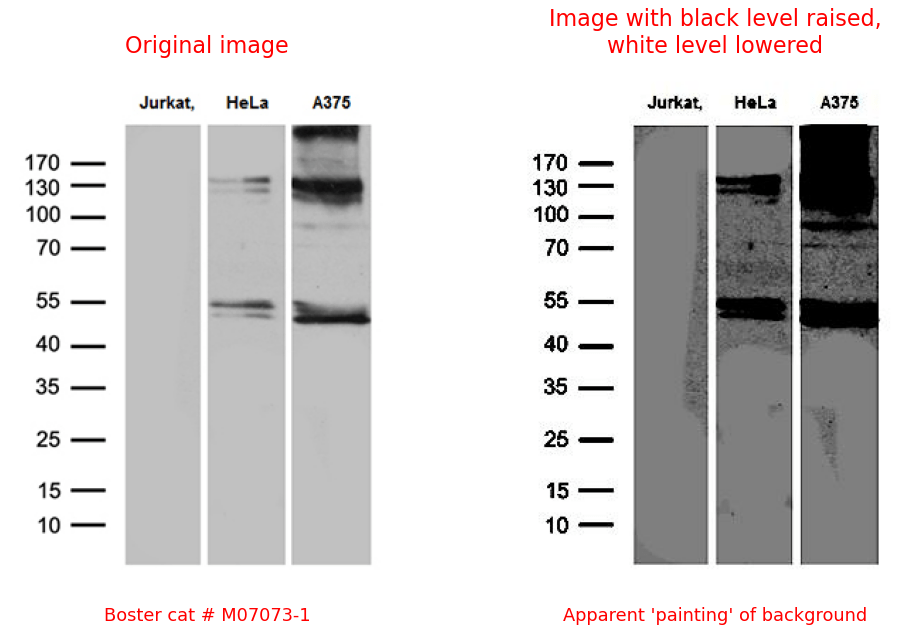
- Boster Bio
- G-Biosciences
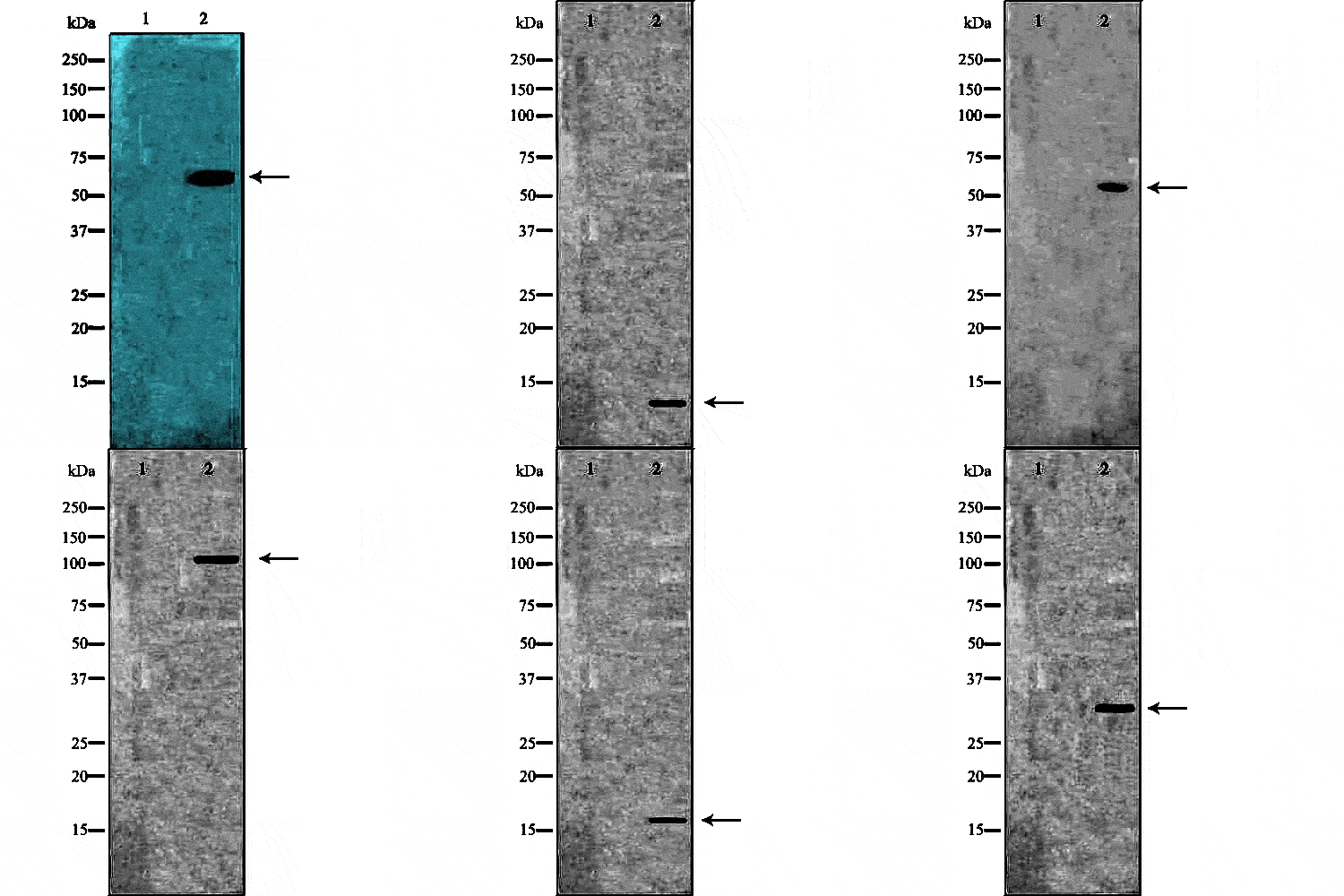
- GeneTex
- HUABIO
- Antibodies.com
- Abnova
- Santa Cruz Biotechnology
Below, I summarize the findings for each company and provide a short postscript detailing my own opinion about what should happen from here. Note that while I have tried to document as many instances of apparent manipulation as possible, the figures shown here do not represent a complete audit of each company’s catalog. Moreover, many images I’ve reviewed look as though they may have been manipulated, but are too low-resolution for me to offer a confident opinion. I’ve elected not to include these images in the repository. For all of these images, the best way to know if falsification has occurred is to inspect the original, high-resolution images, which may or may not be available, even to the vendors themselves.
For these reasons, a vendor having a larger or smaller number of manipulated images documented here should not be interpreted as an indication that it has a larger or smaller manipulation problem than the other companies listed here. All of these companies have some level of manipulated images in their catalogs and they should each comprehensively and transparently audit the images in their respective catalogs. Finally, if a vendor is not present here, it is not an indication that their catalog is free of manipulation.
Hundreds of these problematic images were first identified by others, including Sholto David, Elisabeth Bik, Javeria Nishtar, Maxwell Marley, Marvin Bader, HKADolan, Bryan Heit and several community members that prefer to remain anonymous. Many other community members submitted images that they found suspicious, but were too low-resolution for me to make a confident determination and include them in the repository. I want to thank all these people for taking the time to document and report their findings. I encourage readers to report any suspicious validation data they notice in vendor catalogs here.
Vendors frequently use the same validation images as one another, probably reflecting private labeling
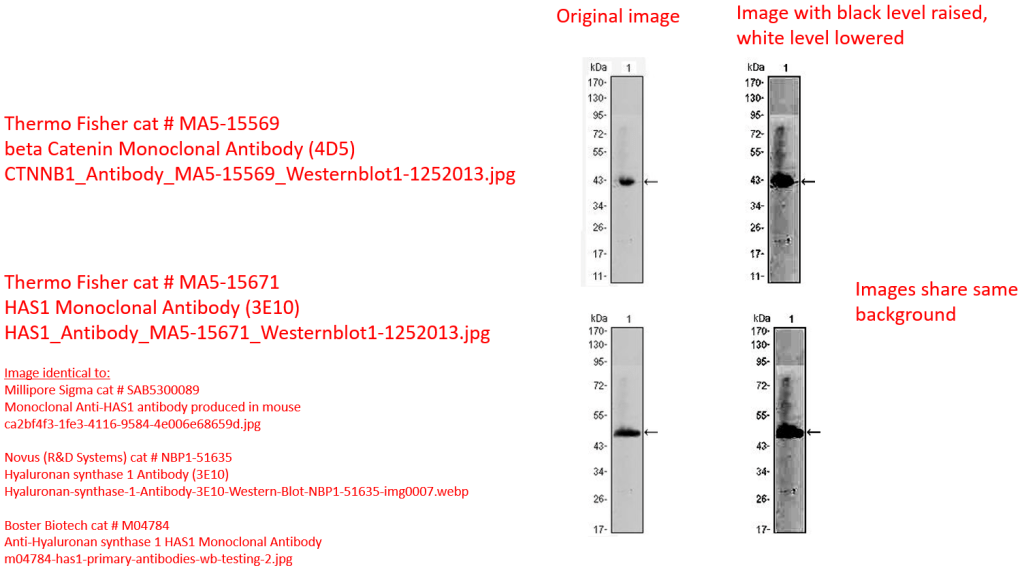
It is clear that many of these vendors are using the same images as one another for their own versions of the same product. For instance, this HAS1 antibody from Thermo Fisher uses the same Western blot image as similar products from Millipore Sigma, Novus (R&D Systems) and Boster Bio. I only noticed this because the image used for the HAS1 antibody has the exact same pattern of background noise as a different Western blot image used for a different antibody also sold by Thermo Fisher, implying that at least one of these images is fabricated.
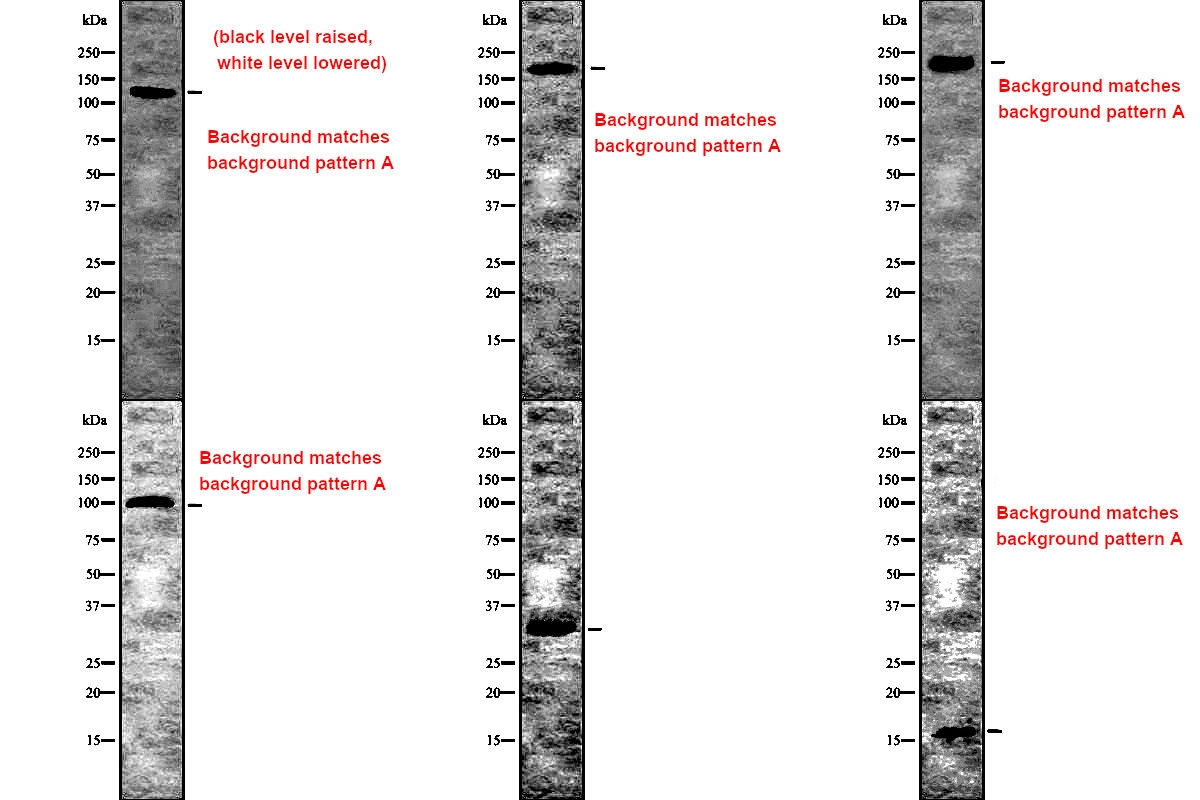
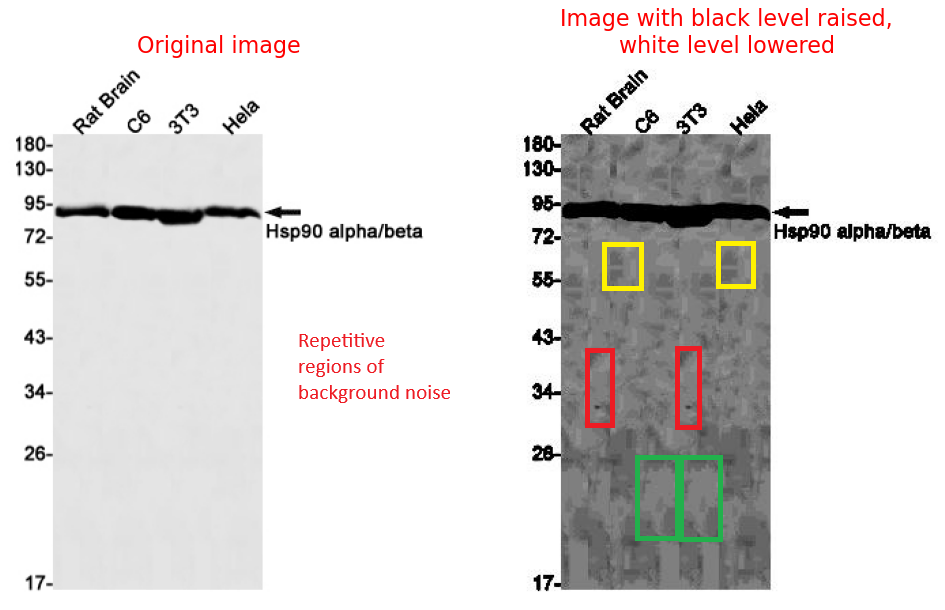
At least six companies (Thermo Fisher, Abcam, LSBio, Antibodies.com, G-Biosciences and GeneTex) present a Western blot using the exact same “background pattern A” as thousands of other antibody products. I described background pattern A in my previous blog post.
If they aren’t using the exact same images as one another, different companies will often use images that are so stylistically similar that it is clear that they originated from the same art studio laboratory.
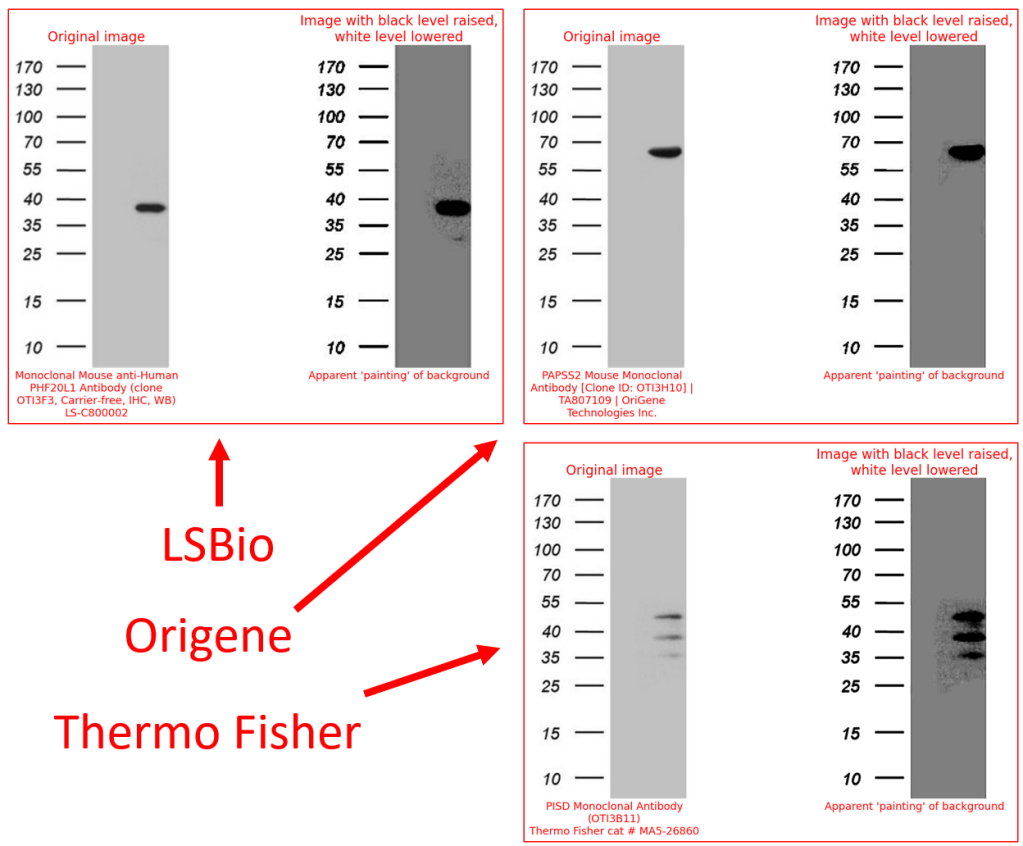
Identical images across multiple vendors probably reflect the industry practicing private labeling, where one manufacturer produces a product that they then sell to other companies to market and sell under their own branding. It appears that the original manufacturer of these antibodies also passed along their validation data to the final vendor, who then placed them on their website.
Thermo Fisher Scientific (5,580 images across 4,819 products)
Thermo Fisher Scientific, headquartered in Waltham, Massachusetts, is probably the world’s largest supplier of laboratory equipment and reagents and was the first company that was noted to have presented fabricated images as validation data. In response to the public outrage, Thermo Fisher released a baffling 15-point FAQ wherein they promise an investigation, but repeatedly state that “antibody images may have been optimized for presentation and clarity on the website”. Shortly after, they revised their FAQ to just seven points. To the carefully-worded question “Did Thermo Fisher manipulate or fabricate antibody data?”, they emphatically respond:
No. The Company fully stands by the data and underlying science. We are confident in the quality of the products within our antibody catalog and our performance guarantee is valid for products purchased directly from Thermo Fisher Scientific or any of our authorized distributors. For further information, please refer to the Invitrogen antibody performance guarantee.
Note that this answer only claims that Thermo Fisher itself did not manipulate or fabricate antibody data, which leaves the company room to offer a clean mea culpa if their review finds that the images were manipulated by a third party. Regardless of which party is responsible for the manipulation, Thermo Fisher used these images to market their products to scientists hungry for antibodies that actually perform as advertised.
Around the same time that their FAQ was revised, Thermo Fisher and added a disclaimer to all antibody product pages in small gray type:
Please note: We are reviewing Western blot images included in the antibody testing data in our catalog, including those provided by third parties. Unless expressly labeled or annotated as “raw-unedited”, Western blot images included in the antibody testing data in our catalog may have been edited, optimized or otherwise adjusted for presentation.
Thus far, I have not seen any images in Thermo Fisher’s catalog that are labeled as “raw-unedited”. Note that Thermo Fisher has not committed to making the findings of their investigation public.
More than a thousand newly-documented images from Thermo Fisher’s catalog contain artefacts of “painting”, where someone presumably has brushed over some undesirable image features in Photoshop or a similar program (some highlights below).
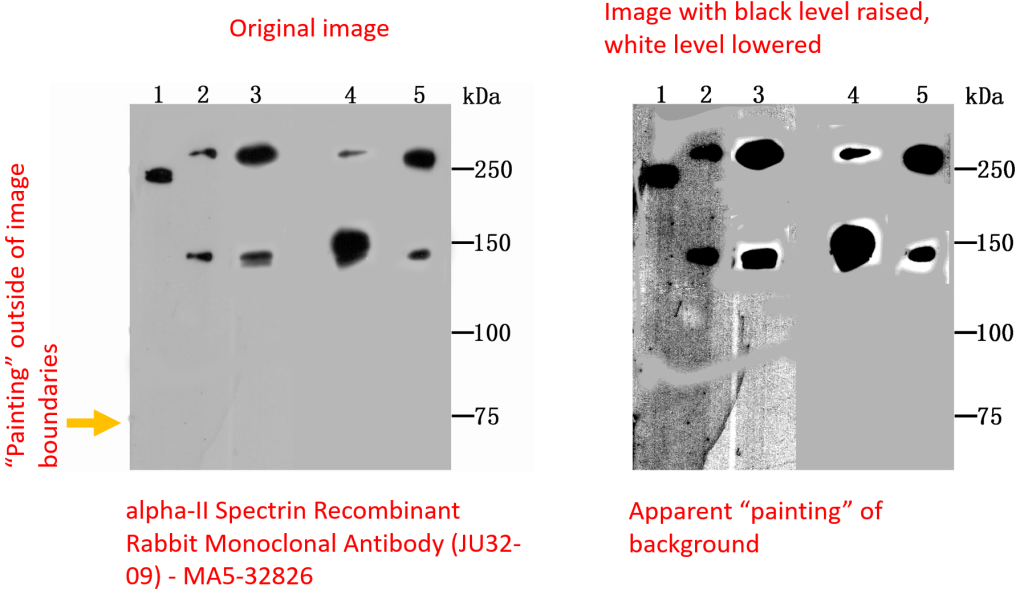
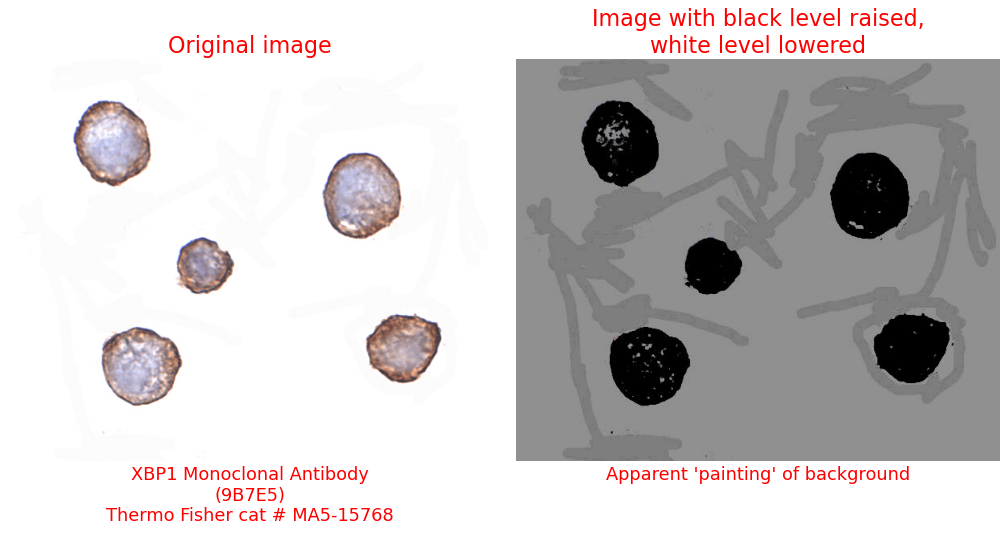
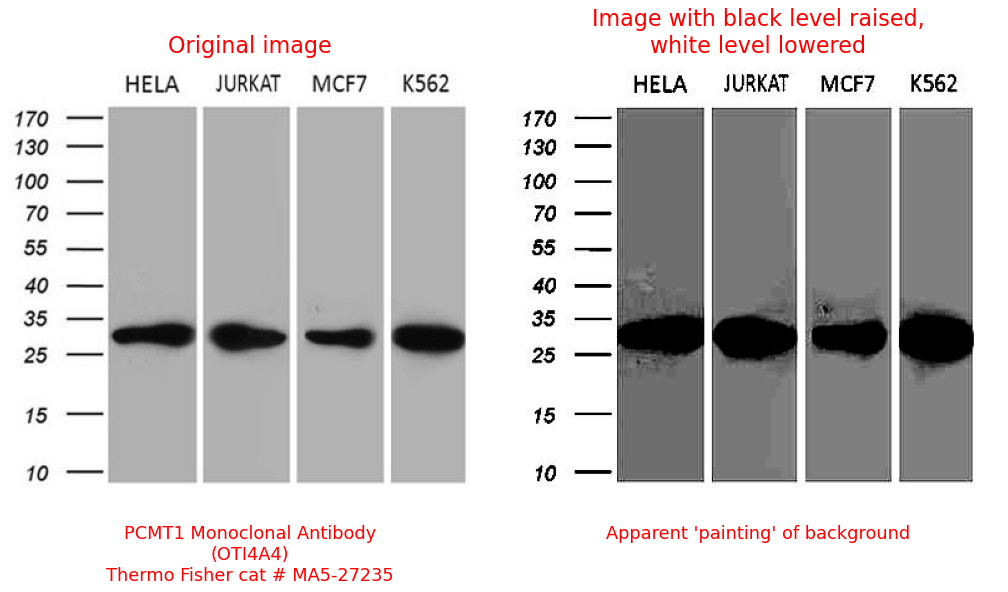
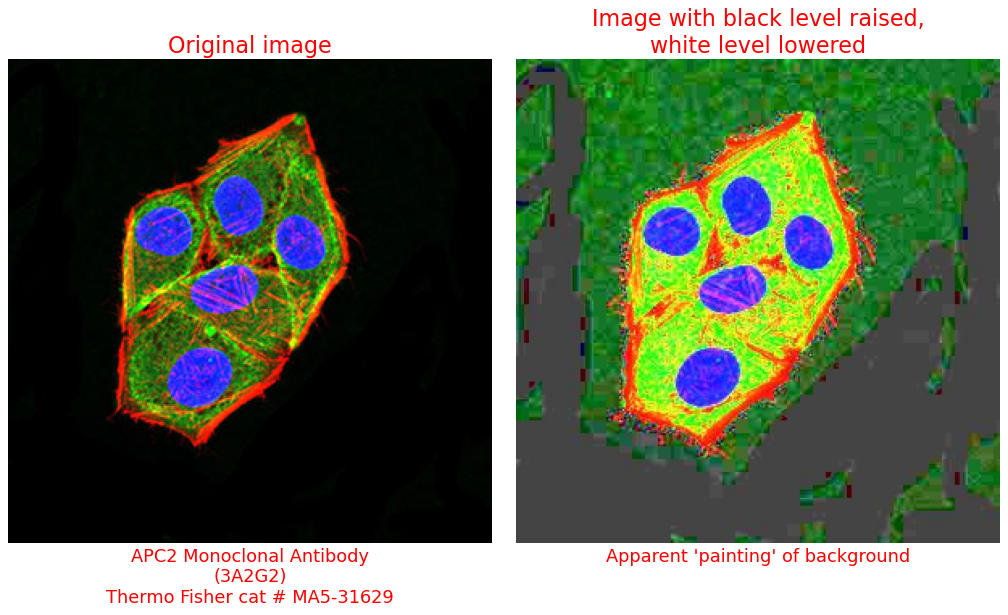
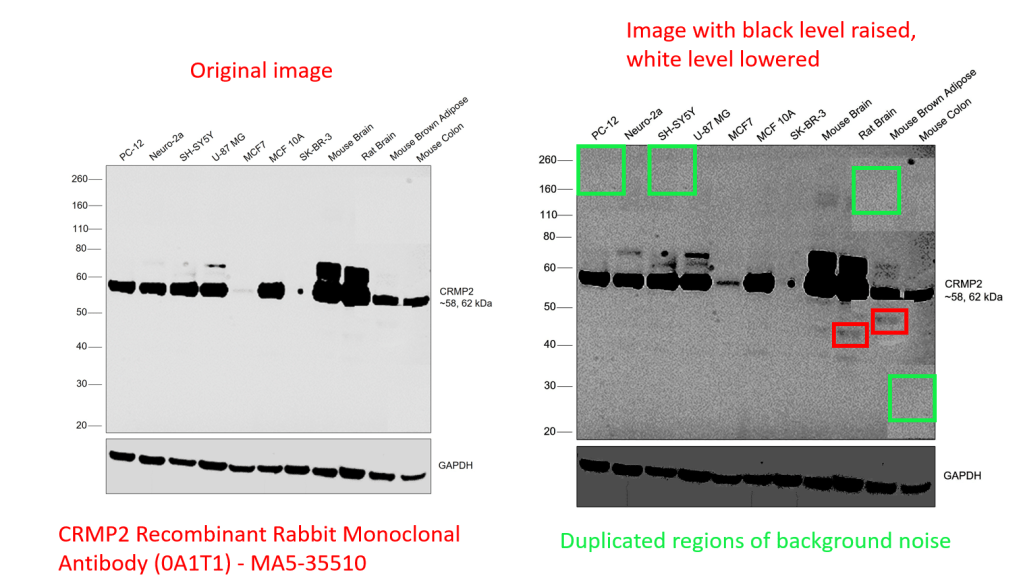
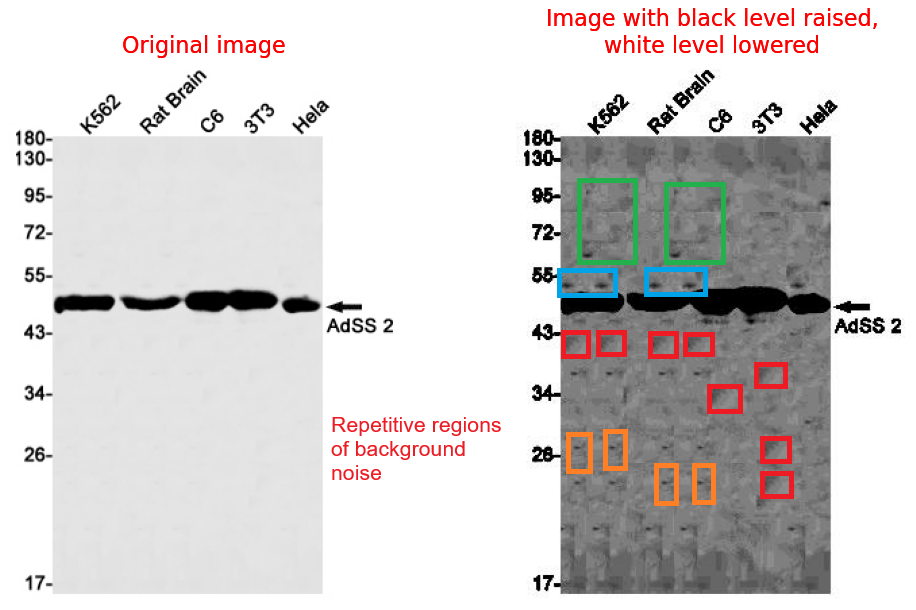
Dozens of other images feature duplicated regions of background noise.
Thousands of other images feature the same background patterns with the bands repositioned to correspond to the expected molecular weight, as in the previously-documented “background pattern A” and “background pattern B”.
If 450 images was not enough to convince Thermo Fisher that this is not data they should “fully stand behind”, maybe 5,000 images will be.
An aside about Thermo Fisher’s “quotations”
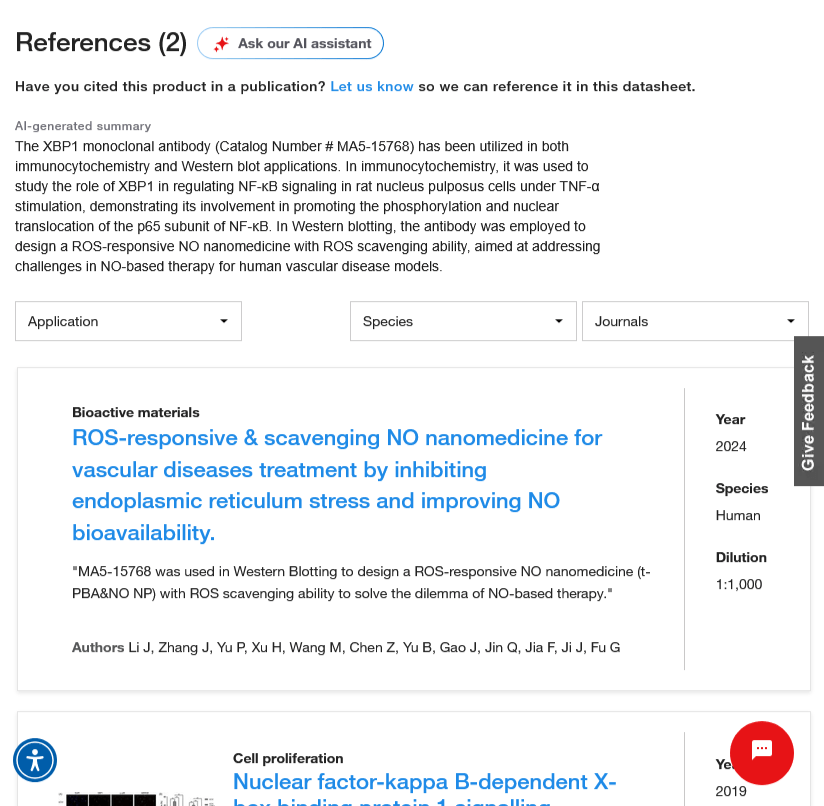
Another way to stoke confidence in buyers that an antibody works as advertised is to show them that other scientists have successfully used it. To that end, most antibody vendors show “citations” and “references” on product pages, listing published articles wherein the authors state that they used the antibody in their experiments. These product citations are compiled by services like CiteAb, the Antibody Registry and BenchSci. Thermo Fisher’s product pages collect citations to the product and provide a short quotation from each describing how the reagent was used.
I was alerted to a problem with these citations by a post by Sander Kersten, who complained that:
[Thermo Fisher] is quoting a sentence from our manuscript, written 25 years ago, indicating that we used their antibody. However, we didn’t, and the quote is a total fabrication.
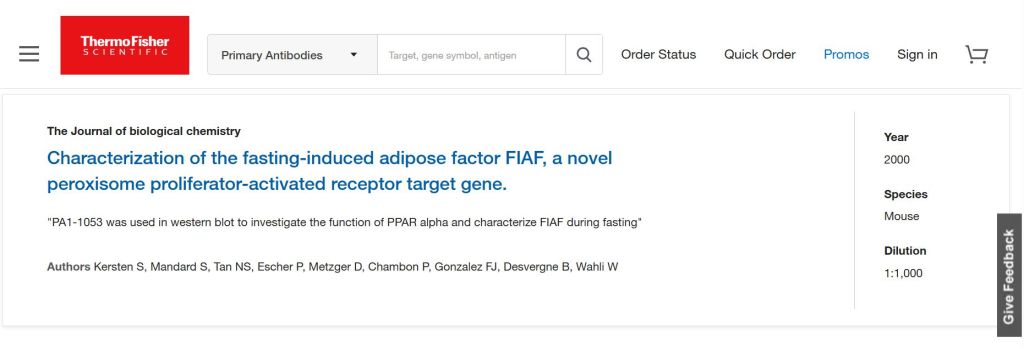
The product page makes it appear as if it is quoting directly from Kersten et al. (2000): “PA1-1053 was used in western blot to investigate the function of PPAR alpha and characterize FIAF during fasting”. The actual relevant quotation from Kersten et al. is “[t]he polyclonal antibody used was directed against the epitope CQGPKGKDAPFKDSE in the N-terminal region of FIAF. The peptide affinity-purified antibody was generated in rabbit and ordered via Eurogentec’s customized antibody production service.” In other words, Kersten et al. never claim to use the Thermo Fisher product in question. The antibody they used binds the same epitope (amino acid sequence) as PA1-1053 claims, but the authors explicitly state that it came from a different manufacturer.
In fact, every single apparent quotation from a product reference on Thermo Fisher’s site is not actually from the reference manuscript. For instance, the same product page that misquoted Kersten et al. also makes it appear as if it is quoting directly from Choudhuri et al. (2021): “PA1-1053 was used in Western Blotting to gain insight into the mechanisms that result in such changes by Tempol in female C3H mice”. The actual relevant quotation from Choudhuri et al. reads “[f]ollowing transfer to nitrocellulose, samples were probed with primary antibodies ALDH1A1 (ab52492) from Abcam (Waltham, MA), ANGPTL4/FIAF (PA1-1053) from Thermo Fisher Scientific (Waltham, MA) followed by rabbit secondary antibody from Santa Cruz Biotechnology (Dallas, TX), and were visualized by chemiluminescence (PerkinElmer; Billerica, MA)”.
I believe these summaries are AI-generated, but they are clearly presented (in quotation marks, no less) as if they are direct quotations from the manuscript. While product pages on Thermo Fisher are littered with buttons prompting users to “Ask AI about this product”, users are given no indication that these quotations are AI-generated nor that they are not actually quotations. Every Reference section does have an “AI-generated summary” at the top, however, this part is not presented in quotation marks and is clearly disclaimed as being AI-generated, unlike the references themselves.
Moreover, many of these summaries are inaccurate, such as the reference to Kersten et al.! I ran spot-checks of 15 references from another antibody (MA5-14520, Ki-67 Recombinant Rabbit Monoclonal Antibody clone SP6) and found 4 listed references (1, 2, 3, 4) that state that they used a rabbit antibody from Thermo Fisher (or one of the brands acquired by Thermo Fisher) but don’t actually specify that it was MA5-14520. Thermo Fisher currently sells 54 antibodies targeting Ki-67 with rabbits as the host organism.
Abcam (185 images across 115 products)
Abcam is based in Cambridge, UK and was acquired by the Danaher Corporation, headquartered in Washington, DC, in 2023. We previously found just one instance of image manipulation in Abcam’s catalog (an appearance by “background pattern A”). After making this public, Abcam issued a short statement to The Scientist and wordlessly removed the image from the antibody’s product page. The product remains for sale.
The newly-documented manipulations contain a lot of patchwork painting of background noise in Western blots, as well as several dozen appearances of background patterns C and D.
Novus Biologicals / R&D Systems (263 images across 171 products)
Novus Biologicals is a brand owned by R&D Systems, a brand of Bio-Techne, based in Minneapolis, Minnesota. Bio-Techne announced in June that they would be acquired by Merck KGaA, headquartered in Darmstadt, Germany (not to be confused with the American company Merck & Co., Inc.). The images flagged in our repository mostly feature background pattern C and background pattern D.
Proteogenix (362 images across 362 products)
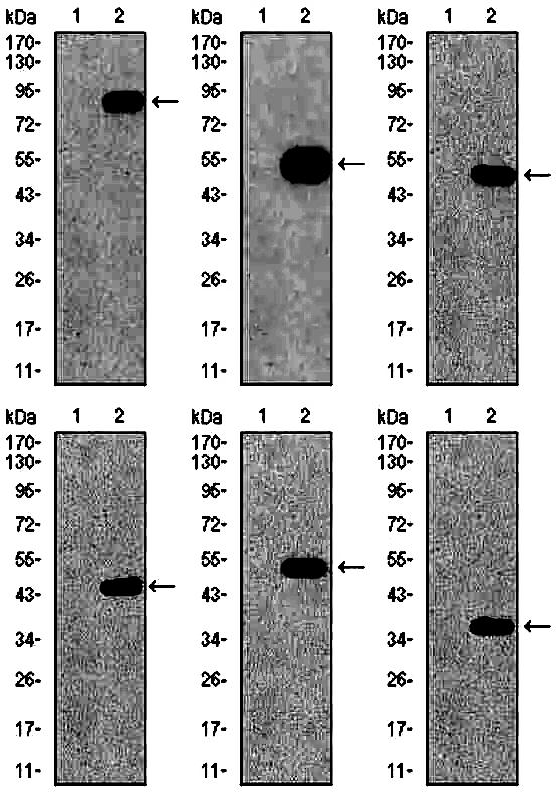
Proteogenix is headquartered in Schiltigheim, France. An anonymous community member noticed that several images in Proteogenix’s catalog use the exact same background pattern (which I’ve called “background pattern E”). According to this person, they alerted Proteogenix to the first handful of problematic images that they noticed. Proteogenix apparently answered this courtesy by silently removing the offending images from the catalog (note that since the catalog pages were not previously archived, I cannot independently verify if Proteogenix did indeed remove these images after the community report). This person went on to document 200 additional occurrences of the background pattern in Proteogenix’s catalog, after which I found more than 150 more.
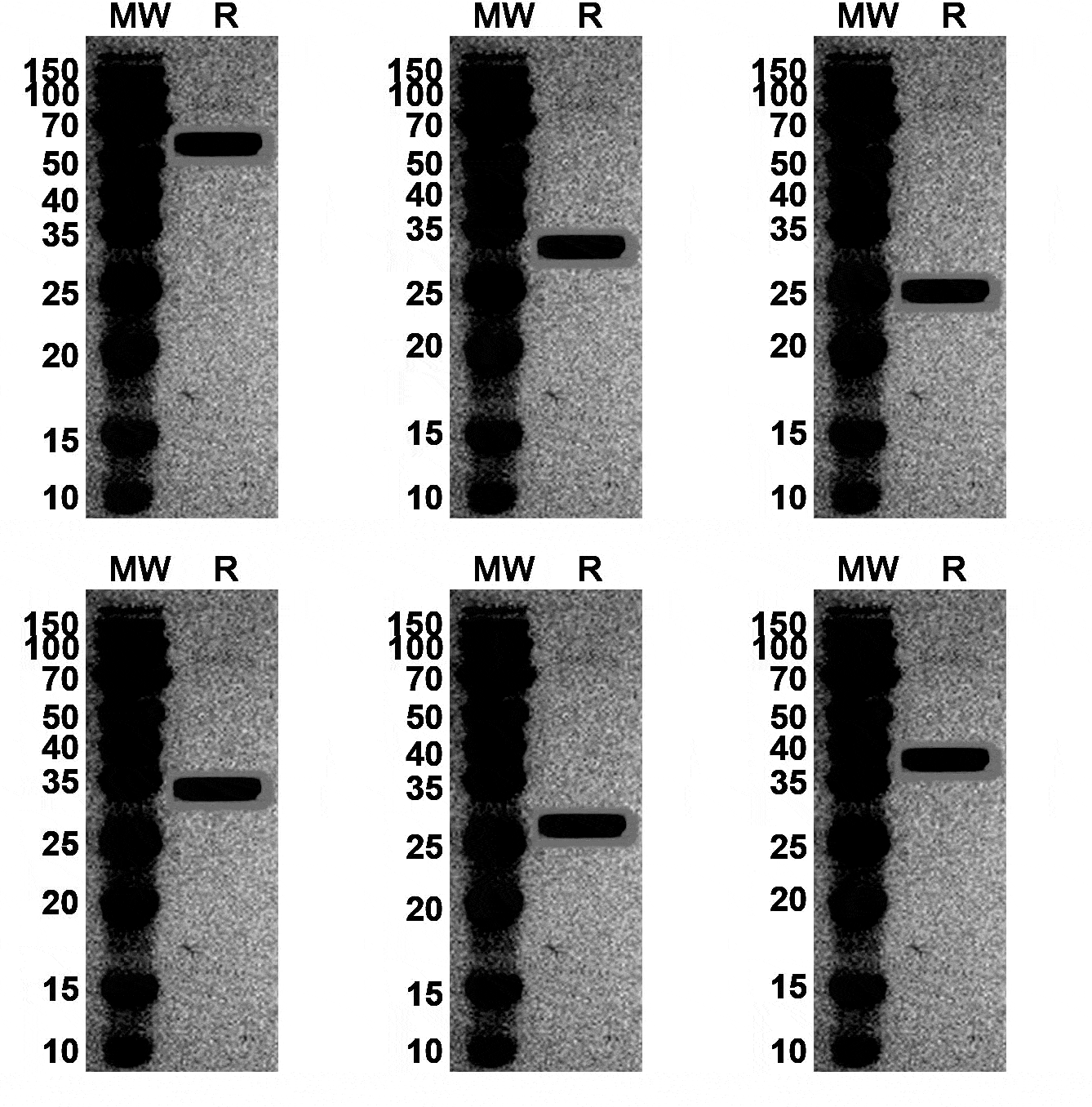
Origene (2,236 images across 1,959 products)
Origene is headquartered in Rockville, Maryland. Most of their newly-documented image manipulations contain evidence of background painting.
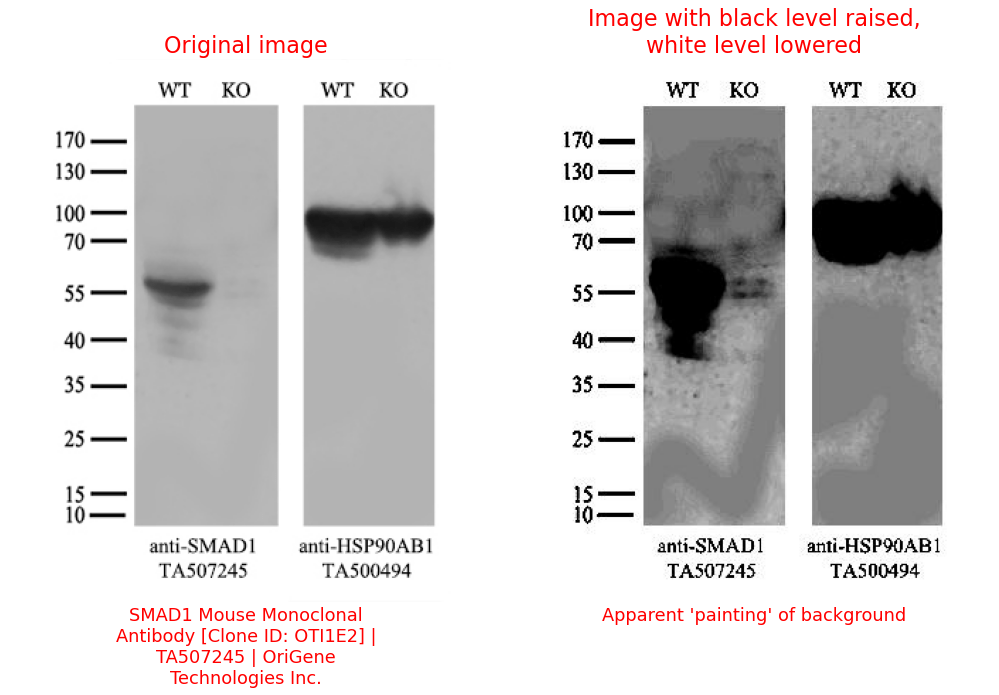
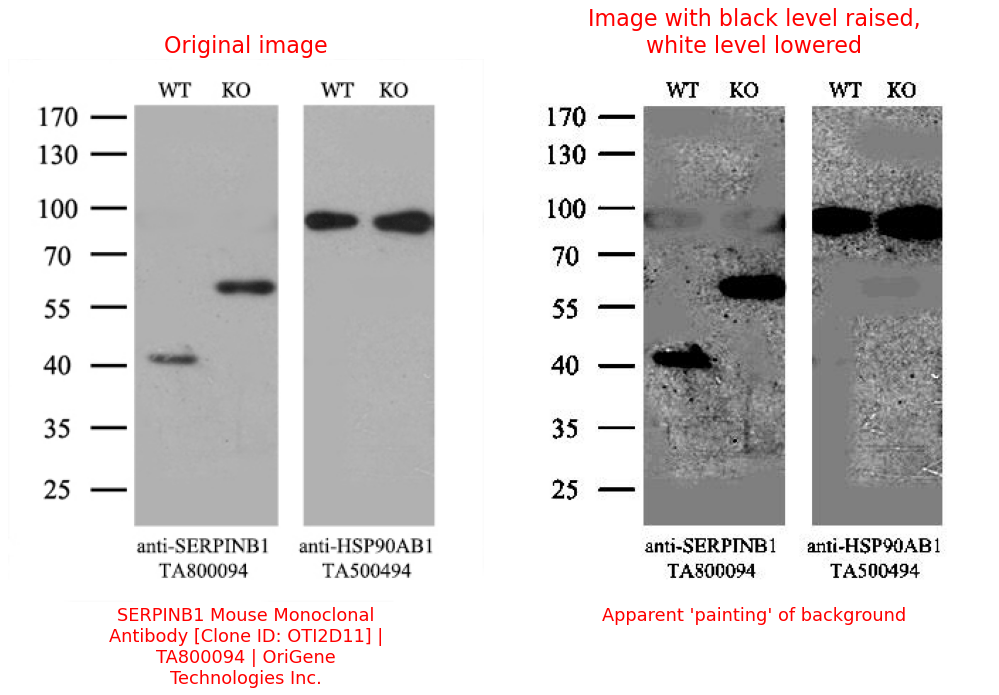
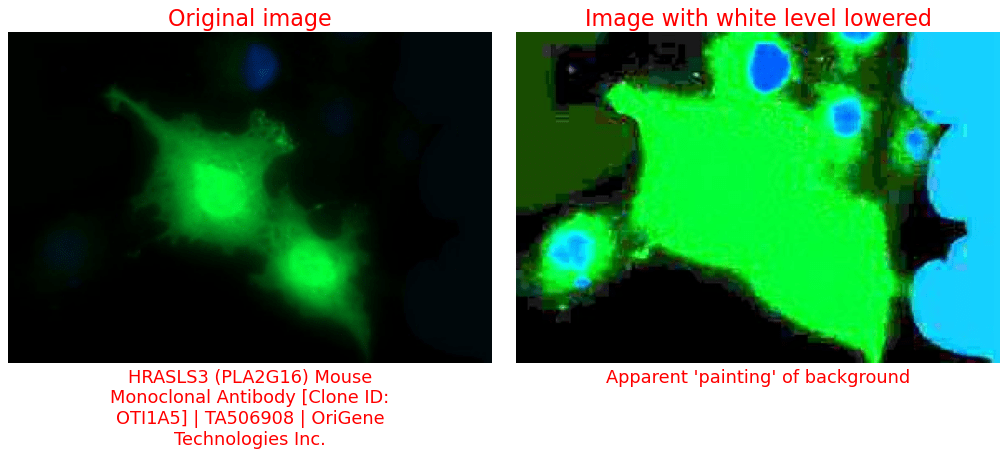
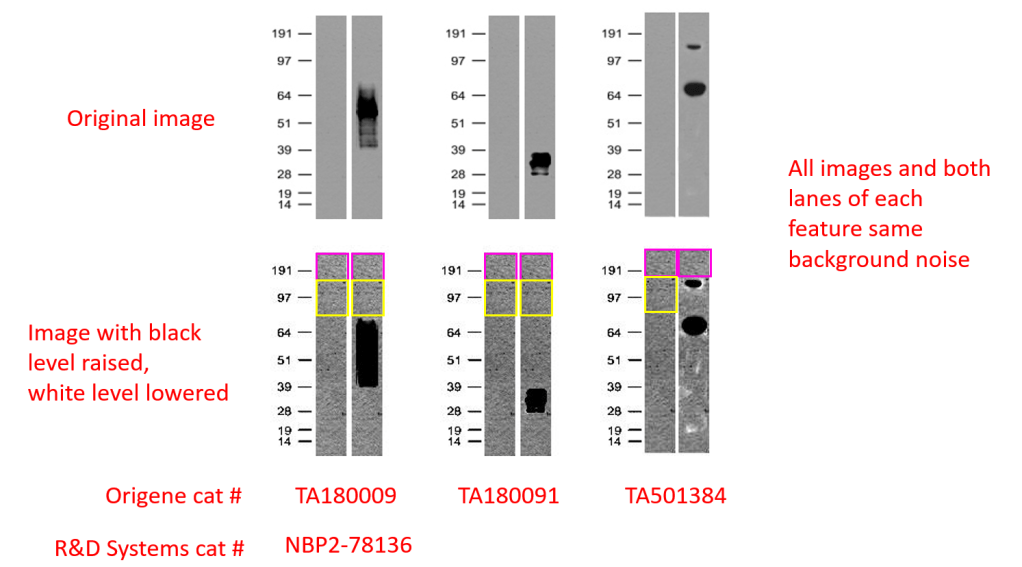
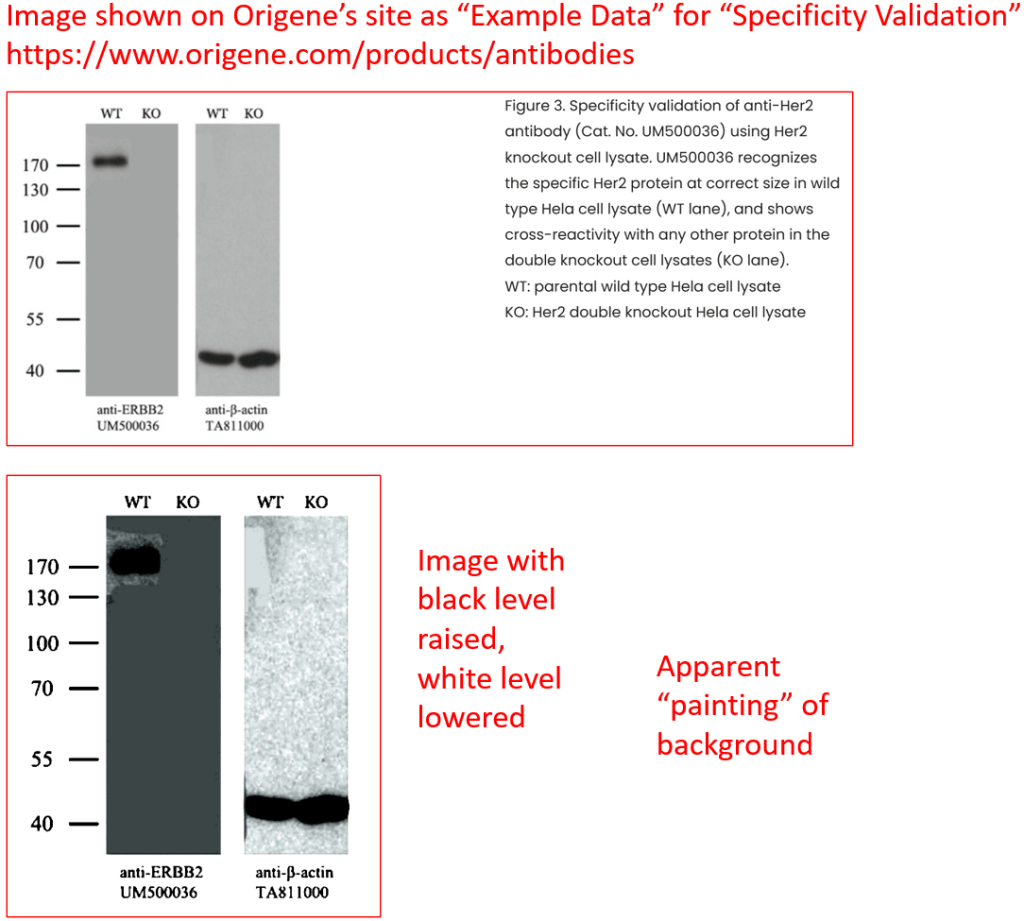
Even one of the images shown as “Example Data” for “Specificity Validation” on Origene’s “Antibodies” landing page appears to have been manipulated.
(As it turns out, some of the images I had previously annotated as belonging to Thermo Fisher products actually belonged to Origene products and only appeared on Thermo Fisher’s website as part of a partnership with Origene to also include their catalog in Thermo Fisher’s search interface. This error has been corrected in the updated version of the repository.)
Millipore Sigma (39 images across 31 products)
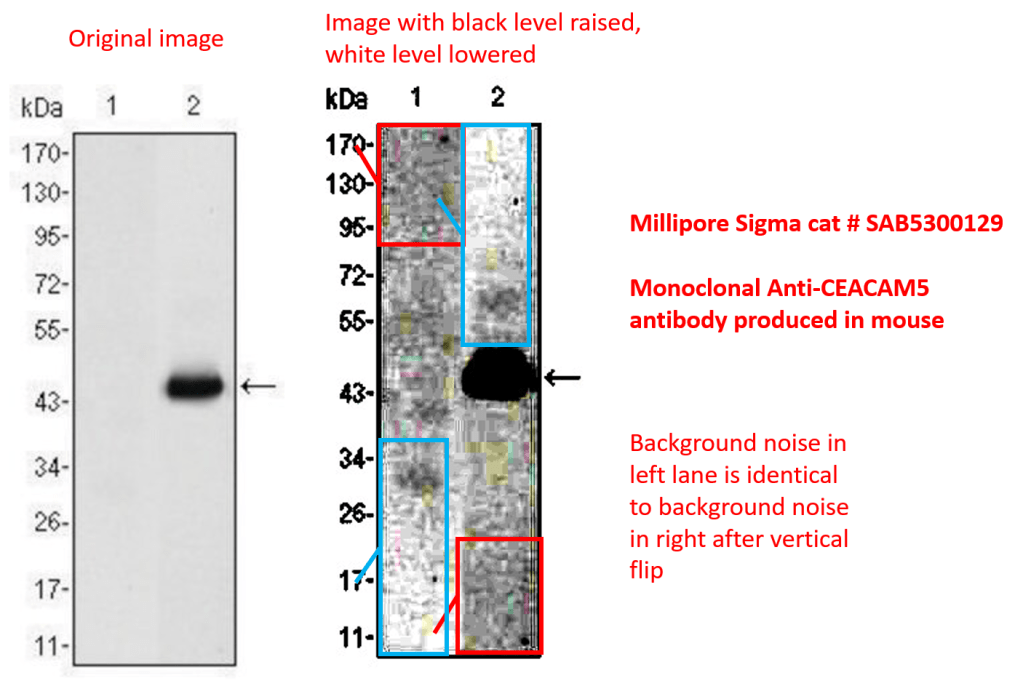
Millipore Sigma is a subsidiary of Merck KGaA, headquartered in Darmstadt, Germany. Most of these image manipulations involve reuse of background patterns C and D.
LSBio (2,695 images across 2,536 products)
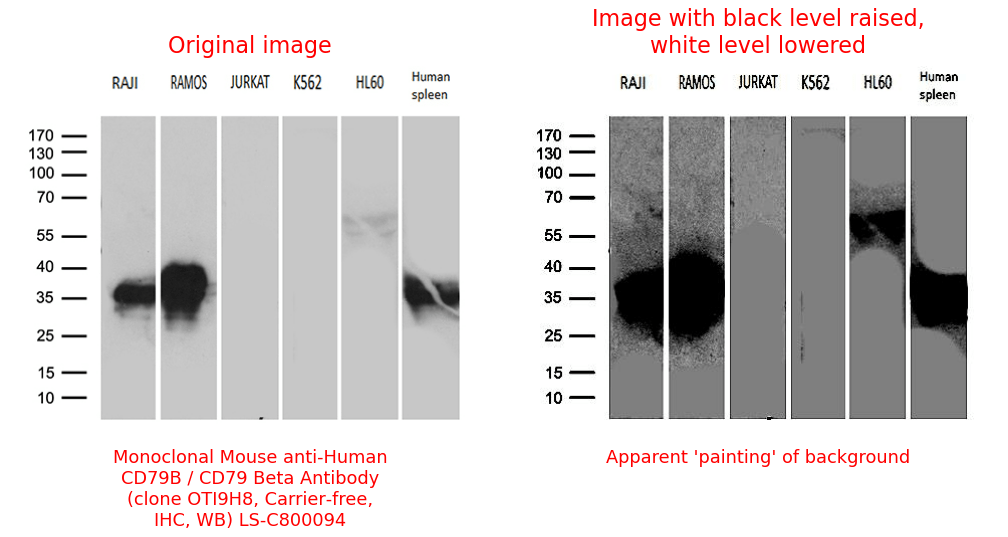
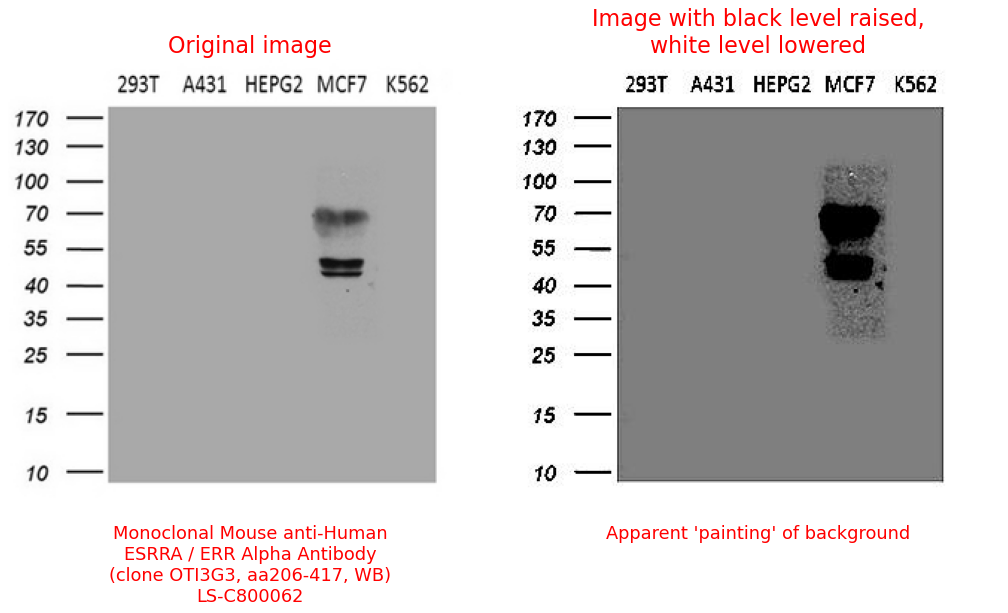
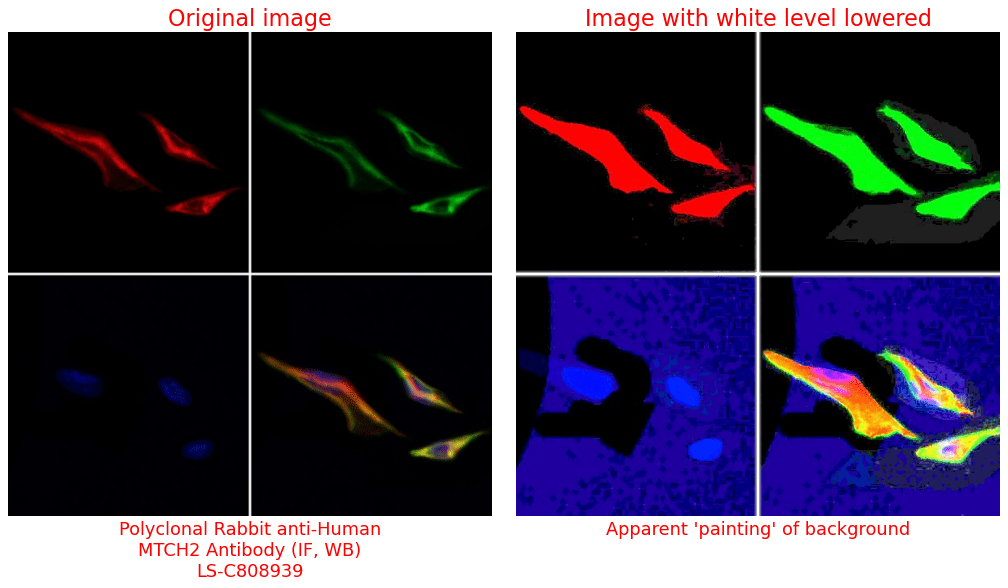
LSBio is a subsidiary of Vector Laboratories, based in Newark, California. Their catalog features more than 1,000 repetitions each of background pattern A and background pattern B and hundreds of instances of apparent painting in Western blot and immunofluorescence images.
Bioss (305 images across 292 products)
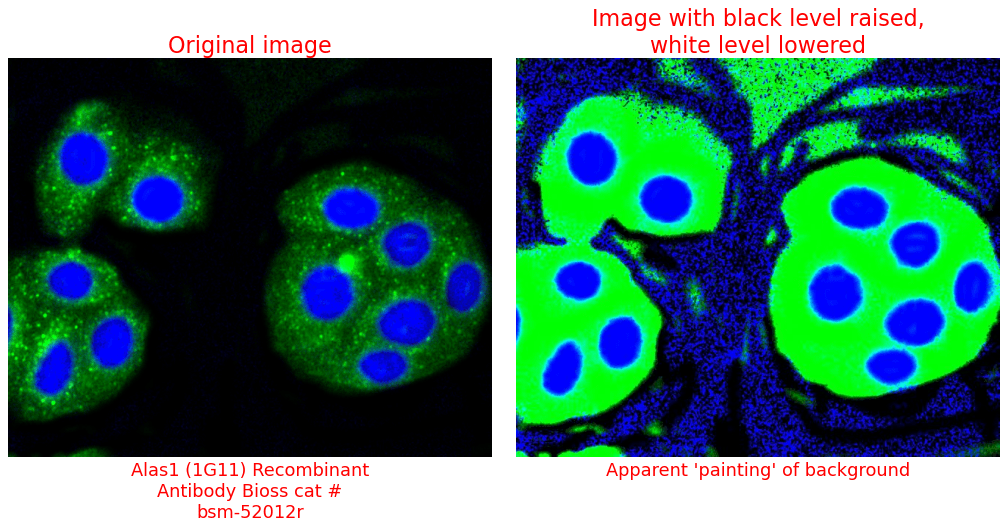
Bioss is headquartered in Woburn, Massachusetts. Hundreds of images in its catalog feature apparent painting or stitching-together of background noise.
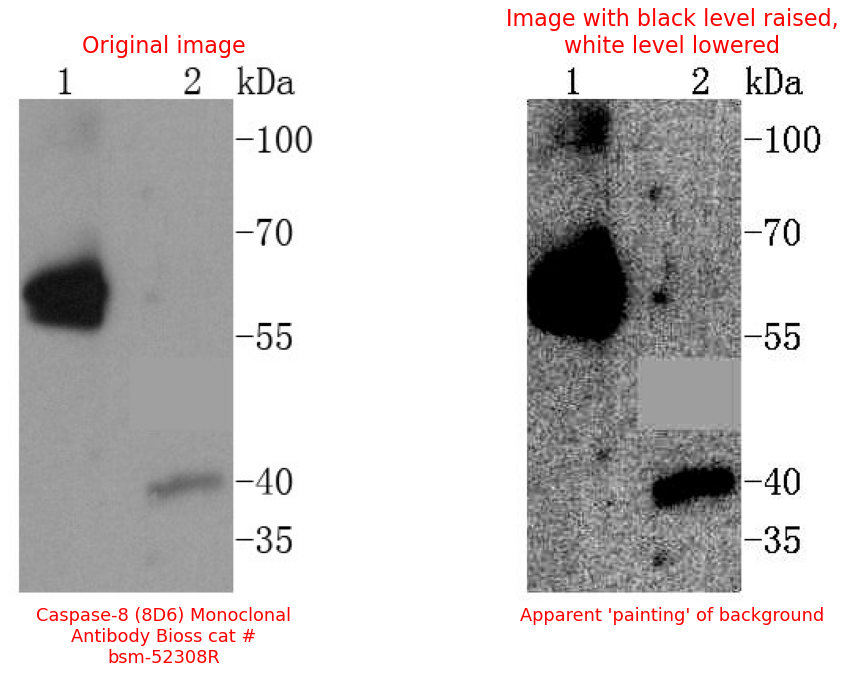
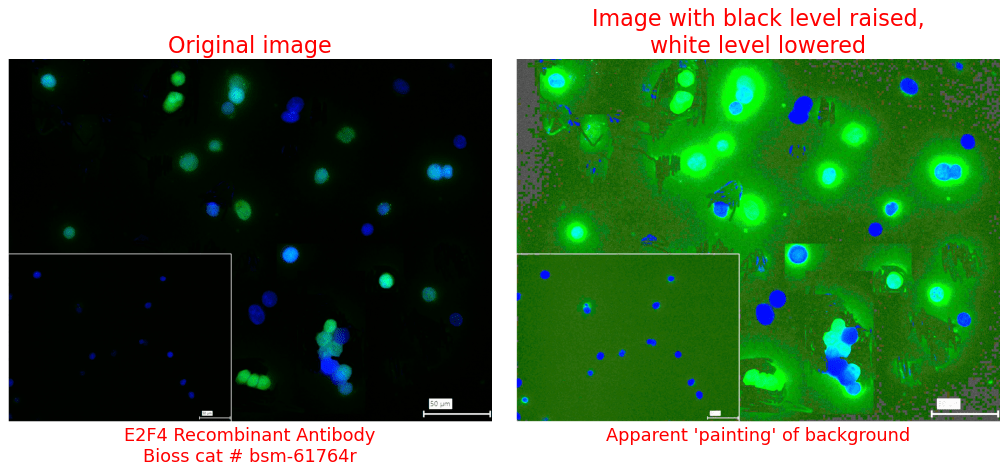
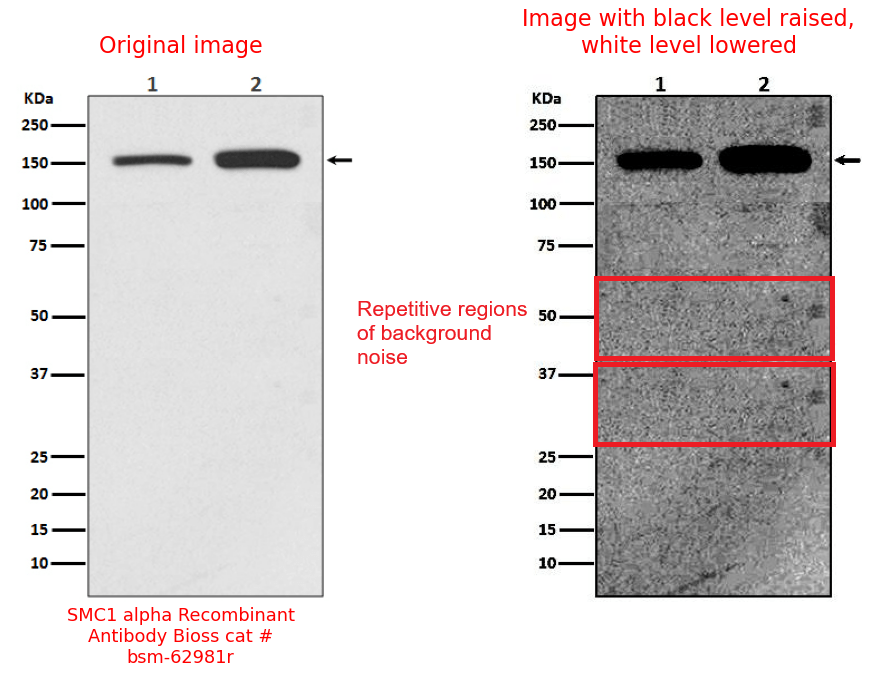
Boster Bio (120 images across 96 products)
Boster Bio is headquartered in Pleasanton, California. Many images in Boster’s catalog feature signs of apparent painting.
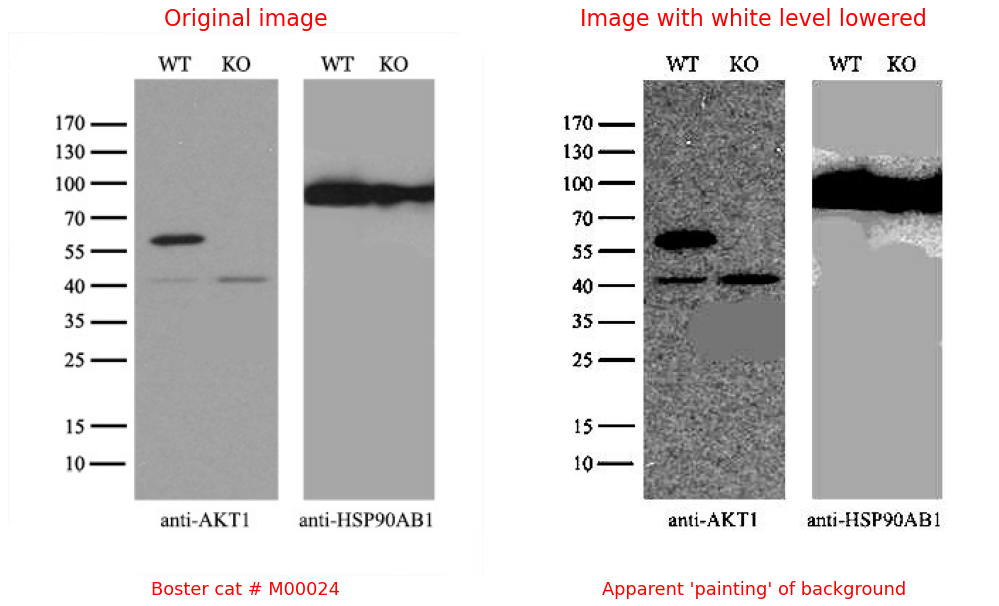
G-Biosciences (6,388 images across 6,373 products)
G-Biosciences is headquartered in St. Louis, Missouri. A stunning volume of images presented as validation data in G-Biosciences’ catalog feature either background pattern A (4,278 images) or background pattern B (2,110 images).
GeneTex (38 images across 38 products)
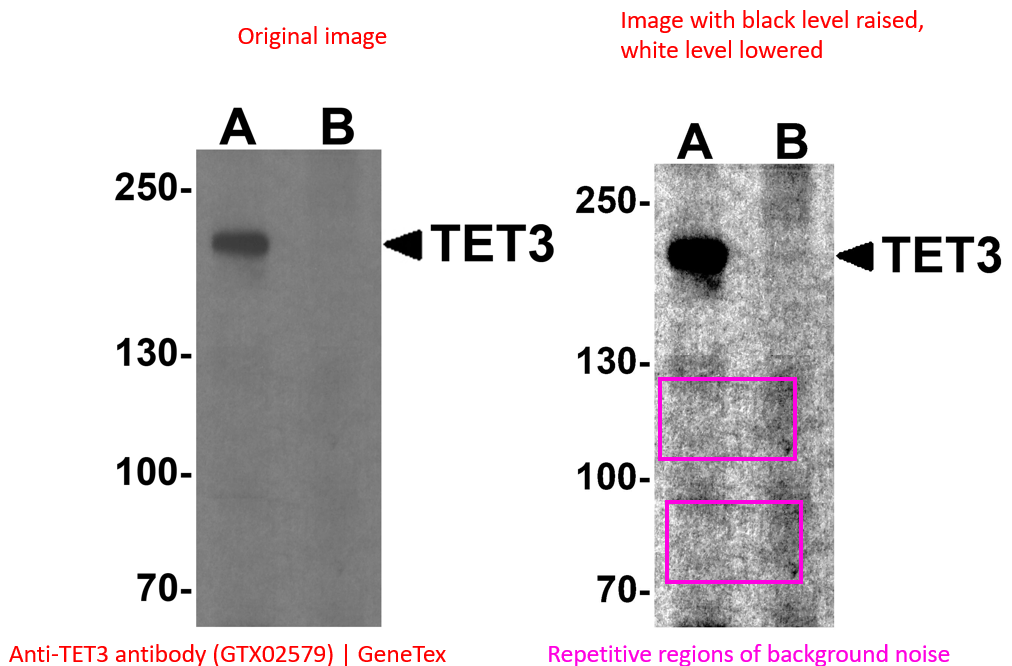
GeneTex is headquartered in Irvine, California. Problematic images in GeneTex’s catalog include repetitions of background patterns A and B and at least one instance of copy-pasted background noise.
HUABIO (209 images across 203 products)
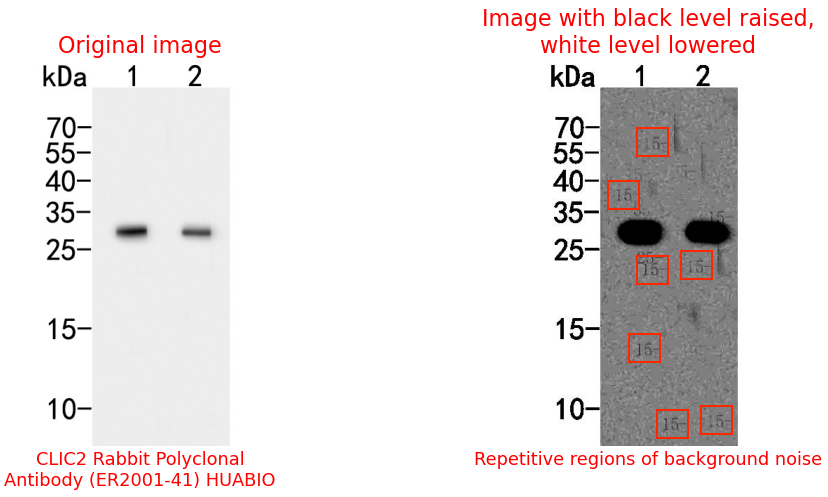
HUABIO is headquartered in Hangzhou, China. HUABIO’s catalog features many instances of apparent painting and repetitive patterns in background noise.
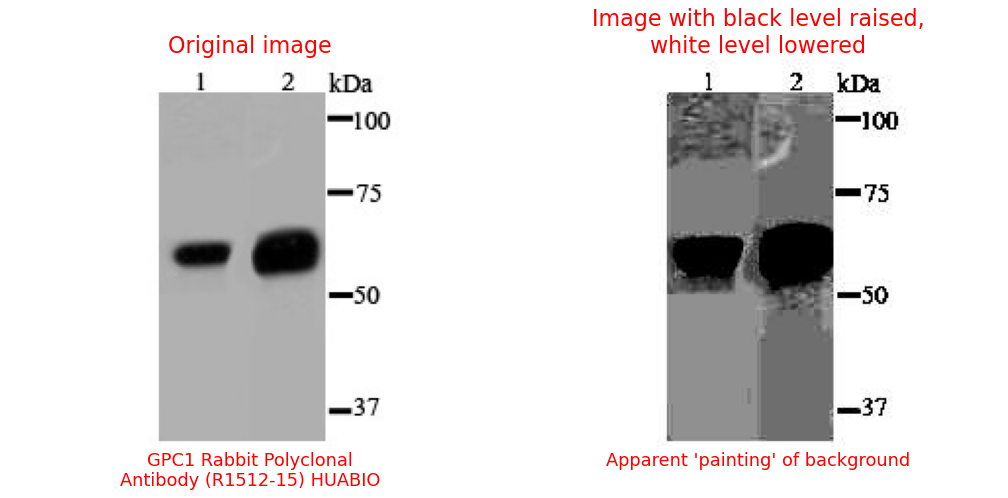
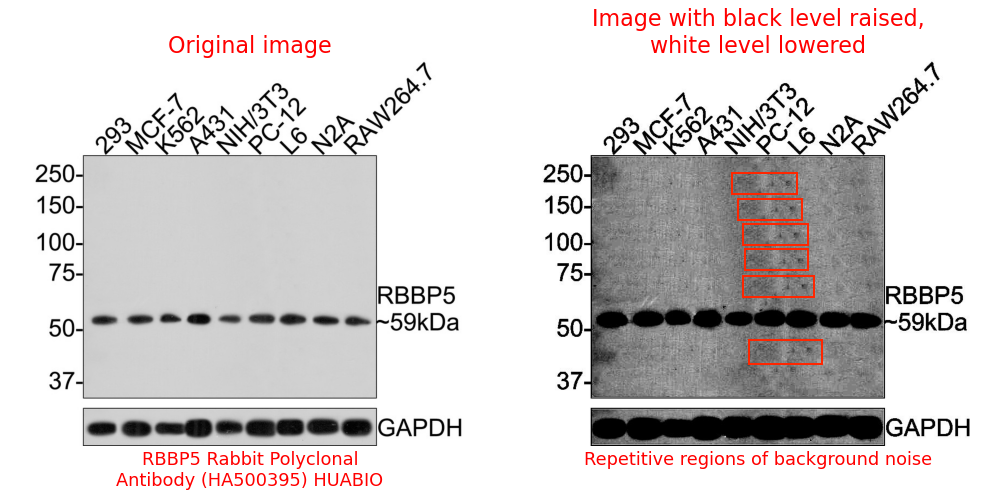
Some of the repetitive regions of background noise also inexplicably contain numerals. I do not have a satisfactory explanation for what happened here.
Antibodies.com (242 images across 242 products)
Antibodies.com is headquartered in Cambridge, UK. At least 242 validation images in their catalog feature background pattern A. On August 21, I was alerted that several of these products had been discontinued from the Antibodies.com online catalog since I downloaded these images on August 12 and can no longer be found by search.
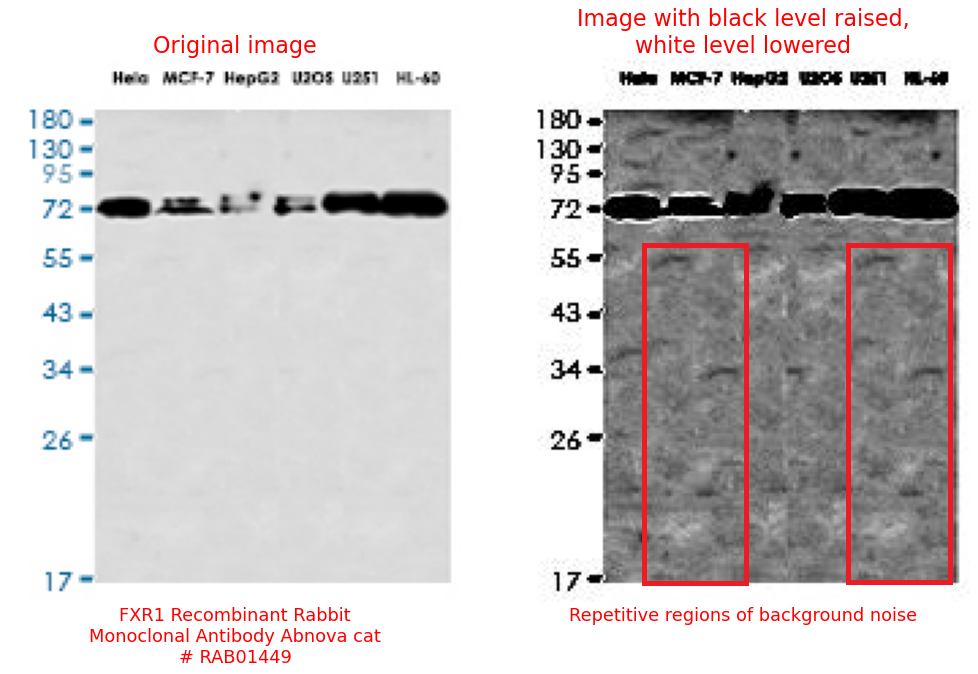
Abnova (154 images across 145 products)
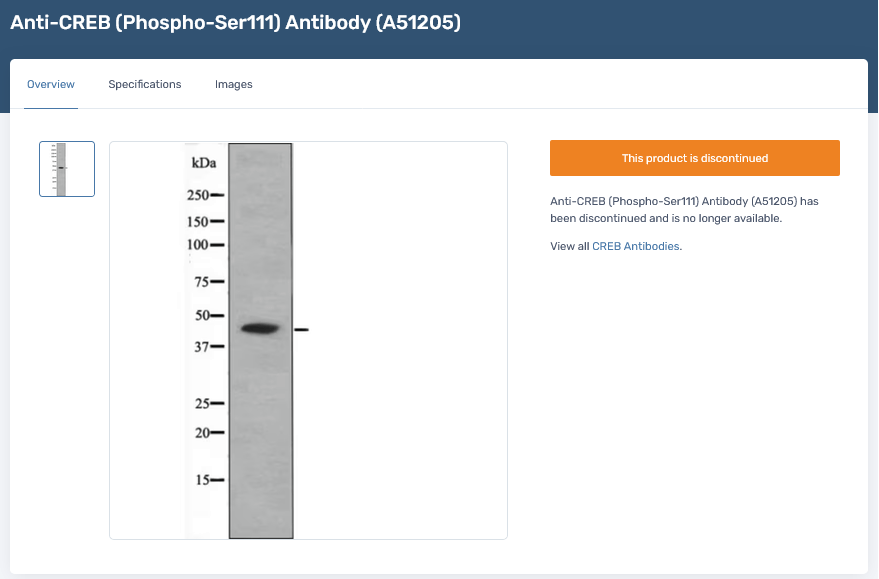
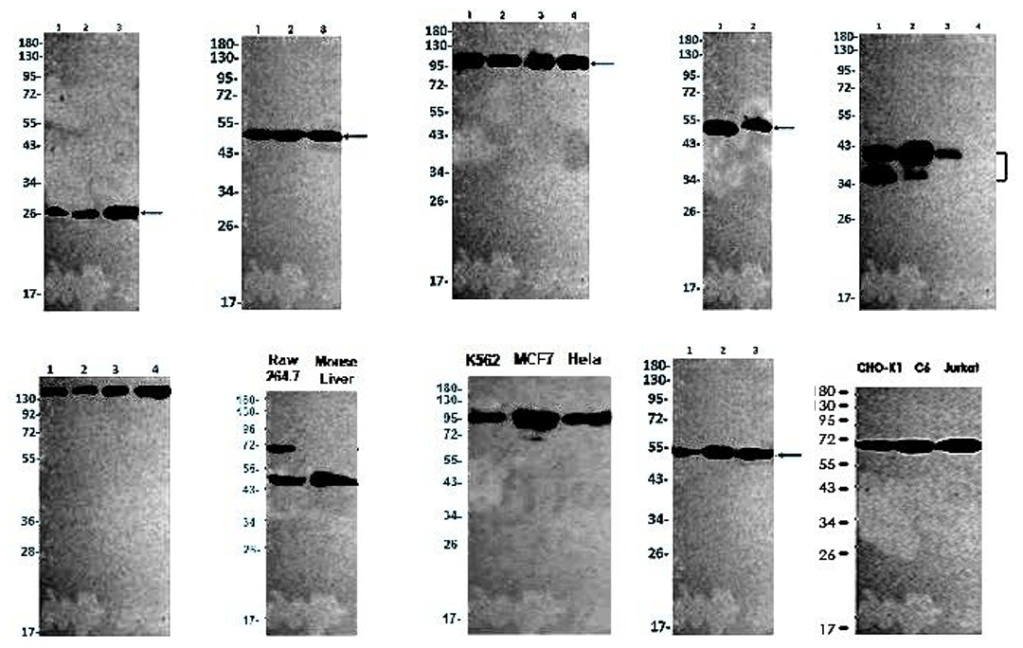
Abnova is headquartered in Taipei, Taiwan. Many validation images in their catalog feature background pattern C or D, signs of apparent painting or compositing, or other common background patterns (“background pattern G” and “background pattern H”) that I have not observed in other vendors’ catalogs.
Santa Cruz Biotechnology (125 images across 111 products)
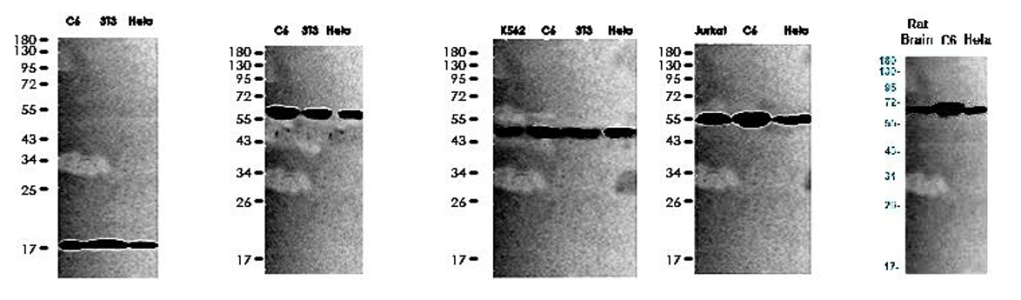
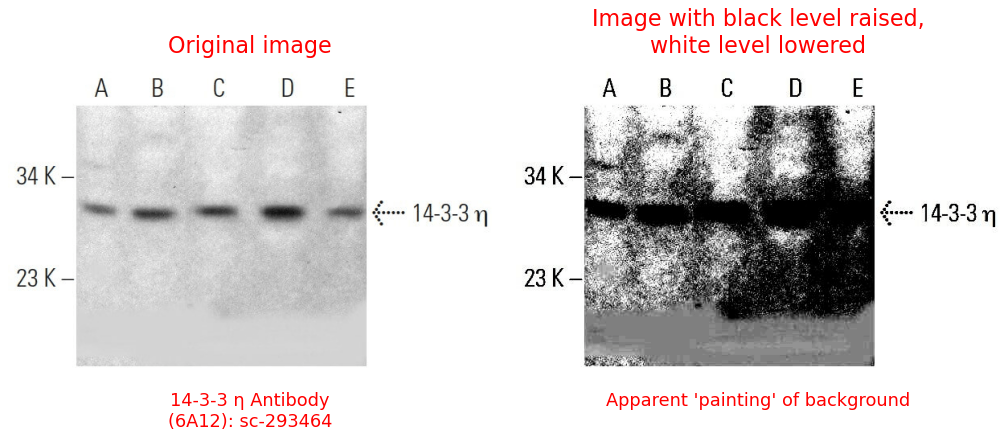
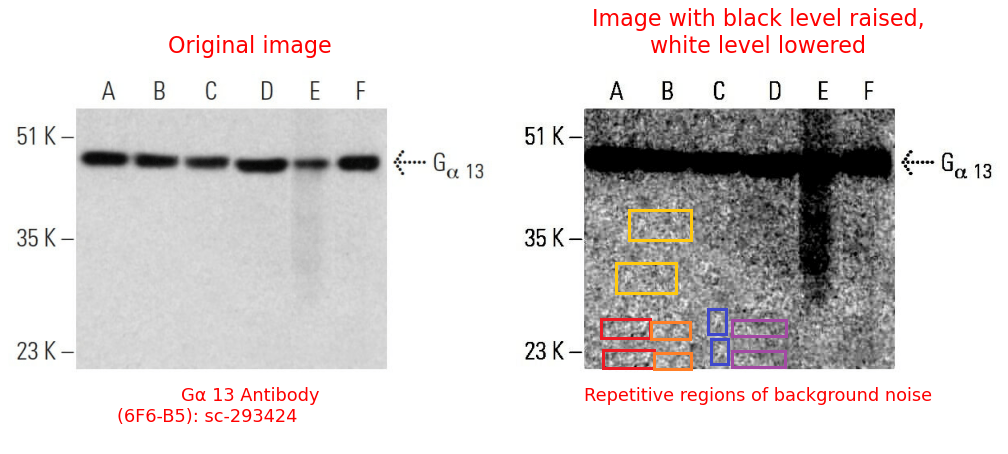
Santa Cruz Biotechnology is headquartered in Dallas, Texas. In 2016, the company paid a historically high 3.5 million USD fine to the United States Department of Agriculture to settle numerous allegations of violating the Animal Welfare Act in its treatment of animals used to produce antibodies. Problematic images in Santa Cruz’s catalog feature background painting and apparent cloning of background noise.
Postscript
It cannot be overstated how much biomedical research rides on antibodies performing as intended and how much time researchers lose to working with antibodies that do not perform. Increased recognition of the importance of antibody validation has led to vendors near-universally embedding validation data in their catalogs. However, to many vendors, selling validated antibodies apparently matters less than the semblance of selling validated antibodies.
If an antibody fails internal validation testing by its manufacturer, a responsible vendor would elect not to sell it. However, a large fraction of research antibodies currently for sale do not perform as advertised, as detailed by Ayoubi et al. (2024). Thus, either manufacturers and vendors are willfully ignoring the results of their validation testing or are not performing validation testing in the first place. When a vendor sells an antibody with validation data that has been painted over or otherwise altered, it suggests the former possibility. The many wholly-fabricated Western blots using a common background pattern suggest the latter. Many companies are clearly attaching their quality guarantees to private-label products that they had no part in testing, if testing occurred at all.
Skirting validation makes perfect business sense; running validation tests is expensive and it is more profitable to sell a large catalog of untested antibodies than a small catalog of properly-validated products. Ayoubi et al. address this:
Commercial antibody suppliers support a large and diverse catalogue of products, with most antibody products generating <$5000 in total sales, far less than the costs of [knockout]-based validation, estimated at $25,000. While leading companies are increasingly assessing antibody performance, it is exceedingly difficult, and cost restrained, to properly characterize all their products. Even when available, high-performing antibodies may remain hidden within the millions of reagents of unknown quality.
An inconvenient result in validation testing could also mean that the cost of developing an antibody goes unrecouped. I wonder, then, why we feel comfortable outsourcing the critical task of antibody production and distribution to entities whose profit motive encourages them to market products that have not been tested.
I do think that readers should direct their ire towards the companies that have been marketing antibodies with faked data. A simple way to do this is for scientists to request the original, unedited validation data images for antibodies they have purchased (Thermo Fisher has already promised that such images will be provided to customers “where available”). However, even the most protracted opprobrium will bounce off of large companies like Thermo Fisher or Merck KGaA. Regulation of how research antibodies are produced and marketed will induce longer-term change (and I believe regulation is a minimum necessary step), but there still remains a fundamental mismatch between the needs of the biomedical research community and the interests of the for-profit enterprises producing their crucial reagents. In the long term, I think that the biomedical research community would be better served by the creation of publicly-funded antibody vendors whose interest is in producing antibodies that work, not in producing antibodies that sell.
Footnotes
- The repository also contains two images from NeoBiotechnologies (based in Union City, California) which represent a re-used image of an SDS PAGE gel on the product pages for two different TP53 antibodies. Since these were the only potentially problematic images identified in their catalog, I did not profile NeoBiotechnologies here. These products were previously annotated as Thermo Fisher products. This error has been corrected in the latest version of the repository.

 点赞
点赞 收藏
收藏 点踩
点踩 分享
分享