Why Social Media Giants Are on Trial For Hooking Kids


A flood of lawsuits against social media giants claim that by engineering their platforms to be hard to resist, the companies are causing serious harm to young users. In the first personal injury case to go to trial, a Los Angeles jury in March found Meta Platforms Inc. and Google negligent in the design and operation of their platforms — awarding $6 million to a 20-year-old woman in a landmark verdict.
Many US states also have taken legal action against social media companies on behalf of the public. At a trial that began Aug. 18 in federal court in Oakland, California, 29 states suing Meta are seeking penalties of as much as $1.4 trillion as well as court orders to force the company to change how its Facebook and Instagram apps operate.
These historic trials, along with more to come in 2027, are drawing comparisons to Big Tobacco’s historic reckoning with consumer addiction three decades ago that resulted in tighter regulation of the cigarette industry.
What are the cases?
The Los Angeles trial centered on a woman who said her nonstop use for more than a decade of sites including Instagram and Google’s YouTube caused her to suffer anxiety, depression and body dysmorphia. Snap Inc. and TikTok Inc. weren’t involved in that trial because they reached confidential settlements, but the four companies face more than 3,000 other cases brought by children, adolescents and young adults — sometimes via their parents, siblings or other family members — based on claims of psychological distress, physical impairment and death.
New Mexico’s attorney general also won judgments against Meta totaling $942 million this year after a jury found that the company misled youths about safety on its platforms.
The coalition of state attorneys general lined up against Meta in Oakland allege the company knowingly designed features that encouraged compulsive and prolonged use of its platforms by young people, while simultaneously misleading consumers about safety features on its platforms.
Another 14 states are separately pursuing claims against the company, including an ongoing trial in a case brought by Tennessee’s attorney general in Nashville state court. TikTok, Snap and Google have also been sued by attorneys general over similar allegations.
Public school districts have brought more than 1,300 complaints on behalf of students. Meta, TikTok, Snap and Google agreed in May to pay a combined $27 million to settle a suit brought by a rural district in Kentucky that was scheduled to go to trial in June. The next school district trial is set for February.
What’s the legal foundation?
The claims filed by individual users focus on product liability, similar to those that drove decades of litigation over cigarettes, asbestos, faulty medical devices and harmful prescription drugs, with mixed success. Rather than targeting the content that social media users see, the suits attack the platforms’ design and functionality, alleging that they are engineered to keep users constantly engaged.
The cases filed by the school districts claim the companies have created a “public nuisance” by distracting children and undermining their education and have caused a youth mental health crisis.
How does the alleged addiction happen?
Many of the lawsuits allege that the social media giants, borrowing behavioral techniques from the gambling and cigarette industries, design endless, algorithm-generated feeds to induce young users into a so-called flow state. In that state, users react to incessant notifications that manipulate dopamine levels, encourage repetitive account checking and reward round-the-clock use.
Addictive use of social media results in an array of psychological disorders, and in extreme cases self-harm and suicide, according to the lawsuits. Such addictive use delivers the most valuable prize: troves of data about young users’ preferences, habits and behaviors that are used to target them with ads.
How are internal records at the companies being used against them?
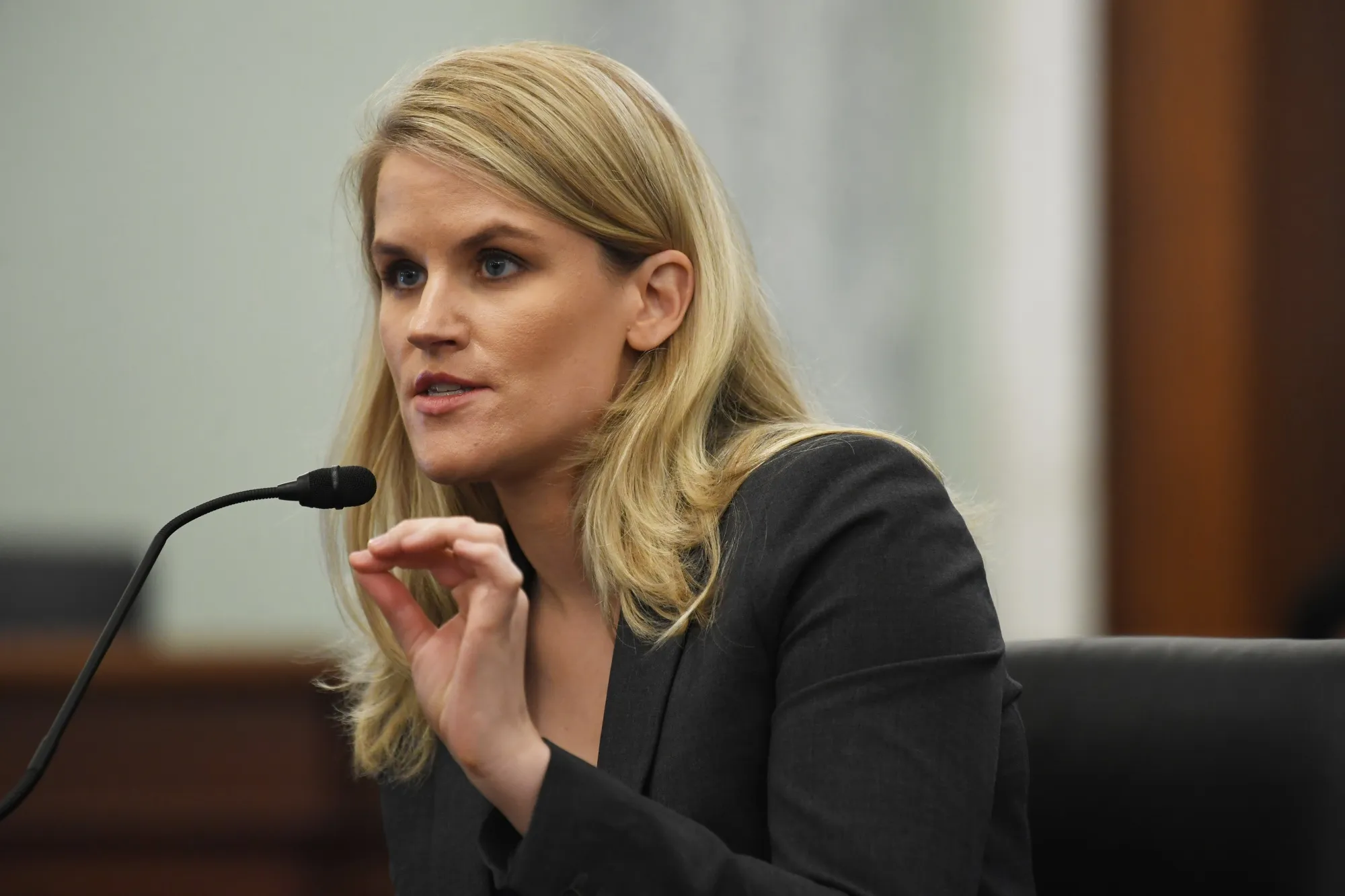
In 2021, Frances Haugen, a former product manager-turned-whistleblower at Facebook, revealed internal documents showing that Meta had long known that its platforms had ill effects on young people, especially girls struggling with their body image. Lawyers at the Los Angeles trial showed internal chats and emails from employees discussing the alleged addictive qualities of Meta’s products. Much of the same evidence is being used at other trials.
Read more: Meta, Google Risk Big Tobacco-Like Fallout After Addiction Trial
Records disclosed by TikTok parent company ByteDance Ltd. in response to lawsuits suggest that the company knew young people were more susceptible to being lured into trying dangerous and even deadly stunts they view on TikTok because their ability to judge risk isn’t fully formed. Product research at ByteDance concluded that the top reason identified by teens for participating in the challenges is “getting views/likes/comments,” followed by “impressing others online.”
What do the companies say?
They maintain that their products were not built to hook kids, and that they have settings and safeguards in place to protect young users.
In the Oakland case, Meta has denied the states’ allegations. Paul Schmidt, an attorney for Meta, told jurors that the company is committed to protecting young users and has adopted new safety tools. He also argued that while Meta “takes seriously” that kids under 13 shouldn’t be on social media, the mobile app stores where users subscribe to platforms also have a gatekeeping responsibility.
Meta argued during the Los Angeles trial that social media actually helps young people connect with friends and family. Meta and Google are appealing the Los Angeles verdict and Meta is appealing the New Mexico verdict.
In the past, the first line of defense for social media companies has been Section 230 of the Communications Decency Act, the 1996 federal statute that shields companies from liability over comments, ads, pictures and videos on their platforms. But judges overseeing the current wave of lawsuits ruled that Section 230 doesn’t protect the companies from negligence claims.
What consequences are the companies facing?
In the Los Angeles trial, jurors said Meta must pay $4.2 million, and that Google owes $1.8 million. Half of each company’s payment is compensation for the plaintiff’s losses, including the cost of therapy, and the other half is punitive damages, meant to punish wrongdoing and discourage similar conduct in the future. That was the first of a handful of test cases selected to proceed to trial to help assess the strength of the legal arguments behind the thousands of other suits.
In the Oakland trial, the stakes for Meta are high. The trial is focused on alleged violations of a federal privacy law and state consumer protection statutes that carry fines of as much as $20,000 per violation — which can add up quickly when multiplied by millions of young Instagram and Facebook users. If the company loses, it may face financial penalties ranging from $193 billion to $1.4 trillion. Even the lower amount would be among the largest ever litigation payouts, comparable to the $206 billion settlement that state attorneys general struck with tobacco companies over cigarette addiction in 1998.
The suits filed by the school districts seek to recover past and future costs tied to the alleged harms of social media, including funding to hire additional mental health counselors and security guards and additional training for teachers to help them identify and respond to students suffering distress. Bloomberg Intelligence has estimated the companies’ collective exposure is almost $400 billion.
The school districts are also demanding that the companies make adjustments to the platforms, including installing parental controls and tweaking algorithms that are designed to maximize user engagement. Similarly, the state attorneys general suing the companies are requesting court orders directing the platforms to dismantle what AGs describe as “addictive” design features that exploit children’s brain development for profit.
If the companies continue to lose trials, pressure could mount for them to pursue settlements reaching into billions of dollars per company, according to Bloomberg Intelligence.

 点赞
点赞 收藏
收藏 点踩
点踩 分享
分享