No, AI Probably Won’t Cure Cancer Anytime Soon, Scientists Say


Eric Topol is a prominent cardiologist known for his research into deploying AI and other technologies to improve healthcare. He considers himself a Demis Hassabis superfan, and when I spoke to him, he enthusiastically recounted scoring a blurb from the Google DeepMind chair for “Super Agers,” Topol’s bestselling 2025 book on longevity. “He’s a hero of mine,” said Topol.
But last week, Topol publicly called out Hassabis—along with Anthropic CEO Dario Amodei. On X, he criticized Hassabis’ claim in a “60 Minutes” interview that AI will be capable of curing all diseases within the next decade and took Amodei to task for a similar remark.
“Diabetes, Alzheimer’s, heart disease—we don’t have cures for any of those common diseases. To think that in the next five or 10 years new drugs are going to change everything, there’s no precedent for that,” Topol told me. “It’s unrealistic and it sets the expectations for AI too high. It’s hype.”
Topol is not alone in his pushback. Over the past year, I have been taken aback by the steadily mounting drumbeat of social media posts, podcast interviews and blogs where scientists offer staunch criticism of what AI leaders say, which they regard as dangerous hubris. It’s a favorite topic during gossipy side conversations that take place at academic conferences. And in one widely shared blog post, Stanford computer scientist Daphne Koller likened the narrative around AI’s use in science to a belief that magic wands actually exist.
For a long time now, Silicon Valley has been funding ideas and companies that many in the medical establishment consider unconventional—and even controversial—such as reversing aging and gene-editing embryos. Some tech-savvy cancer patients or their loved ones are already using AI chatbots to come up with costly experimental treatment plans. Many scientists oppose the development and commercialization of these concepts on ethical or moral grounds. But generally, those skeptics have been able to mostly distance themselves from it: They haven’t changed their everyday tasks and long-term pursuits. And they know the businesses’ ultimate fate will be arbitrated not by the scientific community but by capitalism—and whether they can actually find customers for their products.
The pushback against Amodei and other tech leaders goes beyond discomfort with Silicon Valley trying to cross science’s usual boundaries. Scientists see declarations about how AI can cure cancer or other intractable diseases as a challenge to the culture of science and the fundamental way scientists do their work.
Science is built on the idea of consensus, not disruption—a mindset that has guided nearly all the scientists I’ve known for the two decades I’ve been covering their field. Scientists are supposed to publish papers with enough detailed information so others can replicate the experiments and see for themselves that they actually work. The scientific community thinks Silicon Valley leaders are trying to circumvent the traditional process and declare victory without proof: making grand public pronouncements without showing an abundance of evidence to prove their statements and share their work (in the case of AI, their most advanced models).
As I’ve thought more about the backlash, I’ve come to sense how it stems from the feeling among scientists that Silicon Valley’s leaders don’t share their values. Other professions may have similar concerns about what their place will be in the AI future. Yet few other fields are rooted in higher stakes than the ones that underpin much of science and medicine: life and death.
When AI leaders declare they expect to cure all or most diseases quickly, “it’s assertiveness in the absence of real proof,” said Noubar Afeyan, co-founder and board chair of Moderna. That’s not science, he said. “That’s faith.”
Afeyan’s position highlights the complexities of this moment. Though he has real wariness about bold proclamations that AI will quickly cure diseases, he is also CEO of Flagship Pioneering, which has founded and funded AI drug development companies, including Lila Sciences. Lila has raised over $500 million to combine a new AI with autonomous labs to speed drug development.
This past week, Moderna and its partner Merck announced that their experimental mRNA-based vaccine had prevented melanoma from coming back or spreading in high-risk skin cancer patients. The scientists sequenced the patients’ tumors, used AI algorithms to predict which abnormal proteins the person’s immune system would attack, and then manufactured individual vaccines to match. Investors, scientists and patients alike greeted the news with excitement.
In talking to people like Afeyan, a metaphor for the situation has occurred to me. To many of science’s traditional set, it’s as if AI’s growing power has emboldened Silicon Valley leaders to barge into a holy cathedral, and rather than wanting to worship there or pause to understand how the church was built, they’ve instead immediately started trying to knock down its marbled pillars, insisting that the place will look great once they’re finished.
Scientists themselves are not immune to the dazzle of new technology’s transformative power and the allure of drugs that seem promising, then fall short. A widely circulated front-page article in The New York Times in 1998 described a discovery by cancer researcher Judah Folkman of two new drugs that had cured cancer in mice. James Watson, who won a Nobel Prize for his role in discovering the double-helix structure of DNA, told the Times reporter, “Judah is going to cure cancer in two years.” That did not happen.
David Glass, vice president of research at Regeneron Pharmaceuticals, said the more recent declarations that AI is going to cure cancer and other diseases reminded him of the early days after completion of the first sequence draft of human DNA.
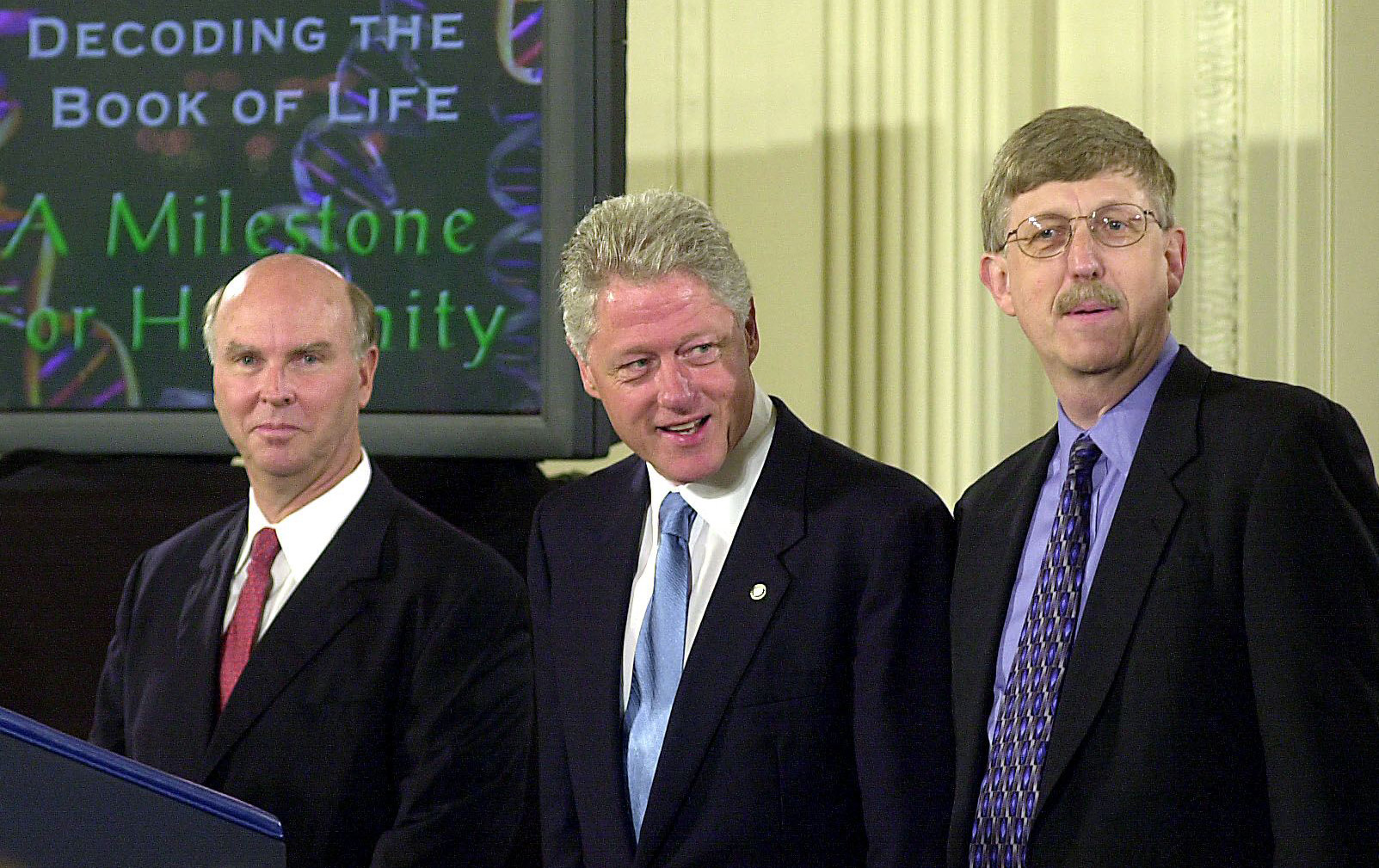
President Bill Clinton announced the breakthrough in 2000 at a big White House ceremony in its honor. And Francis Collins, then director of the federal government’s Human Genome Project, predicted in a PBS interview that “in another 20, 25 years we should be able to prevent or cure most cases of cancer, of diabetes, of heart disease, of multiple sclerosis, of asthma.”
Obviously, that optimistic scenario didn’t materialize, and I can remember my own past conversations with Collins where he acknowledged the disappointment—even as we did see the development of more-precise treatments for diseases caused by gene mutations. And Glass was reflecting back on that rift between hope and reality when he tweeted his own skepticism about promises of AI cures earlier this month.
Even when scientists know what gene they need to fix, they don’t always succeed in developing a drug—despite great technological advancements, Glass said. Take the dystrophin gene that scientists identified back in the 1980s. It’s responsible for causing Duchenne muscular dystrophy, which mainly affects males and leads to progressive muscle weakness and severe health complications.
Despite decades of work, scientists still haven’t figured out a way to deliver dystrophin to all the muscles in a way that is safe and effective. “We all know the problem. We know exactly what’s causing it. There still isn’t a cure,” Glass said.
The rise of AI biology can be traced back to 2020 with Google DeepMind’s release of AlphaFold 2, an AI system that could predict a protein’s 3D shape and had been trained on a library of protein structures massed through decades of laborious lab experiments. Proteins perform crucial functions in the body that keep us alive. Scientists knew proteins fold into specific 3D structures. Predicting those structures computationally without running experiments first in the lab was considered a central challenge of biology for more than 50 years.
In 2022, Google DeepMind released a public database containing over 200 million structures—basically all of the world’s known proteins—and two years later, Hassabis and John Jumper, then a senior research scientist at Google DeepMind, won Nobel Prizes for their work on AlphaFold. (They shared the honor with David Baker, who won for developing computer methods to design new proteins.)
The same month as the Nobel announcement, Amodei, a former Google Brain researcher, published a long essay, “Machines of Loving Grace,” arguing that AI-powered science can eliminate most cancer, prevent Alzheimer’s and treat nearly all infectious diseases. AI medicine, he wrote, “will allow us to compress the progress that human biologists would have achieved over the next 50-100 years into 5-10 years.”
Last year, OpenAI’s Sam Altman and Oracle’s Larry Ellison attended a press conference held at the White House to unveil Stargate, a $500 billion project to power AI by building huge data centers around the country. OpenAI and Oracle helped fund the project. Both tech leaders spoke about the need for better infrastructure to reach AI’s potential for curing disease. Altman said if AI could be fully unleashed, it could lead to cures at an “unprecedented rate” for conditions like cancer and heart disease.
When it was Ellison’s turn, he described a time in an unspecified but presumably relatively near future when AI might detect cancer and then lead to the creation within 48 hours of a personalized cancer vaccine. (For context, Moderna has estimated that it took around six weeks to make each patient’s individualized skin cancer vaccine.)
In May, DeepMind’s Hassabis made a grand announcement of his own. Hassabis is also CEO of Isomorphic Labs, a biotech company spun out of DeepMind to focus on AI drug development. And Isomorphic had raised a whopping $2.1 billion Series B. Hassabis summed up the company’s purpose as: “We are here to solve all disease.”
Those are bold words, but here’s a dash of cold reality: Despite AlphaFold’s enormous success—Google DeepMind has estimated more than 3 million researchers have used the AlphaFold Protein Structure Database—it hasn’t yet produced a cure for a disease.
Still, during an interview this year with academic journal Daedalus about the future of science, Hassabis said he believes AI will be “the ultimate tool to help advance science and medicine” and will “usher in a new golden era of discovery.”
Anthropic and OpenAI are both hurtling toward what are expected to be major IPOs. Perhaps emphasizing AI’s power to cure disease is a way of convincing investors of the value of AI. Public distrust of the technology is at a high. Talking about curing cancer is a positive counternarrative.
That’s one reason why in June, I paid close attention to Anthropic’s announcement of Claude Science, a new product designed to help scientists work faster and more efficiently. I wanted to hear how Anthropic pitched its product to the scientific community.
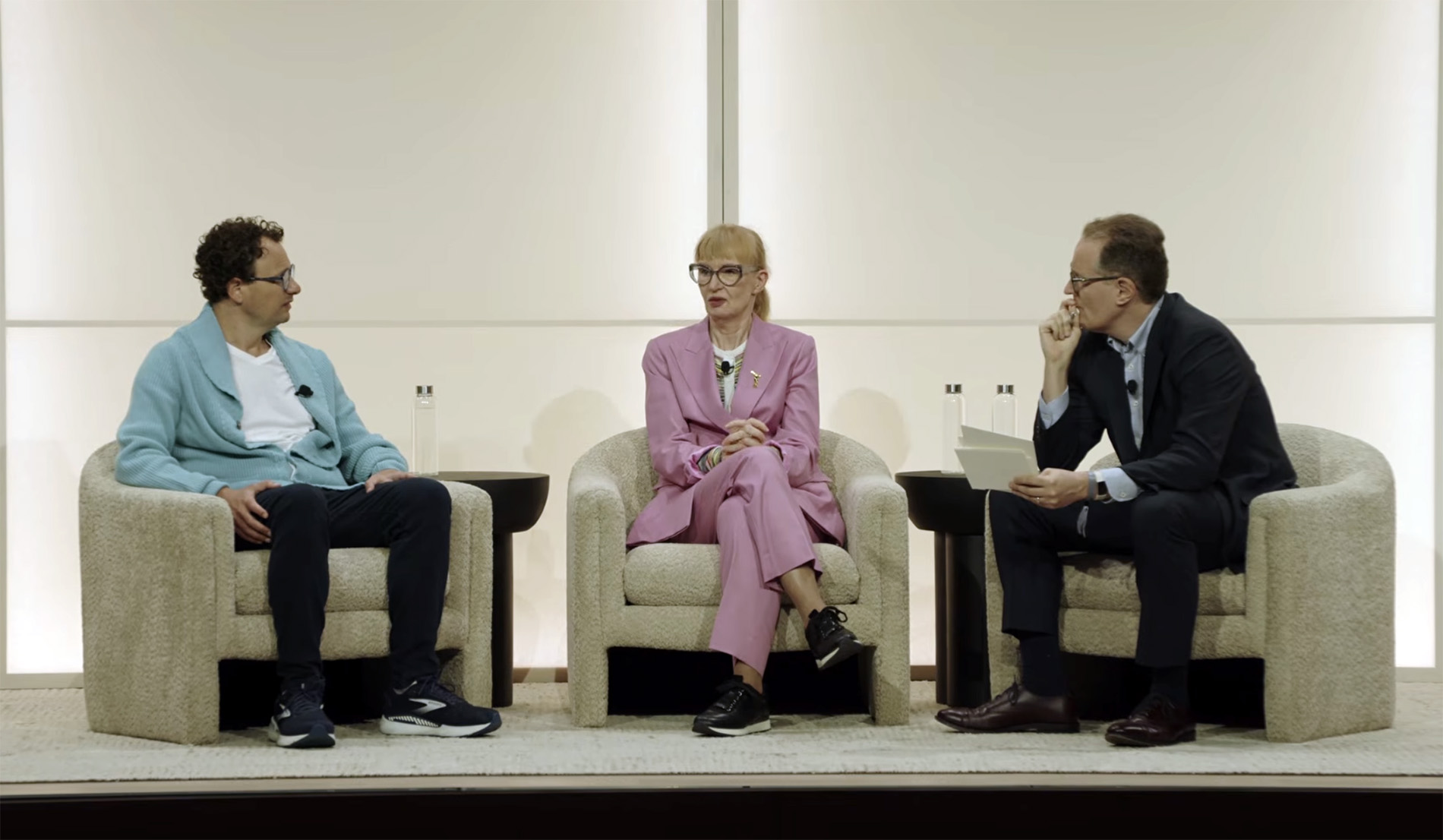
To demonstrate AI’s future potential, Anthropic brought out Lotte Bjerre Knudsen, who used to work at Novo Nordisk and ranks as a major hero in the scientific community for her decadeslong efforts developing GLP-1 drugs. She had to overcome resistance within the company and skepticism within the scientific community about using those drugs—originally meant to treat diabetes—to combat obesity. Perhaps AI could have brought together enormous amounts of biological and clinical data and prompted scientists to make the connection earlier.
She waxed enthusiastic about the prospects of AI in science. “There are already areas of the whole drug discovery and development process that have been revolutionized,” Knudsen said.
But what really caught my attention was when Eric Kauderer-Abrams, the company’s head of life sciences, said Anthropic was going to try to develop new drugs itself. (Anthropic has not yet announced what drugs it intends to develop, although reportedly it is interested in neglected or rare diseases.)
The idea that Anthropic—and possibly its competitors, including OpenAI, Meta Platforms and others—was getting directly into the drug development business in some form seemed revolutionary in itself. It was another example of an AI leader shaking the foundation beneath science’s holy church.
Afterward, I spoke to Derek Lowe, a scientist and drug developer. I wanted to talk to him not only because he has criticized Amodei’s timeline for AI drug development but also because years ago, he also made a splashy criticism of Andy Grove, the former Intel CEO.
In 2007, Grove, who had already survived prostate cancer and was living with Parkinson’s disease, decried the slow pace of drug development compared to how fast he saw the semiconductor industry move. His comments, which he gave in a Newsweek interview, caught plenty of attention.
Lowe responded with a blog post that itself became widely read. He argued that designing a new chip isn’t the same as designing a new drug. “Mr. Grove, you can print out the technical specs for your chips. We don’t have them for cells,” Lowe wrote at the time. Lowe’s argument became known as the “Andy Grove fallacy.”
I mentioned to Lowe that Amodei had talked about the Andy Grove fallacy during the Claude Science rollout. Amodei even said he agreed with Lowe’s point that biology shouldn’t be considered a designed system. “It’s like this supermessy evolved system,” Amodei said. But he went on to say he thought AI would be able to master the complexity.
When I told Lowe that Anthropic has announced it is going to try to develop drugs itself, Lowe reiterated the skepticism he had expressed toward Grove nearly 20 years ago. “Come on down and try it: I wish them luck,” Lowe said. “Honestly, I really do.”
Human biology is complicated and remains poorly understood, said Lowe, who after 30 years still has not had a drug reach FDA approval. “That’s why you can’t turn AI loose on it and have it suddenly illuminate the inside of the box.”
When I’ve stopped to consider what the fight between scientists and AI leaders might bring next, I found myself returning to my conversation with David Glass, the Regeneron researcher. It gave me a sense of how the atmosphere of existential dread he and others feel could quickly morph into a moment of reluctant acceptance.
Glass was very insistent on a specific point when we spoke: “Don’t make me sound like a Luddite.” He said he uses and values AI, and he cited ways scientists are already benefiting, including recent studies showing that AI tools can find small tumors in mammograms and brain scans that doctors miss. AI is helping companies speed up enrollment in clinical trials and summarize dense scientific submissions to regulatory agencies. There have been breakthroughs using AI to design new antibodies, an important part of drug development.
In addition to developing drugs, Glass teaches a course, Experimental Design for Biology, at Harvard Medical School, arguably one of the bastions of traditional academic science. He wrote a textbook by the same name.
He told me he is writing a third edition of the textbook to incorporate AI and to teach students how to use the tool—and ways to control it. “We still need experts,” he said. Last year, he told me, his direction to students was “Don’t use AI.”
Not anymore.
“This year,” Glass said, “I am saying, ‘This is with us.’”
Amy Dockser Marcus covers health and science for The Information's Weekend section.

 点赞
点赞 收藏
收藏 点踩
点踩 分享
分享