For AI Companies, Unanswered Questions About White House Model Testing Plan

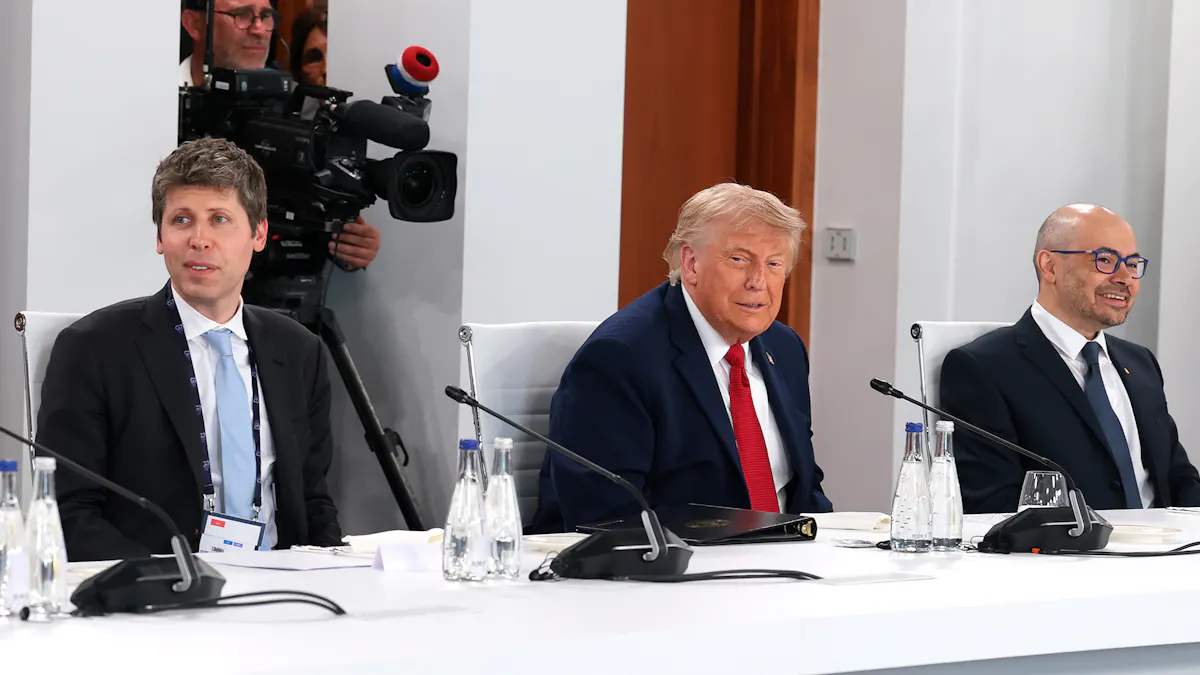
In early August, the White House hosted tech companies including OpenAI, Anthropic and Google to share details on its new AI framework, which would encourage labs to voluntarily share their most advanced new models with the government before releasing them to the public.
But more than two weeks later, much of the AI sector remains in the dark about the details of the new program. The White House has yet to share details of the framework publicly. Even companies that attended the briefing have unanswered questions about how it will work.
At the August briefing, staff for the Office of the National Cyber Director, an agency within the executive branch, shared paper copies of the framework with company representatives but told them they could only take notes, according to four people familiar with the matter. The White House also has not distributed the framework to companies since the briefing, said three of the people. Nor has it shared further details with companies about a public AI event in August related to the framework that government officials floated during the meeting, according to three people familiar with the matter.
So far, it doesn’t appear that the lack of detail about the testing framework has resulted in any delays in the release of the most advanced forms of AI, known as frontier models. Some AI companies, however, are opting to slow their own model development for safety reasons. On Tuesday, OpenAI announced in a blog post that it would slow down the pace of training its latest models. The company said its decision followed a cybersecurity incident in which its AI hacked the systems of Hugging Face, as well as evidence that an upcoming OpenAI model called Astra may have powerful new cybercapabilities.
As the Trump administration reckons with the accelerating speed of AI development and reorients its own stance toward regulation, that has left tech companies uncertain over how the government plans to handle the release of frontier models. Many hoped the framework would create clear rules of the road, especially after the administration imposed export controls on Anthropic and ordered OpenAI to stagger the release of its latest model.
Without clear information over how the framework defines frontier models or exempts open models, even leading AI companies say they still lack critical information about the White House’s plans. In a thread on X over the weekend, Anthropic CEO Dario Amodei wrote that he was “very supportive” of the approach the Trump administration seemed to be taking on pre-deployment testing for frontier models. “Though of course I have to see the details to be sure,” he added.
The idea for a voluntary AI framework stemmed from an executive order developed by the Office of the National Cyber Director. President Trump declined to sign an early version of the order over concerns that it would create too much red tape for companies. But after the administration made changes to the plan, Trump signed a final order in early June. It tasked federal agencies with creating a voluntary framework by Aug. 1 to which companies could submit their frontier models to the government up to 30 days before sharing them with partners and ultimately the public.
The government specified in the executive order that some aspects of the framework would remain classified, including the benchmarking process for assessing whether models qualified as frontier level and therefore subject to government evaluation. Still, the administration sought feedback from top companies over how to develop the program. OpenAI, Anthropic and Google jointly contributed suggestions to an early version, The Information previously reported.
On Aug. 3, two days after the deadline, a White House official said the voluntary framework had been completed. The next day, the White House hosted companies for the briefing. The written version of the framework included language stating that it should not be interpreted as restricting the development and use of open models once weights have been publicly released, according to a person familiar.
But officials verbally communicated to the companies at the event that the framework would only apply to closed-source models for the time being, though that could change in the future—a specification not explicitly clear in the written version, according to three people familiar with the matter. In the following weeks, reporting from different media outlets have included varying and often conflicting details on the apparent exemption for open models.
The fact that the White House has not distributed the written version following the meeting or publicly clarified framework details has contributed to the confusion. In his post on X, Amodei referred to the approach that the Trump administration was “reported to be taking” on testing open models.
It remains uncertain whether the White House will host a public event on the framework or publish further details on how the program currently operates and how it will evolve in the future.
“The White House continues to work with industry stakeholders on the implementation of the framework,” said a White House official.
Juan Londoño, a policy analyst at the libertarian Cato Institute, wrote in a blog post last week: “The White House is essentially putting the AI testing regime in a black box.…A framework that raises more questions than the ones it answers is worse than no framework at all.”
Leo Schwartz is a reporter covering the intersection of tech and politics. He can be reached at [email protected] or on Signal at leomschwartz.24

 点赞
点赞 收藏
收藏 点踩
点踩 分享
分享