
A Slew of Deals Appears to End the Malaise for Battery Startups

In 2022, next-generation battery startup SES AI debuted on the New York Stock Exchange and announced the big news that its lithium-metal battery was undergoing validation tests with three major automakers—General Motors, Honda and Hyundai, all three of which were investors in the Massachusetts startup.
By last year, all three carmakers had decided against powering any EVs with SES’s batteries amid lackluster consumer demand for the vehicles. Qichao Hu, CEO of SES AI, decided he had to pivot away from EVs and find some other use case for his batteries.
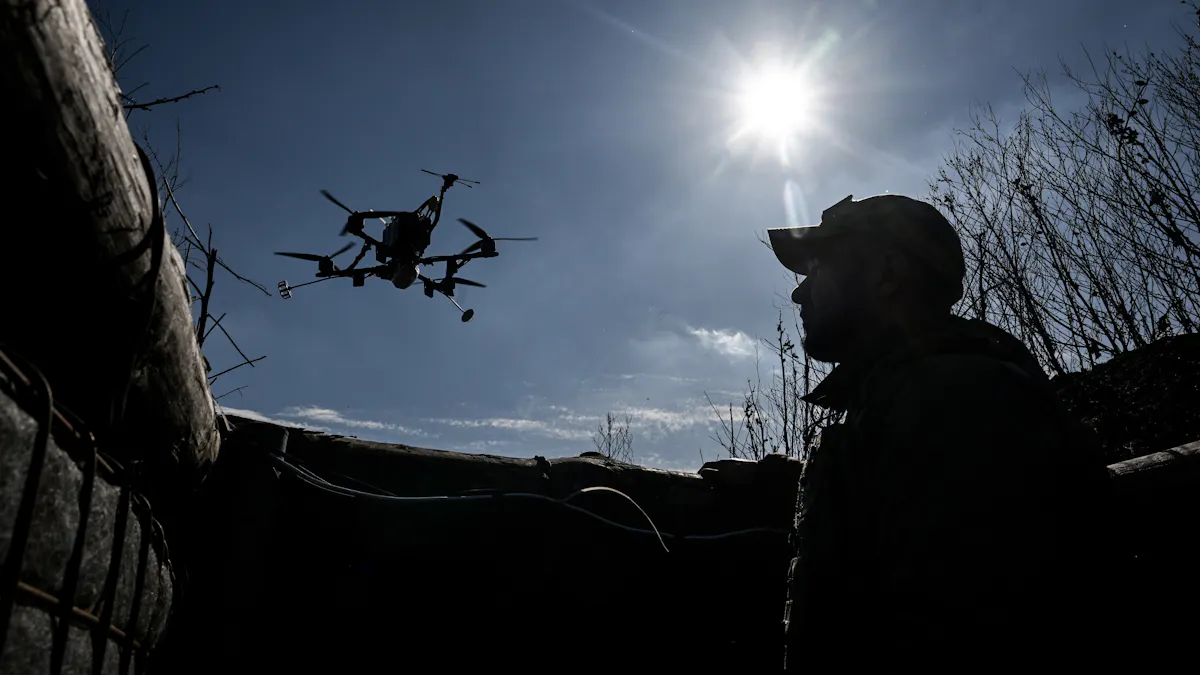
Last week, Hu said surging demand for drones, triggered by the war in Ukraine, had turned into a boom for SES AI batteries. He is quickly adding manufacturing capacity in South Korea to quintuple drone battery production to 1 million cells a year by October, enough to power 100,000 drones. All of the cells will meet Pentagon rules meant to keep Chinese-made materials out of U.S. weaponry, he said.
Yet even that level of battery production is still “not enough,” Hu told me in a text message, and he is looking for more contract manufacturing capacity to satisfy demand for drones that meet Pentagon specifications.
SES’s drone bonanza reflects what looks like a turning point in the next-generation battery industry. Battery startups as a whole have struggled for the last three or so years in the “valley of death,” the period startups face before finding a paying market for their product, when costs are high but revenue is low or nonexistent. Multiple U.S. and European battery companies have gone bankrupt during this period.
But over the last two weeks, a sprinkling of contracts to produce batteries for drones and AI data centers has given way to a gusher of deals involving many of the surviving startups and the investors behind them.
In a flurry of fundraises, iron-air battery developer Form Energy raised $750 million, home battery maker Base Power raised $1 billion and silicon anode developer Sila Nanotechnologies got a $1.4 billion conditional loan from the Pentagon.
In addition, silicon anode developer Amprius Technologies increased its projected annual revenue to $140 million, up from $130 million, and said its gross margin would be 28%, up from 25%. SES said it would generate roughly $30 million in revenue this year.
These and other U.S. battery startups are not out of the woods. This year, Amprius expects to earn its first profit before interest, taxes, depreciation and amortization. But none of the other battery startups has forecast profit. In addition, Form lowered its valuation in the latest round to $1.75 billion from about $3 billion in its last fundraise in October 2024, Axios reported. Form declined to comment.
Collectively, the developments paint a picture of a sector that can see the end of the valley of death visible on the horizon. At the same time, its investors will have to recalibrate their revenue and profit expectations. Simply put, drones, AI data centers and perhaps eventually robotics will return significant revenue and possibly profit, but none of them requires the scale of batteries that EVs do.
Still, most investors see a colossal difference between companies that earn no commercial revenue and those that earn millions from commercially sold products.
Drones have provided the quickest income for the battery makers, and the catalyst has been the revolutionary impact of the Ukraine and Iran wars on battlefield and weaponry strategy. Suddenly, everything is about unmanned vehicles of all types—the cheaper, the better.
“Ukraine and Iran have brought the power of autonomous vehicles to the world,” said Halle Cheeseman, a battery expert and former veteran program director for the Department of Energy’s Advanced Research Projects Agency—Energy. “We hear about the drones, but Ukraine has also been using autonomous water vessels. They’ve been using autonomous ground vessels to attack Russia and to even collect wounded people. So people are realizing, from generals to politicians and everyone, that electric and battery are key needs and therefore are key areas that need to be focused on.”
The drone boom has also improved the outlook for startups developing battery-powered technologies. Several flying electric taxi startups, for instance, which have spent billions of dollars in development costs and face a long road to civilian passenger revenue, last week announced that they had made acquisitions to create their first commercial revenue.
One such startup, Archer Aviation, last week bought three Boeing subsidiaries, including Insitu, which Archer said is profitable as a separate entity and sells $200 million of drones to the military every year. And Joby Aviation agreed to pay $500 million for Resonant Sciences, a defense electronics firm whose sales grew 40% last year to $100 million; that added to $100 million in annual revenue Joby already acquired last year in the purchase of the helicopter passenger unit of Blade Air Mobility.
The flying taxi startups are currently small customers for batteries, since none of their electric vehicles is operating commercially yet, but they will be bigger buyers in the future if, as expected, the Pentagon makes a large order for hybrid electric combat aircraft later this year or in 2027.
Some of the battery startups voice the hope that the EV market will still grow larger in the U.S. and require next-generation batteries. Even if that comes to pass, it is unlikely to be at the scale predicted in 2020 and 2021, at least not in the next five or more years.
But the current level of battery demand and investor interest is preferable to the valley of death. “The political and commercial winds have changed,” Cheeseman said.
Noteworthy
Ford said that in the first quarter next year, it will finally begin making prototypes of the $28,500 midsize electric truck it has been developing at what it has called a “skunk works” in California. The company will begin delivering the truck, named Fathom, later next year. Ford has said it has designed Fathom to compete with Chinese-made EVs.
Tesla could unveil a flying Roadster as early as later this month, my colleague Grace Kay reported. The car, powered by cold gas thrusters, is the result of a joint effort between Tesla and SpaceX. A number of industry veterans regard plans for the car as a stunt since it can’t be used on public roads and could cost in the millions of dollars.
Chinese car sales fell for the tenth straight month. Retail car sales in China fell 21% year on year in July, and 9% compared with sales in June. The slide explains Chinese carmakers’ ultra-aggressive export efforts. China has been the world’s biggest car-exporting country since 2023.
Recommended Newsletter
Start your day with Applied AI, which covers how leading businesses are leveraging AI to automate tasks. Subscribe now for free to get it delivered to your inbox twice a week.
Upcoming Event: AI Agenda Live SF 2026
Wednesday, September 23: Purchase your ticket to AI Agenda Live, where The Information’s reporting team will convene the leaders driving the next era of AI (more details).
Steve LeVine is editor of The Electric. Previously, he worked at Axios, Quartz and Medium, and before that The Wall Street Journal and The New York Times. He is the author of The Powerhouse: America, China and the Great Battery War, and is on Twitter @stevelevine